
The bezel insert is one of the most exposed parts of any dive watch, and the material it is made from decides how the watch looks after ten years of daily wear. If you are weighing a ceramic bezel insert against traditional aluminum or a machined steel ring, the differences come down to four practical things: hardness, fade resistance, repairability, and the way each material catches the light. This guide compares the main bezel insert materials used on modern and vintage dive watches so you can judge which trade-offs matter for the way you actually wear a watch.
What a Bezel Insert Actually Is
On most dive watches the rotating bezel is built in two parts. There is the metal bezel ring itself, usually steel, which holds the click spring and the teeth you grip to turn it. Sitting on top of that ring is the insert: the flat or slightly domed disc that carries the printed or engraved 60-minute scale and the luminous pip at zero. The insert is what your eye reads and what your cuff, your dive gear, and the occasional door frame rub against.
Because the insert is a separate component, it can in principle be replaced without rebuilding the whole bezel assembly. That single fact shapes a lot of the ownership experience. A material that scratches easily but swaps out cheaply is a very different proposition from one that never scratches but costs a great deal to replace if it ever chips. Keep that idea in mind as we go through the three main options.
Aluminum Bezel Inserts: The Traditional Choice
Anodized aluminum was the standard dive-watch bezel insert material for decades, and it is still widely used today. The disc is stamped from aluminum, anodized to add colour and a thin protective oxide layer, and then the markings are engraved or printed and filled. It is light, inexpensive, and easy to produce in almost any colour, which is why it defined the look of the classic tool divers of the 1960s and 1970s.
Aluminum is soft, so it scratches and dings more readily than the alternatives. Over years of sunlight and saltwater the anodized colour also fades, and a deep black can drift toward grey or a navy blue can lighten noticeably. For some owners that is a defect. For others it is exactly the point: a faded aluminum insert is the honest fingerprint of a watch that has been worn and used, and vintage collectors often pay a premium for a bezel that has aged evenly.
The compensating virtue is repairability. Aluminum inserts are cheap to manufacture and straightforward to replace, so a damaged one is rarely a serious problem. If you want a watch that looks period-correct, ages with character, and can be freshened up inexpensively, aluminum still makes a strong case.
Ceramic Bezel Inserts: Scratch Resistance First
A ceramic bezel insert is made from zirconium dioxide, a technical ceramic that is sintered at high temperature into a dense, extremely hard disc. On the Mohs scale ceramic sits far above steel and aluminum, which is why the headline benefit is scratch resistance. A ceramic insert shrugs off the everyday knocks that would leave marks on aluminum, and the surface keeps its high-gloss finish for the life of the watch.
The colour on a good ceramic insert is fired into the material rather than sitting on top of it, so it does not fade in sunlight and does not lighten in saltwater. Ten years on, a ceramic bezel looks essentially the way it did in the display case. The markings are often applied by cutting the numerals into the fired surface and filling them with luminous or metallic paint, or by using a PVD process to lay platinum or another metal into recessed engraving.
The Trade-Offs of Ceramic
Ceramic is hard, but hardness and toughness are not the same thing. Because zirconium dioxide is a brittle material, a sharp impact on the edge of the bezel can chip it rather than scratch it, and a chipped ceramic insert cannot be polished out the way a metal one sometimes can. Replacement is also more expensive than aluminum, both because the part costs more and because ceramic inserts are manufactured to tight tolerances. In daily life these are rare events, but they are worth knowing about before you assume ceramic is indestructible.
There is also a look to consider. Ceramic tends to read as glossy and modern, which suits contemporary designs. If you are after the flatter, more utilitarian appearance of a vintage tool diver, a high-shine ceramic ring can feel out of period. That is an aesthetic judgement, not a fault.
Steel and Sapphire Inserts
Some dive watches skip a separate insert and machine the scale directly into a steel bezel, or fit a solid steel insert with engraved and lacquer-filled markings. A steel bezel is tough and repairable: light scratches can often be polished, and the metal has a purposeful, monochrome look that many owners like. The downside is that steel shows hairline marks more visibly than ceramic hides them, and a plain steel ring offers less colour contrast than a filled aluminum or ceramic scale.
A smaller number of watches use a sapphire insert, with the markings printed on the underside of a transparent sapphire disc so they are protected by the crystal itself. Sapphire is nearly as scratch-proof as ceramic and gives a deep, glassy look, but like ceramic it can shatter under a hard edge impact and is costly to replace. It remains a niche, premium option rather than a mainstream one.
Which Bezel Insert Material Should You Choose?
There is no single best answer, because the right material depends on what you want from the watch. To make the comparison concrete:
- Choose aluminum if you value period-correct looks, low replacement cost, and the character that comes from a bezel ageing over time.
- Choose ceramic if you want a bezel that stays flawless for years, never fades, and you are happy to accept a glossier, more modern appearance and a higher repair bill in the rare event of a chip.
- Choose steel if you like a tough, tool-like monochrome bezel that can be polished, and you do not mind that it collects fine scratches over the years.
- Consider sapphire only if you specifically want its glassy depth and are comfortable with premium replacement costs.
It also helps to be honest about how you treat your watches. If a single scratch will bother you, ceramic or sapphire will save you a lot of grief. If you plan to wear the watch hard and want to fix it cheaply when life happens, aluminum or steel is the pragmatic pick. Neither instinct is wrong.
The Bezel Is More Than Its Material
Whichever material you land on, remember that the insert is only half the story. What the bezel does matters as much as what it is made of. The unidirectional dive bezel exists as a safety device, and the way its scale is laid out determines how quickly and accurately you can read elapsed time underwater. A beautifully finished ceramic ring with a poorly designed scale is less useful than a modest aluminum one that you can read at a glance.
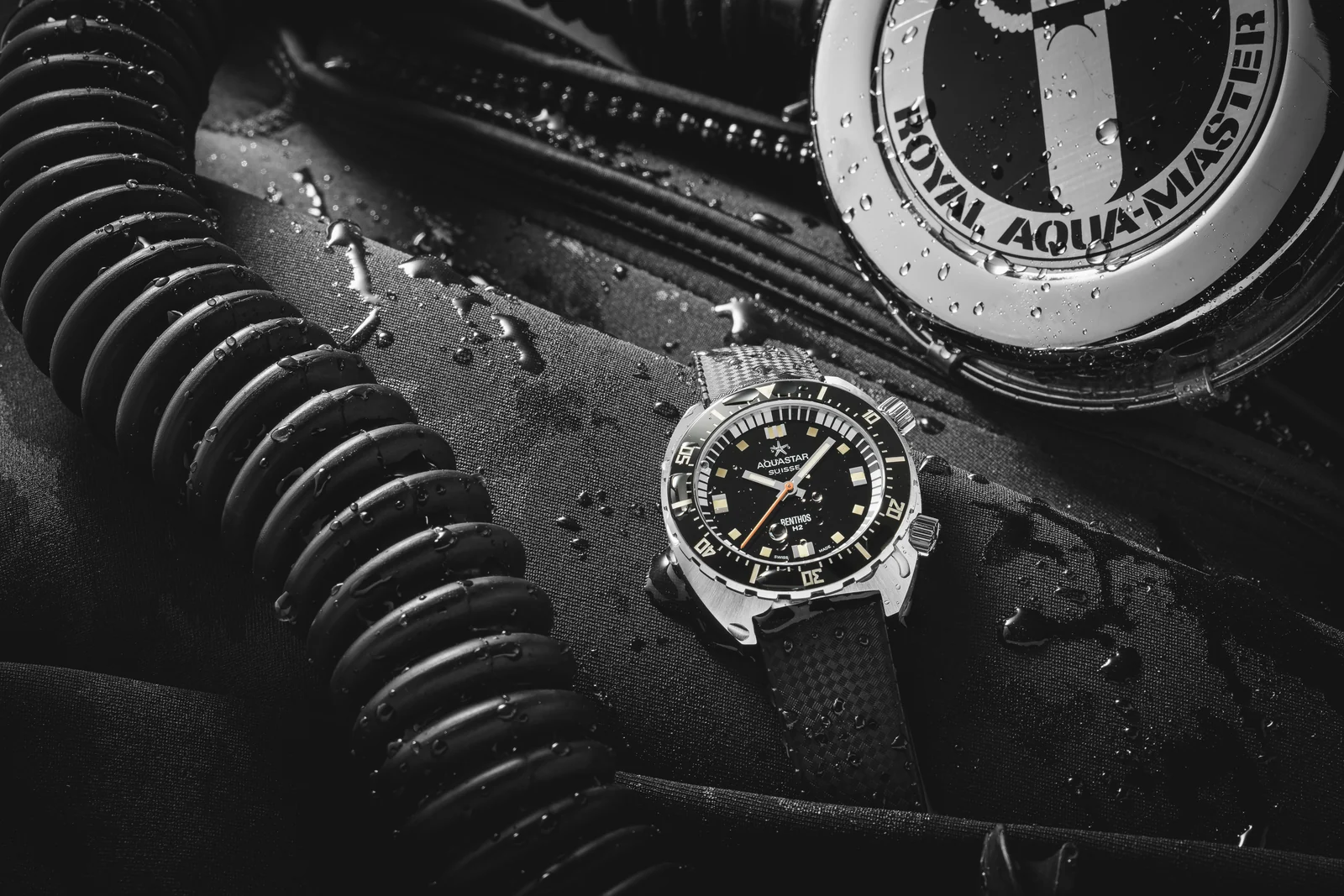
Aquastar’s history is a good example of function driving the bezel. The brand’s patented no-decompression bezel, first developed in 1962, was built to let a diver track repetitive dives across a session rather than time a single descent, which was a genuine step beyond the simple elapsed-time bezels of the day. If you are shopping for a dive watch where the bezel is a working instrument and not just a design flourish, it is worth looking at how the scale is engineered before you settle on the material of the insert. You can see that approach across the Aquastar Benthos collection.