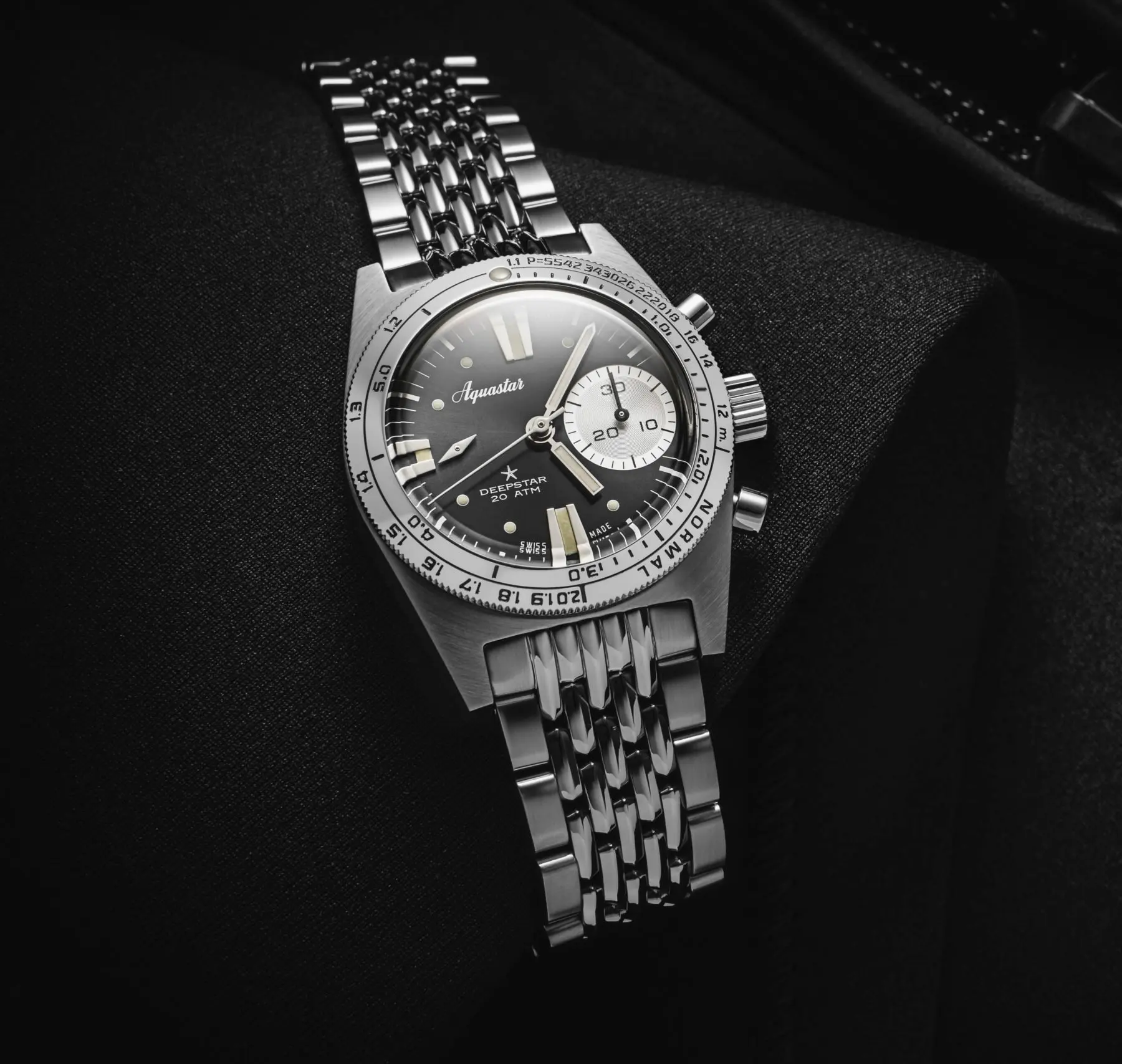
Almost every mechanical dive watch made today is automatic, and almost every collector eventually wonders whether a manual-wind piece would suit them better. The honest answer is that both are excellent, the practical differences are smaller than the forum debates suggest, and the right choice comes down to how you live with a watch rather than which mechanism is objectively superior.
How each one works
A manual movement is wound by turning the crown. Turning the crown tensions the mainspring, the coiled ribbon of steel that stores the energy the watch runs on. When the spring unwinds, the watch stops, and you wind it again. A manual watch is the older and simpler of the two mechanisms.
An automatic movement adds a rotor, a weighted semicircle that pivots freely on the back of the movement. As your wrist moves through the day, the rotor swings and winds the mainspring for you. You still can wind an automatic by hand through the crown, but in normal wear you rarely need to. The rotor is the only meaningful mechanical difference between the two.
Power reserve, and why it matters less than you think
Power reserve is how long a fully wound watch runs before it stops. Manual watches and automatics both typically run somewhere between 40 and 70 hours. The number that gets quoted in marketing rarely matters in daily wear: if you wear the watch every day, an automatic stays wound from your wrist motion, and a manual takes a few seconds to top up each morning. Power reserve only becomes relevant if you rotate between several watches and want one to survive a weekend in a drawer. For a one-watch owner, it is close to irrelevant.
The real differences
- Convenience. An automatic asks nothing of you if you wear it daily. A manual asks for a few seconds of winding each morning. Some owners find the ritual satisfying; some find it a chore. This is the single biggest practical difference.
- Thickness. The rotor and its bearing add height. A manual movement is thinner, which is why hand-wound dive chronographs can sit flatter on the wrist than their automatic siblings. If case thickness matters to you, the manual usually wins.
- Case-back view. A rotor covers roughly half the movement. On a watch with a display back, a manual movement shows the full mechanism, gear train, bridges, balance, uncovered. Many enthusiasts prefer the view of a manual calibre for this reason. Most dive watches use a solid case back regardless, because a solid back seals better and is stronger under pressure.
- Servicing. A manual movement has fewer parts (no automatic winding assembly), so there is marginally less to wear and service. The difference is small, and both mechanisms need the same 5 to 10 year full service on an Aquastar. Neither needs annual attention.
- Accuracy. Accuracy is a function of the movement's grade and regulation, not of whether it is automatic or manual. A well-regulated example of either type keeps good time. There is no inherent accuracy advantage to either mechanism.
Which suits a dive watch
For a watch you wear every day and take in the water, an automatic is the natural default: it stays wound, it needs no thought, and the sealed rotor adds no vulnerability. The Aquastar Model 60 and the automatic Deepstar are built exactly this way. For a hand-wound piece, the appeal is the thinner case and the mechanical purity, the morning wind is part of the relationship with the watch. The manual-wind Aquastar Deepstar descends from the column-wheel chronograph tradition, where the hand-wound mechanism is the point rather than a limitation. Read more on the column-wheel chronograph.
One practical note for chronograph buyers: a manual-wind chronograph avoids a small quirk of automatics. When an automatic chronograph rests on a desk, the rotor can occasionally nudge the movement in a way that unsettles a reset hand. A hand-wound chronograph, with no rotor, sidesteps this entirely. It is a minor point, but a real one for people who fixate on a chronograph hand sitting exactly on zero.
The bottom line
There is no wrong answer. Choose automatic if you value never thinking about winding and you wear one watch most days. Choose manual if you value a thinner case, the fullest view of the movement, and the daily ritual of winding. Both mechanisms, well made and properly serviced, will outlast you. The choice is about how you want to live with the watch, not about which is the better machine.
Frequently asked questions
What is the difference between an automatic and a manual watch?
A manual watch is wound by hand through the crown, tensioning the mainspring that powers it. An automatic adds a weighted rotor that swings with your wrist motion and winds the mainspring for you, so it rarely needs hand-winding in daily wear. The rotor is the only meaningful mechanical difference between the two.
Is an automatic or manual watch more accurate?
Neither has an inherent accuracy advantage. Timekeeping depends on the grade of the movement and how well it is regulated, not on whether it winds automatically or by hand. A well-regulated example of either type keeps good time.
Do I have to wind an automatic watch?
Not if you wear it daily, because your wrist motion keeps it wound. You can wind an automatic by hand through the crown, and you will need to if it has stopped after sitting unworn past its power reserve, but in normal daily wear it winds itself.
Which is better for a dive watch, automatic or manual?
An automatic is the natural default for a watch worn daily and taken in the water, because it stays wound with no thought and the sealed rotor adds no vulnerability. A manual suits buyers who want a thinner case, the fullest movement view, and the ritual of winding. Both are excellent when properly serviced.
How often does a mechanical dive watch need servicing?
An Aquastar needs a full service every 5 to 10 years, with no annual service required even with daily diving. A manual movement has marginally fewer parts than an automatic, but both follow the same interval. Regular gasket checks keep the water resistance intact between services.
Related reading: Inside the column-wheel chronograph · The six features that define a professional dive watch · The Aquastar Deepstar family · Servicing a dive watch