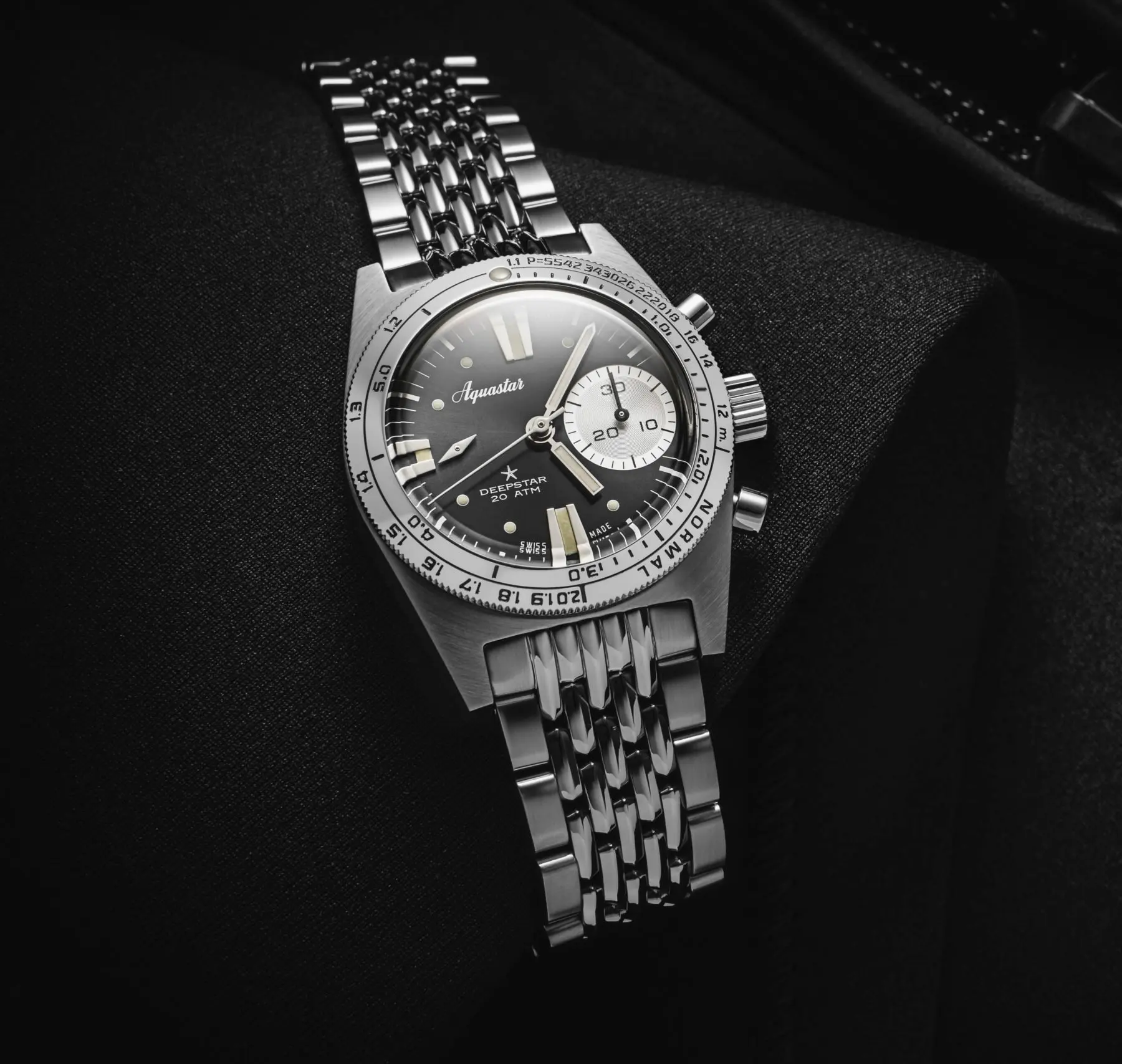
Collecting dive watches is one of the most rewarding corners of horology, because dive watches are tools with real history: worn on record-setting descents, issued to navies, engineered to solve genuine problems. A collection can be built around era, function, brand, or simply what you love to wear. This is a starter's guide to how the category is organised, what to look for, and the mistakes that cost new collectors the most.
The four eras of the dive watch
Almost every collectable dive watch belongs to one of four periods, and understanding them is the fastest way to make sense of the market.
- The skindiver era (roughly 1953 to the late 1960s). The first purpose-built dive watches: small cases of 36 to 39 mm, modest 50 to 100 metre ratings, time-only dials, and the newly standardised rotating bezel. Aquastar shipped its first, the Model 60, in 1957. For the full account see what is a skindiver watch.
- The race for the deep (from the late 1960s). Depth ratings became the industry's proving ground: larger cases, 200 metre and deeper ratings, chronographs, and national-navy contracts. Aquastar's Deepstar Chronograph and the 500-metre Benthos belong here, as do the Marine Nationale issues.
- The quartz era (roughly 1983 to 2000). Battery movements arrived and much of the industry converted. Collector interest in quartz dive watches is generally lower, but the period is historically important and holds some undervalued pieces.
- The modern revival (roughly 2000 to today). Mechanical dive watches returned to favour, and heritage brands began reissuing their archives. This is where a new collector can buy a brand-new watch with genuine lineage, such as the reissued Model 60 or Deepstar.
What drives value
- Originality above all. An unmolested watch with its original dial, hands, bezel, and finish is worth far more than one that has been relumed, refinished, or fitted with replacement parts. On many vintage watches, originality accounts for more than half the value. See how to identify a genuine dive watch.
- Condition and finish. A case that retains its original brushing and sharp edges is prized. Over-polishing that has rounded the edges permanently reduces value, and unlike a scratch, it cannot be undone.
- Provenance. A documented history, period photos, receipts, service records, or a link to a named owner or issuing institution, adds real value and confidence. Military provenance in particular commands a premium when it is genuinely documented.
- Rarity and significance. Watches tied to a first (the first 500-metre Swiss diver, a record descent) or produced in small numbers carry more weight than common references.
- Lineage and heritage. Watches from makers with a documented, continuous history hold value better than generic pieces, which is the core of the heritage reissue versus homage distinction.
Where to buy, and how safely
The safest route scales with the value of the watch. For significant pieces, recognised auction houses, established specialist dealers, and manufacturers' own certified-authentic programmes offer the most protection and usually some recourse. For mid-tier watches, well-reviewed sellers on the major platforms with long trading histories are reasonable, provided you do your own authentication. Entry-level buying through forums and private sales turns up bargains but demands the most diligence and carries the most risk. Whatever the tier, buy the seller as much as the watch, and for anything significant, get an independent inspection first.
Common beginner mistakes
- Chasing condition over originality. A freshly relumed, over-polished watch can look better than an honest original while being worth much less. Learn to value patina.
- Ignoring the movement. Not opening the case back, or not knowing which calibre a watch should contain, is how collectors end up with a franken assembly. Always verify.
- Overpaying for a story. Provenance must be documented, not merely narrated. A compelling tale with no paper is just a tale.
- Neglecting the seals. A collectable dive watch is still a dive watch. Keep it clean and serviced. An Aquastar needs a full service only every 5 to 10 years, with no annual service required, but the seals do age and need periodic attention. See cleaning a dive watch.
- Underinsuring. A growing collection needs proper cover, which is a subject of its own, covered in insuring a dive watch.
Finding a focus
The most satisfying collections have a theme rather than being a scattered accumulation. Some collectors focus on a single brand and try to represent its history; some collect one function, such as dive chronographs, across many makers; some collect a single era. A focus makes you a more knowledgeable buyer, because you learn one area deeply rather than a little about everything, and depth of knowledge is the collector's best protection against paying too much or buying wrong. Aquastar's own history, from the 1957 Model 60 through the Deepstar and Benthos to the modern revival, is a compact, coherent thread that many collectors find rewarding to follow. See vintage Aquastar models worth collecting and the full Aquastar story.
Frequently asked questions
How do I start collecting dive watches?
Begin by learning the four eras, skindiver, professional, quartz, and modern revival, so you can place any watch in context. Decide on a focus, such as a brand, a function, or a period, then buy the best-quality, most original examples you can, from reputable sellers, verifying authenticity before any significant purchase.
What makes a dive watch valuable to collectors?
Originality is the biggest factor: an unmolested watch with its original dial, hands, bezel, and finish can be worth more than double a relumed or refinished example. Condition, documented provenance, rarity, historical significance, and a maker with genuine continuous heritage all add value on top of that.
What is the biggest mistake new collectors make?
Valuing shiny condition over originality. A freshly relumed and over-polished watch often looks better to an untrained eye while being worth far less than an honest, patinated original. Other common errors are not checking the movement, overpaying for an undocumented story, and neglecting servicing and insurance.
Where is the safest place to buy a collectable dive watch?
For significant pieces, recognised auction houses, established specialist dealers, and manufacturers' certified-authentic programmes offer the most protection. Mid-tier watches can be bought from long-established sellers on major platforms with your own authentication, while forum and private sales carry the most risk. Buy the seller as much as the watch.
Should a collectable dive watch still be serviced?
Yes. A collectable dive watch is still a mechanical watch with seals that age, so it needs cleaning after wear and a periodic professional service. An Aquastar requires a full service only every 5 to 10 years, with no annual service needed even with daily diving, but the gaskets do need renewing on that interval to keep the watch healthy.
Related reading: Vintage Aquastar models worth collecting · How to identify a genuine dive watch · Insuring a dive watch · What is a skindiver watch? · Independent Swiss watch brands worth knowing