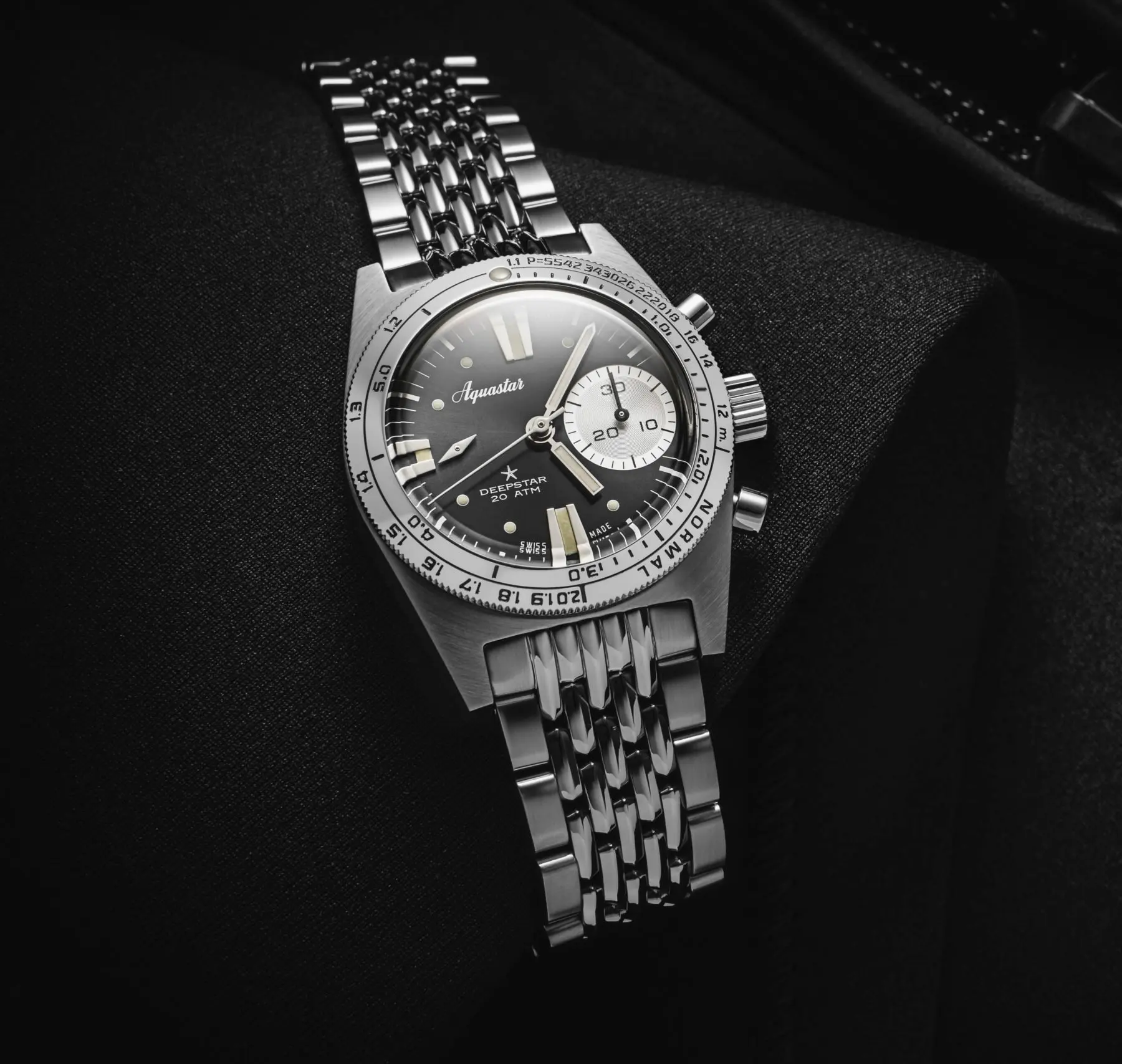
The market for desirable dive watches, vintage and modern, has grown large enough to attract counterfeits, "franken" watches assembled from mismatched parts, and honest watches misrepresented as something rarer than they are. Authentication is a skill built from a handful of checks, most of which need nothing more than good light, a loupe, and patience. This guide covers what to inspect, in the order a careful buyer inspects it. It is general guidance, not a substitute for an expert opinion on a high-value purchase.
Start with the dial
The dial is where most fakes fail, because reproducing the exact printing of an original is genuinely difficult. Look closely, with a loupe, at:
- Font and printing quality. Original dials use precise, sharp printing with correct letter shapes and spacing. Counterfeits often get the typeface subtly wrong, the shape of a specific digit, the weight of the text, the kerning. Compare against verified reference images of the exact model and era.
- Lume colour and aging. On a vintage watch, original tritium ages to an uneven warm cream or tan. A uniform, bright glow on a dial that should look decades old suggests a relume or a reproduction dial. Genuine aging is uneven across the dial because different markers absorbed light and radiation differently. See the lume guide for the full picture.
- Text alignment and depth ratings. Check that the printed water-resistance rating and model name match what the reference actually carried in that year. A modern-sounding rating on a supposedly vintage dial is a red flag.
The hands
Hands should match the dial in style, finish, and lume aging. On a genuine vintage watch the lume on the hands has aged to the same tone as the lume on the dial, because they were made and fitted together. Hands whose lume is a different colour or brightness from the dial's markers were likely replaced, which is common and not always dishonest but must be disclosed and priced accordingly. The shape of the hands must also match the reference exactly; wrong-shaped hands are a frequent tell on assembled fakes.
The case and case back
- Case-back engraving. Study the depth, font, and alignment of any engraving. Factory engraving is clean, evenly spaced, and consistent. Re-cut, added, or "improved" engravings, common on watches faked to look military-issued, show uneven depth, wrong fonts, or spacing that drifts. A military stamp alone proves nothing; it must be consistent with the documented format for that issue.
- Serial and reference numbers. These should fall within the ranges documented for the model and year. A number outside the known range, or one that does not match the rest of the watch, indicates a problem. Reputable manufacturers, Aquastar included, hold production records that can confirm a serial.
- Case finish. Original brushing and polishing follow a specific pattern. Over-polishing that has softened the case edges and erased the original finish is the silent value-killer on vintage watches. It is not a fake, but it is a heavily degraded example.
Open the case back: the movement
On any significant purchase, have the case back opened by a watchmaker to inspect the movement. Each model used specific calibres in specific eras, and the movement inside must match what the reference is documented to have carried. A movement that is wrong for the model, or a modern movement in a supposedly vintage watch, exposes a "franken" assembly or an outright fake. The finish, engraving, and condition of the movement also reveal service history and whether parts have been swapped. This single check catches a large share of misrepresented watches.
Provenance and paperwork
Documentation supports authenticity, though it can also be faked and must be weighed with the watch itself. Period photographs, original sales receipts, service records, and papers from a recognised dealer or auction house all add confidence. A watch with a documented chain of ownership traceable to a named retailer or, for military pieces, an identified issuing institution is far more defensible than one with a story but no paper. For how provenance drives collector value, see how to collect dive watches and heritage reissue versus homage.
Buy the seller, not just the watch
The most reliable protection is the counterparty. Established dealers with years of trading history, recognised auction houses, and manufacturers' own certified-authentic programmes all stake their reputation on the watches they sell and generally offer recourse if something is wrong. A private sale at a suspiciously low price, with reluctance to show the movement or provide provenance, is where most people are caught. When a purchase is significant, a pre-purchase inspection by an independent watchmaker or a brand's own authentication service is money well spent. Aquastar can verify a serial against its production records, which is the surest confirmation for the brand's own watches.
Frequently asked questions
How can I tell if a dive watch is genuine?
Work through the watch in order: inspect the dial for correct fonts, printing, and lume aging; check that the hands match in style and lume tone; study the case-back engraving and serial numbers against documented ranges; and have a watchmaker open the case to confirm the movement matches the model and era. Provenance and a reputable seller add further confidence.
What is a "franken" watch?
A franken watch is one assembled from mismatched parts, for example an original case fitted with a reproduction dial, replacement hands, and a movement that is wrong for the model. Opening the case back to check that the movement matches the documented calibre for that reference is the single most effective way to catch a franken assembly.
Where do most fake dive watches give themselves away?
The dial is where most fakes fail, because reproducing the exact original printing is genuinely difficult. Wrong fonts, incorrect digit shapes, poor print quality, and lume that is too uniform or the wrong colour for the watch's age are common tells. The movement, checked by opening the case, is the other decisive point.
Does a military case-back stamp prove a watch was issued?
No. A stamp alone proves nothing, because engravings are easy to add or re-cut. A genuine issued watch has engraving whose depth, font, and spacing match the documented format for that issue, a serial number in the correct range, and ideally provenance to the issuing institution. Faked military engraving typically shows uneven depth or the wrong font.
Should I get a watch authenticated before buying?
For any significant purchase, yes. A pre-purchase inspection by an independent watchmaker or a brand's authentication service is money well spent. Buying from an established dealer, a recognised auction house, or a manufacturer's certified programme also provides recourse. Aquastar can verify a serial against its production records for its own watches.
Related reading: How to collect dive watches · The dive-watch lume guide · Vintage Aquastar models worth collecting · Heritage reissue versus homage