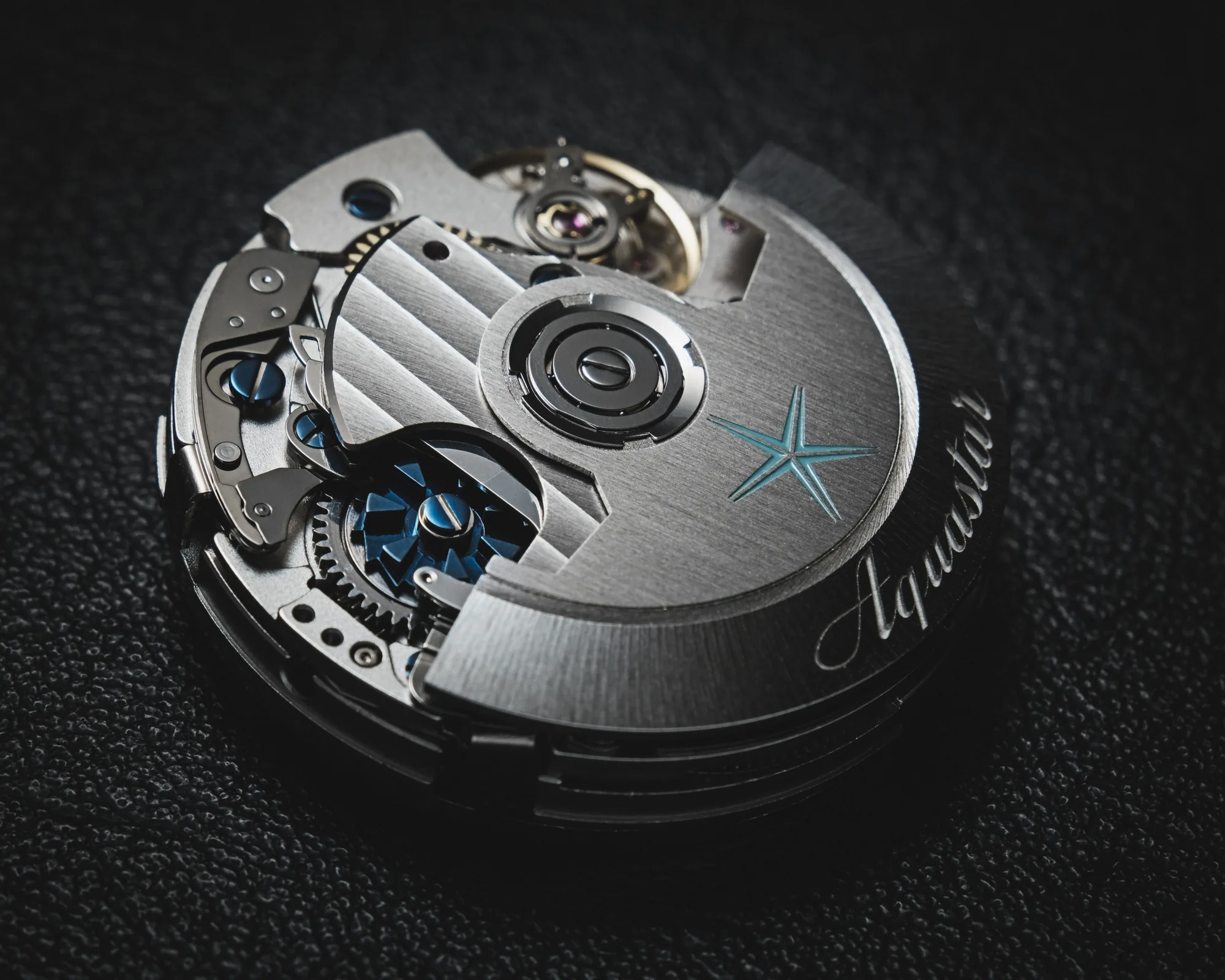
Sellita SW200-1 vs ETA 2824 comes down to this: both are reliable, ETA-based Swiss automatic movements, and the SW200-1 is the more accessible of the two while the ETA 2824-2 carries the longer manufacturing pedigree. Neither one is the “wrong” choice. The right movement depends on what you value more: proven history or price-to-performance.
If you have ever shopped for a Swiss dive watch under $1,500, you have already run into this debate. Two movements, both automatic, both roughly the same size, both tracing back to the same design lineage, yet priced and marketed as if they were worlds apart. We are going to walk through what actually separates them, where each one earns its reputation, and which one belongs on your wrist.
Quick verdict:
- Want the deepest service history and widest watchmaker familiarity? Go ETA 2824-2.
- Want strong specifications-per-dollar from an independent Swiss brand? Go Sellita SW200-1.
- Buying based on grade rather than name? Either one, at the same grade, performs the same.
What Are the Sellita SW200-1 and ETA 2824-2?
Both movements trace back to the same design lineage, and today they are the two most common Swiss automatic calibers you will find inside dive watches under $1,500.

What is the Sellita SW200-1?
The Sellita SW200-1 is a Swiss-made automatic movement built on the same architecture as the ETA 2824-2, designed specifically for independent and boutique watch brands. It comes in four grades: Standard, Elabore, Top, and Chronometer, each with tighter accuracy tolerances than the last.
What is the ETA 2824-2?
The ETA 2824-2 is a Swiss-made automatic movement produced by ETA, a subsidiary of the Swatch Group, and one of the most widely used calibers in Swiss watchmaking history. Like the SW200-1, it is available in Standard, Elabore, Top, and Chronometer grades.
Sellita SW200-1: Specs, Strengths, and Where It Shines
The SW200-1 has become the go-to movement for independent Swiss brands, and its specs explain why.
What are the core specifications?
- Jewels: 26
- Power reserve: 38 hours
- Beat rate: 28,800 vibrations per hour (4Hz)
- Winding: Bidirectional
- Grades available: Standard, Elabore, Top, and Chronometer
How accurate is the SW200-1 in practice?
In its base grade, the SW200-1 typically runs within -20 to +20 seconds per day, which is standard for an unregulated automatic movement at this price point. Higher grades, particularly Elabore and Top, tighten that range considerably and are frequently regulated closer to -10/+10 seconds per day by the brands that use them.
Why do independent brands choose the SW200-1?
Cost and availability drive this decision more than anything else. Sellita built the SW200-1 as a direct response to ETA’s decision to restrict movement supply to outside brands, first announced in the early 2000s. Rather than let independent watchmakers scramble, Sellita reverse-engineered a movement based on the same architecture as the ETA 2824-2, then refined it over several generations into a separately manufactured caliber built to the same footprint. That access lets smaller manufacturers keep prices in check without cutting corners on the movement itself.
ETA 2824-2: Specs, Strengths, and Where It Shines
The ETA 2824-2 wins on reputation, and reputation was earned over roughly four decades of continuous use.
What are the core specifications?
- Jewels: 25 in most grades
- Power reserve: 38 hours
- Beat rate: 28,800 vph, matching the SW200-1
- Grades available: Standard, Elabore, Top, and Chronometer, mirroring Sellita’s tiered approach
Is the ETA 2824-2 more accurate than the Sellita SW200-1?
Not inherently. At matching grades, the accuracy between the two movements is essentially the same, typically within a few seconds of each other per day. Any accuracy gap you read about online almost always comes down to how well an individual watch was regulated at the factory, not which caliber sits inside the case.
What makes the ETA 2824-2 worth paying for?
Reputation and history. Brands that have relied on the ETA 2824-2 for years often cite decades of proven reliability and an enormous global network of watchmakers who know the movement inside and out. For collectors who prioritize a long service history over marginal cost savings, that track record carries real weight.
Sellita SW200-1 vs ETA 2824: Side-by-Side Comparison
Here is how the two movements stack up when you put their specifications side by side.
| Spec | Sellita SW200-1 | ETA 2824-2 |
|---|---|---|
| Jewels | 26 | 25 (varies by grade) |
| Power reserve | 38 hours | 38 hours |
| Beat rate | 28,800 vph (4Hz) | 28,800 vph (4Hz) |
| Diameter | 25.60mm | 25.60mm |
| Grades available | Standard, Elabore, Top, Chronometer | Standard, Elabore, Top, Chronometer |
| Base accuracy | -20/+20 sec/day | -20/+20 sec/day |
| Production history | Since 2000s | Since late 1970s |
| Third-party availability | High | Limited (Swatch Group priority) |
| Parts and service access | Growing, strong | Extensive, long-established |
Accuracy, Durability, and Serviceability: How They Really Compare
Specs on paper only tell part of the story; how each movement holds up in daily use is what actually matters to a diver.
Which movement holds up better over time?
Both movements are built on the same fundamental architecture, so long-term durability is comparable when either one is serviced on a normal schedule, roughly every four to five years. Neither has a documented reliability edge over the other in independent watchmaker forums or repair data.
Which one is easier to get serviced?
The ETA 2824-2 has a slight edge here simply due to age. With decades in circulation, more watchmakers globally have direct experience servicing it. That gap is closing quickly, though, as Sellita’s SW200-1 has now been in wide use for close to two decades and most modern watchmakers service both without hesitation.
Does grade matter more than brand?
Yes, and this is the point most comparisons miss. A Top-grade SW200-1 will consistently outperform a Standard-grade ETA 2824-2 in accuracy testing. When choosing a watch, check the grade the brand actually uses before assuming that one movement name automatically means better performance.
Price and Value: What You’re Actually Paying For
The price difference between these two movements comes down to supply chains, not quality gaps.
Why does the Sellita SW200-1 usually cost less?
Supply is the main driver. Sellita manufactures specifically to serve third-party brands at competitive volume, which keeps licensing and sourcing costs lower for the watchmakers who use it. That savings often gets passed on in the final retail price.
Is a cheaper movement a lower-quality movement?
No, and this is the most common misconception in the Sellita vs ETA debate. Price differences reflect supply chain economics and brand positioning, not a meaningful quality gap at matching grades. A well-regulated SW200-1 Elabore will perform on par with a well-regulated ETA 2824-2 Elabore.
Cost considerations
Look at the grade, not just the movement name.
- A watch advertising “Swiss automatic movement” without specifying the grade is telling you less than you think.
- Ask which grade is inside before comparing prices across brands.
- Compare accuracy specs directly rather than assuming one brand name is automatically superior.
Which movement should you choose?
Neither choice is a compromise. Both movements, at the same grade, deliver the accuracy and durability expected of a genuine Swiss automatic caliber. Your decision comes down to what you personally value.
Choose the ETA 2824-2 if:
- You want the longest possible service history behind your movement.
- You plan to have the watch serviced by a wide range of watchmakers over decades.
- You simply prefer the reassurance of a movement from the brand with the deepest track record in Swiss watchmaking.
Choose the Sellita SW200-1 if:
- You want strong specifications-per-dollar.
- You are buying from an independent or boutique Swiss brand where SW200-1 access supports better pricing.
- You care more about performance at a given grade than the name printed on the movement.
Why Aquastar trusts both movements
This is where we step out of theory and into practice, because Aquastar does not pick a side in the Sellita SW200-1 vs ETA 2824 debate. We do not have to.
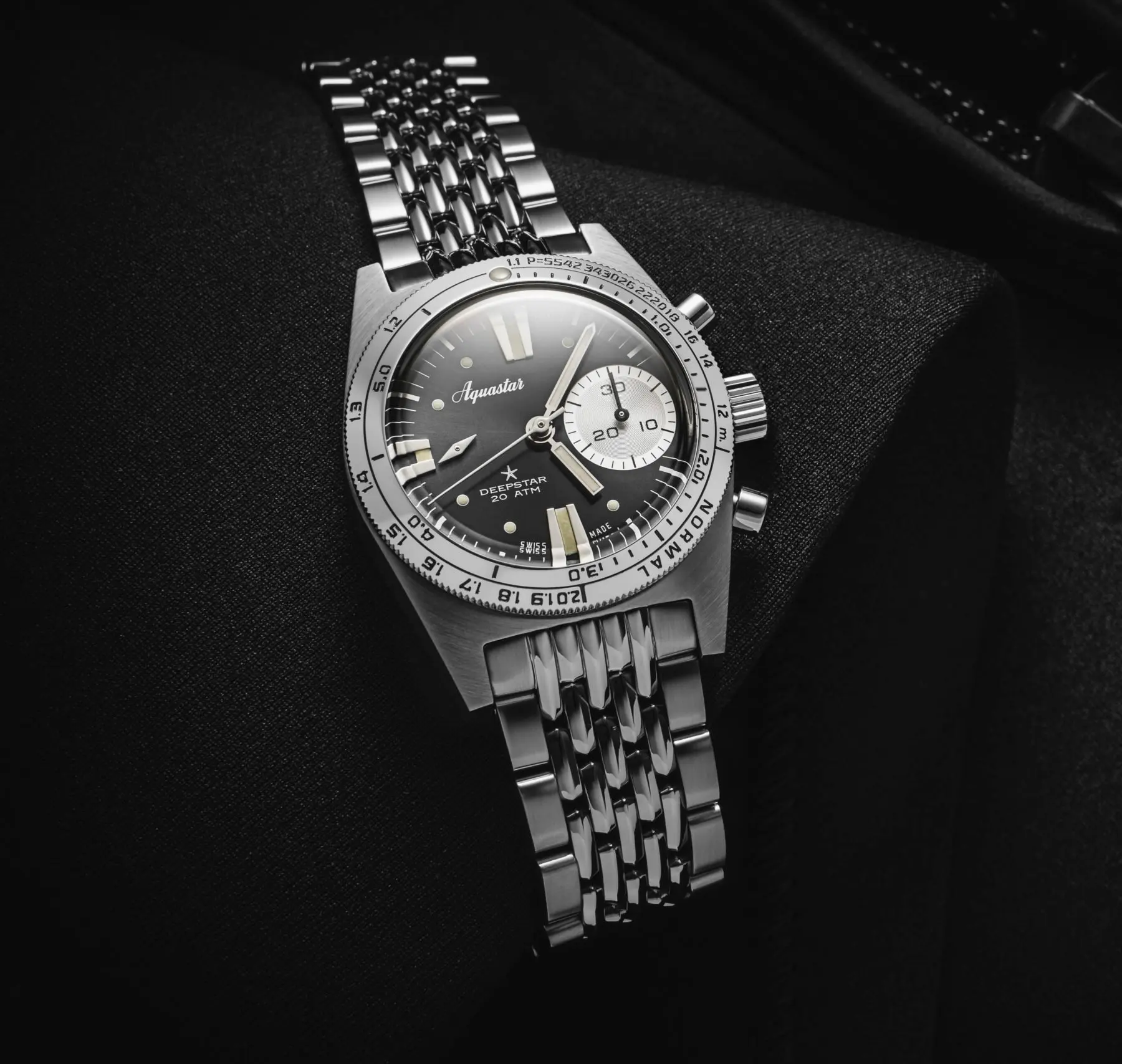
Our Model 60 MKII runs a Sellita SW200-1, chosen for the specifications-per-dollar it delivers, alongside a domed, AR-triple-coated sapphire crystal and a 316L stainless steel case built for real diving use. Our Benthos H1, the modern re-edition of the 1970 original, runs a genuine ETA 2824-2 Elabore grade movement, matched to a 904L stainless steel case and a unidirectional ceramic bezel.
We built our reputation on being the originator of the tool dive watch category, not on movement marketing. Aquastar’s patent history, including the friction-ring bezel (Swiss patent CH 335 178, 1957), the Navigator wrist dive instrument (CH 351 225, filed 30 December 1959 by Frederic Robert and released in 1960 as the first integrated analog dive computer), the inner rotating bezel (1962), the dial bathymeter (CH 394 658, 1963), and the no-decompression bezel (CH 436 140, filed 15 May 1964 by Marc Jasinski), was engineered around function, not around which movement supplier happened to be fashionable that decade.
When we choose a movement for a model, we do so based on what that specific watch needs to perform underwater, not on which name sounds better on a spec sheet. If you want a Swiss dive watch built on a genuine tool-watch lineage rather than a marketing narrative, explore the current Aquastar collection.
Frequently asked
Is the Sellita SW200-1 as good as the ETA 2824-2?
At matching grades, yes. Both movements share the same architecture, beat rate, and power reserve, and differences in accuracy typically come down to regulation quality rather than the movement brand itself.
What’s the difference between Sellita and ETA movements?
The main differences are production history and third-party availability. ETA has manufactured the 2824-2 since the late 1970s and now limits outside supply, while Sellita built the SW200-1 specifically to serve independent brands at competitive cost.
Why do some watch brands use Sellita instead of ETA?
Availability and cost drive the decision. Since the Swatch Group restricted ETA movement sales to outside brands, Sellita has become the more accessible option for independent and boutique Swiss watchmakers who still want a genuine Swiss automatic caliber.
Does the movement grade matter more than the brand name?
Yes. A Top-grade Sellita SW200-1 will outperform a Standard-grade ETA 2824-2. Always check the specific grade before comparing accuracy claims between brands.
Which movement is easier to service, Sellita or ETA?
The ETA 2824-2 has a slight edge due to its longer history and greater familiarity among watchmakers, though the Sellita SW200-1 is now routinely serviced by most Swiss-trained watchmakers as well.
Related reading: The Aquastar Model 60 collection (Sellita SW200-1) · The Aquastar Benthos collection (ETA 2824-2 Elabore in the H1) · Sellita SW200-1 vs La Joux-Perret G100 · The eleven Aquastar patents, 1957 to 1977 · Independent Swiss watch brands