
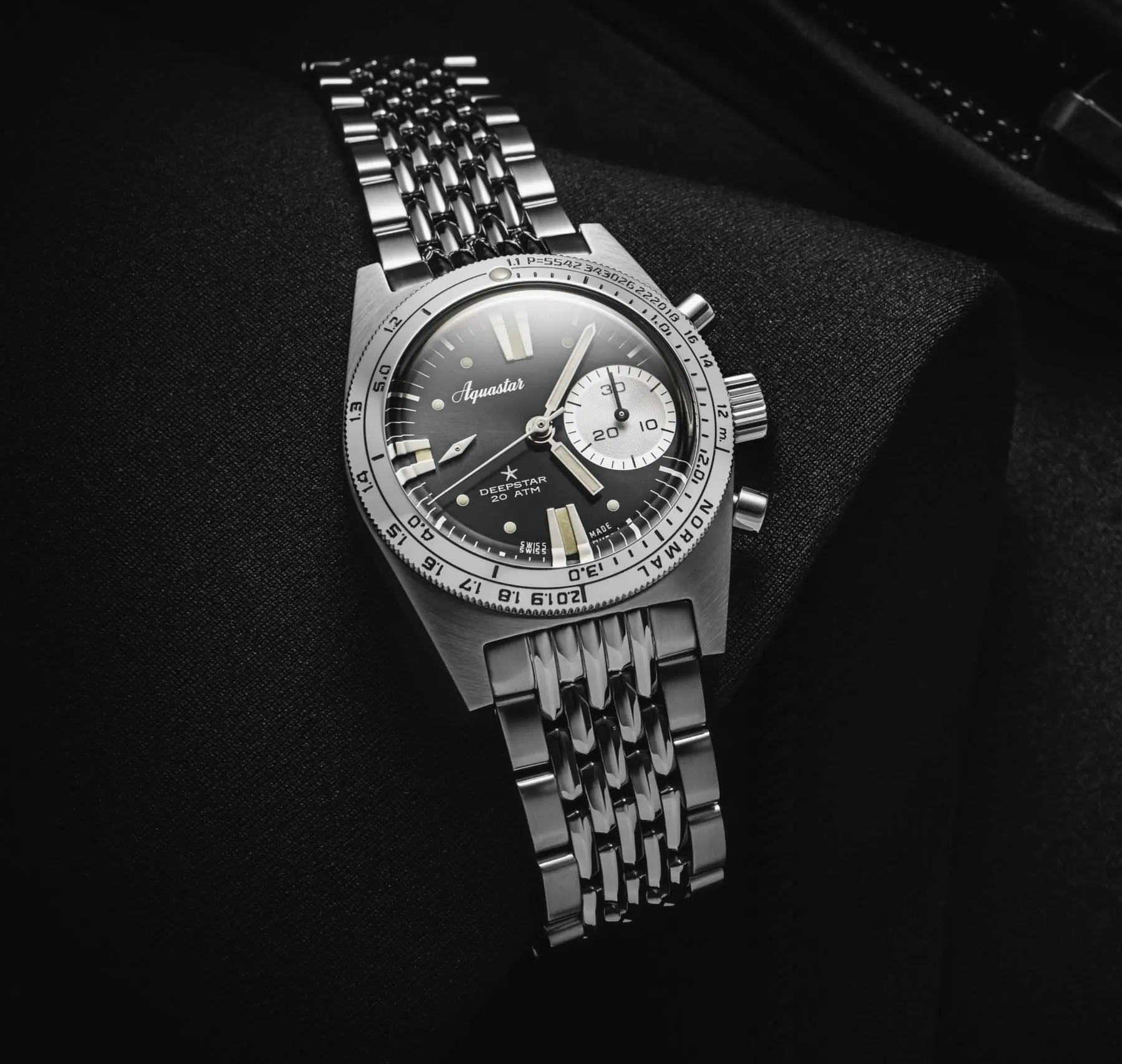
The Deepstar story
The world’s first multiple-dive no-decompression chronograph.
In 1962 the Deepstar shipped with a Valjoux 23 column-wheel chronograph and the no-decompression bezel marked with the actual decompression tables of the Marine Nationale. Sixty years later, every Deepstar is built from the same archive drawings, just with a hand-wound La Joux-Perret movement in place of the Valjoux 23.
Further reading: best Swiss dive chronographs under $3,000.
In the Deepstar line
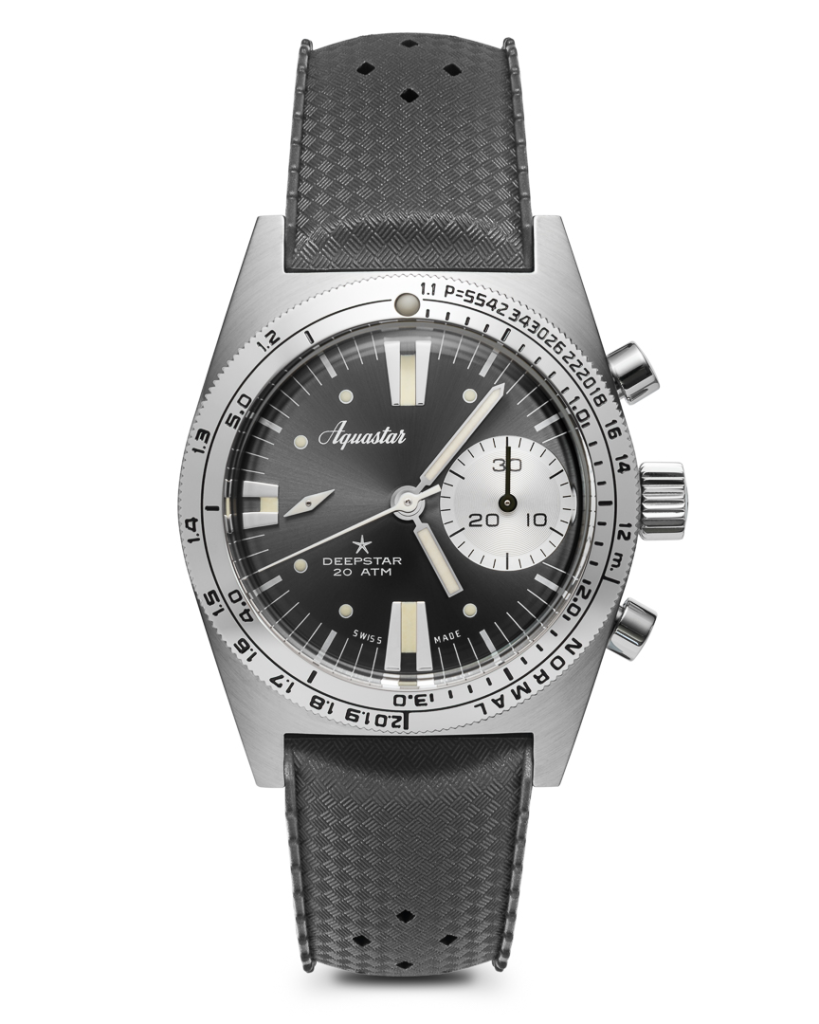
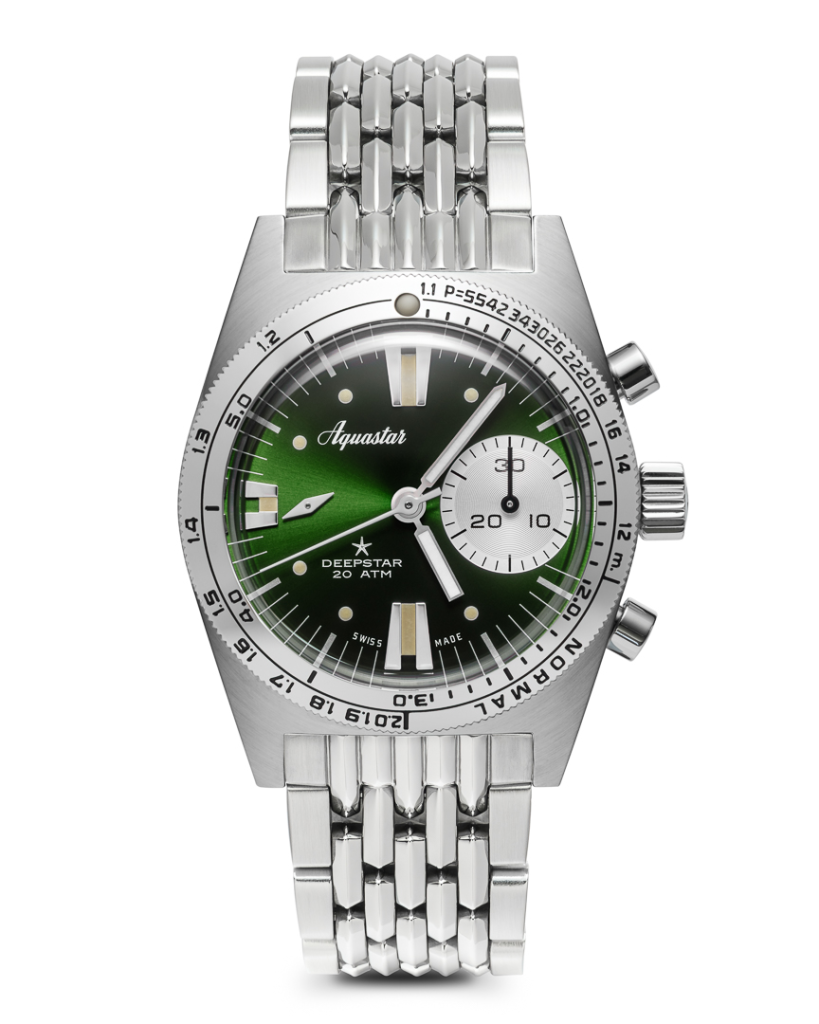
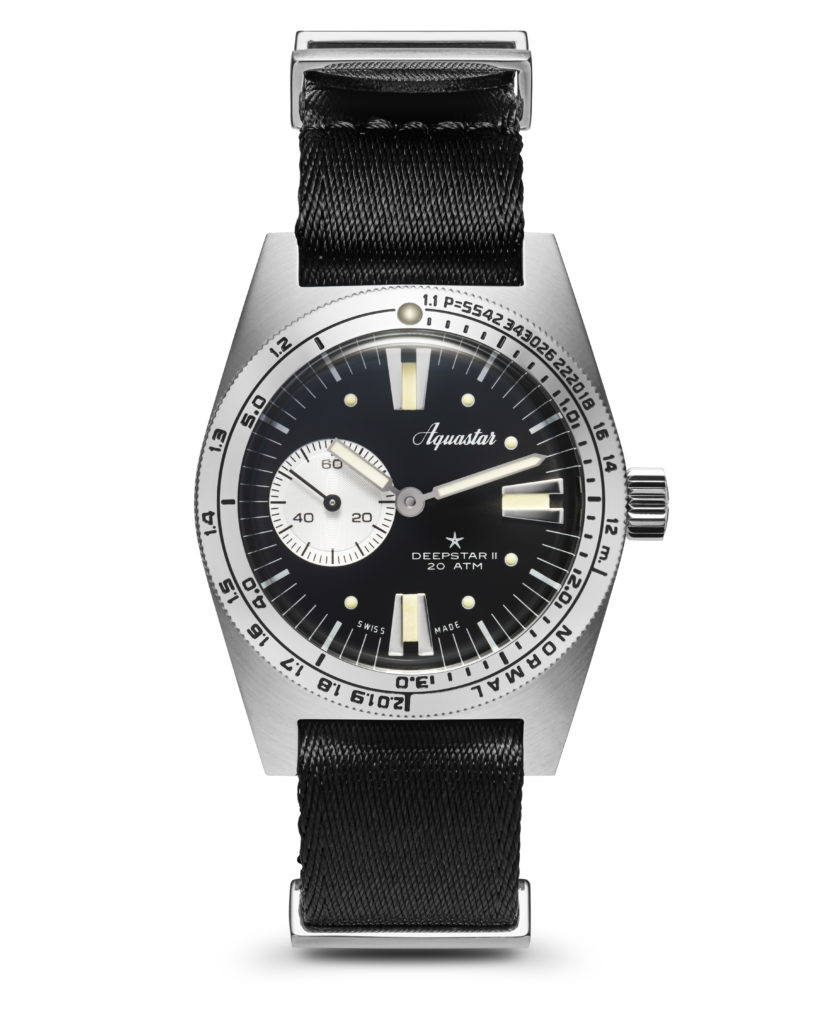
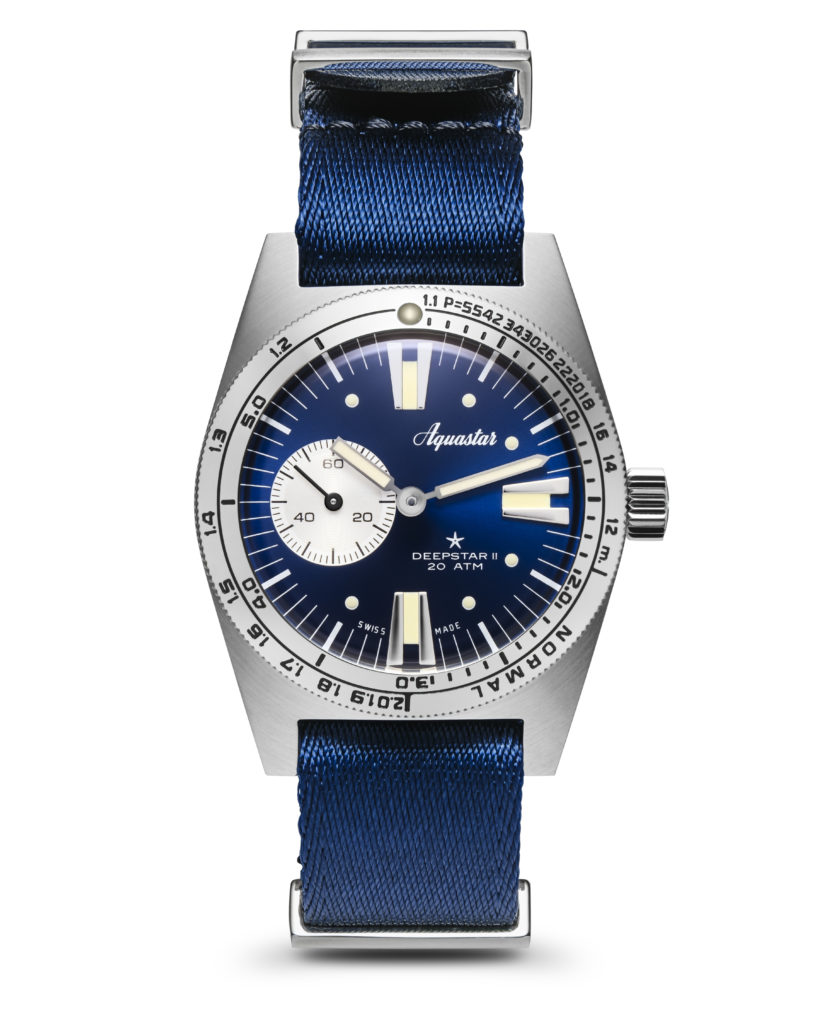
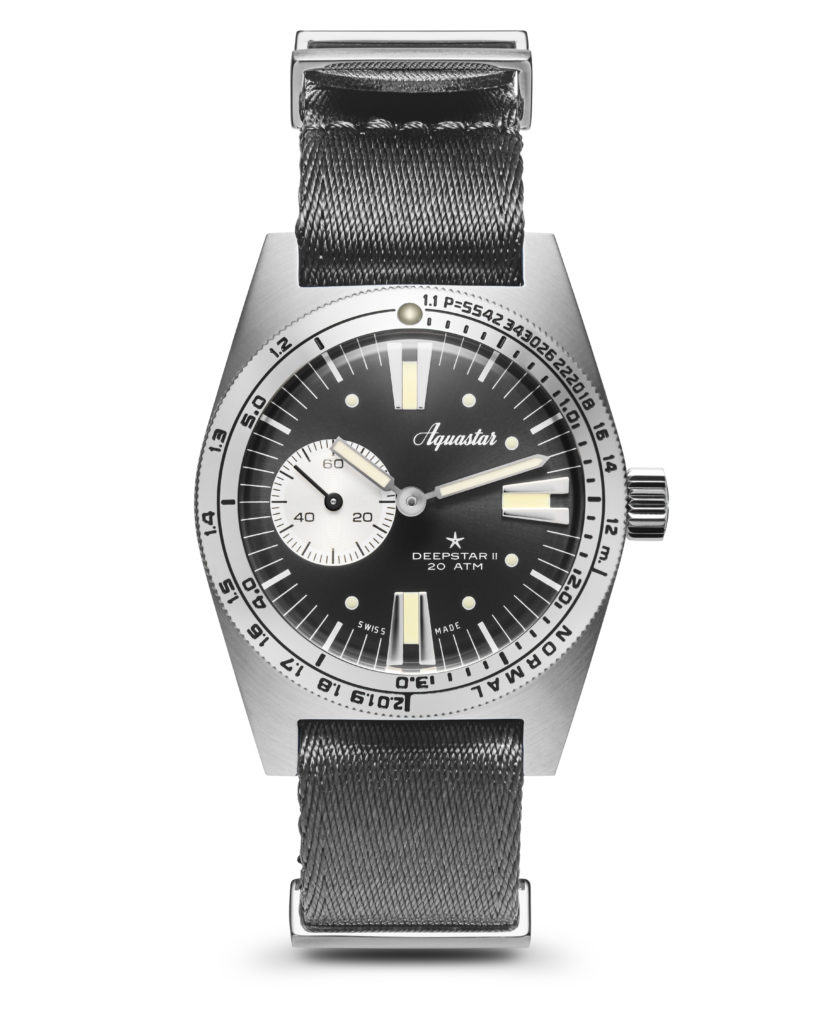
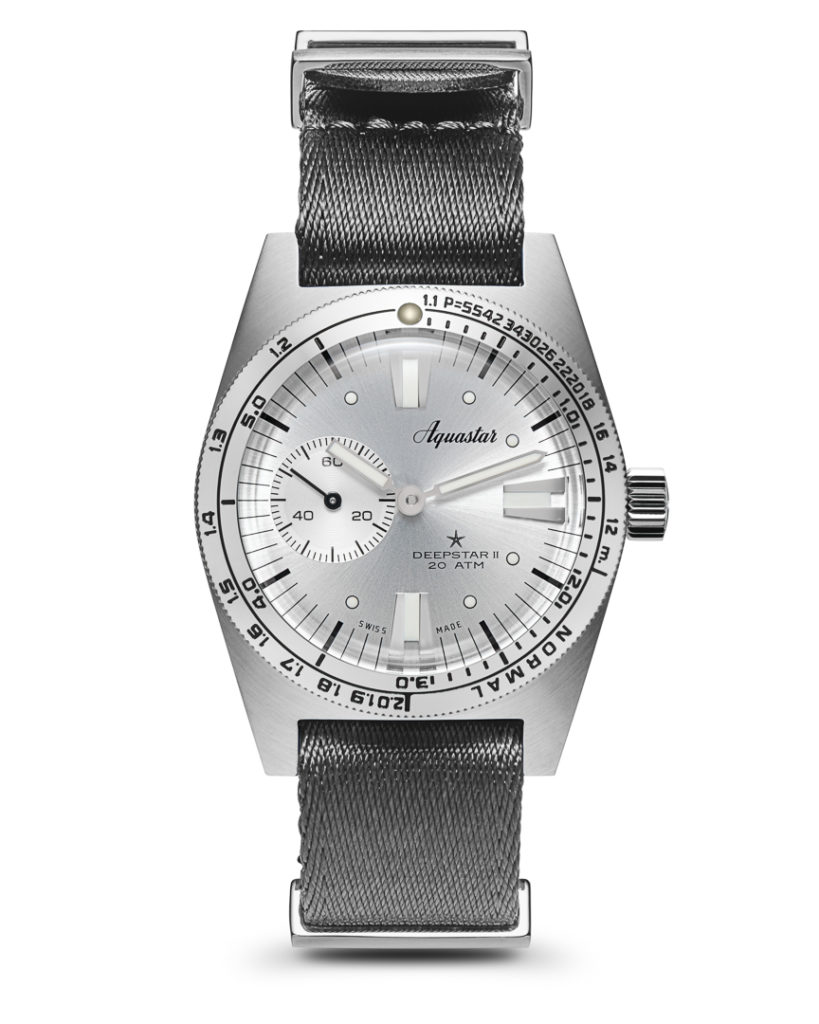
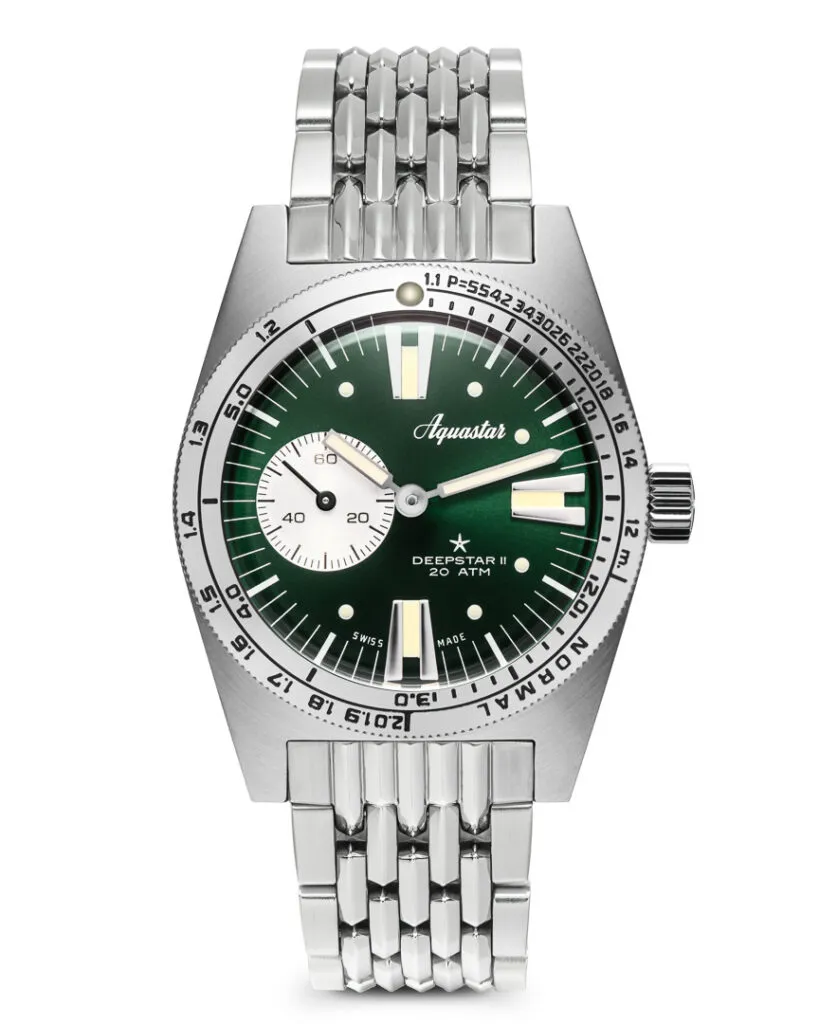
Every Deepstar we make today.
All 200 m water resistant. All Swiss made. Each with its own serial engraving.
Frequently asked
Deepstar questions, answered.
What is the Aquastar Deepstar?
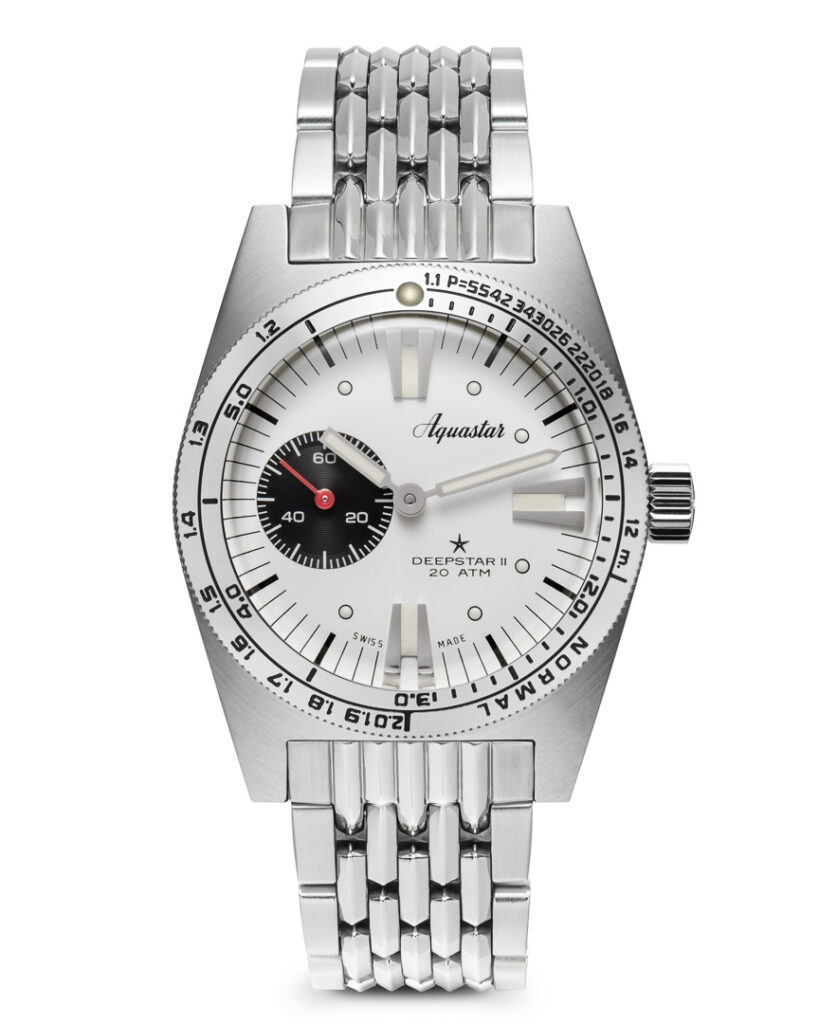
The Aquastar Deepstar is a Swiss dive chronograph first released in 1962 and the watch that introduced the no-decompression bezel, patented by Marc Jasinski in 1964 as Swiss patent CH 436 140. The bezel carries a logarithmic scale calibrated to the nitrogen-saturation tables of the day, so a diver reads maximum safe bottom time at a given depth directly from the bezel rather than a table. The geometry of that 1964 patent is still in production on the modern Deepstar family (Deepstar II three-hand, Deepstar 39 mm Chronograph, Deepstar III Manual Wind).
What movement does the Aquastar Deepstar use?
The 2020 Deepstar 39 mm Chronograph runs a La Joux-Perret LJP mono-compax column-wheel movement, adjusted in five positions with certificate. The 2026 Deepstar III runs the manual-wind variant of the same architecture, hand-wound and built specifically for Aquastar, the closest mechanical equivalent to the original 1962 Valjoux 23. The three-hand Deepstar II uses a Sellita SW290 in Elabore grade.
What is the no-decompression bezel?
The no-decompression bezel is a calibrated dive-watch bezel that shows the maximum time a diver can stay at a given depth without requiring a decompression stop on ascent, read directly from the bezel scale rather than from a printed table. Filed 15 May 1964 by Marc Jasinski for Aquastar S.A. (Switzerland) (CH 436 140), the Deepstar bezel is the world's first multiple-dive no-decompression chronograph mechanism. It made the watch a dive-planning tool in the tool-watch tradition. It carries two scales, an inner 60-minute elapsed-time scale and an outer no-decompression scale calibrated to the French Navy tables of the period, and lets a diver plan a first dive, time the surface interval, and execute a repetitive second dive directly off the wrist, without a slide rule and without a separate table.
How does a column-wheel chronograph differ from a cam?
A cam is a flat lobed plate that performs start-stop-reset with a single component. A column wheel distributes the same three jobs across a set of levers that drop into indexed gaps on a rotating wheel. The pusher feel of a column wheel is crisper because the coupling clutch engages cleanly without the fractional-second jump characteristic of cam-actuated chronographs. Every modern Aquastar chronograph uses a column-wheel movement.
What sizes does the Aquastar Deepstar come in?
The current family spans 37 mm to 39 mm. The Deepstar II three-hand carries a 37 mm case with a Sellita SW290, sized as a modern reissue of the 1962 original. The Deepstar 39 mm Chronograph and Deepstar III Manual Wind carry a 39 mm case with the LJP column-wheel movement. All are 200 m water-resistant and all sit inside the 37 to 40 mm everyday-wear band.