Aquastar: inventor of the tool dive watch
1959 Aquastar navigator
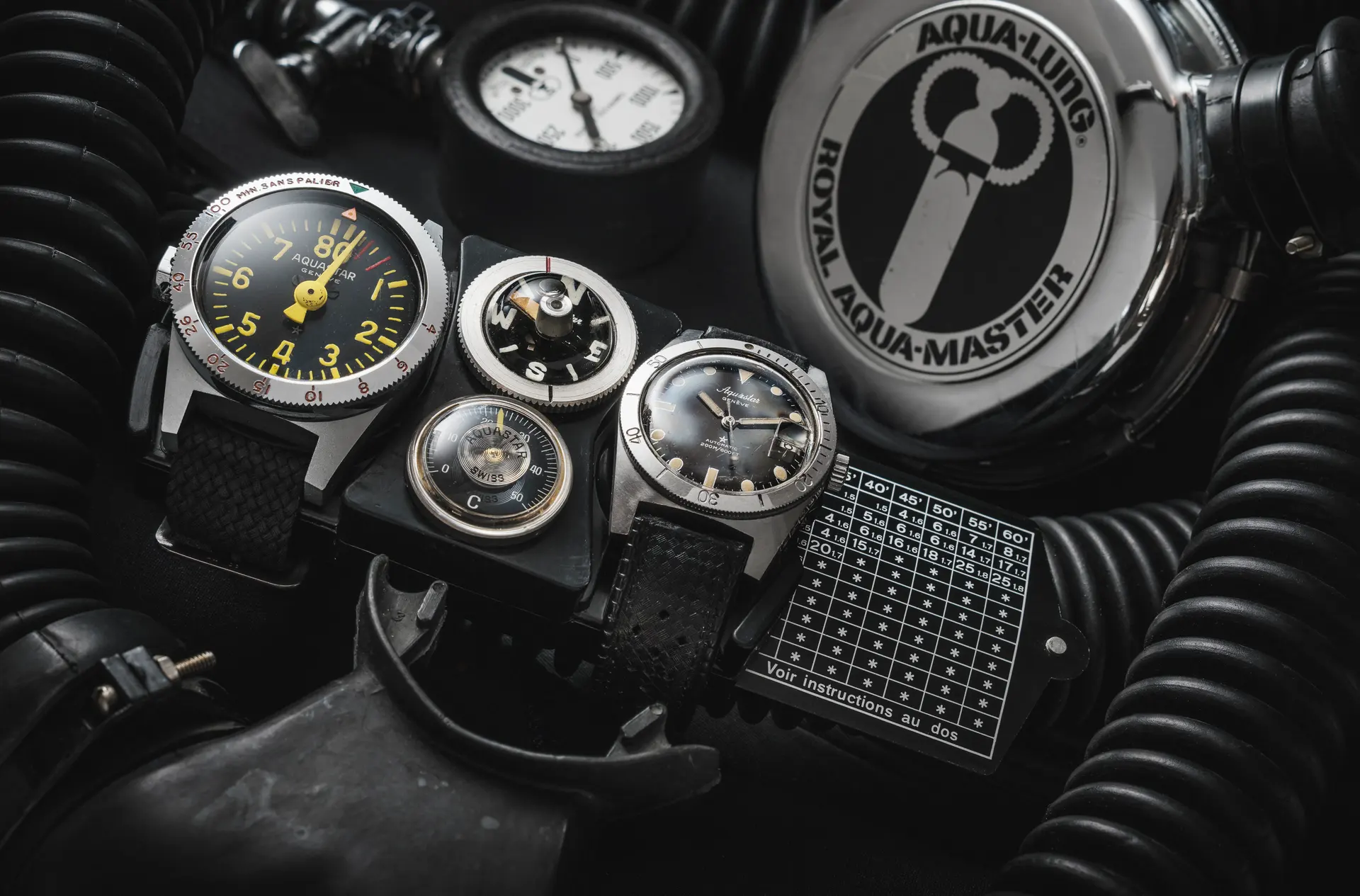
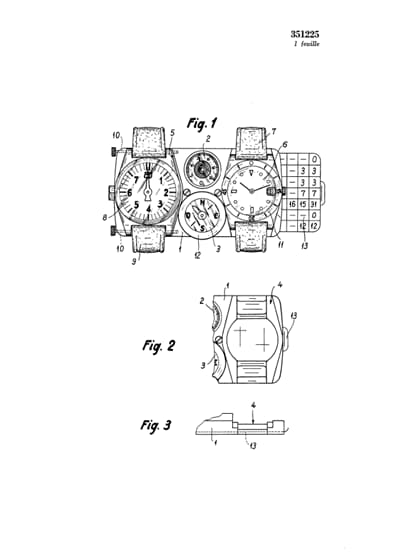
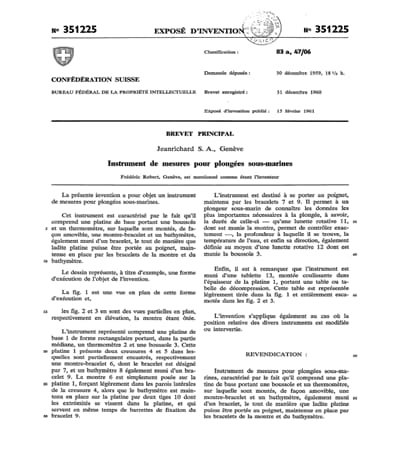
In 1959, Aquastar filed a patent for what would become one of the most significant advancements in analogue diving technology, the Aquastar Navigator . Released in 1960, this innovative tool marked a major leap forward in the world of professional diving.
The Navigator was the first of its kind, combining five critical diving tools into a single, wearable unit. Worn on the wrist, the Navigator provided divers with all the information needed to perform a safe dive, at a time when such comprehensive devices, especially the digital solutions that we see today, were unheard of.
A Groundbreaking Set of Tools
The First Analog Dive Computer
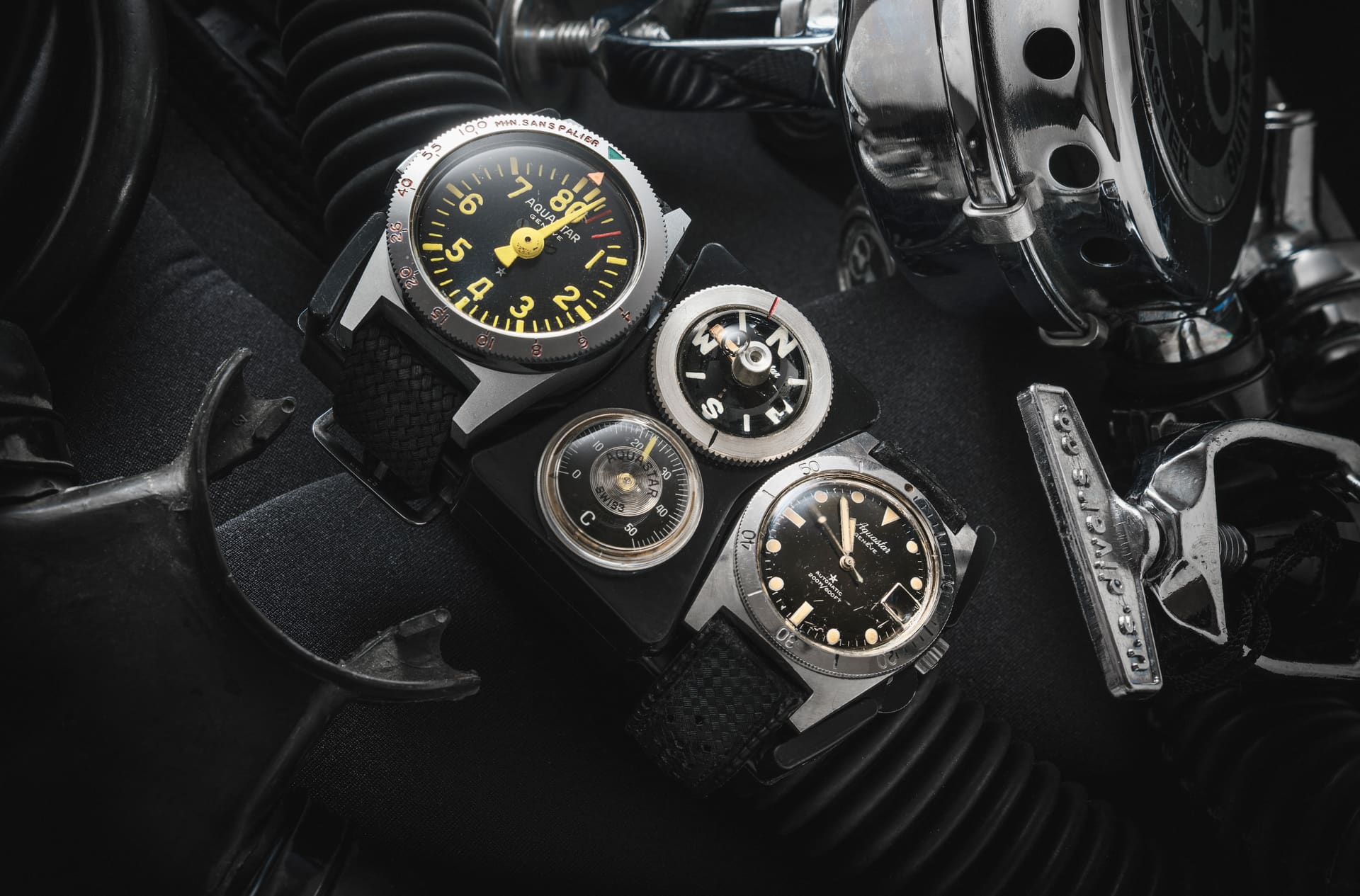
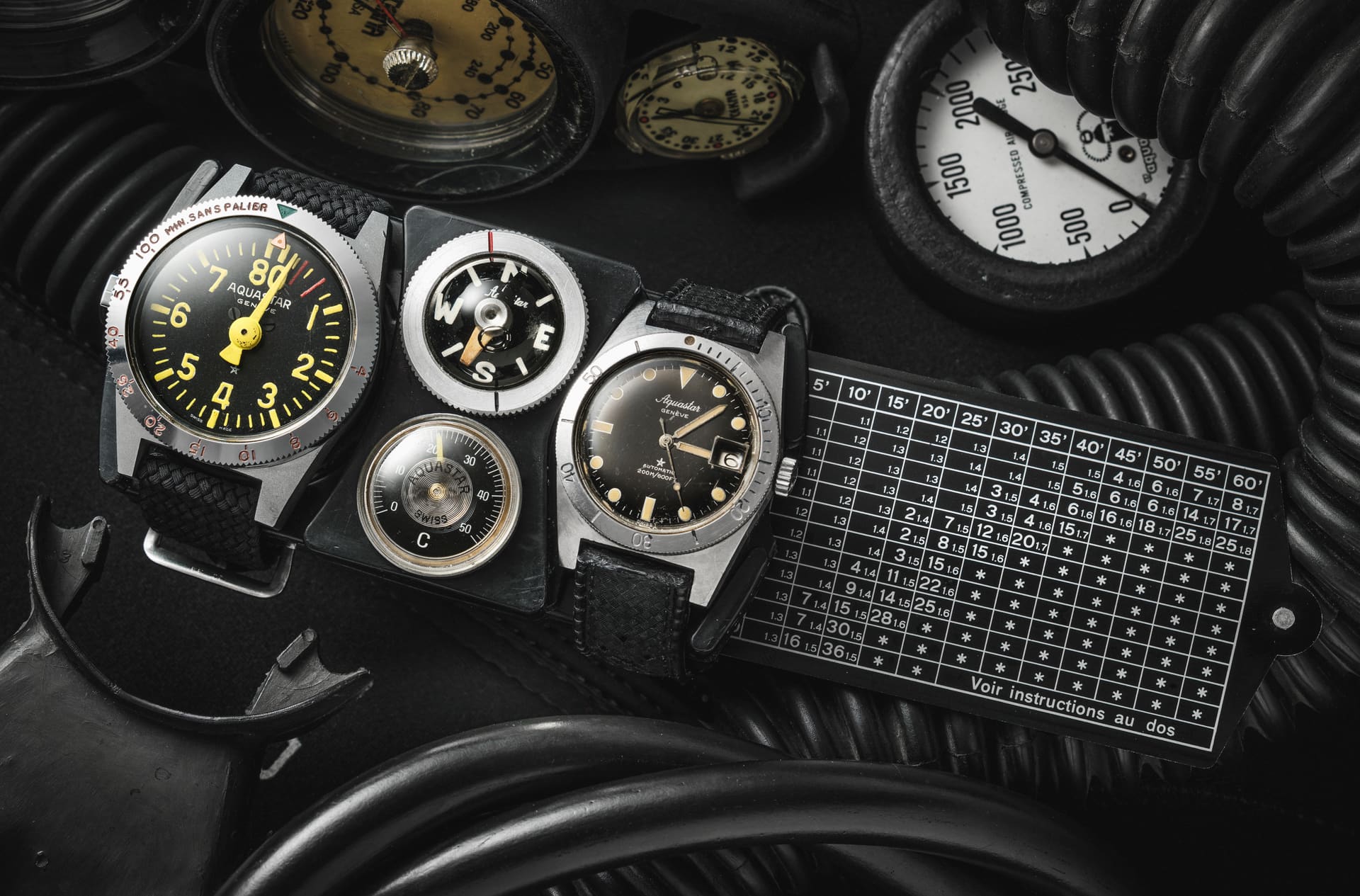
The Aquastar Navigator was an integrated system consisting of:
The Navigator was, in effect, the first analog dive computer, combining mechanical and analog technologies to provide divers with essential dive metrics, something that had never been achieved before. Prior to this, divers had to rely on separate tools for each data point, often requiring them to memorize important figures or carry additional, bulky, equipment.
The Navigator integrated these tools into a compact, easy-to-use format, significantly improving safety and efficiency in underwater exploration.
Aquastar Paved The Path For Tool Dive Watches
Aquastar’s Role in Shaping Dive Safety
The Navigator solidifed Aquastar as not merely a watch company, but as a pioneer in dive instrumentation. By introducing this multi-functional system, Aquastar became the first company to design tools specifically for professional divers.
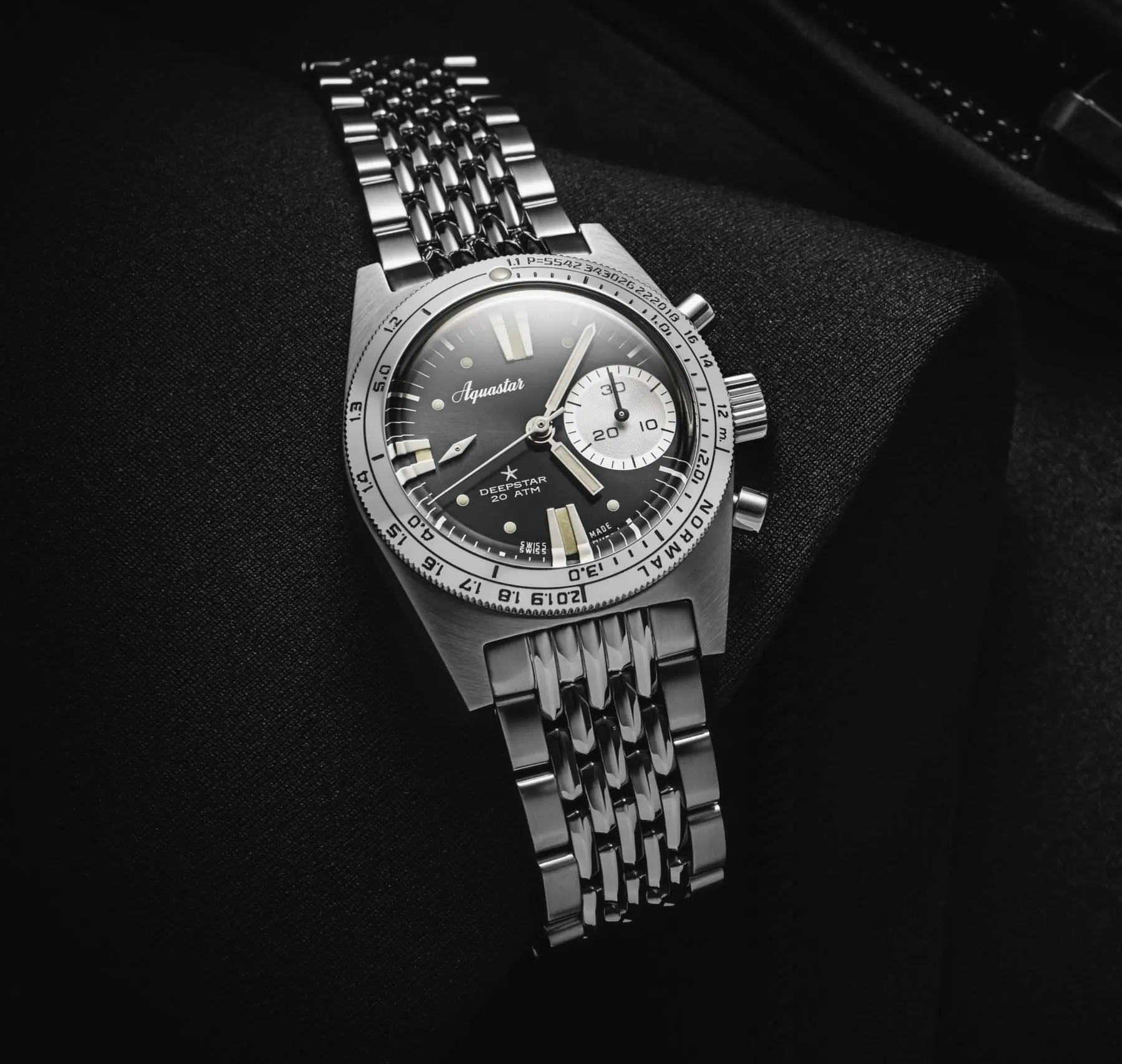
This commitment to functional, reliable diving tools continued with the later introduction of the Aquastar Model 60, which evolved into the Deepstar. The Deepstar added additional a Multi-no-decompression dive calculator to the bezel, taking the tool dive watch to an entirely new level.
With the Navigator, Aquastar established itself as the innovator of the tool dive watch. This set the stage for future innovations in diving technology, and today, the legacy of Aquastar remains synonymous with precision, reliability, and a dedication to diver safety. The Navigator was a key development that helped shape the modern era of diving, setting the standard for the integration of essential tools and data in the field.
Aquastar’s contributions to diving history cannot be overstated. From the Navigator to the Deepstar, Aquastar remains at the forefront of dive watch innovation, continuing to build upon its legacy of designing functional, life-saving instruments for underwater explorers.
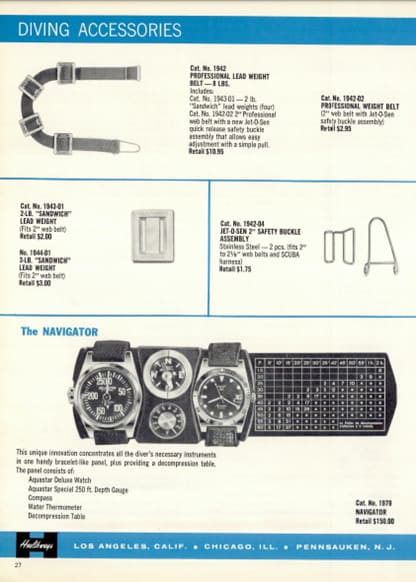
Here in the Healthways catalogue from 1962. The Aquastar Navigator advertised for $150.00 including the Aquastar Model 60
The instrument
The Navigator, in photographs.
6 studio photographs from the Aquastar archive.




The Aquastar tool-watch tradition
The Navigator started a tradition. The workshop still builds it.
A tool watch is a watch designed and built for a purpose beyond simply showing the time of day. Aquastar pioneered the tool watch in diving, and the Navigator was where it began: a wrist instrument that read depth, computed no-decompression time, and replaced a bag of separate dive gauges. Every Aquastar that followed carries a tool function alongside the time-of-day function.
Read the principle on the tool watch pillar page, see the short list on the best Swiss tool watches by Aquastar, or jump straight to the modern Aquastar tool-watch line below.
Frequently asked