
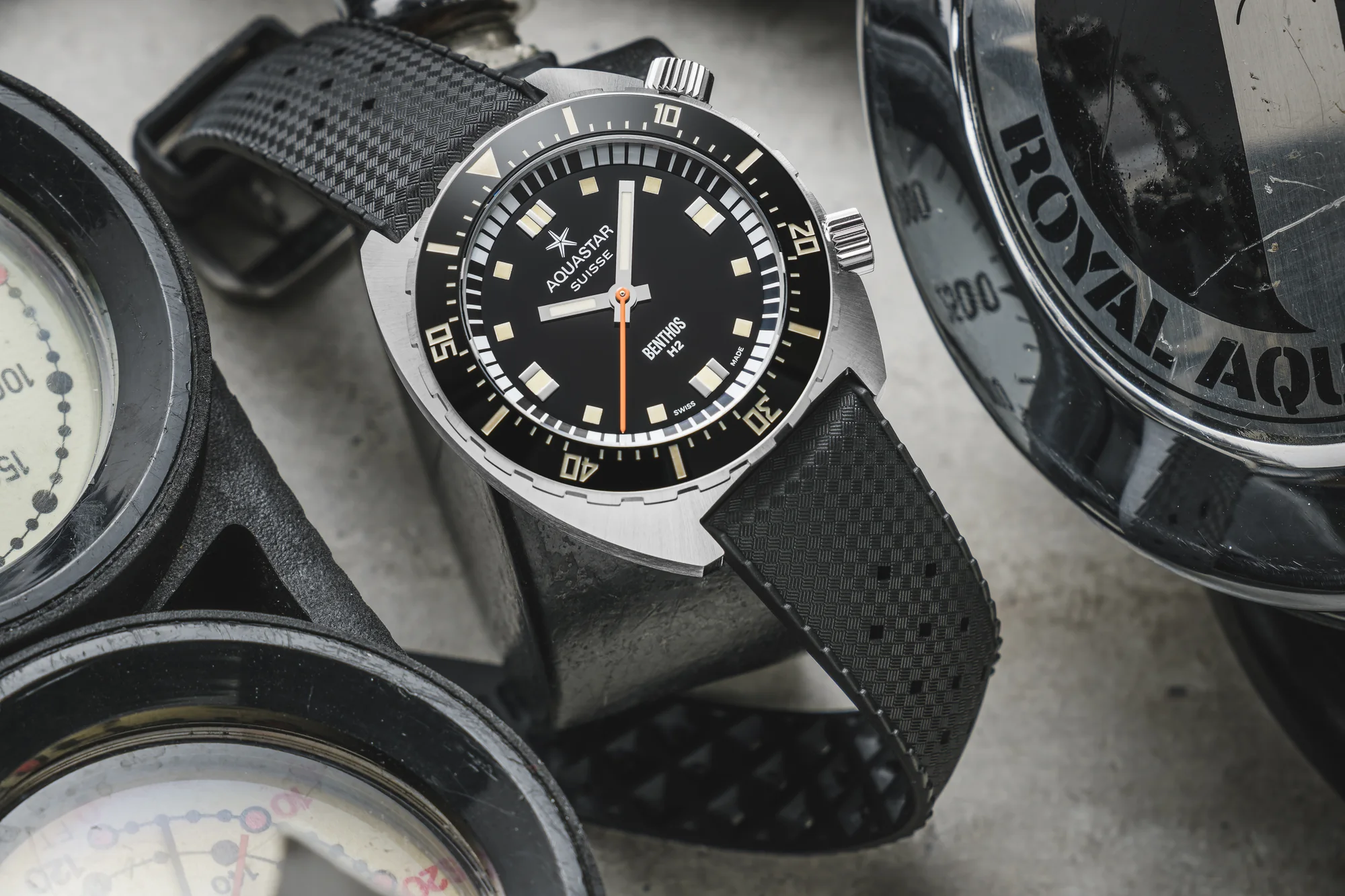
How To Maintain Mechanical Diver: at a glance
Learn how to maintain mechanical diver watch performance with proper rinsing, winding, storage, service timing, and water resistance care. Use this guide on how to maintain mechanical diver to weigh design choices, engineering trade-offs and how the category translates to real Aquastar dive watches.
| Topic | How to maintain mechanical diver |
| Read time | 5-8 min |
| Source | Aquastar editorial |
A mechanical diver earns its keep in salt, pressure, heat, shock, and neglect. That is precisely why owners ask how to maintain mechanical diver watch performance without compromising the case, movement, seals, or finish. The answer is not complicated, but it does require discipline. A true dive watch is built to endure harsh conditions. Keeping it that way means treating it like the instrument it is.
Table of Contents
- How to maintain mechanical diver watch performance
- Crown, gaskets, and water resistance
- Daily wear habits that protect the movement
- Bracelet, strap, and external components
- Storage matters more than most owners think
- Service intervals and what a full service actually means
- When vintage rules differ from modern rules

How to maintain mechanical diver watch performance
The first rule is simple: maintenance starts the moment the watch leaves the water. Salt is relentless. Chlorine is no better. Even if your diver is rated for serious depth, residue left on the case, bezel, crown, and caseback will shorten the life of gaskets and wear on moving external parts.
Rinse the watch in fresh water after every swim or dive. Use moderate water flow, not a high-pressure jet. If the bezel feels gritty, rotate it gently while rinsing to flush away salt and sand. Dry the watch with a soft microfiber cloth and let any remaining moisture evaporate before storage.
If the watch has seen sunscreen, sweat, or sea spray all day, a more thorough clean is worth the effort. A soft toothbrush and a little mild soap can lift residue from the bezel edge, lug gaps, and bracelet links. The crown must be fully screwed down before any washing begins. That point sounds obvious, but many water-resistance failures begin with simple oversight rather than dramatic impact.
Crown, gaskets, and water resistance
Most mechanical dive watches fail at the entry points, not at the crystal or case walls. The crown, caseback, crystal gasket, and any chronograph pushers are where water resistance is won or lost. If you want to know how to maintain mechanical diver reliability over years rather than months, start there.
Never unscrew or operate the crown when the watch is wet. Never adjust the time or date poolside, on a boat, or right after a dive. Water trapped around the crown tube can be drawn inward when the crown is pulled. The same logic applies to chronograph pushers on models that are not specifically engineered for underwater operation.
Gaskets are consumable components. They harden, compress, and age. Heat accelerates that process. So does exposure to chemicals. If your diver sees regular water use, have its water resistance checked before a major dive trip and at the recommended service interval (every 5 to 10 years). Annual testing is not necessary. A pressure test is fast, inexpensive compared with movement repair, and far more valuable than assuming a case is still sealed because it was last summer.
There is a trade-off here. Some owners avoid routine testing because they do not want a watch opened unnecessarily. That concern is reasonable, especially with vintage pieces. But a proper dry pressure test does not require opening the watch, and it can reveal a problem before moisture reaches the dial and movement.
Daily wear habits that protect the movement
A Swiss mechanical diver is designed for active use, but it is not immune to bad habits. Repeated hard shocks, exposure to strong magnetism, and careless setting routines can all undermine accuracy and longevity.
If your watch is automatic, regular wear usually provides sufficient winding. If it has been off the wrist for a day or two, give it a controlled manual wind before setting it. Do not force the crown at the end of the winding range. A well-made movement communicates resistance clearly. Respect it.
Set the time with steady, deliberate motion. If your watch includes a date, avoid changing it during the movement’s date-change window, typically late evening through early morning. The exact period depends on the caliber, but as a rule, if the watch is near midnight, move the hands away from that zone before adjusting the date. It is a small step that prevents unnecessary stress on the calendar mechanism.
Magnetism remains one of the most overlooked threats to modern watch accuracy. Tablet covers, speakers, induction cooktops, phone accessories, and magnetic clasps can all affect rate performance. A magnetized movement may start running dramatically fast even though nothing appears physically wrong. The good news is that demagnetizing is usually quick. The better news is that simple awareness prevents most of these issues.
Bracelet, strap, and external components
Collectors tend to focus on the movement, but the parts you touch every day deserve equal attention. A dive watch bracelet works in a hostile environment. Salt crystals settle between links. Fine sand acts like abrasive paste. Clasps take repeated impact against desks, tanks, ladders, and railings.
Clean the bracelet regularly, especially after ocean use. If the watch is fitted on rubber, rinse and dry it thoroughly because salt trapped beneath the strap can abrade the underside of the lugs and irritate the wrist. If you alternate between steel and rubber, inspect the spring bars during every strap change. They are inexpensive, critical, and too often ignored until one fails.
The bezel also deserves a closer look. A unidirectional dive bezel should turn with clean, positive action. If it becomes stiff, gritty, or uneven, do not force it. Debris may be trapped beneath the mechanism. In some cases a careful rinse solves the problem. In others, the watchmaker needs to remove and clean the assembly. Forcing a bezel can damage the click spring or mar the insert.
Cosmetic wear is more subjective. Hairline scratches on a steel case are honest signs of use. Deep impact marks near the crown guards or crystal edge are different because they may indicate stress to sealing surfaces. That is where appearance and function intersect.
Storage matters more than most owners think
How you store a diver between wears affects its condition over time. A watch left on a windowsill, in a humid bathroom, or loose in a drawer will age faster than one stored properly. Heat is the enemy of oils and gaskets. Moisture is the enemy of everything.
Store the watch in a cool, dry place away from direct sunlight and strong magnetic fields. If you rotate several watches, keep each one separate to avoid case and bracelet contact. A soft watch pouch or lined box is enough. You do not need a theatrical setup.
Watch winders are a matter of preference, not necessity, for most divers. They can be useful for complicated calendars, less so for simple time-and-date tool watches. Constant motion also means constant wear on the winding system. For many owners, letting the watch stop and restarting it properly is the better choice.
If the watch will be stored for an extended period, make sure it is clean and completely dry first. For vintage-style divers with leather accessories, keep the leather separate from prolonged damp conditions. The watch may be built for depth, but a damp storage environment is still poor stewardship.
Service intervals and what a full service actually means
The question is not whether a mechanical diver needs service. It does. The question is when. Manufacturer guidance varies by movement and use, but a practical interval for many modern Swiss mechanical dive watches is around five to seven years. Heavy water use, harsh conditions, or obvious changes in performance can shorten that timeline.
Do not wait for the movement to fail outright. Warning signs tend to arrive first: reduced power reserve, erratic amplitude, poor timekeeping, moisture under the crystal, rotor noise that seems abnormal, or difficulty winding and setting. Any of those justify inspection.
A proper service is more than oiling a few parts. The movement is disassembled, cleaned, inspected, re-lubricated, regulated, and reassembled. Worn components are replaced. Case gaskets are renewed. Water resistance is tested. The case and bracelet may be refinished depending on owner preference, though collectors often prefer a light hand here. Over-polishing can erase the sharp geometry that gives a professional dive watch its character.
That is where brand expertise matters. A historically faithful diver with specific bezel construction, case finishing, or dial furniture should be handled by a watchmaker who understands both modern sealing standards and the architectural details that define the watch. Aquastar owners, in particular, tend to value those details because they are part of the watch’s legitimacy, not decoration.
When vintage rules differ from modern rules
Not every mechanical diver should be treated the same. A modern dive watch with fresh seals and tested water resistance is one thing. A vintage piece, even one with a screw-down crown and serious original specifications, is another.
If you own a vintage diver, assume nothing about water resistance until it has been evaluated by a specialist. Original crowns, old crystal gaskets, aged caseback seals, and decades of unseen wear all change the equation. In some cases the correct decision is to keep the watch dry and preserve it as a historical instrument rather than force it back into aquatic duty.
That is not a contradiction. It is good judgment. Mechanical dive watches were built as tools, but heritage also deserves respect. The right maintenance plan depends on whether the watch is an active underwater instrument, a daily wearer, or a collector’s piece with finite originality.
A serious diver does not ask for much. Keep it clean, keep it sealed, keep it serviced, and pay attention when it starts telling you something has changed. Do that, and the watch on your wrist remains what it was built to be – a dependable instrument with the substance to outlast trends.
Related from Aquastar: Aquastar service & repair, the Aquastar collection.
Further reading: Wikipedia on diving watches.