
The short version
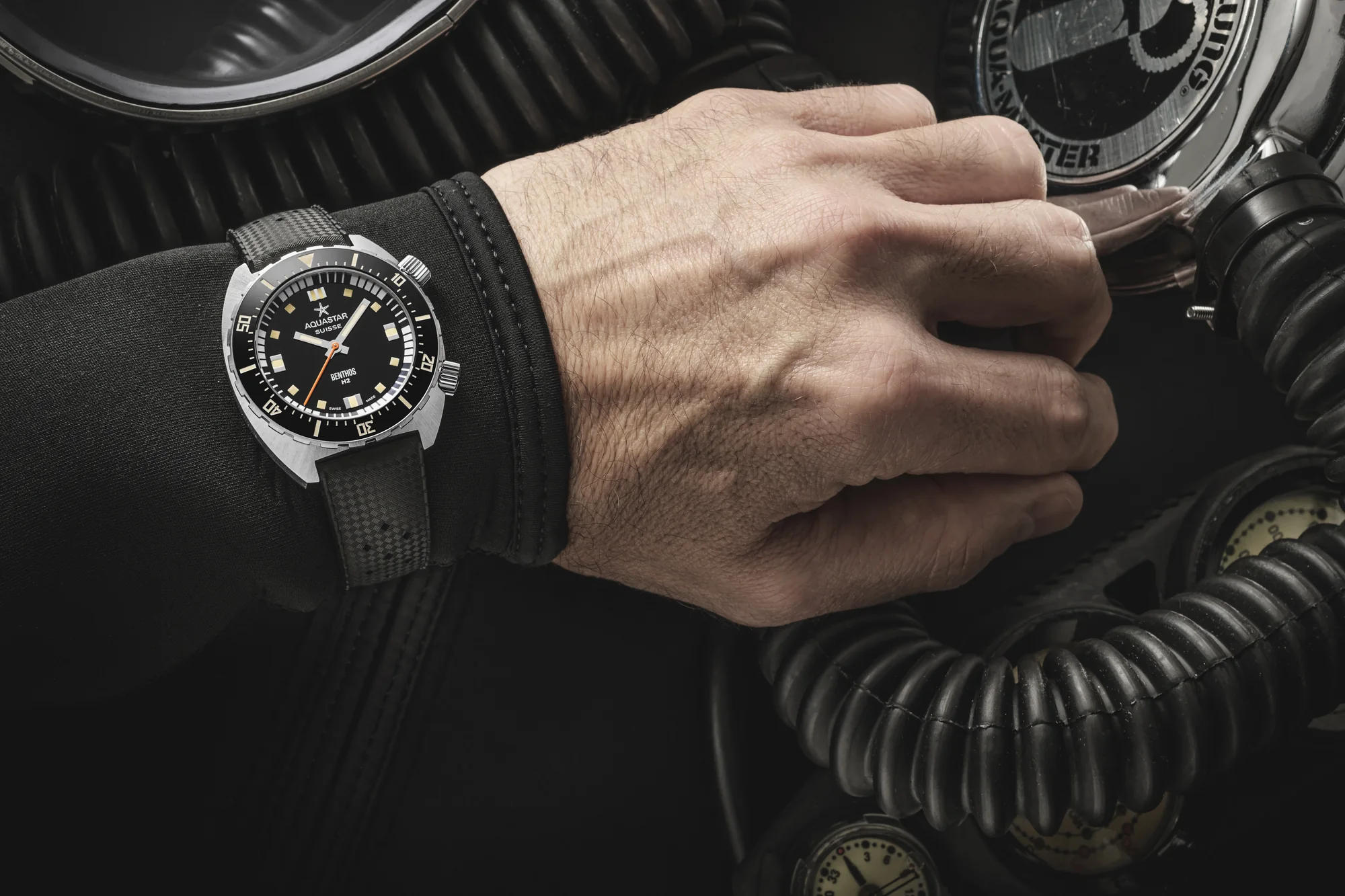
Sizing a dive watch is not a single diameter number. It is the relationship between case diameter, lug-to-lug length, thickness, bezel architecture and how the strap anchors the watch. This guide explains which measurements actually decide wrist fit, and uses Aquastar’s own case dimensions as concrete reference points.
A dive watch can be technically perfect on paper and still feel wrong the moment it hits the wrist. That usually comes down to proportion. If you are wondering how to size a dive watch correctly, the answer is not a single millimetre measurement. It is the relationship between case diameter, lug-to-lug length, thickness, bezel architecture and the way the strap or bracelet anchors the watch under load.
Serious dive watches were never meant to be delicate objects. They were built as instruments for timing underwater work, often with oversized bezels, high-contrast dials and cases engineered for pressure resistance. But instrument credibility does not excuse poor fit. A watch that overhangs the wrist, shifts under a wetsuit or sits top-heavy will never wear like a proper tool.
How to size a dive watch: the dimensions that matter
Most buyers start with case diameter, and that is where mistakes begin. Diameter matters, but on a dive watch it can mislead. A 37 mm skindiver with short curved lugs, like the Aquastar Model 60, wears compact, while a 40 mm compressor-style case with a broad bezel opening and long straight lugs can feel substantially larger. Size five dimensions together: case diameter, lug-to-lug, thickness, lug width, and bezel-to-dial ratio. That last point gets less attention than it should. A broader bezel framing a tighter dial aperture can make a given diameter feel more disciplined and compact.
As a rough guide, wrists under about 6.5 inches usually wear dive watches best in the 36 mm to 40 mm range, provided lug-to-lug stays controlled. Wrists from 6.5 to 7.25 inches can typically carry 39 mm to 42 mm comfortably. Above that, 42 mm to 44 mm becomes realistic, especially if the case profile is balanced. These are only starting points; the deciding factor is still geometry.
Case diameter is only the first filter
On a dive watch, diameter tells you broad stance, not actual wearability. A 41 mm watch with slim crown guards and a narrow bezel can present smaller than a 39 mm model with a thick timing bezel and open dial. Vintage-inspired divers prove this well: their measured size can sound modest, but because the dial is open and legibility is prioritised, they carry more wrist presence than expected. Treat diameter as the first filter, not the final answer. If your wrist is modest and you like classic professional proportions, 37 mm to 40 mm is often the sweet spot.
Lug-to-lug decides whether the watch belongs on your wrist
If one measurement deserves top billing, it is lug-to-lug: the distance from the tip of the top lugs to the tip of the bottom lugs. It determines whether the watch sits within the flat surface of your wrist or hangs over the edges. For most people, lug-to-lug should stay at or below the flat width of the wrist where the watch sits. Push past that and the watch begins to look unstable even if the diameter sounds reasonable. This matters more on divers because their cases tend to be thicker and heavier, so overhang combined with height creates leverage, rotation and pressure points.
Thickness matters more on a diver than almost anything else
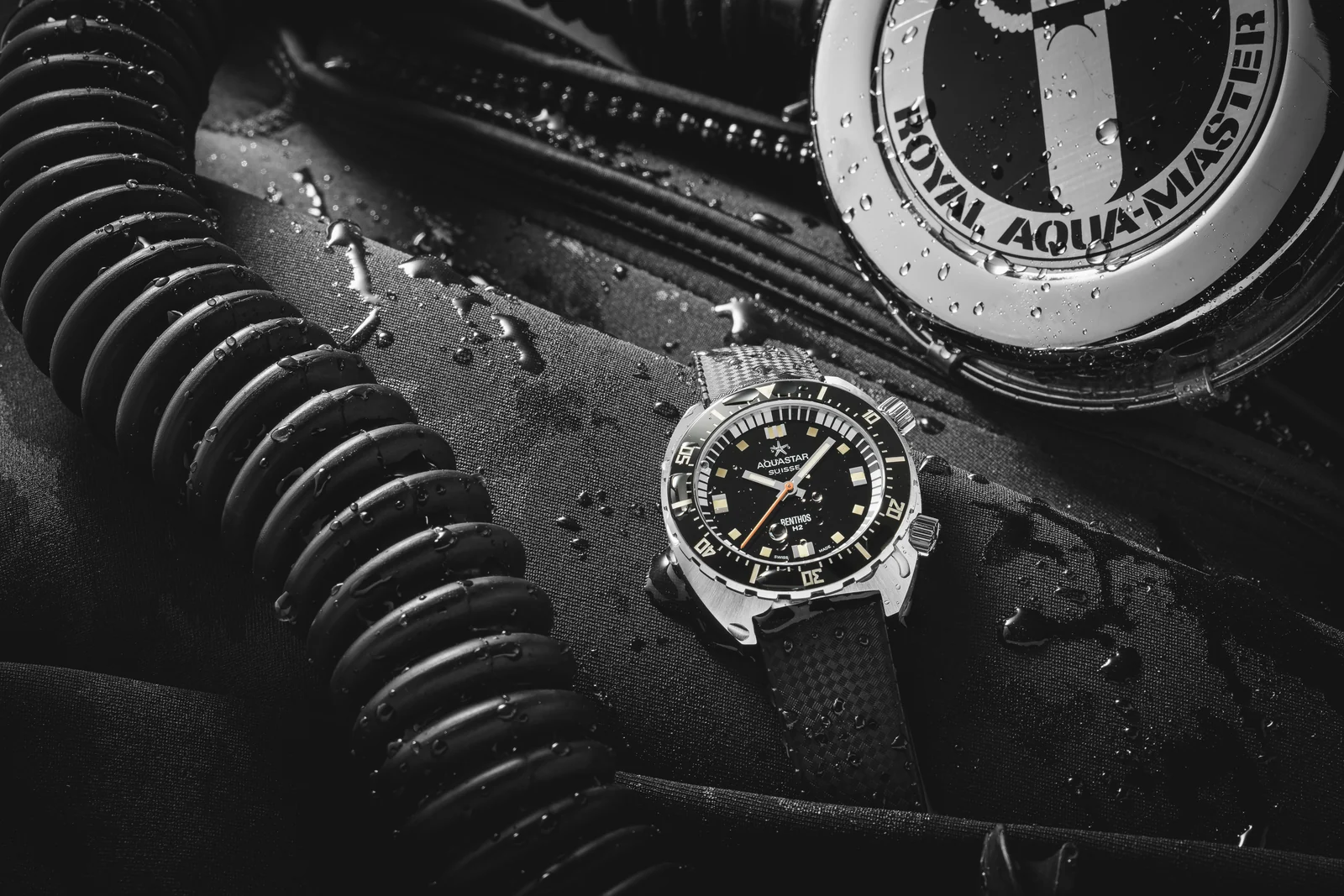
A dive watch is expected to have more vertical mass. Gaskets, caseback construction, crystal thickness, bezel assembly and water resistance all add substance. But there is a meaningful difference between solid and cumbersome. Around 11 mm to 13 mm can feel impressively balanced for a modern diver, depending on diameter and case shape. The Aquastar Benthos Professional is a useful reference point here: it holds a 300 m rating at just 13.7 mm thick, which shows that depth capability does not have to mean a brick on the wrist. Once you move much beyond that, a watch needs strong design discipline, mid-case contouring, a sloped caseback and a strap that drops sharply from the lugs, to avoid feeling top-heavy.
Bezel, dial opening, and visual weight
Dive watch sizing is not just physical, it is visual. Two watches with identical measurements can wear differently because one has a larger dial opening, brighter contrast or stronger rehaut presence, and the eye reads that as larger. A broad rotating bezel can make a watch feel more compact and instrument-focused; a thin bezel with an expansive dial gives more apparent scale. If you prefer classic underwater tool-watch character, a prominent bezel often creates the most balanced result, framing the dial and reinforcing the purpose of the watch. It is one reason heritage divers wear so well: their proportions were developed around utility, not showroom presence.
Strap and bracelet fit change the entire equation
The head of the watch is only half the story. A heavy steel bracelet can stabilise a substantial case but can also exaggerate the footprint if the end links are long or rigid. A supple rubber strap can reduce visual mass and improve comfort, especially on smaller wrists. For diving this gets specific: if you will wear the watch over a wetsuit, you need usable extension and enough strap length to secure the case without shifting. Lug width matters too. A 20 mm strap on a compact 39 mm diver usually looks proportionate, while a 22 mm strap adds stance. Neither is universally better; it depends on whether you want restraint or more overt tool-watch presence.
Crown position, caseback shape, and wrist anatomy
Not all wrists are round, and not all discomfort comes from size alone. Some divers sit beautifully until the crown digs into the hand; others look balanced but wobble because the caseback is too flat for a narrow wrist. If your wrist is flatter on top, you can often wear a larger diver than expected, provided the lugs do not overrun the edges. If your wrist is rounder and smaller, compact lug geometry and a curved caseback matter much more. Crown guards, left-side crown placement and downward-turning lugs can all improve wear on thicker professional cases.
How to size a dive watch before you buy
Start with your wrist measurement, but do not stop there. Measure circumference and also the flat width across the top of the wrist. That second figure is often more useful. Then compare it to the watch’s lug-to-lug. Next, study the full case profile: bezel width, dial opening, thickness and whether the lugs turn downward. If a maker publishes exact dimensions, that is a good sign it understands serious buyers; technical transparency usually correlates with better real-world wear.
Then consider use. If this is a true daily dive watch, moderate diameter and controlled thickness will serve you better over time than brute size. If it is part of a rotation and you want stronger vintage-professional character, a slightly bolder case can make sense, at some cost to versatility. Finally, be honest about what you want the watch to do visually. Some divers should wear with quiet authority, others are meant to project mass and presence. The right size is the one that aligns physical comfort with the design language of the watch. When the proportions are right, the watch disappears in use and asserts itself only when you need it to. To compare real dimensions across a range built around these principles, see the Aquastar collection, from the 37 mm Model 60 to the Deepstar and Benthos.
Frequently asked questions
What is the most important measurement when sizing a dive watch?
Lug-to-lug, the tip-to-tip length of the lugs. It decides whether the watch sits within the flat top of your wrist or hangs over the edges, and on a heavy diver that overhang causes rotation and pressure points. As a rule, keep lug-to-lug at or below the flat width of your wrist where the watch sits. Diameter is only the first filter.
How thick should a dive watch be?
Around 11 mm to 13 mm usually feels balanced for a modern diver, and good engineering can hold real depth ratings within that range. The Aquastar Benthos Professional, for example, is rated to 300 m at just 13.7 mm. Much beyond that, a watch needs careful mid-case contouring and a sloped caseback to avoid feeling top-heavy on the wrist.
What size dive watch fits a smaller wrist?
For wrists under about 6.5 inches, a 36 mm to 40 mm case with short lugs and controlled thickness usually wears best. A compact skindiver such as the 37 mm Aquastar Model 60 is a good example, because its short lugs and flat profile keep it planted rather than overhanging. Watch the lug-to-lug and thickness more than the headline diameter.
Does the strap change how big a dive watch feels?
Yes, significantly. A heavy steel bracelet can stabilise a large case but also exaggerate its footprint, while a supple rubber strap reduces visual mass and improves comfort on smaller wrists. Lug width matters too: a 20 mm strap keeps a compact diver proportionate, a 22 mm strap adds stance. For diving over a wetsuit, make sure the strap has enough length and extension to secure the watch.
Related from Aquastar: the collection, the 37 mm Model 60, the Benthos, the Deepstar, and what makes a tool watch.