
Swiss Dive Chronograph Guide: at a glance
Swiss dive chronograph guide: how to judge a chronograph designed as an underwater instrument first — legibility, decompression timing and pressure use. Use this guide on Swiss dive chronograph guide to weigh design choices, engineering trade-offs and how the category translates to real Aquastar dive watches.
| Topic | Swiss dive chronograph guide |
| Read time | 5-8 min |
| Source | Aquastar editorial |
A dive chronograph earns its place the hard way. It has to do more than look correct under a cuff or echo a famous reference. In any serious Swiss dive chronograph guide, the real question is whether the watch was conceived as an underwater instrument first, then refined into something worthy of long-term ownership.
Table of Contents

That distinction matters because the category is narrower than many buyers assume. Plenty of watches combine a rotating bezel, screw-down pushers, and a tachymeter-free dial, then market themselves as aquatic chronographs. Far fewer were designed around legibility, decompression timing, elapsed dive tracking, and pressure resistance without compromising the function of the chronograph itself. When a chronograph goes underwater, every design choice becomes more demanding.
What makes a Swiss dive chronograph legitimate
A true dive chronograph starts with purpose-built architecture. Water resistance on paper is only one part of the equation. The more difficult task is preserving usability and clarity while housing a more complex movement than a standard time-only diver. Additional pushers create more potential points of failure. A busier dial creates more chances for confusion. Greater movement height can upset case proportions and wearability.
That is why the best examples tend to show discipline rather than excess. Case construction must be tight, with proper gasket engineering, secure crown operation, and pushers that inspire confidence rather than hesitation. The dial should prioritize elapsed time reading over decorative symmetry. Hands and markers must remain distinct in poor light, with enough contrast that the chronograph display does not fight the time display.
Swiss manufacturing matters here because the category depends on precision case tolerances and movement reliability, not just on a label. A well-executed Swiss dive chronograph is usually the product of watchmaking restraint – a refusal to let complexity dilute function.
Swiss dive chronograph guide to the core design choices
Start with the bezel and dial as a system, not as separate features. On a serious dive watch, the bezel remains the fastest and safest timing reference. The chronograph adds another layer of utility, but it should never make the primary timing function harder to use. If the bezel markings are too fine, the insert is overly reflective, or the dial is crowded by multiple scales, the watch may impress in a display tray and disappoint in the water.
Subdial layout deserves more attention than most buyers give it. A bicompax register arrangement often delivers better balance and cleaner reading than a tri-compax format on a dive chronograph, simply because there is less visual clutter. Larger subdials with restrained printing are easier to scan than a dial packed with information. A decompression scale, minute counter, and running seconds can coexist well, but only when each has hierarchy.
Case size is another area where numbers alone can mislead. Chronographs naturally run thicker than simple divers, so diameter has to be judged alongside lug-to-lug length, bezel width, and caseback profile. A 40 to 41mm case with compact lugs may wear more like a purpose-built instrument than a broader case chasing visual presence. Underwater, bulk is not a virtue. Secure fit, stable balance, and easy operation matter more.
Then there are the pushers. Screw-down pushers offer reassurance and help support water resistance, but they also slow operation. Non-screw-down pushers can be more immediate, yet they demand absolute confidence in engineering and intended use. Some owners like the visual seriousness of screw-down construction. Others value cleaner functionality. Neither choice is automatically superior. It depends on whether the watch was designed around active timing use or around maximum protection when not engaged.
The movement question
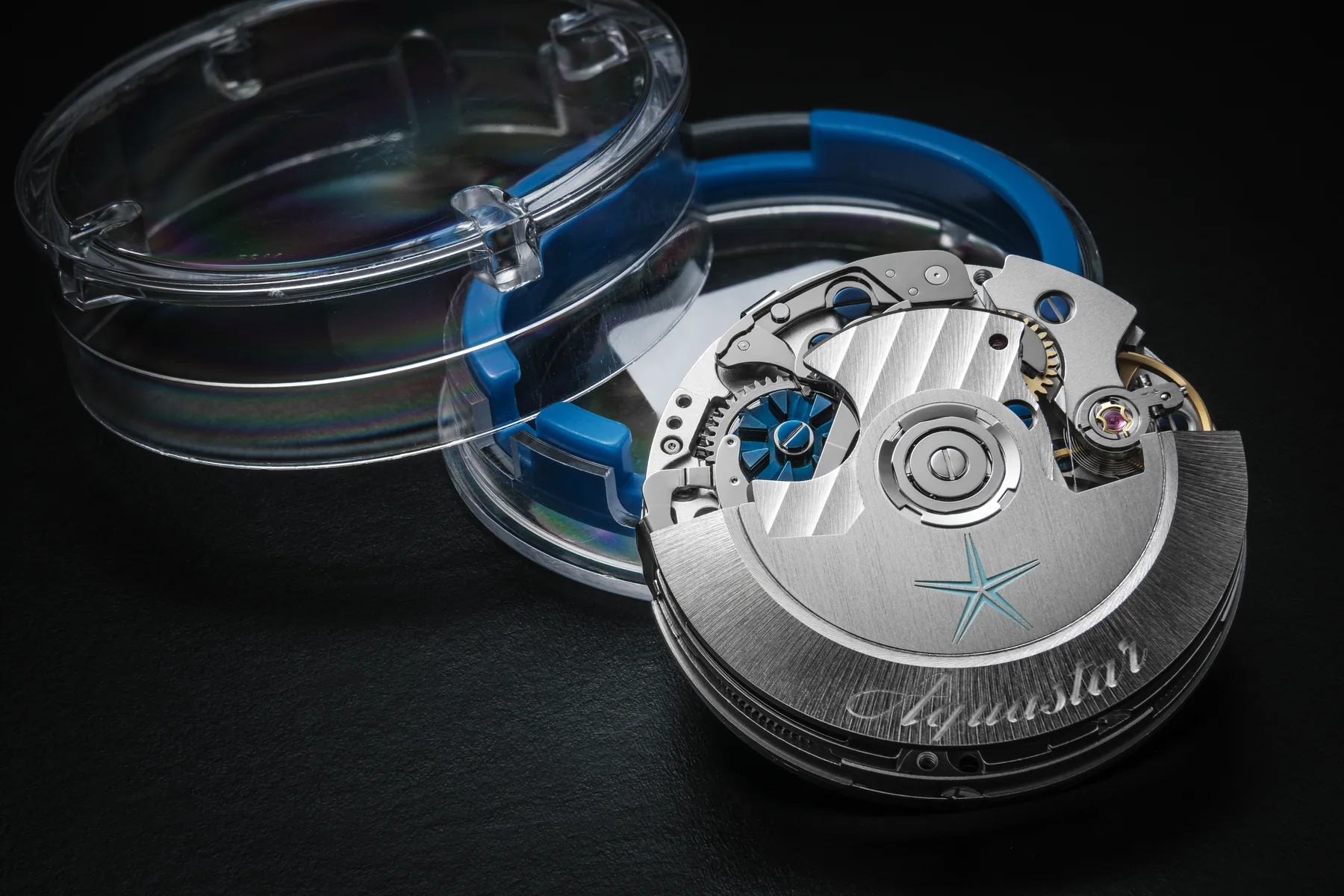
No Swiss dive chronograph guide is complete without movement trade-offs. Automatic calibers remain the natural fit for this category because they align with daily wear practicality and professional-tool lineage. A good automatic chronograph movement should deliver stable amplitude, serviceable parts support, and sensible long-term maintenance, not just a headline power reserve.
Column-wheel and cam-actuated systems each have their place. Column-wheel chronographs often deliver a more refined pusher feel, which collectors appreciate. Cam systems can be just as dependable and, in some cases, easier to service broadly over time. For a dive chronograph, reliability under real wear matters more than romantic movement mythology.
Thickness is the hidden cost of the complication. Some movements produce elegant pusher action but force a taller case. Others allow tighter packaging while giving up some tactile finesse. That is not a flaw. It is engineering prioritization. Buyers should assess the movement in the context of the finished watch, not in isolation.
Heritage matters, but only if the watch earns it
Dive chronographs have one of the strongest historical identities in tool-watch design. The best heritage references were not nostalgic exercises. They were solutions to a professional problem: timing underwater events in low-visibility, high-pressure environments with minimal ambiguity. That history still matters because it explains why certain design traits endure.
Large minute hands, high-contrast subdials, no-nonsense bezels, and compact, wearable cases were not styling cues borrowed from a mood board. They were field-tested decisions. When a modern Swiss dive chronograph revisits those forms faithfully, it preserves more than appearance. It preserves logic.
This is also where many contemporary releases miss the mark. Some lean too far into luxury finishing, polishing every surface until the watch loses its instrument character. Others over-modernize, inflating dimensions and adding textures, colors, and scales that weaken the original purpose. Heritage should sharpen a watch. It should not excuse bloat or theatrics.
For collectors, authenticity is rarely about reproducing every historical limitation. It is about respecting the old proportions, preserving the dial logic, and improving the failure points with modern materials and manufacturing. A sapphire crystal, ceramic or hardened bezel insert, modern luminous compound, and improved sealing are welcome upgrades when they do not distort the original intent.
What to inspect before buying
Look closely at the minute counter. On a dive chronograph, it should be instantly readable, because minutes matter most underwater. If the chronograph minutes are too small, share visual weight with secondary scales, or disappear under highly stylized hands, that is a warning sign.
Examine the relationship between the central hands and the subdials. The main time display should remain dominant. If the chronograph seconds hand is too thin to track or too similar in color to the minute hand, actual use becomes slower than it should be.
Check the lume strategy. Strong lume is not enough if it is applied without hierarchy. The minute hand and bezel pip should stand out. Hour markers must remain legible, but the watch should tell you elapsed dive time at a glance. Uniform brightness can still produce a poor reading if everything glows with the same visual weight.
Assess the bracelet or strap with equal seriousness. A heavy chronograph head can turn unstable on a weak strap design. A proper tropic-style rubber strap, well-engineered steel bracelet, or secure textile option can transform wearability. Tool watches live or die by how they stay planted on the wrist.
The collector’s view versus the diver’s view
Collectors often pursue rarity, historical faithfulness, and movement pedigree. Divers and active owners focus more quickly on grip, clarity, comfort, and service confidence. The best watches satisfy both, but not always in equal measure.
A highly faithful re-edition may win on proportions and period-correct character while giving up some conveniences expected in modern luxury sports watches. A more contemporary interpretation may improve water resistance, bezel durability, and bracelet execution while softening the exact historical profile. Neither approach is wrong. The better choice depends on why you are buying.
If the watch is primarily for collecting, nuance in case form, dial typography, and archival accuracy will carry more weight. If it will see regular time in salt water, heat, travel, and rotation with other tool watches, serviceability and practical durability may matter more. Aquastar has long understood that a dive chronograph should not have to choose between provenance and use. That balance is where the category becomes interesting.
Why this category remains hard to fake
The market is full of watches that borrow the visual grammar of vintage dive chronographs. Much fewer capture the authority of the real thing. It is easy to copy a reverse panda dial or a compact steel case. It is far harder to build a watch where every component feels disciplined by function.
That is why experienced buyers look beyond broad specifications. Two watches may both offer Swiss automatic movements, 200 meters of water resistance, sapphire crystals, and lumed bezels. One will still feel more coherent on the wrist and more convincing in the hand. The difference usually comes down to proportion, legibility, and whether the design team understood how a dive chronograph should behave, not just how it should photograph.
The right watch in this category carries a certain tension. It has to be handsome enough for daily wear, serious enough for harsh conditions, and honest enough to show where history still has the better answer. If you find one that manages all three, hold onto it. Good dive chronographs are rare because genuine purpose always is.
Related from Aquastar: the Aquastar Deepstar III, a Swiss dive chronograph, the Aquastar Airstar.
Further reading: Wikipedia on the chronograph.