
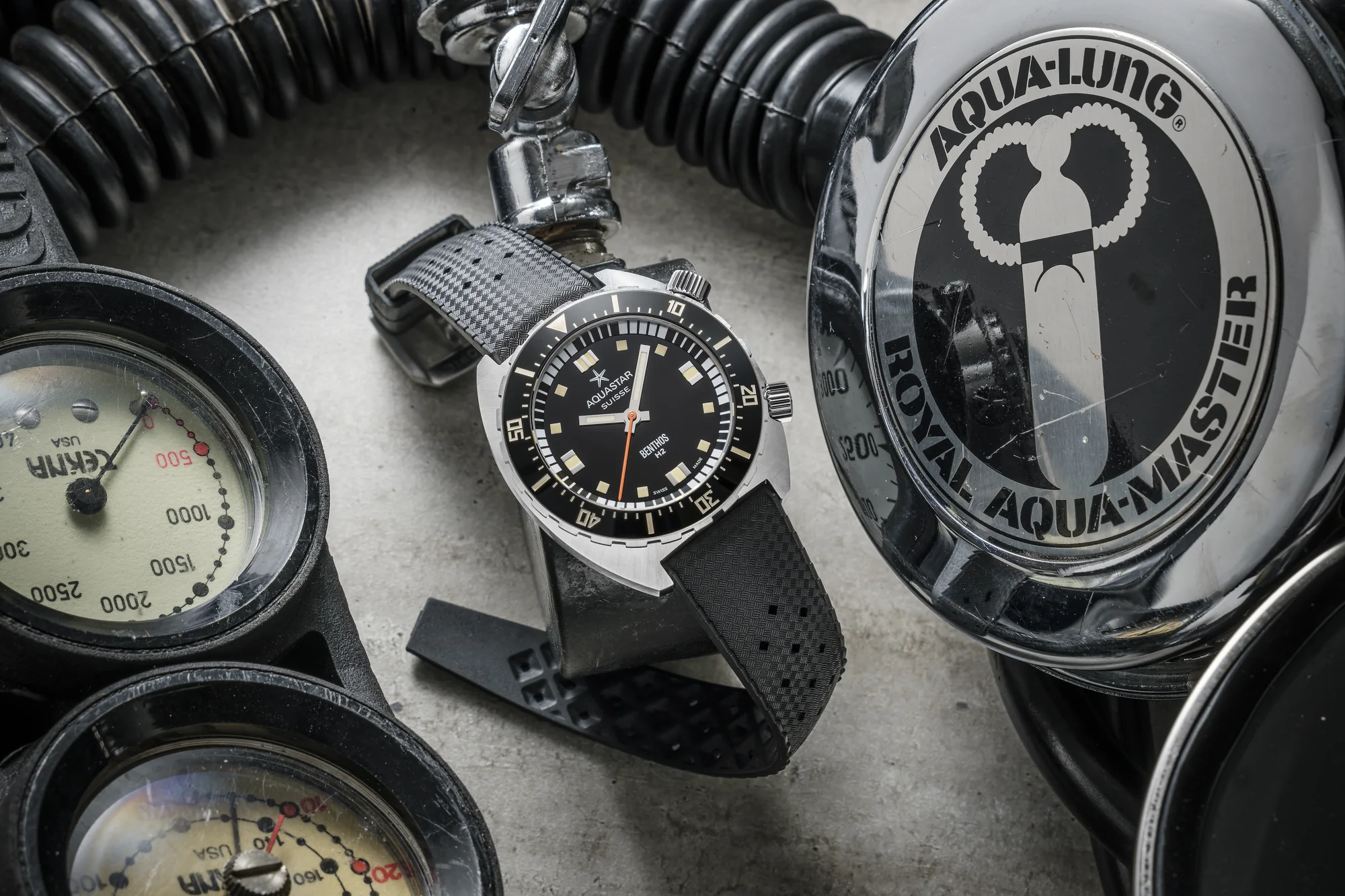
Best Dive Watch Materials: at a glance
Best dive watch materials for professional use in 2026: 316L, 904L, titanium and specialty alloys compared on corrosion, weight and wrist comfort. Use this guide on best dive watch materials to weigh design choices, engineering trade-offs and how the category translates to real Aquastar dive watches.
| Topic | Best dive watch materials |
| Read time | 5-8 min |
| Source | Aquastar editorial |

Selecting the right material for a dive watch shapes every aspect of its performance, from corrosion resistance to wrist comfort during extended underwater missions. Professional divers and watch enthusiasts face a complex decision: stainless steel variants offer proven durability at different price points, titanium delivers lightweight strength, and specialty alloys promise enhanced longevity. Understanding how materials perform under extreme pressure, saltwater exposure, and daily wear determines whether a timepiece becomes a trusted tool or an expensive disappointment. This guide examines the top materials used in professional dive watches, comparing their strengths and limitations to help you make an informed choice that matches your diving needs and budget.
Table of Contents
- Criteria For Choosing Dive Watch Materials
- 316L And 904L Stainless Steel: Durability And Luxury Finishes
- Titanium Dive Watches: Lightweight Strength And Corrosion Resistance
- Special Features And Certifications Enhancing Material Performance
- Explore Premium Dive Watches With Expert Craftsmanship
- Frequently Asked Questions
Key takeaways
| Point | Details |
|---|---|
| 316L stainless steel dominates | Industry standard offering excellent corrosion resistance and cost efficiency for professional dive watches |
| Titanium reduces wrist fatigue | Approximately 40% lighter than steel while maintaining superior corrosion resistance through oxide layer |
| 904L delivers luxury performance | Enhanced corrosion resistance and brighter finish justify premium pricing in high-end dive watches |
| ISO 6425 validates materials | Certification ensures materials perform under real underwater conditions beyond simple depth ratings |
| Helium valves require robust cases | Saturation diving demands materials that support pressure equalization features for safe decompression |
Criteria for choosing dive watch materials
Evaluating dive watch materials requires understanding the extreme conditions these timepieces must endure. Professional dive watches face constant exposure to saltwater, rapid pressure changes, temperature fluctuations, and physical impacts against equipment or reef structures. The material you choose determines how well your watch handles these stresses over years of service.
ISO 6425 certification ensures dive watches meet real underwater test standards including pressure resistance and durability. This certification validates that materials perform under actual diving conditions, not just theoretical specifications. Materials must pass rigorous testing for corrosion resistance, legibility maintenance, and structural integrity at rated depths.
Key performance factors guide material selection:
- Corrosion resistance against saltwater and chemical exposure
- Weight distribution for comfortable extended wear
- Scratch and impact resistance for daily durability
- Thermal conductivity affecting wrist comfort in varying temperatures
- Surface finishing potential for legibility and aesthetics
- Maintenance requirements over the watch’s lifespan
- Certified pressure resistance matching intended dive depths
Understanding diver watch features for reliability helps contextualize how material choices interact with other critical components. Materials don’t work in isolation. They must support gasket seals, crystal retention, and crown mechanisms that together create a waterproof system. The best material for your needs balances performance attributes with practical considerations like budget, intended use frequency, and personal comfort preferences.
316L and 904L stainless steel: durability and luxury finishes
Stainless steel dominates dive watch manufacturing for compelling reasons. 316L stainless steel is the most widely used grade for dive watch cases due to its excellent resistance to seawater corrosion and cost effectiveness. This austenitic steel contains 16-18% chromium, 10-14% nickel, and 2-3% molybdenum, creating a passive layer that protects against saltwater degradation.
Manufacturers favor 316L for practical production advantages. Standard machining tools work efficiently with this grade, keeping manufacturing costs reasonable and enabling larger production runs. This efficiency translates to better value for buyers seeking professional-grade dive watches without luxury price tags. The material accepts various surface finishes, from brushed textures that hide scratches to polished surfaces that enhance legibility underwater.
904L stainless steel offers superior corrosion resistance and a brighter luster compared to 316L. This superalloy contains higher chromium (20-21%) and increased nickel and copper content, delivering exceptional resistance to acidic and chloride-rich environments. Luxury watchmakers adopt 904L for its ability to maintain a mirror polish that resists tarnishing over decades of use.
Key advantages of stainless steel variants:
- Proven corrosion resistance in marine environments
- High tensile strength withstanding impacts and pressure
- Affordable manufacturing costs for 316L models
- Premium aesthetic appeal with 904L bright finishes
- Wide availability of replacement parts and service options
Considerations include higher weight compared to titanium alternatives and potential nickel sensitivity for some wearers. Understanding dive watch cases explained guide reveals how case construction amplifies or mitigates these material characteristics.
Pro Tip: Choose 316L for practical daily dive watches where cost efficiency matters, or select 904L when investing in a luxury piece where corrosion resistance and lasting appearance justify the premium.
Titanium dive watches: lightweight strength and corrosion resistance
Titanium transforms the dive watch wearing experience through dramatic weight reduction without sacrificing strength. Titanium is about 40-45% lighter than stainless steel, reducing wrist fatigue for larger dive watches. This weight advantage becomes critical during multi-hour dives or when wearing a watch continuously for days during liveaboard diving expeditions.

The material’s corrosion resistance surpasses even premium stainless steels. Titanium forms a self-healing titanium dioxide layer that instantly repairs itself when scratched, maintaining protection against saltwater degradation indefinitely. This oxide layer makes titanium virtually immune to galvanic corrosion, a significant advantage when dive watches contact other metals on diving equipment.
Grade 5 titanium offers increased tensile strength and surface hardness versus Grade 2 titanium. Grade 2 provides excellent corrosion resistance and easier machining at lower costs, making it suitable for mid-range titanium dive watches. Grade 5 (Ti-6Al-4V) incorporates aluminum and vanadium alloys, creating a material nearly as strong as steel while retaining titanium’s lightweight properties.
| Material | Density (g/cm³) | Tensile Strength (MPa) | Corrosion Resistance | Weight vs Steel | Typical Cost |
|---|---|---|---|---|---|
| 316L Stainless Steel | 8.0 | 485-690 | Excellent | Baseline | Moderate |
| Grade 2 Titanium | 4.5 | 345-480 | Superior | 44% lighter | High |
| Grade 5 Titanium | 4.4 | 895-930 | Superior | 45% lighter | Very High |
Ergonomic benefits extend beyond weight. Titanium’s lower thermal conductivity means the watch feels more comfortable against skin in cold water or hot tropical conditions. The material doesn’t conduct heat away from your wrist as aggressively as steel, reducing the initial cold shock when entering water.
OEM manufacturing with titanium requires special tooling and can raise costs and minimum order quantities. Titanium’s hardness dulls cutting tools quickly, demanding specialized carbide or ceramic tooling. These manufacturing challenges explain why titanium dive watches command premium prices despite the raw material costing only moderately more than stainless steel.
Exploring professional dive watch features shows how titanium cases enhance other critical components through weight distribution and structural advantages.
Pro Tip: Grade 2 titanium offers the best balance of corrosion resistance and value for serious recreational divers, while Grade 5 suits professional applications demanding maximum strength in extreme conditions.
Special features and certifications enhancing material performance
Materials alone don’t guarantee dive watch reliability. ISO 6425 certifies dive watches for pressure resistance, condensation control, legibility, and durability beyond simple depth ratings. This certification validates that your chosen material performs under actual testing protocols that simulate real diving stress.
ISO 6425 testing subjects materials to 125% of rated depth for two hours, followed by thermal shock tests cycling between 40°C and 5°C. Materials must maintain water resistance without condensation forming under the crystal. Corrosion resistance testing exposes watches to saltwater immersion for extended periods, revealing how materials degrade over time. These protocols ensure the stainless steel or titanium case you select will protect the movement during actual dives, not just in marketing specifications.
The helium escape valve is critical for professional saturation diving to prevent crystal failure during decompression. During saturation diving, helium molecules from breathing mixtures penetrate watch cases over days of pressurized habitat living. Without an escape valve, rapid decompression forces this trapped helium to explosively exit, often blowing off the crystal. Materials supporting helium valves must accommodate additional case penetrations while maintaining structural integrity and water resistance.
Key features working with materials:
- ISO 6425 certification validating material performance under standardized tests
- Helium escape valves requiring robust case materials for safe gas release
- High-quality gasket systems depending on material surface finish for proper sealing
- Sapphire crystals matched to case material thermal expansion rates
- Crown systems designed for material-specific threading and seal compression
| Feature | Material Requirement | Performance Benefit | Ideal Use Case |
|---|---|---|---|
| ISO 6425 Certification | Corrosion-resistant alloy | Validated underwater reliability | All professional diving |
| Helium Escape Valve | Strong case walls for valve housing | Prevents crystal blowout | Saturation diving only |
| Premium Gaskets | Smooth case finish for seal contact | Enhanced water resistance | Deep technical diving |
| Anti-magnetic Shielding | Non-ferrous materials like titanium | Movement protection | Scientific diving near equipment |
Comparing watches with and without helium valves reveals distinct use cases. Recreational divers rarely exceed depths or durations requiring helium breathing mixtures, making escape valves unnecessary added complexity. Professional commercial divers working from saturation habitats absolutely require this feature, making it a critical specification when selecting materials that support the valve mechanism.
Material selection and special features work together to create dive watches that function reliably under extreme conditions. ISO certification and helium valves aren’t optional extras for serious professional diving, they’re essential validations that your chosen material will perform when your safety depends on it.
Understanding best dive watch brand features helps evaluate how manufacturers integrate materials with these critical performance features.
Explore premium dive watches with expert craftsmanship
Now that you understand how materials impact dive watch performance, discovering timepieces that showcase these principles becomes your next step. Aquastar manufactures professional mechanical dive watches using premium materials validated through decades of underwater innovation. Since pioneering dive watch technology in the 1960s, Aquastar has remained the only Swiss watchmaker born exclusively to create dive watches for serious underwater work.
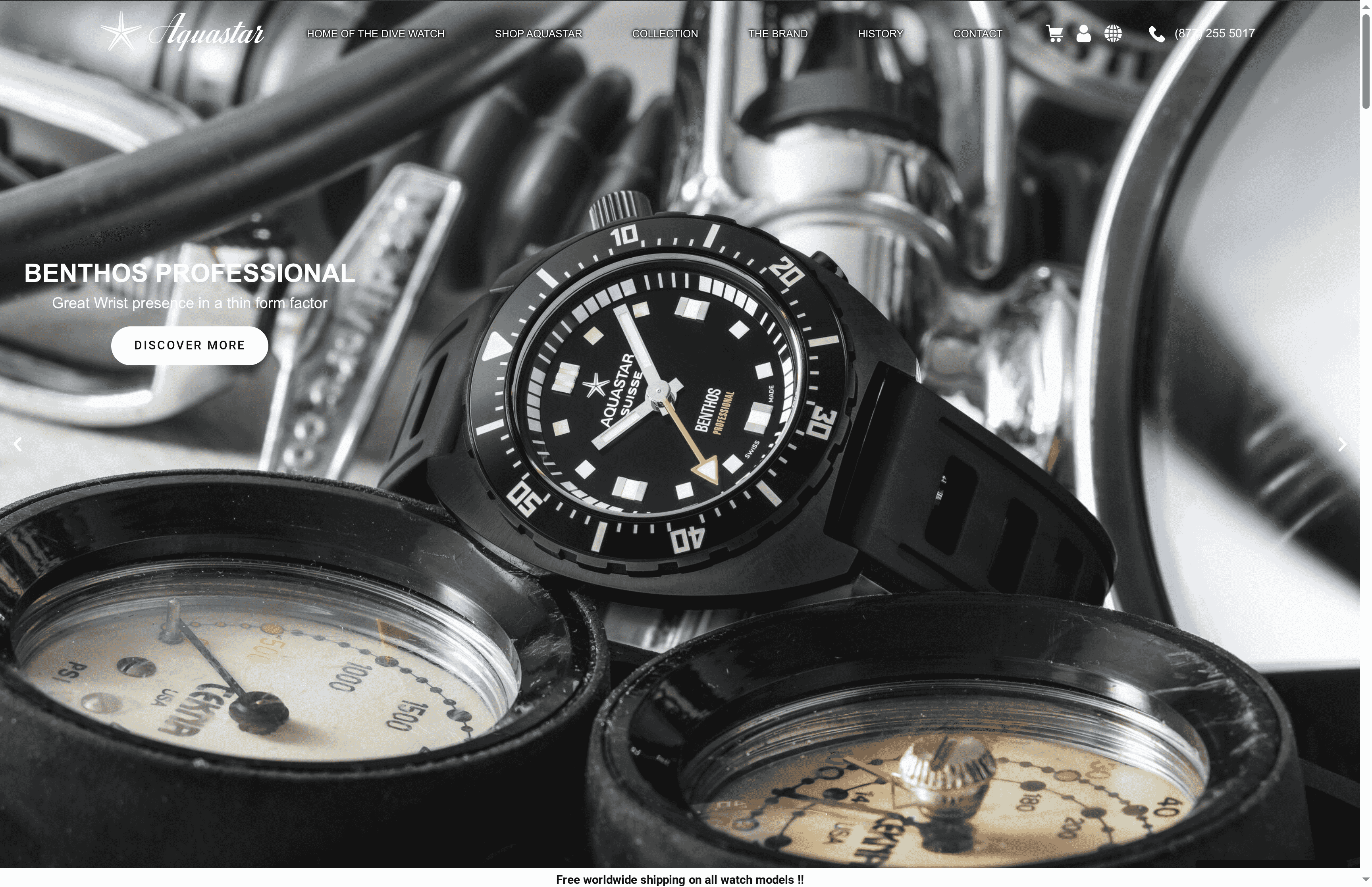
Our collection features watches built with carefully selected materials, from corrosion-resistant stainless steel to lightweight titanium cases. Each timepiece incorporates lessons learned from creating the first analog dive computer and introducing the original skindiver case design. Today’s Aquastar watches serve commercial and recreational divers as reliable backup instruments to electronic dive computers.
Explore our guides on professional dive watch features guide to understand what makes a timepiece truly dive-capable, compare options in our dive watch brand comparison, or learn the fundamentals in our tool watch explained guide. These resources help you make informed decisions about materials, features, and specifications that match your diving needs.
Frequently asked questions
What is the difference between 316L and 904L stainless steel?
316L stainless steel provides excellent corrosion resistance and represents the industry standard for dive watch cases, offering proven performance at accessible price points. 904L stainless steel contains higher chromium and nickel content, delivering superior corrosion resistance and a brighter, more lustrous finish that maintains its appearance over decades. Luxury watchmakers choose 904L for premium dive watches where enhanced durability and aesthetics justify the increased manufacturing costs.
Why is titanium preferred for some dive watches over stainless steel?
Titanium weighs approximately 40-45% less than stainless steel, dramatically reducing wrist fatigue during extended dive operations or continuous wear. The material forms a self-healing titanium dioxide layer that provides superior corrosion resistance compared to stainless steel, particularly in harsh saltwater environments. Additionally, titanium’s lower thermal conductivity makes watches more comfortable against skin in extreme temperatures, whether diving in cold water or tropical conditions.
What does ISO 6425 certification guarantee for dive watches?
ISO 6425 certification validates that dive watches meet rigorous testing standards including pressure resistance to 125% of rated depth, condensation control during thermal shock, legibility in darkness, and corrosion resistance during extended saltwater exposure. This certification ensures watches function reliably under actual diving conditions rather than just meeting theoretical specifications. Unlike simple depth ratings, ISO 6425 confirms the entire watch system, including materials, gaskets, and construction, performs safely for professional underwater use.
Do all dive watches need a helium escape valve?
Helium escape valves are essential only for professional saturation diving, where divers live in pressurized habitats for extended periods breathing helium-oxygen mixtures. During saturation operations, helium molecules penetrate watch cases and must safely escape during decompression to prevent crystal blowout. Recreational divers who never use helium breathing mixtures or work from saturation systems don’t require this feature, making it unnecessary added complexity for typical sport diving applications.
Recommended
- 7 Must-Have Diver Watch Features for 300m+ Professional Use – Aquastar dive watches
- Best Dive Watch Brands – Expert Comparison 2025 – Aquastar dive watches
- How to Identify Genuine Dive Watches Like a Pro – Aquastar dive watches
- Dive Watch Cases Explained: Complete Collector’s Guide – Aquastar dive watches