

Dive Watch Troubleshooting Steps: at a glance
Dive watch troubleshooting steps: water intrusion, timing inaccuracies and power failures — practical diagnostics for Aquastar and other dive watches. Use this guide on dive watch troubleshooting steps to weigh design choices, engineering trade-offs and how the category translates to real Aquastar dive watches.
| Topic | Dive watch troubleshooting steps |
| Read time | 5-8 min |
| Source | Aquastar editorial |

Professional dive watches are precision instruments built to withstand extreme underwater conditions, yet even the most robust timepieces can develop issues over time. Water intrusion, timing inaccuracies, and power failures are among the most frustrating problems divers and watch enthusiasts encounter. This comprehensive guide walks you through practical troubleshooting steps to diagnose and resolve common dive watch problems, with special attention to the innovations that have shaped modern dive watches. Whether you own an Aquastar or another professional dive watch, these techniques will help you maintain peak performance and extend your timepiece’s lifespan.
Table of Contents
- Essential Prerequisites For Dive Watch Troubleshooting
- Step-By-Step Dive Watch Troubleshooting Process
- Common Troubleshooting Mistakes And How To Avoid Them
- Verifying Successful Repairs And Maintaining Dive Watch Performance
- Discover Expert Dive Watches Designed For Reliability
- Frequently Asked Questions
Key takeaways
| Point | Details |
|---|---|
| Proper preparation | Gather essential tools like case openers, loupes, and cleaning cloths before starting any troubleshooting work |
| Water intrusion signs | Fogging, condensation, or moisture droplets inside the crystal indicate immediate professional attention is needed |
| Timing accuracy | Test watch performance over several days and compare against atomic time to identify regulation issues |
| Regular maintenance | Schedule professional servicing every 2 to 3 years to prevent major failures and maintain water resistance |
| Know your limits | Recognize when DIY troubleshooting should stop and professional watchmakers should take over |
Essential prerequisites for dive watch troubleshooting
Before attempting any dive watch troubleshooting, you need the right tools and environment to work safely and effectively. Proper tools and a clean workspace are essential for effective dive watch troubleshooting, as even minor contaminants can compromise your watch’s water resistance. Start by assembling a basic toolkit that includes precision screwdrivers, a case opener specific to your watch type, a jeweler’s loupe for close inspection, microfiber cleaning cloths, and a dust blower. These tools allow you to inspect your watch without causing damage.
Your workspace matters just as much as your tools. Set up in a well-lit area with a clean, soft surface like a watch mat or microfiber cloth to prevent scratches. Eliminate dust sources by closing windows and turning off fans during inspection. Good lighting, preferably daylight-spectrum LED, helps you spot subtle issues like hairline cracks or moisture traces that might otherwise go unnoticed.
Understanding your specific watch type is crucial before you begin. Automatic movements require different troubleshooting approaches than manual or quartz watches. Check whether your dive watch is mechanical or battery powered, as this determines which diagnostic steps apply. Familiarize yourself with your watch’s normal operation, including power reserve duration for automatics or typical battery life for quartz models. This baseline knowledge helps you recognize when performance deviates from normal.
Safety precautions protect both you and your valuable timepiece. Never open a watch case near water or in humid conditions, as moisture can enter and cause serious damage. Avoid working on your watch immediately after diving, swimming, or showering. Let it acclimate to room temperature for several hours first. If you notice any signs of water intrusion, stop immediately and seek professional help rather than attempting repairs yourself.
Pro Tip: Keep a dedicated notebook to log your watch’s performance, including accuracy measurements, battery replacement dates, and any unusual behavior. This record becomes invaluable for identifying patterns and communicating issues to watchmakers.
Essential troubleshooting tools
| Tool | Purpose | Approximate Cost |
|---|---|---|
| Case opener | Safely remove case back | $15 to $50 |
| Precision screwdrivers | Access movement and components | $20 to $40 |
| Jeweler’s loupe | Inspect details and damage | $10 to $30 |
| Microfiber cloths | Clean without scratching | $5 to $15 |
| Dust blower | Remove particles safely | $8 to $20 |
Step-by-step dive watch troubleshooting process
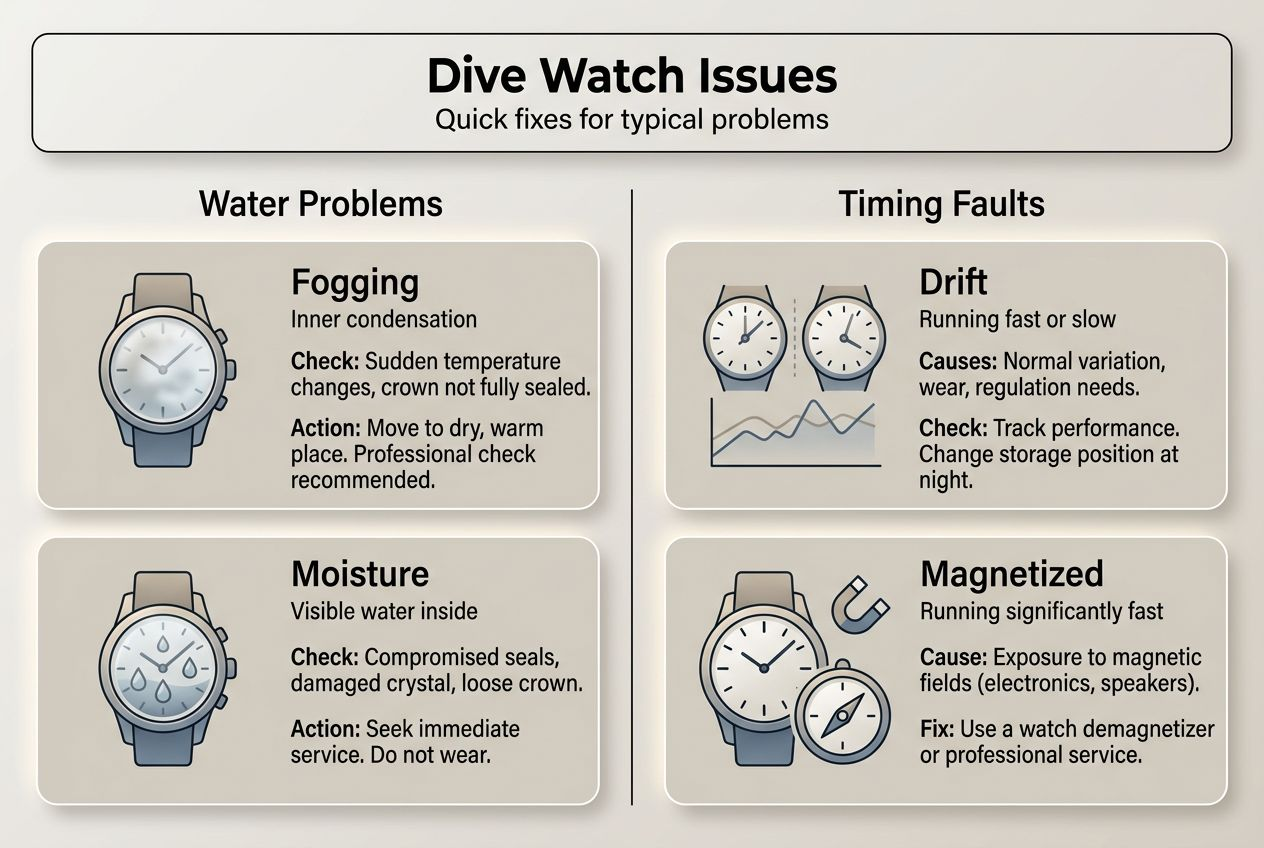
Water intrusion represents the most serious threat to dive watch functionality and requires immediate attention. Begin by examining the crystal and dial carefully under bright light. Look for fogging, condensation droplets, or moisture spots that indicate compromised seals. If you spot any moisture, place the watch in a dry, warm location with the crown pulled out to the time-setting position. This allows trapped moisture to escape naturally. Never use direct heat sources like hair dryers or radiators, as rapid temperature changes can crack the crystal or damage internal components.
Timing accuracy issues often stem from magnetization, insufficient power reserve, or regulation problems. Test your watch’s accuracy by comparing it against an atomic clock or smartphone time over 24 hours. Record the deviation in seconds gained or lost. For automatic watches, ensure you’re providing adequate wrist movement or use a watch winder to maintain full power reserve. Mechanical watches typically gain or lose 4 to 6 seconds daily within acceptable tolerances. Deviations beyond 10 seconds daily suggest professional regulation is needed.
Battery powered dive watches require periodic battery replacement to maintain reliable operation. Regularly checking and replacing the battery is crucial in preventing dive watch stoppage, typically every 2 to 3 years depending on usage. Signs of battery failure include second hand jumping in 2 to 4 second intervals, dimmed display on digital models, or complete stoppage. If you’re comfortable opening your watch case, note the battery number and replace it with an identical type. Always replace the gasket when changing batteries to maintain water resistance.
Mechanical dive watches depend on proper winding and power reserve management. Automatic movements need consistent motion to stay powered, while manual watches require daily winding. Wind manual watches at the same time each day, typically in the morning, using smooth, consistent turns until you feel resistance. Never force the crown past this point. Automatic watches should run 38 to 48 hours on a full charge, depending on the movement. If your watch stops overnight despite regular wear, the mainspring may need professional attention.

Recognizing when professional servicing becomes necessary protects your investment. Seek expert help immediately if you detect water inside the case, hear unusual sounds from the movement, experience crown or pusher malfunctions, or notice the watch gaining or losing more than 30 seconds daily. Professional watchmakers have specialized equipment for pressure testing, demagnetization, and movement cleaning that home troubleshooting cannot replicate. Understanding how to identify genuine dive watches helps you communicate effectively with service professionals about your specific timepiece.
Pro Tip: Before sending your watch for service, photograph any visible issues and document exactly when problems occur. This information helps watchmakers diagnose intermittent problems more efficiently.
Diagnostic checklist
- Visual inspection for scratches, cracks, or moisture
- Crown operation test for smooth winding and setting
- Bezel rotation check for proper clicking and alignment
- Accuracy measurement over 24 to 48 hours
- Power reserve verification for mechanical movements
- Lume brightness assessment in dark conditions
- Strap or bracelet security inspection
Comparing automatic vs manual dive watches reveals different maintenance needs and common failure points specific to each movement type.
Common troubleshooting mistakes and how to avoid them
Opening a watch case without proper tools ranks among the most damaging mistakes enthusiasts make. Using improvised tools like kitchen knives, screwdrivers, or pliers almost always results in scratched cases, bent case backs, or damaged gaskets. These amateur attempts compromise water resistance and can void warranties. If you lack the correct case opener for your specific watch model, leave case opening to professionals. The cost of proper tools or professional service is minimal compared to repairing case damage.
Operating the crown or pushers while the watch is wet or submerged creates a direct pathway for water intrusion. Many divers make this critical error by adjusting the time immediately after surfacing or checking chronograph functions underwater without proper preparation. Always ensure the crown is fully screwed down before water exposure. After diving, dry the watch thoroughly and wait several hours before unscrewing the crown for any adjustments. This simple precaution prevents the majority of water damage cases.
Ignoring early signs of internal moisture leads to extensive corrosion damage that could have been prevented with prompt action. Some owners dismiss light fogging as condensation that will disappear naturally, but any moisture inside the case indicates failed seals requiring immediate professional attention. Incorrect handling during DIY repairs can compromise dive watch water resistance and functionality, turning minor issues into expensive overhauls. When you spot moisture, stop using the watch immediately and seek professional help within 24 to 48 hours to minimize corrosion.
Replacing gaskets and seals with generic alternatives instead of manufacturer-specific parts undermines your watch’s water resistance certification. Each dive watch model uses precisely engineered gaskets designed for specific tolerances and pressure ratings. Aftermarket seals may appear identical but often use inferior materials or slightly different dimensions. These small differences create leak points during deep dives. Always insist on original equipment manufacturer gaskets during battery changes or servicing.
“The difference between a watch that survives 300 meters and one that fails at 100 meters often comes down to proper gasket selection and installation. Generic seals are never worth the risk for professional dive watches.” – Master Watchmaker, Swiss Timepiece Institute
Attempting to regulate timing without proper knowledge and tools frequently makes accuracy problems worse. Watch regulation requires specialized equipment to measure beat rate and timing across multiple positions. Turning adjustment screws randomly or applying incorrect pressure damages delicate hairspring assemblies. Even experienced watchmakers spend years mastering regulation techniques. If your watch needs timing adjustment, this work belongs exclusively in professional hands.
Critical don’ts for dive watch owners
- Never use compressed air to dry watch interiors, as it forces moisture deeper into the movement
- Avoid ultrasonic cleaners for assembled watches, which can loosen components and damage gaskets
- Don’t store dive watches near magnets, speakers, or electronic devices that cause magnetization
- Never wind the crown counterclockwise, which can strip delicate gear teeth
- Avoid extreme temperature changes that stress case materials and seals
Understanding must have diver watch features professional reliability helps you recognize which components require expert attention versus safe DIY maintenance.
Verifying successful repairs and maintaining dive watch performance
After completing any troubleshooting or repairs, thorough testing confirms your watch has returned to proper working condition. Water resistance testing requires specialized pressure testing equipment found only at professional service centers. Never assume your watch is water resistant after opening the case or replacing gaskets without professional pressure testing. Many watch owners learn this lesson the expensive way during their next dive. Schedule a pressure test at an authorized service center before returning your watch to active dive duty.
Monitoring timing accuracy over several days provides reliable performance data. Set your watch to atomic time and record deviations at the same time each day for at least five days. Track performance in different positions, as watches often run differently when lying flat versus hanging vertically. Acceptable daily variation for mechanical dive watches ranges from negative 4 to positive 6 seconds, though many modern movements perform better. Consistent deviations beyond this range indicate regulation needs.
Establishing a regular maintenance schedule prevents major failures and extends your watch’s operational life. Regular maintenance significantly extends dive watch lifespan and performance under professional conditions, with properly serviced watches often lasting decades. Professional servicing every 2 to 3 years includes movement cleaning, lubrication, gasket replacement, and pressure testing. Between services, inspect gaskets annually for cracks or hardening, especially if you dive frequently in saltwater.
Proper storage protects your watch when not in use. Store automatic watches on a quality watch winder set to appropriate turns per day for your specific movement. This prevents lubricants from settling and keeps gaskets flexible. Manual and quartz watches should rest in a cool, dry location away from magnetic fields. Avoid storing watches in bathrooms where humidity fluctuates dramatically. A dedicated watch box with silica gel packets maintains optimal conditions.
Pro Tip: After saltwater diving, rinse your watch thoroughly in fresh water while the crown remains screwed down. This simple step prevents salt crystal buildup that can damage seals and corrode case materials over time.
Maintenance schedule for dive watches
| Interval | Maintenance Task | DIY or Professional |
|---|---|---|
| After each dive | Rinse with fresh water, dry thoroughly | DIY |
| Monthly | Visual inspection, accuracy check | DIY |
| Every 6 months | Gasket inspection, strap cleaning | DIY |
| Annually | Water resistance check, battery replacement if needed | Professional |
| Every 2-3 years | Full service, movement cleaning, all gaskets replaced | Professional |
Developing disciplined care habits makes the difference between a watch that serves reliably for decades and one that requires frequent repairs. Track your watch’s performance patterns in a maintenance log. Note when accuracy drifts, how long batteries last, and any environmental factors that affect performance. This data helps you anticipate issues before they become serious problems. Learning how to collect dive watches guide principles applies equally to maintaining a single cherished timepiece.
Discover expert dive watches designed for reliability
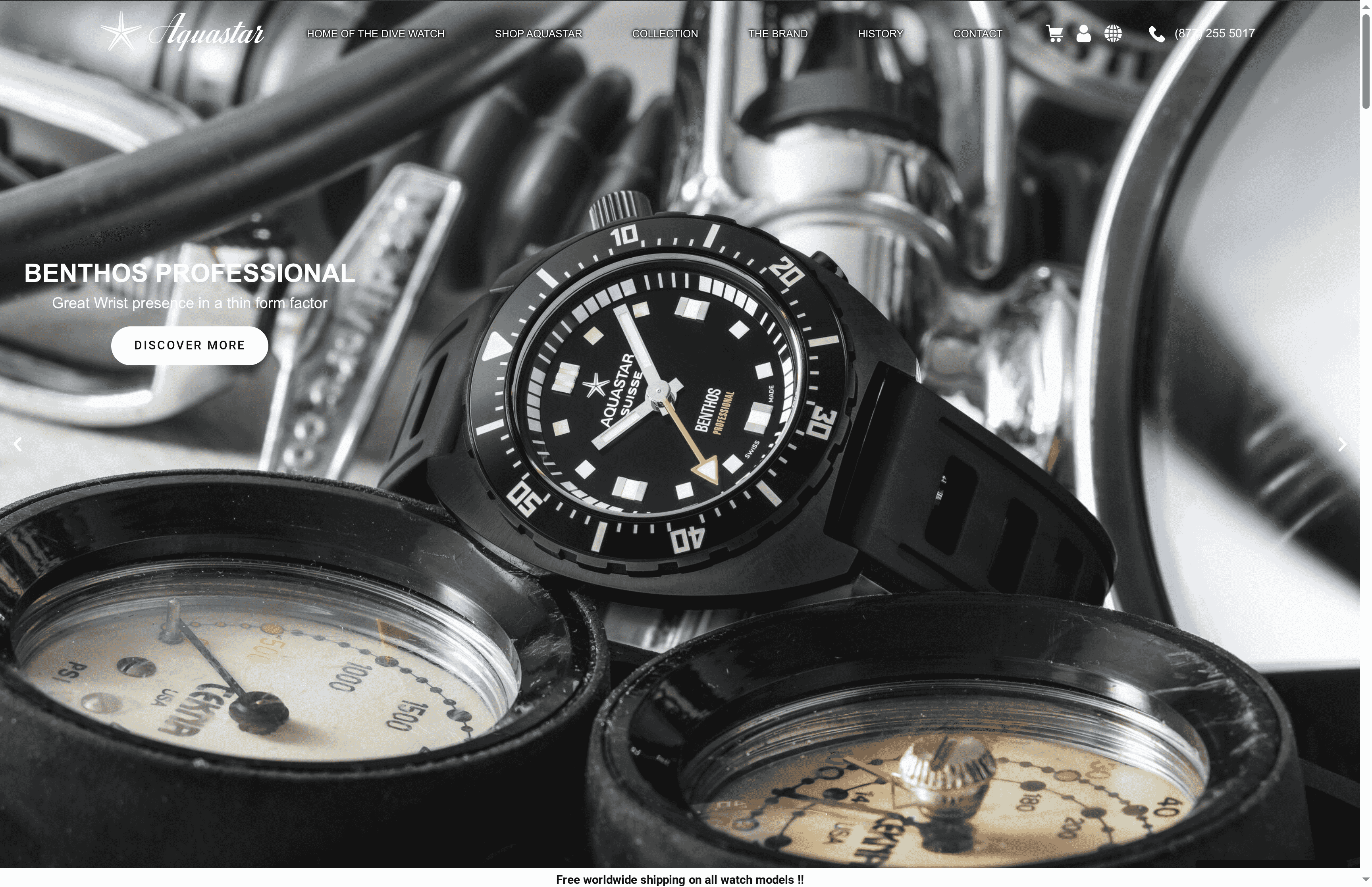
Aquastar has pioneered professional dive watch innovation since the 1960s, filing numerous patents that shaped modern dive watch design. As the only Swiss watchmaker born exclusively to create dive watches, Aquastar introduced groundbreaking innovations including the first analog dive computer and the original skindiver case watch. Today, Aquastar continues this legacy by manufacturing professional-grade dive watches that serve as reliable backup instruments for both commercial and recreational divers.
Explore Aquastar’s collection of precision-engineered timepieces built to withstand the demanding conditions professional divers face daily. Whether you’re seeking to understand tool watch explained guide principles, discover must have diver watch features professional reliability, or compare automatic vs manual dive watches, Aquastar provides the expertise and craftsmanship serious divers demand.
Frequently asked questions
What causes dive watches to lose accuracy underwater?
Pressure changes, temperature variations, and physical shocks during diving can affect mechanical watch timing by altering the balance wheel’s oscillation rate. Modern dive watches are designed to minimize these effects, but extreme conditions may still cause temporary accuracy shifts. Proper maintenance and regular regulation help mitigate accuracy loss and keep your watch performing within acceptable tolerances.
How can I tell if my dive watch has water intrusion?
Fogging under the crystal, visible condensation droplets, or moisture spots on the dial indicate water has entered the case. You might also notice the watch stopping unexpectedly or developing corrosion on hands and markers. If you observe any of these signs, stop using the watch immediately and seek professional service within 24 hours to prevent permanent damage. Understanding how to identify genuine dive watches helps you recognize quality construction that resists water intrusion.
When should I seek professional servicing for my dive watch?
Seek professional help immediately after detecting water intrusion, experiencing persistent timing issues beyond 10 seconds daily, or noticing crown or pusher malfunctions. Even without apparent problems, schedule complete servicing every 2 to 3 years to maintain water resistance and movement health. Professional watchmakers have specialized tools for pressure testing and movement cleaning that ensure your watch remains dive ready.
Can I replace my dive watch battery myself safely?
You can replace batteries if you have proper tools and experience, but you must have the watch pressure tested professionally afterward to verify water resistance. Opening the case breaks the seal, and even correctly installed gaskets require pressure testing to confirm proper seating. Many divers find the cost of professional battery replacement with guaranteed water resistance worth the peace of mind compared to risking a flooded watch on their next dive.
How often should I wind my manual dive watch?
Wind manual dive watches once daily at approximately the same time, typically in the morning before wearing. Use smooth, consistent turns until you feel resistance, then stop immediately without forcing. Most manual movements provide 40 to 48 hours of power reserve, but daily winding ensures consistent amplitude and optimal accuracy throughout the day.
Recommended
- How to Identify Genuine Dive Watches Like a Pro – Aquastar dive watches
- How to Collect Dive Watches: A Complete Collector’s Guide – Aquastar dive watches
- 7 Must-Have Diver Watch Features for 300m+ Professional Use – Aquastar dive watches
- Dive Watch Cases Explained: Complete Collector’s Guide – Aquastar dive watches
Further reading: Wikipedia on diving watches.