
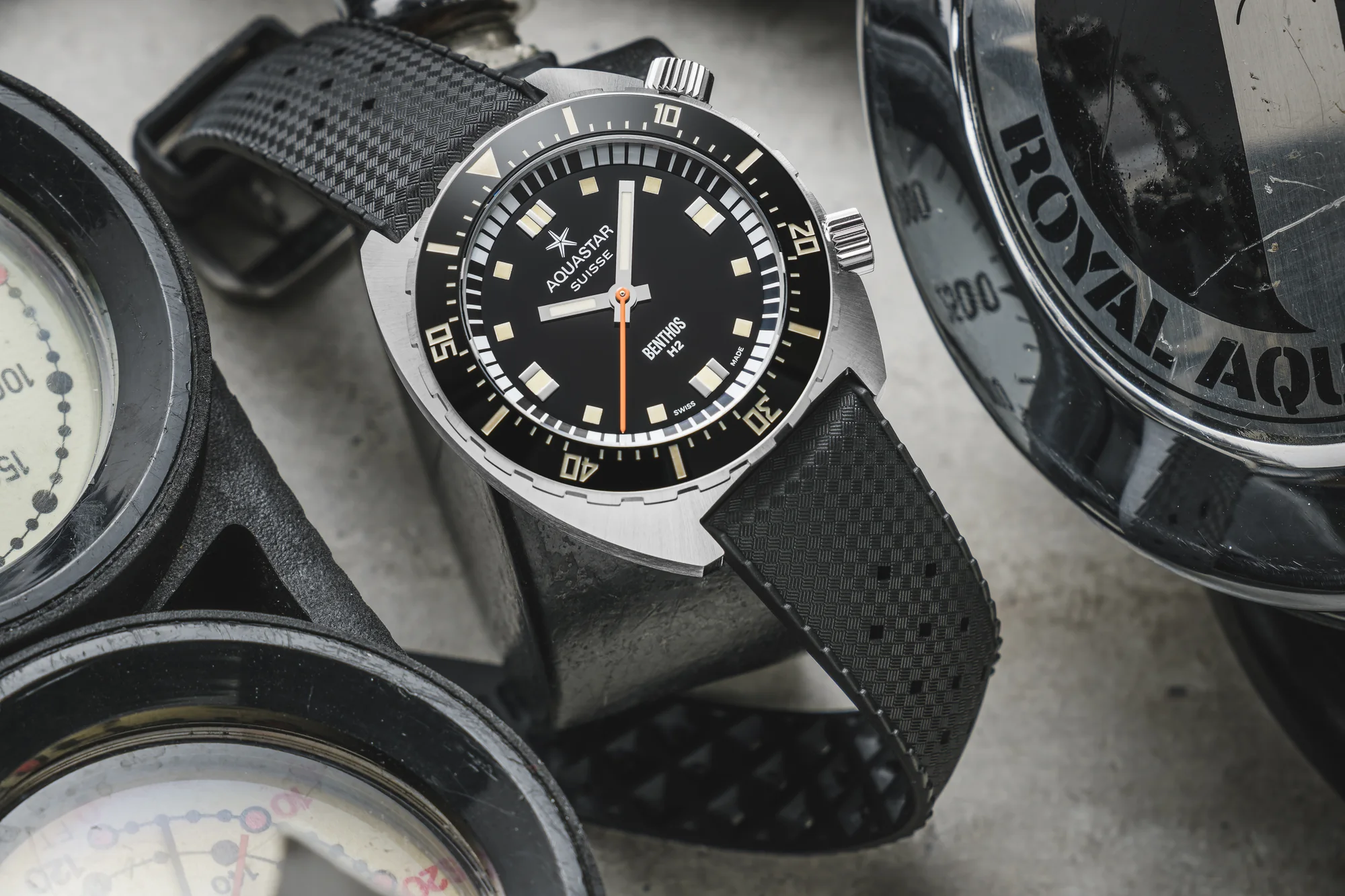
A crystal can change the entire character of a dive watch. Not just how it looks in a product photo, but how it behaves under hard light, salt spray, desk wear, and years of use. In the hesalite vs sapphire dive watch debate, the right answer is rarely absolute. It depends on whether you value vintage fidelity, daily resilience, or the particular way a tool watch should age.
For collectors and serious buyers, this is not a minor specification. The crystal sits at the point where engineering meets experience. It affects legibility, case profile, historical accuracy, and how a watch carries itself on the wrist. On a purpose-built diver, that matters.
Hesalite vs sapphire dive watch: what changes in practice
Hesalite is an acrylic crystal. Sapphire is synthetic corundum, grown for extreme hardness and cut for watch use. On paper, the distinction sounds simple. On the wrist, it is more nuanced.
Sapphire is the modern standard for premium dive watches because it resists scratching far better than acrylic. If you wear your watch daily, rotate it through travel, or expose it to the usual contact points of modern life, sapphire keeps a cleaner surface for longer. Keys, zippers, countertops, and general abrasion that would mark hesalite will often leave sapphire untouched.
Hesalite answers with a different strength. It is softer, but also more forgiving under impact. Rather than shattering, it tends to deform or scratch. That characteristic gave it a long and legitimate place in professional and military watchmaking. A scratched acrylic crystal can often be restored with polish. A chipped or fractured sapphire crystal cannot be polished back into shape.
That does not make hesalite the tougher option in every context. It makes it the more forgiving one in a narrow sense. For a modern dive watch built to endure real wear, sapphire usually offers the better long-term balance of visual durability, water-ready confidence, and low-maintenance ownership.
The case for hesalite
Hesalite has qualities that enthusiasts understand immediately. It carries warmth. It bends light differently. It can produce the soft distortion and visual dome associated with mid-century dive instruments and early professional chronographs. If a watch is meant to preserve a historic silhouette and period-correct feel, hesalite often looks more authentic than sapphire, even before you examine the specifications.
There is also a tactile honesty to it. Hesalite picks up marks, yes, but those marks are often part of the ownership story rather than a terminal flaw. Collectors who appreciate vintage skin, tropical bezels, and honest case wear usually understand acrylic in the same spirit. It shows life. It can also be revived.
For heritage re-editions, that matters. A watch rooted in archival design can lose some of its original temperament when every surface becomes too hard, too perfect, too modern. Hesalite preserves some of that old-world character. On the right model, it is not a compromise. It is the point.
The limitation is obvious. Hesalite scratches with ease compared with sapphire, and a dive watch lives a harder life than a dress piece. Sand, metal hardware, ladders, equipment, and everyday surfaces all leave traces. If you want your crystal to remain crisp with minimal attention, hesalite asks more from the owner.
Why some collectors still prefer hesalite
The answer is rarely utility alone. It is visual depth, historical correctness, and the way the crystal completes the watch as an object. A diver with vintage proportions and a boxed or domed acrylic crystal can feel closer to the era that inspired it. For some buyers, that emotional and aesthetic accuracy is worth more than scratch resistance.
The case for sapphire
Sapphire earns its place on modern dive watches because it aligns with what contemporary owners actually do with them. Most luxury tool watches today are expected to move from ocean to office to long-haul travel without ceremony. In that environment, scratch resistance is not marketing language. It is a practical advantage.
A sapphire crystal keeps the dial looking sharp over time. That matters on a watch with a carefully executed handset, applied markers, or a highly legible timing layout. One deep scratch across the crystal can undermine the entire experience of wearing an otherwise finely built instrument. Sapphire reduces that risk dramatically.
Modern sapphire also offers excellent clarity, especially when paired with quality anti-reflective treatment. On a serious diver, where legibility is part of the watch’s purpose rather than decoration, that counts. A well-specified sapphire crystal can deliver a clean view of the dial in harsh daylight, underwater glare, or quick glances on the move.
From a buyer’s perspective, sapphire also fits the expectations of the premium Swiss category. It signals contemporary engineering and aligns with the broader package of ceramic bezels, high water resistance, strong gaskets, and modern manufacturing tolerances. For brands building dive watches to current performance standards, sapphire is often the natural choice.
Where sapphire gives up ground
Hardness is not invincibility. Sapphire is highly scratch resistant, but under a sharp enough impact it can chip or crack. It is also visually colder than hesalite to some eyes. On certain vintage-inspired watches, sapphire can look technically superior while feeling historically less convincing. That distinction matters more than many specifications sheets admit.
Vintage character versus modern use
This is where the hesalite vs sapphire dive watch question becomes interesting. Most buyers are not choosing between good and bad. They are choosing between two valid philosophies.
If the watch is meant to honor a historic instrument with discipline, hesalite may be the more faithful material. It preserves the look, feel, and optical behavior that belonged to the original era. A heritage diver should not always be modernized into sterility.
If the watch is meant to deliver daily reliability with fewer compromises, sapphire is usually the stronger answer. It matches how modern enthusiasts actually wear watches – frequently, hard, and without wanting to think about polishing the crystal after routine contact.
This is why many serious heritage brands reserve acrylic for watches where period correctness is central to the concept, while using sapphire where modern performance is part of the brief. Both choices can be right if they are honest to the watch.
Which crystal is better for an actual dive watch?
For most real-world dive watch buyers, sapphire is the more practical option. It offers stronger day-to-day durability, better long-term cosmetic preservation, and a specification set that suits a modern underwater tool. If you are buying one premium diver to wear often and hard, sapphire is difficult to argue against.
But that is not the full story. If your idea of a dive watch includes historical legitimacy, period-correct materials, and the pleasure of owning something closer to the original instrument, hesalite still has a place. Not because it is technically superior overall, but because a dive watch is more than a waterproof case and a hardness rating. It is also design language, lineage, and feel.
A brand like Aquastar, rooted in true underwater watch history, understands that material choices carry meaning beyond specification shorthand. The best dive watches do not chase modernity for its own sake. They use the right material for the purpose, the era, and the owner.
How to choose between hesalite and sapphire
Start with how you will actually wear the watch, not how you imagine owning it. If it will be a daily companion, travel watch, or one-watch collection piece, sapphire makes the better case. If it is a collector-led purchase driven by heritage, design fidelity, and vintage sensibility, hesalite may deliver more of what you are really buying.
Then consider your tolerance for wear. Some owners accept scratches as part of a tool watch’s life. Others want the dial to remain pristine for years. Neither view is wrong, but they lead to different crystals.
Finally, think about what drew you to the watch in the first place. If it was the shape of the case, the restrained proportions, the archival details, and the sense of mechanical continuity, do not treat the crystal as a minor line item. It is one of the components most responsible for whether a dive watch feels authentic or merely styled to look the part.
The right choice is the one that suits both the watch and the owner. Buy sapphire when you want modern resilience. Choose hesalite when you want the watch to carry more of its original soul. A serious dive watch deserves that level of thought.