
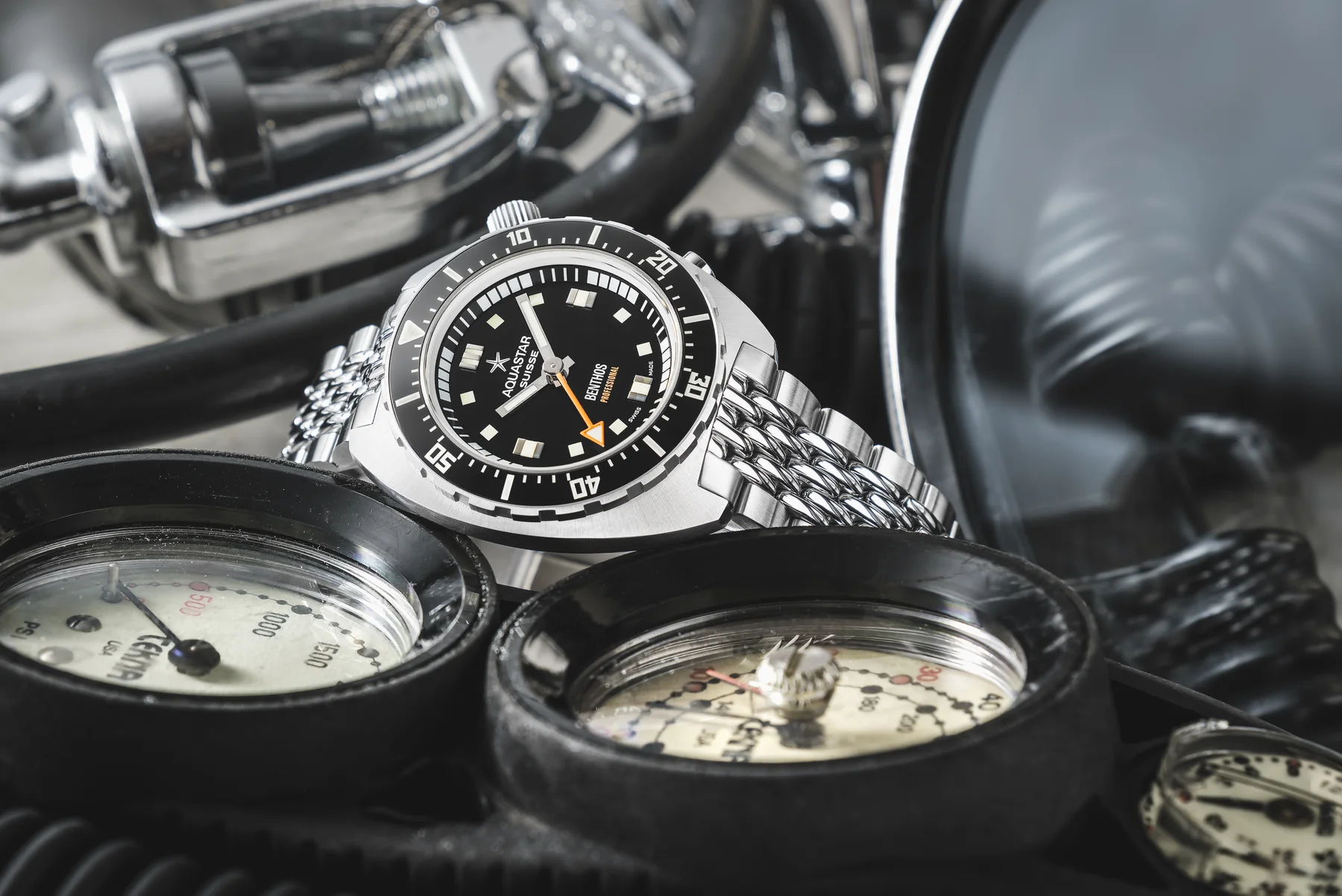
How Does A Watch Bezel Work: at a glance
How does a dive watch bezel work? Unidirectional rotation, 60 clicks, materials and why the design choice can save or risk a decompression stop. Use this guide on how does a watch bezel work to weigh design choices, engineering trade-offs and how the category translates to real Aquastar dive watches.
| Topic | How does a watch bezel work |
| Read time | 5-8 min |
| Source | Aquastar editorial |

Many divers mistakenly believe rotating their bezel clockwise is safe, but this error can dangerously increase decompression sickness risk. Dive bezels are critical safety tools for measuring elapsed dive time. This guide reveals how bezels work mechanically and why design matters for underwater safety.
Table of Contents
- Introduction To Dive Watch Bezels
- Mechanical Operation Of Dive Watch Bezels
- Safety Importance Of Unidirectional Bezels
- Aquastar’s Historical Contributions To Bezel Design
- Common Misconceptions About Bezels
- Evolution Of Bezel Materials And Mechanisms
- Regulatory Standards For Dive Bezels
- Practical Application Of Dive Watch Bezels
- Explore Aquastar’s Advanced Dive Watch Bezel Technology
- Frequently Asked Questions
Key Takeaways
| Point | Details |
|---|---|
| Unidirectional rotation | Bezels rotate only counterclockwise to prevent extending dive time accidentally. |
| Precise ratcheting | The 60-click mechanism provides minute-by-minute timing accuracy underwater. |
| Aquastar innovation | Aquastar pioneered key bezel patents in the 1960s that shaped modern dive watch safety. |
| ISO 6425 compliance | Standards mandate bezel features essential to certified dive watch performance. |
| Alignment matters | Proper bezel setting at dive start is critical for accurate elapsed time tracking. |
Introduction to Dive Watch Bezels
A dive watch bezel is a rotating ring surrounding the watch dial that serves as a timing device critical for diving safety. Its primary function involves tracking elapsed dive time by rotating the bezel to align with the minute hand at dive start. Historical development of ISO 6425 standards established bezels as mandatory safety features for professional dive watches.
The history of Aquastar demonstrates how Swiss innovation transformed basic timing rings into sophisticated safety mechanisms. Manual bezel alignment at dive start establishes a zero reference point that remains visible throughout the dive. This framework ensures divers can continuously monitor time underwater without checking secondary instruments.
Bezel design contributes to diver safety through several key mechanisms:
- Visible time tracking that works independently of watch movement complications
- Tactile feedback through ratcheting clicks that confirm bezel position changes
- High contrast markers that remain readable in murky water or low light conditions
- Rugged construction that withstands impacts and pressure changes during descent
Understanding these fundamentals prepares you to appreciate the sophisticated engineering behind modern dive watch bezels.
Mechanical Operation of Dive Watch Bezels
The mechanical operation begins with aligning the bezel’s zero marker, typically a luminous triangle, with the minute hand at dive start. This alignment creates your reference point for measuring elapsed time throughout the dive. The bezel rotates around the watch case perimeter via a ratcheting mechanism featuring internal teeth that engage with spring-loaded pawls.
This ratcheting mechanism produces discrete clicks as the bezel rotates. Typical bezels feature 60 discrete clicks to track each minute securely without slipping during dives. Each click represents one minute of rotation, providing both audible and tactile confirmation of position changes. The Aquastar Model 60 mechanics exemplify precision engineering in this ratcheting system.
Minute markers arranged around the bezel perimeter enable precise time reading:
- The first 15 minutes typically feature individual minute markers for decompression stop accuracy
- Markers from 15 to 60 minutes may show 5-minute increments for extended dive tracking
- Luminous coating on markers ensures visibility in all underwater conditions
- High contrast colors distinguish timing markers from dial elements
The click feedback serves an engineering purpose beyond user satisfaction. Underwater, you cannot rely on visual confirmation alone when adjusting the bezel with gloved hands. The mechanical clicks provide tactile assurance that the bezel has moved to the intended position.
Reading elapsed time during a dive follows a straightforward process. Check where the minute hand currently points on the bezel scale. That number indicates minutes elapsed since dive start. If your minute hand points to the 25-minute marker on your bezel, you have been underwater for 25 minutes.
Pro Tip: Always verify full engagement of the bezel’s ratchet clicks before descent to avoid slippage that could compromise timing accuracy during your dive.
Safety Importance of Unidirectional Bezels
The critical safety feature of modern dive bezels is their unidirectional rotation capability. These bezels can only rotate counterclockwise, never clockwise. This design prevents accidental clockwise rotation that could underreport elapsed dive time and create dangerous situations.

Imagine accidentally bumping your bezel clockwise during a dive. A bi-directional bezel would allow this rotation, making it appear you have been underwater for less time than reality. You might believe you have 10 minutes of bottom time remaining when you actually have only 5 minutes. This miscalculation dramatically increases decompression sickness risk.
The ratchet mechanism enforces unidirectional rotation through asymmetric tooth design. Teeth angle in one direction, allowing counterclockwise movement while blocking clockwise rotation. Spring-loaded pawls engage these angled teeth, creating a mechanical lock against reverse movement. Accidental impacts can only rotate the bezel counterclockwise, which shows more elapsed time and keeps you safer.
Key differences between bezel types highlight safety evolution:
- Obsolete bi-directional bezels allowed rotation in both directions, creating timing risks
- Modern unidirectional bezels comply with ISO safety standards for bezels
- Professional dive watches exclusively use unidirectional designs for certified safety
- Recreational watches sometimes feature bi-directional bezels for non-diving timing functions
Rotating a bezel clockwise during a dive can hide elapsed time, potentially causing you to exceed safe bottom time limits and risk decompression sickness. Unidirectional design eliminates this danger by ensuring any accidental rotation only increases displayed time.
This mechanical safeguard represents decades of refinement in dive watch engineering. Understanding why your bezel only rotates one direction helps you appreciate the safety-first approach behind professional dive watch design.
Aquastar’s Historical Contributions to Bezel Design
Aquastar filed numerous patents in the 1960s that fundamentally shaped modern dive bezel functionality. These innovations addressed key limitations in existing bezel designs and introduced features now standard across the industry. The Aquastar history reveals pioneering work in bezel locking mechanisms and precision timing capabilities.
The brand introduced the first analog dive computer bezel, called the Navigator, which allowed divers to track multiple dive parameters simultaneously. This innovation integrated decompression calculation directly into bezel functionality, moving beyond simple elapsed time measurement. The Navigator bezel featured specialized scales for depth, time, and no-decompression limits.
Aquastar’s integration of compass markings with bezel functions created dual-use capability:
- Directional orientation using cardinal point markers on the bezel
- Simultaneous time tracking without compromising compass readability
- Rotating bezel to align with compass readings for navigation bearing locks
- Enhanced utility for technical divers requiring both timing and navigation tools
| Feature | Aquastar Innovation (1960s) | Contemporary Standard Bezels |
|---|---|---|
| Rotation | Unidirectional with patent-protected locking | Unidirectional ratcheting |
| Function | Multi-parameter dive computer integration | Single function elapsed time |
| Markers | Compass integration with timing scale | Time markers only |
| Precision | 60-click mechanism for minute accuracy | 60-click or 120-click systems |
These innovations influenced how manufacturers approached bezel design for professional applications. The analog dive computer concept demonstrated that bezels could serve computational functions beyond basic timing. Modern dive computers evolved from these mechanical predecessors, though Aquastar continues producing mechanical watches as reliable backups to electronic systems.
The impact of Aquastar’s 1960s patents extends to current safety standards and functionality expectations. Ideas pioneered decades ago now define what divers expect from professional-grade bezel mechanisms.
Common Misconceptions About Bezels
Several widespread myths about dive bezel use persist among both new and experienced divers. Rotating bezel clockwise is dangerous and does not enhance safety, contrary to what some believe. This misconception likely stems from confusion about how elapsed time tracking works with rotating bezels.
Another common myth suggests all bezels offer equal durability regardless of construction materials. Reality shows significant performance differences between aluminum, ceramic, and other bezel insert materials. Ceramic bezels resist scratching far better than aluminum alternatives, maintaining legibility over years of use. Aluminum bezels fade and scratch more easily, potentially compromising readability during critical dive moments.
Many divers incorrectly believe bezel setting at dive start is optional or can be approximated. This practice introduces timing errors that accumulate throughout the dive. Setting your bezel even two minutes off at dive start means your elapsed time reading remains two minutes inaccurate for the entire dive. Those two minutes could represent the difference between safe ascent and decompression obligation.
Corrections for these myths based on evidence:
- Clockwise rotation reduces displayed elapsed time, potentially causing unsafe extended bottom time
- Material choice directly impacts bezel longevity, readability, and resistance to underwater conditions
- Precise bezel alignment at dive commencement is mandatory for accurate timing throughout the dive
- Bezel accuracy depends on both mechanical precision and proper user technique
Some divers assume bezel clicks are purely aesthetic rather than functional. The ratcheting mechanism serves critical safety purposes by preventing accidental bezel movement and providing tactile position feedback. A bezel that rotates smoothly without clicks cannot maintain position reliably underwater when bumped against equipment or reef structures.
Pro Tip: Always set your bezel precisely at dive commencement to avoid timing errors that could compromise your safety during ascent and decompression stop planning.
Challenging these misconceptions with factual information helps divers use their bezels correctly and understand why specific design features exist.
Evolution of Bezel Materials and Mechanisms
Bezel construction has evolved dramatically from early aluminum inserts to modern ceramic materials. Aluminum bezels dominated early dive watch design due to low cost and ease of manufacturing. These bezels served their purpose but showed significant wear after regular diving use. Scratches accumulated on aluminum surfaces, and printed markers faded from saltwater exposure and UV light.
Ceramic bezel inserts represent a major advancement in durability and appearance retention. Ceramic material resists scratching from impacts that would gouge aluminum surfaces. The material maintains color vibrancy indefinitely, as pigments are embedded throughout the ceramic rather than printed on the surface. This longevity ensures your bezel remains fully legible even after years of professional diving.
Ceramic bezels do add weight to the watch case compared to aluminum alternatives. Some divers appreciate this added heft as it conveys quality and substance. Others prefer lighter aluminum for extended wear comfort. Material choice involves tradeoffs between durability, weight, and cost considerations.
Tactile click feedback has improved significantly through refined ratcheting mechanism design. Modern bezels offer crisper, more distinct clicks than vintage models. This enhancement matters underwater when you need immediate confirmation of bezel position changes. Improved spring tension and tooth geometry create more positive engagement that divers can feel even through thick neoprene gloves.
| Material/Type | Scratch Resistance | Weight | Color Retention | Click Feel | Cost |
|---|---|---|---|---|---|
| Vintage Aluminum | Low | Light | Fades over time | Soft clicks | Low |
| Modern Aluminum | Medium | Light | Good with coating | Moderate clicks | Medium |
| Ceramic | Excellent | Heavier | Permanent | Crisp clicks | High |
| Bi-directional (obsolete) | Varies | Varies | Varies | Smooth rotation | Varies |
| Unidirectional Modern | Good to Excellent | Moderate to Heavy | Excellent | Positive clicks | Medium to High |
Mechanical enhancements extend beyond materials to ratcheting tooth count and geometry. Some manufacturers offer 120-click bezels providing 30-second interval timing precision. These finer increments suit technical divers requiring precise timing for gas switches or decompression stops.
Comparison resources like bezel materials comparison guides help you evaluate options across different watch models and brands. Understanding material properties and mechanical refinements enables informed decisions when selecting dive watches for specific applications.
Regulatory Standards for Dive Bezels
ISO 6425 establishes mandatory requirements for dive watch bezels to ensure safety and reliability. These standards specify precise bezel characteristics that manufacturers must meet for official dive watch certification. Visible minute markers for the first 15 minutes and luminescence for underwater visibility are core requirements. The first 15 minutes receive special attention because this period covers most decompression stop timing.
Luminescence requirements ensure bezel markers remain visible in complete darkness or murky water conditions. Standards specify minimum brightness levels and glow duration after light exposure. Your bezel must provide readable time information even in zero-visibility situations where artificial light sources fail or become unavailable.
Anti-slip bezel features prevent accidental rotation during diving activities. Standards mandate bezel edges with sufficient grip texture for manipulation with gloved hands. Smooth bezels that work fine in showroom conditions become unusable underwater when wearing 5mm neoprene gloves. Knurling, scalloped edges, or raised grip points satisfy this requirement.
Bezel locking mechanisms represent an optional but valuable feature some manufacturers include. These locks prevent any bezel rotation until deliberately released by the diver. Locked bezels eliminate accidental adjustment risk entirely, though they require an extra step before each dive start.
Key standard requirements that impact bezel design:
- Unidirectional rotation with secure ratcheting mechanism preventing backslip
- Clear minute markings for at least the initial 15-minute period
- Luminous coating on both bezel markers and watch hands for low-light legibility
- Adequate grip surface for operation with diving gloves in underwater conditions
- Resistance to corrosion from saltwater exposure over extended service life
Compliance with ISO 6425 standards affects every aspect of bezel engineering from material selection to mechanical design. These standards ensure certified dive watches meet minimum safety thresholds for professional use. Watches lacking certification may function adequately for recreational diving but cannot be trusted for commercial or technical diving applications.
Understanding regulatory requirements helps you distinguish between fashion watches with dive styling and genuine professional dive instruments engineered to precise safety specifications.
Practical Application of Dive Watch Bezels
Proper bezel use begins before you enter the water. Your pre-dive safety checks should include bezel verification alongside other equipment inspections. Confirm the bezel rotates smoothly through its full range and clicks positively at each position. Check that all markers remain clearly visible and that luminous coating charges adequately under light exposure.
Step-by-step bezel alignment procedure at dive start:
- Note the current position of your minute hand on the watch dial
- Rotate the bezel counterclockwise until the zero marker aligns precisely with the minute hand
- Verify alignment by checking from multiple angles to eliminate parallax error
- Confirm the bezel clicked into position and will not slip from light contact
- Begin your descent, confident that elapsed time tracking starts from an accurate zero point
Continuous time reading throughout your dive involves comparing the minute hand position to bezel markers. As your minute hand sweeps around the dial, it passes bezel markers indicating elapsed minutes. When the minute hand points to the 20-minute bezel marker, you have been underwater for 20 minutes. This reading method works independently of the hour hand position or specific time of day.
Immediate accurate bezel setting prevents timing errors that compromise dive planning. A bezel misaligned by even three minutes creates a three-minute error in all subsequent time readings. During ascent, those three minutes could mean the difference between adequate safety stop duration and cutting your decompression short. Timing inaccuracies up to five minutes can occur from careless bezel setting, creating serious decompression illness risk.
Pro Tip: Double-check bezel position during pre-dive safety checks by confirming the zero marker aligns exactly with your minute hand before entering the water.
Choosing bezels suited to your diving type involves considering your typical dive profiles. Recreational divers benefit from clear, simple bezel designs with high-contrast markers. Technical divers may prefer bezels with finer increment markings or specialized scales for gas planning. Professional commercial divers require the most robust bezel construction to withstand daily use in harsh conditions.
The professional dive watch features you prioritize depend on whether you dive recreationally or professionally. Understanding proper bezel application ensures you maximize safety benefits from this critical timing tool.
Explore Aquastar’s Advanced Dive Watch Bezel Technology
Aquastar’s cutting-edge bezel technology ensures precision timing and safety for professional and recreational divers. Each model features unidirectional ceramic bezels compliant with ISO 6425 standards, combining Swiss watchmaking heritage with modern materials engineering. The 60-click ratcheting mechanisms deliver tactile feedback you can feel through diving gloves, confirming accurate position setting underwater.
Discover how professional diver watch features translate pioneering 1960s innovations into contemporary dive instruments. Expert comparisons in our best dive watch brands 2026 guide help you evaluate bezel quality across manufacturers. The Aquastar Benthos Heritage II dive watch exemplifies how advanced bezel engineering supports reliable dive timing as a backup to electronic dive computers.
Frequently Asked Questions
How does a dive watch bezel prevent extending dive time accidentally?
Unidirectional bezel rotation ensures the bezel only moves counterclockwise, so elapsed time readings can only increase, never decrease. This mechanical design prevents underestimating dive time by making it impossible to accidentally rotate the bezel in a direction that would hide elapsed minutes. The ratcheting mechanism physically blocks clockwise rotation, eliminating the risk of accidental time extensions that could lead to decompression sickness.
Can I use a bi-directional bezel for professional diving?
Bi-directional bezels are considered unsafe for professional diving and have become largely obsolete in serious dive watch design. Professional dive watches exclusively use unidirectional bezels to comply with ISO 6425 safety standards. The ability to rotate in both directions creates unacceptable risk of accidentally reducing displayed elapsed time during a dive.
Why is bezel alignment at the start of the dive so important?
Proper bezel alignment establishes an accurate zero reference point for measuring elapsed dive time throughout your dive. Misalignment by even two or three minutes creates timing errors that persist for the entire dive, potentially causing you to exceed safe bottom time limits. Errors up to five minutes from careless setting can compromise decompression stop planning and increase decompression illness risk during ascent.
Which bezel material is best for durability?
Ceramic bezels offer superior scratch resistance and permanent color retention compared to aluminum alternatives. The material maintains legibility indefinitely because pigments are embedded throughout the ceramic rather than surface-printed. Choosing high-quality ceramic construction enhances your bezel’s readability over years of diving, which directly supports safety through consistent timing accuracy.