
Chronograph Watch Explained: at a glance
Chronograph watch explained for divers: how mechanical chronos with decompression scales and waterproof pushers serve as analog dive computers. Use this guide on chronograph watch explained to weigh design choices, engineering trade-offs and how the category translates to real Aquastar dive watches.
| Topic | Chronograph watch explained |
| Read time | 5-8 min |
| Source | Aquastar editorial |

Many divers dismiss chronograph watches as fashion accessories, unaware these instruments carry patented safety features designed to preserve life underwater. Aquastar pioneered mechanical dive chronographs in the 1960s, filing patents that transformed simple timekeepers into analog dive computers with decompression scales and water-resistant pushers. This guide explores the technical mechanisms, operational procedures, and safety functions that make chronograph watches essential backup instruments for professional and recreational divers worldwide.
Table of Contents
- Introduction To Chronograph Watches In Diving
- Mechanical Chronograph Mechanisms Specific To Diving
- Aquastar’s Patented Chronograph Dive Functionalities
- Decompression And Dive Safety Features In Chronographs
- Comparison Of Vintage Vs Modern Dive Chronograph Features
- Common Misconceptions And Technical Clarifications
- Practical Operational Guidance For Using Chronographs In Dive Scenarios
- Conclusion: Bridging Historical Innovation To Modern Dive Practice
- Explore Aquastar’s Dive Chronograph Collection
- FAQ
Key Takeaways
| Point | Details |
|---|---|
| Patented Timing Systems | Aquastar chronographs integrate rotating bezels with no-decompression scales enabling multi-dive nitrogen tracking. |
| Underwater Pusher Operation | Mechanical pushers feature specialized seals allowing start, stop, and reset functions during dives without water intrusion. |
| Analog Dive Computer Heritage | Aquastar created the first analog dive computer, the Navigator, combining elapsed time measurement with decompression calculations. |
| Modern Material Evolution | Contemporary dive chronographs preserve vintage patented functions while upgrading to sapphire crystals and automatic movements. |
| Backup Safety Role | Chronographs serve as reliable mechanical backups to electronic dive computers, requiring proper training for safe operation. |
Introduction to Chronograph Watches in Diving
A chronograph watch combines standard timekeeping with independent stopwatch functions, featuring additional subdials and pushers that measure elapsed time intervals. The emergence of dive chronographs occurred in the early 1960s when commercial and military divers needed precise underwater timing beyond basic elapsed dive time. These specialized instruments became essential tools for managing decompression stops, tracking multiple dive sequences, and calculating nitrogen loading during repetitive dives.
Dive chronographs addressed critical functional demands that standard dive watches couldn’t meet. Divers required the ability to start and stop timing functions independently during underwater operations, measure specific work intervals, and track decompression obligations across multiple dives in a single day. The mechanical reliability of these instruments proved vital when electronic devices failed in saltwater environments or extreme pressure conditions.
Aquastar emerged as a pioneering manufacturer dedicated exclusively to dive watch production, filing multiple patents throughout the 1960s that established standards still used today. The brand introduced innovations like the skindiver case design and integrated decompression scales that transformed chronographs from simple timing tools into comprehensive dive safety instruments. These patents addressed specific underwater challenges:
- Water-resistant pusher systems operating reliably at depth
- Rotating bezels combining elapsed time with decompression limit calculations
- High-contrast dial layouts readable in low-visibility conditions
- Robust mechanical movements resisting pressure and temperature fluctuations
- Corrosion-resistant case materials withstanding prolonged saltwater exposure
Mechanical Chronograph Mechanisms Specific to Diving
Mechanical chronographs employ two primary actuation systems: column wheel mechanisms and cam-actuated designs. Column wheel movements offer smoother pusher action and greater long-term reliability, making them preferred for professional dive applications where precise timing control matters. Cam-actuated systems provide simpler construction with fewer parts, though they typically deliver less refined pusher feel and increased wear over thousands of cycles.
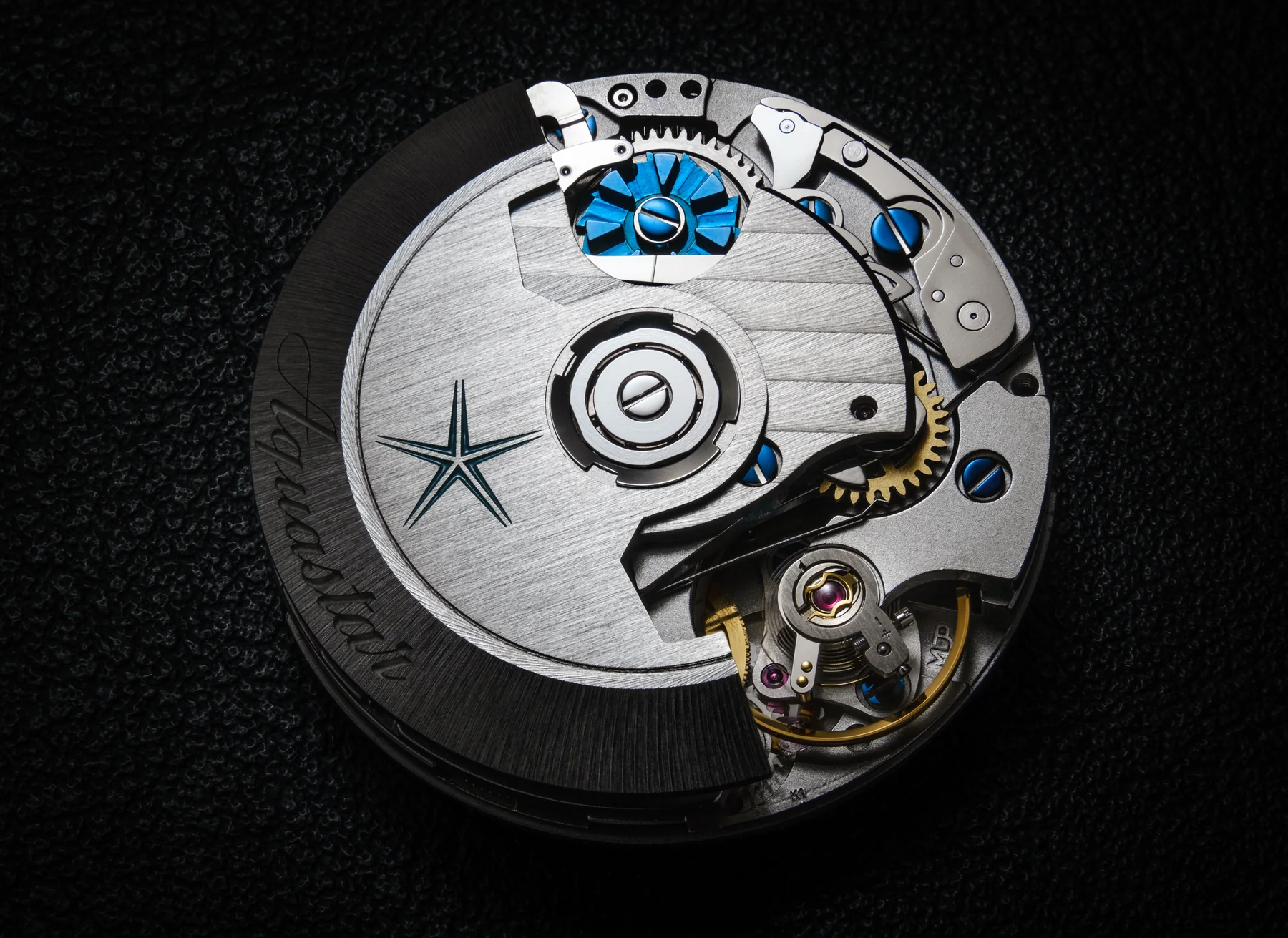
The La Joux-Perret automatic column-wheel movement in the Aquastar Deepstar delivers 55 hours of power reserve with 200-meter water resistance, ensuring extended dive operation without manual winding. Automatic movements eliminate the need for crown manipulation underwater, reducing potential water ingress points. Manual wind chronographs offer thinner case profiles and direct tactile feedback during winding, appealing to divers who prefer traditional mechanical interaction.
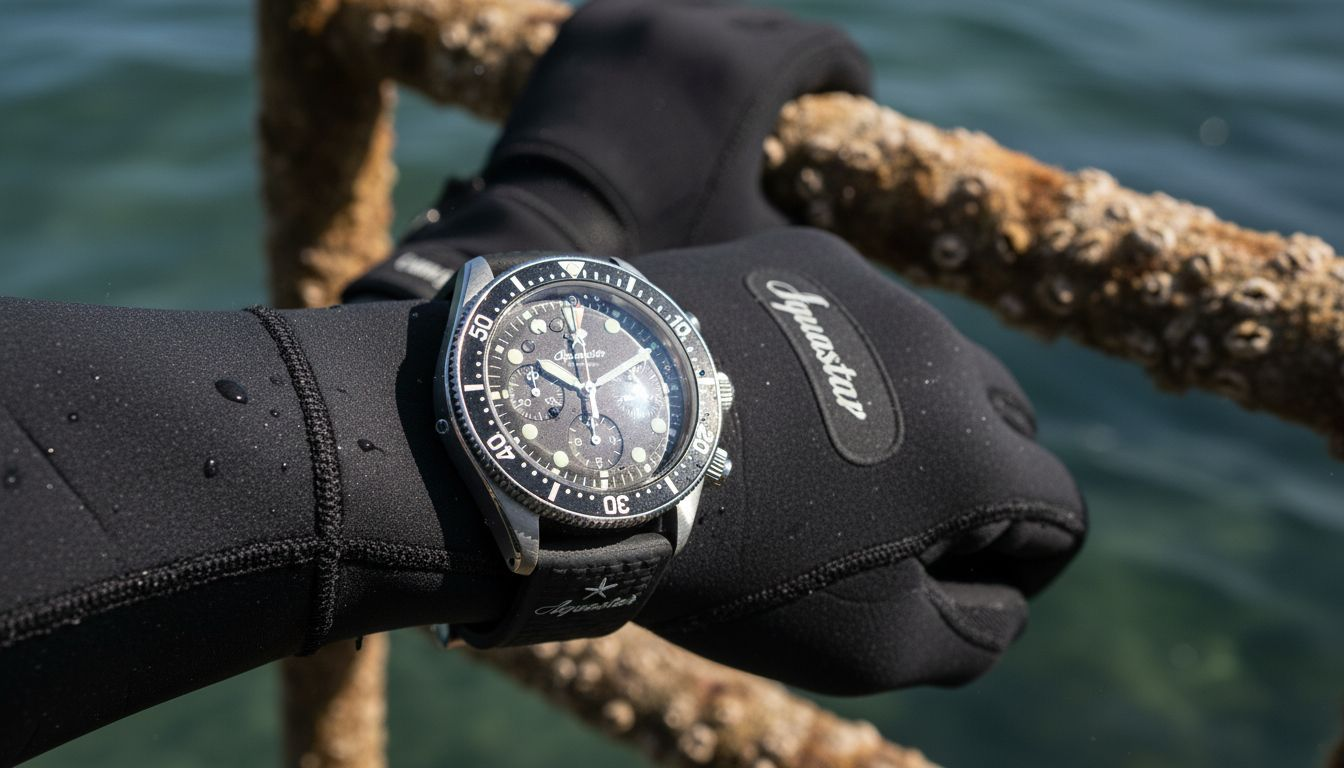
Water resistance for dive chronographs requires specialized engineering beyond standard watch construction. Pusher systems incorporate multiple gaskets, spring-loaded seals, and precisely machined tolerances preventing water penetration during underwater actuation. The pushers must maintain friction levels allowing deliberate operation while resisting accidental activation from bumps or pressure changes during descent and ascent.
Reliable underwater pusher operation depends on several mechanical factors. The spring tension must overcome water pressure at rated depths while remaining operable with gloved hands. Pusher stems require extended lengths reaching through thicker case walls needed for pressure resistance. Screw-down pusher designs add an extra security layer, though they prevent underwater chronograph use unless specifically engineered for submerged operation.
Pro Tip: Check your chronograph’s power reserve indicator before diving and ensure the movement operates at 28,800 vibrations per hour or higher for optimal timing accuracy during critical decompression calculations.
Key mechanical specifications affecting dive reliability include:
- Movement frequency determining timing precision under varying temperatures
- Mainspring torque curves affecting power delivery throughout reserve duration
- Escapement design resisting magnetic fields from electronic dive equipment
- Jewel count indicating bearing quality for long-term accuracy
- Shock protection systems absorbing impacts during equipment handling
Aquastar’s Patented Chronograph Dive Functionalities
Aquastar’s patented rotating bezel system combines elapsed time measurement with no-decompression limit scales, creating a mechanical dive computer on your wrist. Introduced in 1962, this innovation allowed divers to track both current dive duration and permissible bottom time before requiring decompression stops. The dual-scale bezel rotates bidirectionally, enabling divers to set markers for planned ascent times while simultaneously monitoring actual elapsed minutes.
The no-decompression limit scale operates by aligning specific depth markers with elapsed time indicators. Divers set the bezel’s zero marker at dive start, then read the intersection of their current depth with elapsed time to determine remaining no-decompression minutes. This mechanical calculation provided critical safety information decades before electronic dive computers became affordable and reliable for recreational divers.
Aquastar’s analog dive computer features integrated decompression calculations directly into the bezel design. The modern Deepstar chronograph preserves these patented scales while adding contemporary materials and movements. The Navigator model took this concept further, becoming the first true analog dive computer combining chronograph functions with comprehensive decompression tables on rotating inner and outer bezels.
| Feature | Vintage Aquastar (1960s) | Modern Re-Edition |
|---|---|---|
| Bezel Function | Patented dual-scale decompression | Same patented scales preserved |
| Movement Type | Manual wind column wheel | Automatic column wheel |
| Water Resistance | 200 meters | 200-300 meters |
| Crystal Material | Acrylic domed | Sapphire with anti-reflective coating |
| Case Construction | Stainless steel 37-39mm | Stainless steel 39-42mm options |
These patented features deliver tangible benefits for dive planning and safety management:
- Immediate visual reference for remaining no-decompression time without electronic devices
- Mechanical reliability unaffected by battery depletion or electronic failure
- Intuitive operation requiring minimal training for basic dive timing
- Redundant safety backup when primary dive computers malfunction
- Historical accuracy preserving proven decompression calculation methods
Decompression and Dive Safety Features in Chronographs
No-decompression limit scales represent the maximum time divers can spend at specific depths before requiring staged ascents to off-gas accumulated nitrogen. These scales prove critical because exceeding no-decompression limits without proper stops risks decompression sickness. The Aquastar Deepstar’s bezel tracks both elapsed dive time and nitrogen loading calculations, providing real-time safety information throughout the dive.
Monitoring multiple dives using chronograph bezels requires systematic procedures:
- Set the bezel’s zero marker aligned with the minute hand at dive start to track total elapsed time.
- Note your maximum depth and cross-reference with the bezel’s depth markings to find your no-decompression limit.
- Monitor the chronograph subdial tracking cumulative bottom time if performing repetitive dives within 24 hours.
- Before starting a second dive, calculate your residual nitrogen group using the bezel’s tables and adjust permissible bottom time accordingly.
- Reset the chronograph between dives but maintain bezel position to track surface interval duration for nitrogen off-gassing.
- Cross-reference all bezel calculations with dive tables or electronic computers before committing to dive plans.
The chronograph’s elapsed time measurement differs fundamentally from comprehensive nitrogen tracking. While the stopwatch function accurately records minutes underwater, it cannot account for varying depths, ascent rates, or physiological factors affecting decompression needs. The bezel scales provide estimated guidelines based on standard dive table calculations, offering reasonable safety margins for recreational diving within sport diving limits.
Pro Tip: Always verify your bezel readings against your primary electronic dive computer’s real-time tissue loading calculations, using the mechanical chronograph as a secondary reference rather than sole safety instrument.
Mechanical chronographs carry important operational limitations underwater. They cannot measure actual nitrogen absorption rates, account for individual physiological differences, track multi-level dive profiles accurately, or adjust for altitude diving conditions. These instruments work best for square-profile dives at consistent depths, matching the assumptions built into traditional dive table calculations that informed their bezel scale designs.
Comparison of Vintage vs Modern Dive Chronograph Features
Vintage Aquastar dive chronographs from the 1960s and 1970s featured specific characteristics reflecting period manufacturing capabilities and diver preferences. Manual wind movements dominated this era, requiring crown winding every 40 to 48 hours but offering thinner case profiles appreciated by divers wearing watches under wetsuit cuffs. The patented bezel systems introduced on these vintage models established the foundation for modern dive chronograph functionality. Case sizes typically measured 37mm to 39mm, considered large for the period but modest by contemporary standards.
Modern re-editions preserve core patented functions while incorporating significant material and movement improvements. The contemporary Deepstar models feature sapphire crystals offering superior scratch resistance compared to acrylic, anti-reflective coatings improving underwater visibility, and automatic movements eliminating manual winding requirements. Stainless steel metallurgy has advanced, providing better corrosion resistance in saltwater environments. Water resistance ratings often extend to 300 meters with improved gasket materials and case construction techniques.
| Specification | Vintage Models | Modern Re-Editions |
|---|---|---|
| Movement | Manual wind, 40-48hr reserve | Automatic, 55+ hour reserve |
| Crystal | Acrylic domed | Sapphire with AR coating |
| Case Size | 37-39mm | 39-42mm options |
| Lume Material | Radium/Tritium | Super-LumiNova |
| Bezel Design | Aluminum insert | Ceramic or steel |
| Strap Options | Tropic rubber, leather | Modern rubber, NATO, bracelet |
| Price Range | $3,000-$8,000 (collector market) | $2,500-$5,000 (new) |
Modern Aquastar chronographs maintain the patented underwater timing functions that distinguished vintage models. The decompression scales, bidirectional bezel operation, and water-resistant pusher systems continue operating on identical principles. This functional continuity allows divers trained on vintage instruments to use contemporary models without relearning operational procedures. The updated materials and movements enhance reliability and durability while preserving the mechanical character collectors value.
Both vintage and modern forms attract distinct collector segments. Vintage enthusiasts prize original patented designs, historical significance, and the connection to pioneering dive exploration. These watches carry stories of actual underwater use during the golden age of recreational diving. Modern re-editions appeal to divers seeking proven functionality with contemporary reliability, warranty coverage, and the ability to actually use the watch for its intended purpose without risking irreplaceable vintage pieces. The vintage Deepstar chronographs command premium prices reflecting their historical importance and limited surviving examples in good condition.
Common Misconceptions and Technical Clarifications
The perception that chronographs serve only as fashion accessories ignores the engineering sophistication required for professional dive timing. Aquastar dive chronographs incorporate water-resistant pusher systems, patented decompression scales, and movements tested under extreme conditions, distinguishing them from decorative timepieces lacking functional dive capability. The patents filed by Aquastar addressed specific underwater timing challenges that fashion watches never intended to solve.
Pusher operation underwater requires specialized construction beyond standard water resistance. Many assume operating chronograph pushers compromises water resistance, but properly designed dive chronographs incorporate multiple sealing systems preventing water ingress during underwater actuation. The pusher stems extend through reinforced case tubes with spring-loaded gaskets maintaining pressure even when depressed. This engineering allows divers to start, stop, and reset timing functions during dives without flooding the movement.
Confusion often arises between chronograph elapsed time measurement and comprehensive dive computer functions. Chronographs measure time intervals accurately but cannot calculate real-time tissue nitrogen loading, track ascent rates, or account for multi-level dive profiles. Electronic dive computers incorporate physiological models, depth sensors, and algorithms adjusting decompression requirements based on actual dive conditions. The chronograph’s bezel scales provide estimated guidelines based on standard dive tables, offering reasonable safety margins for simple dive profiles.
Mechanical chronographs function as safety backups rather than dive computer replacements. Modern diving standards require electronic computers as primary instruments, with mechanical chronographs serving secondary roles. The redundancy proves valuable when batteries fail, electronics malfunction, or sensors provide questionable readings. Experienced divers maintain proficiency with mechanical timing and table-based calculations as foundational skills underlying electronic convenience.
Safe chronograph use requires proper dive training beyond simply reading the watch. Understanding decompression theory, recognizing nitrogen loading symptoms, planning conservative dive profiles, and executing controlled ascents all depend on comprehensive dive education. The chronograph provides timing data, but the diver must interpret that information correctly and make sound safety decisions. Collector misconceptions about dive chronographs often stem from viewing them as collectibles rather than functional instruments requiring operational knowledge:
- Assuming all chronographs with rotating bezels qualify as dive instruments
- Believing water resistance ratings alone determine dive suitability
- Expecting mechanical chronographs to replace modern dive computers entirely
- Operating pushers without understanding their water-resistant depth limitations
- Neglecting regular pressure testing and gasket service for underwater reliability
Practical Operational Guidance for Using Chronographs in Dive Scenarios
Operating chronograph pushers underwater requires deliberate technique ensuring accurate timing without damaging sealing systems. Follow these procedures for safe underwater operation:
- Press the start pusher firmly and completely before releasing to ensure the chronograph mechanism fully engages without partial activation causing timing errors.
- Monitor the running seconds subdial confirming the chronograph activated properly, as partial pusher depression may not trigger the mechanism.
- Press the stop pusher with equal firmness at dive end or when timing specific intervals, holding briefly to ensure complete mechanism disengagement.
- Activate the reset pusher only after fully stopping the chronograph, never while the mechanism runs, to prevent damage to the column wheel or cam system.
- Limit underwater pusher operations to necessary timing functions, as excessive actuation increases gasket wear and potential seal degradation over time.
- Rinse the watch thoroughly in fresh water after saltwater diving, operating the pushers several times during rinsing to clear salt deposits from the pusher tubes.
Reading and aligning no-decompression bezel scales during multi-dive planning requires understanding the underlying decompression theory. Set the bezel’s zero marker at dive start, then track your maximum depth throughout the dive. The bezel’s depth markings intersect with elapsed time indicators showing remaining no-decompression minutes at that depth. For repetitive dives, calculate your residual nitrogen group based on surface interval duration and adjust the bezel accordingly before the second dive.
Best practices for elapsed time measurement emphasize conservative safety margins. Start the chronograph at descent rather than surface departure, capturing actual bottom time. Stop timing at ascent start rather than surface arrival, ensuring you account for all time spent at depth. Build in safety stops even when remaining within no-decompression limits, using the chronograph to time three to five-minute stops at 15 feet.
Mechanical chronographs carry important limitations compared to electronic dive computers. They cannot adjust for altitude diving, account for cold water exposure increasing decompression risk, track actual tissue nitrogen loading in real time, or warn of dangerous ascent rates. The Aquastar Deepstar chronograph pushers operate reliably underwater, but the watch provides estimated safety guidelines rather than comprehensive physiological monitoring.
Pro Tip: Program your electronic dive computer as your primary instrument and reference the mechanical chronograph’s bezel scales as a secondary check, using any discrepancies as signals to adopt the more conservative timing guideline.
Conclusion: Bridging Historical Innovation to Modern Dive Practice
Aquastar’s patented safety features and mechanical excellence established chronograph dive watches as essential professional tools rather than mere accessories. The integration of decompression scales, water-resistant pushers, and reliable column-wheel movements created instruments serving real safety functions during underwater operations. Modern re-editions preserve these proven innovations while incorporating contemporary materials and automatic movements enhancing reliability and user experience.
The enduring value of analog chronographs as professional dive backups persists despite electronic computer dominance. Mechanical reliability independent of batteries, intuitive operation under stress, and time-proven accuracy provide reassurance when primary systems fail. The blend of heritage and modern technology in contemporary Aquastar models honors historical innovation while meeting current dive standards and collector expectations. Understanding these instruments encourages informed use, proper maintenance, and appreciation for the engineering sophistication preserving life underwater.
Explore Aquastar’s Dive Chronograph Collection
Aquastar continues innovating professional dive chronographs building on six decades of patented safety features and mechanical excellence. Our comprehensive tool watch guide explores the engineering principles distinguishing functional dive instruments from fashion timepieces. Discover the differences between automatic and manual movements to determine which best suits your diving style and maintenance preferences.
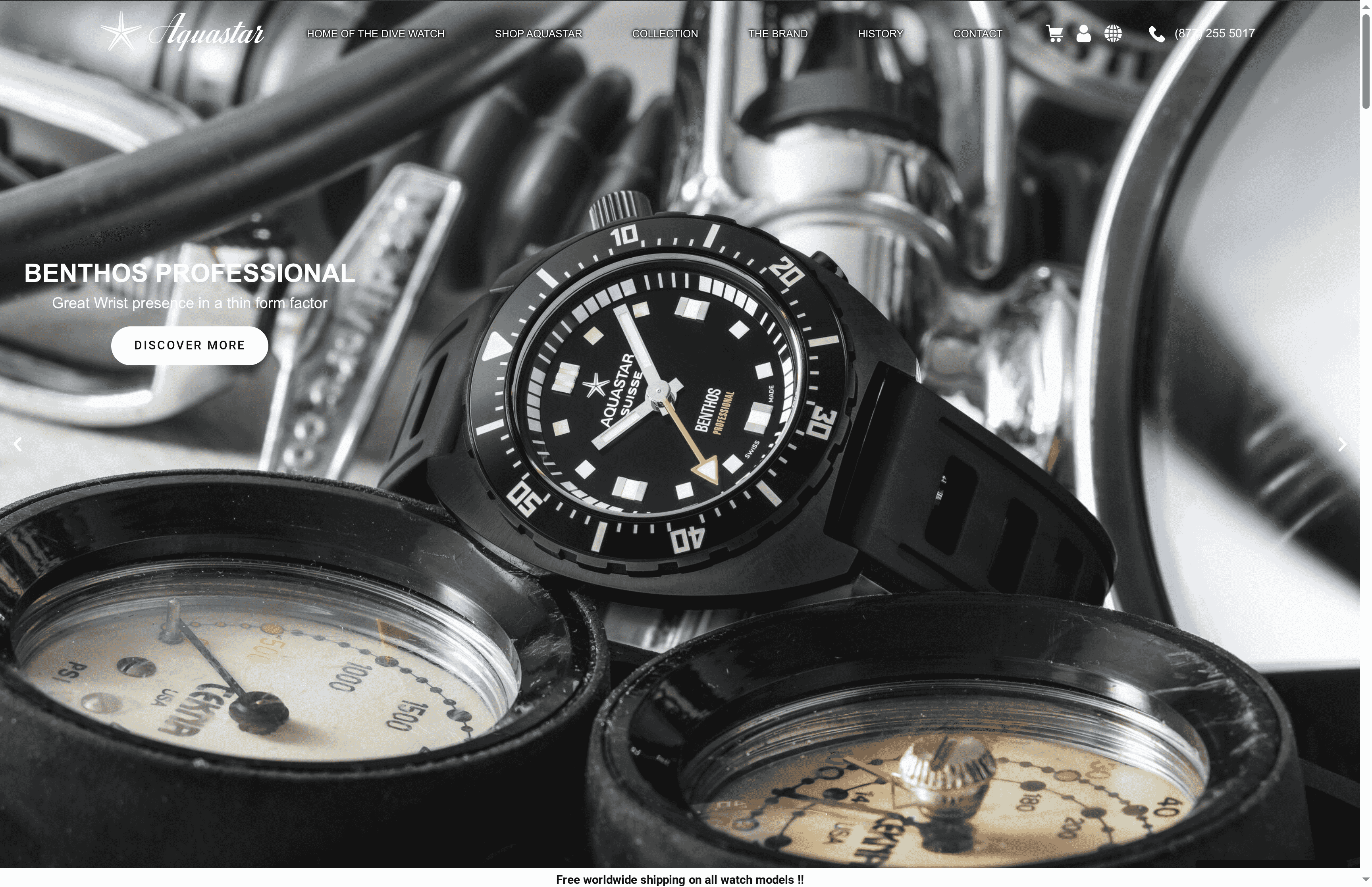
The flagship Aquastar Deepstar 39mm Chronograph combines the original patented bezel design with a modern automatic column-wheel movement, sapphire crystal, and 200-meter water resistance. This watch serves both as a reliable dive backup and a connection to the pioneering innovations that transformed underwater timing. Whether you dive professionally, recreationally, or collect mechanical instruments with proven heritage, Aquastar’s chronographs deliver the functionality and reliability divers have trusted since 1962.
FAQ
What is a chronograph watch and how is it different from a standard dive watch?
A chronograph watch includes independent stopwatch functions with subdials and pushers for timing specific events, while standard dive watches primarily track elapsed dive time using a rotating bezel. Chronographs offer start, stop, and reset capabilities enabling precise measurement of multiple intervals during a single dive. The added complexity provides greater timing versatility for professional diving operations requiring detailed time tracking.
Can chronograph pushers be safely used underwater during dives?
Properly designed dive chronograph pushers feature specialized seals and spring-loaded mechanisms allowing underwater operation without water intrusion. Aquastar dive chronographs incorporate multiple gasket systems and reinforced pusher tubes maintaining water resistance during actuation at rated depths. Divers can start, stop, and reset timing functions throughout the dive when using chronographs specifically engineered for underwater pusher operation.
How do dive chronographs assist with decompression stops and safety?
Bezel scales on dive chronographs provide no-decompression limit estimates and track elapsed bottom time for decompression planning. Aquastar’s patented bezel design integrates depth markers with time scales allowing divers to monitor nitrogen loading across multiple dives. These mechanical calculations support safety planning alongside electronic dive computers, offering backup timing when primary instruments fail or require verification.
Are mechanical chronograph watches reliable compared to electronic dive computers?
Mechanical chronographs provide robust, independent timing functions as backup instruments but lack the physiological sensors and real-time calculations of electronic dive computers. They excel at measuring elapsed time and offering decompression estimates based on standard dive tables. Divers should use chronographs as supplementary safety tools rather than replacements for dive computers’ comprehensive monitoring of tissue loading, ascent rates, and multi-level profile tracking.
Recommended
- Dive Watch Cases Explained: Complete Collector’s Guide – Aquastar dive watches
- How to Identify Genuine Dive Watches Like a Pro – Aquastar dive watches
- How to Collect Dive Watches: A Complete Collector’s Guide – Aquastar dive watches
- Best Dive Watch Brands – Expert Comparison 2025 – Aquastar dive watches