

Dive Watches: at a glance
Learn how to insure your luxury or dive watch with the right coverage, documents, and steps to protect your high-value timepiece from loss or damage. Use this guide on dive watches to weigh design choices, engineering trade-offs and how the category translates to real Aquastar dive watches.
| Topic | Dive watches |
| Read time | 5-8 min |
| Source | Aquastar editorial |

TL;DR:
- Luxury watch insurance offers full, agreed, or replacement value coverage, unlike standard policies.
- Proper documentation and appraisals are essential before applying for specialized watch coverage.
- Active policy management and timely claims process protect both financial and sentimental value.
Imagine surfacing from a dive in the Coral Sea, reaching for your wrist, and finding your prized professional timepiece gone. Or picture opening your travel case to discover your collector-grade mechanical watch cracked beyond repair. For owners of high-value timepieces, these scenarios represent a financial and emotional loss that standard insurance rarely addresses. Luxury and dive watches occupy a unique category in the world of personal property, and securing the right coverage requires specific knowledge, precise documentation, and a clear understanding of how specialty insurers operate. This guide walks you through every step.
Table of Contents
- Understanding luxury watch insurance and why it matters
- What you need before applying: Documents and requirements
- How to get your luxury watch insured: Step-by-step
- Maintaining your policy and making a claim
- Why luxury watch insurance matters more than you think
- Protect your luxury watches with expert guidance
- Frequently asked questions
Key Takeaways
| Point | Details |
|---|---|
| Specialized insurance is crucial | Standard homeowners policies rarely protect luxury watches adequately; specialty insurance secures true value and peace of mind. |
| Proper documentation matters | Keep all receipts, appraisals, and authenticity records safe for easy application and smooth future claims. |
| Step-by-step process | Follow clear steps to research providers, prepare documents, and maintain your coverage for ongoing security. |
| Policy updates are essential | Update appraisals and documentation regularly to avoid gaps in protection if market values rise. |
Understanding luxury watch insurance and why it matters
Luxury watch insurance is a specialized form of personal property coverage designed to protect high-value timepieces against risks that standard policies routinely exclude or underpay. Unlike a general homeowners or renters policy, a dedicated watch insurance plan accounts for the true market or agreed value of your watch, not a depreciated replacement figure that leaves you short.
Standard coverage for luxury watches often limits payouts for jewelry and watches to a sublimit of $1,500 to $5,000, regardless of what your timepiece is actually worth. For a professional dive watch or a vintage Swiss mechanical piece valued at $15,000 or more, that gap is significant. Standard homeowners insurance often limits coverage for luxury items or excludes them without scheduled additions, which is why specialty coverage exists.
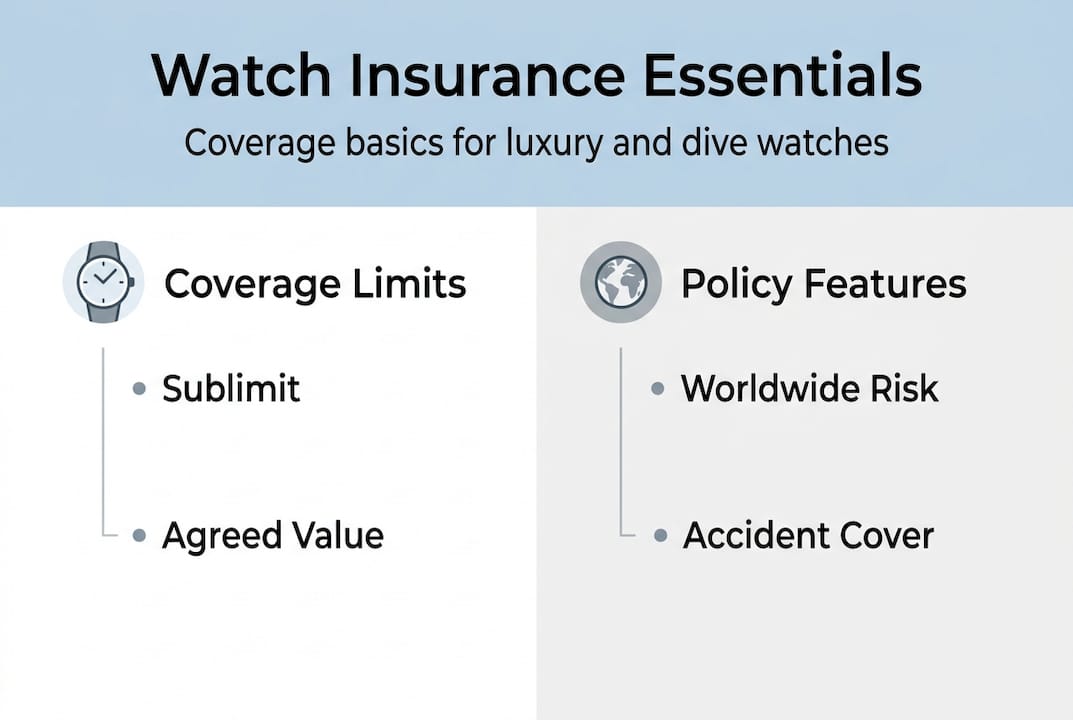
Three terms define how specialty watch policies work. Agreed value means you and the insurer agree on a fixed payout amount upfront, with no depreciation applied at claim time. Replacement value means the insurer pays the cost to replace the watch with a comparable model at current market prices. A scheduled item is a specific watch listed by name, serial number, and appraised value on your policy, giving it its own coverage limits separate from your general property.
Understanding what defines a tool watch matters here, because professional dive watches often carry both collector and functional value, and insurers treat them differently depending on their classification.
Scenarios typically covered by specialty watch insurance include:
- Theft, including from hotel rooms and vehicles
- Accidental damage, such as impact, scratching, or water ingress beyond rated depth
- Mysterious disappearance or loss
- Damage during travel or transit
- Partial loss, such as a broken crystal or damaged crown
| Feature | Standard homeowners policy | Specialty watch insurance |
|---|---|---|
| Coverage limit | $1,500 to $5,000 sublimit | Full appraised or agreed value |
| Depreciation applied | Yes | No (agreed or replacement value) |
| Worldwide coverage | Rarely | Commonly included |
| Accidental loss | Usually excluded | Often covered |
| Scheduled items | Optional add-on | Core feature |
| Claims process | General property adjuster | Watch-specialist adjuster |
“A watch is not just a timekeeping instrument. It is a documented asset, and treating it as such from an insurance standpoint is the most responsible approach an owner can take.”
Proper insurance preserves both the financial and sentimental value of your collection, ensuring that a single incident does not erase years of careful acquisition.
What you need before applying: Documents and requirements
Once you grasp the why and what of insuring your timepiece, the next step is gathering the proper paperwork to make your application seamless. Insurers need to verify authenticity, establish current value, and confirm ownership before they extend coverage. Arriving prepared accelerates the process considerably.
Most insurers require proof of authenticity, recent appraisals, and clear documentation before activating a policy. The specific documents vary by watch type and region, but the core requirements are consistent across the USA, Canada, UK, and Australia.
Standard documents required for watch insurance applications:
- Original purchase receipt or invoice showing price and retailer
- Certificate of authenticity or manufacturer warranty card
- Reference card or model specification sheet
- Recent professional appraisal (typically within the last two years)
- High-resolution photographs showing all angles, serial number, and case back
- Serial number record, often stamped between the lugs or on the case back
For identifying genuine dive watches, serial numbers and manufacturer stamps are critical reference points that insurers use to verify the watch is what the owner claims it to be.
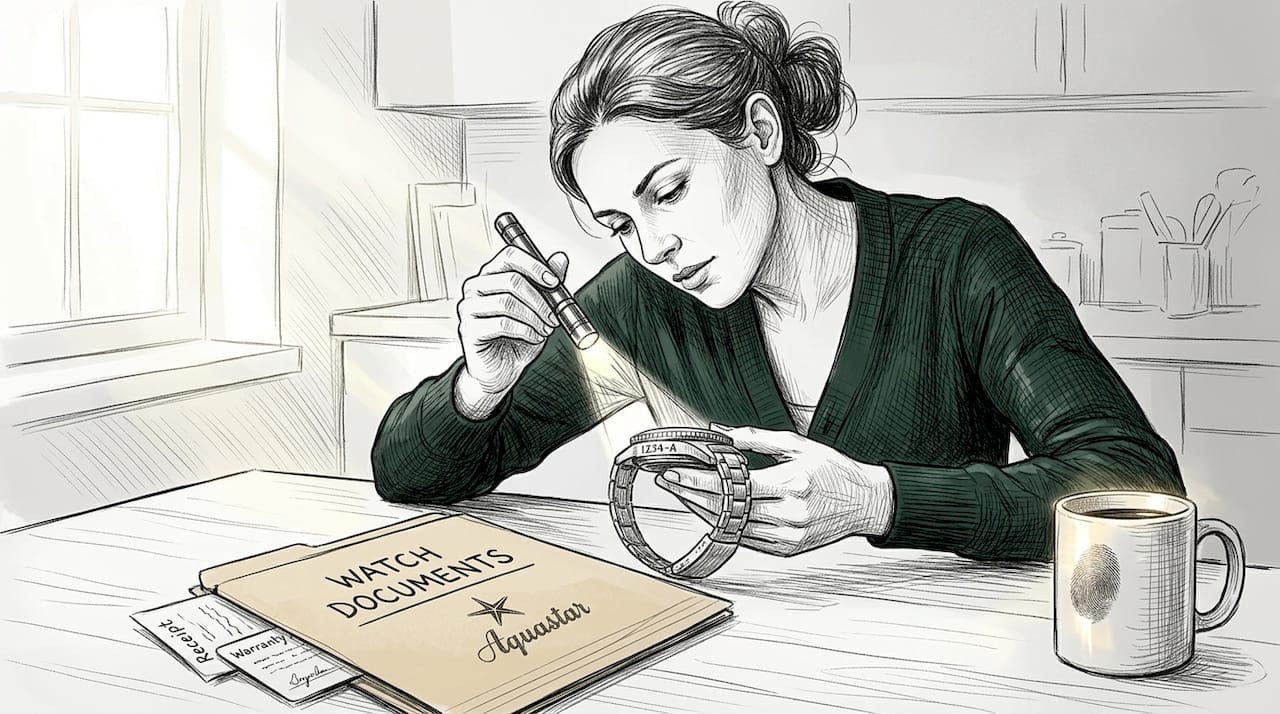
| Requirement | New watch | Vintage or pre-owned watch |
|---|---|---|
| Purchase receipt | Required | Helpful but not always available |
| Manufacturer warranty card | Standard | Rarely available; service records substitute |
| Professional appraisal | Recommended | Required |
| Provenance documentation | Optional | Strongly recommended |
| Service history | Not applicable | Important for valuation |
| Photos | Required | Required, with condition notes |
Regional differences exist. In the USA, insurers commonly accept dealer appraisals from certified gemologists or horologists. In the UK and Australia, Lloyd’s-affiliated underwriters may request independent appraisals from accredited valuers. Canadian insurers often align with US standards but may require bilingual documentation in Quebec.
For collecting dive watches at a serious level, maintaining a dedicated watch portfolio with all documentation organized by reference number is a practice that pays dividends at claim time. Warranty and paperwork details for newer models are available directly from manufacturers and should be retained from the moment of purchase.
Pro Tip: Store both physical and digital copies of all watch documentation. Use a cloud-based service with strong encryption for digital backups, and keep physical copies in a fireproof safe. If your home is burglarized or damaged, you will still have everything needed to file a claim promptly.
How to get your luxury watch insured: Step-by-step
Armed with your documents, here’s how to navigate the insurance process from start to finish. The process is straightforward when approached methodically, and choosing the right insurer from the outset saves time and potential frustration later.
Specialist insurers often offer superior coverage for high-value watches compared to mainstream providers, including broader accidental loss provisions and watch-specific claims adjusters who understand horological value.
Step-by-step guide to insuring your luxury watch:
- Research insurers. Compare mainstream insurers offering scheduled item riders, jewelry specialists, and dedicated watch insurance providers. Look for worldwide coverage, agreed value policies, and a track record with high-value claims.
- Prepare your documents. Gather receipts, appraisals, photos, and serial number records before contacting any insurer. Incomplete applications delay coverage.
- Request quotes from at least three providers. Premiums vary significantly. Provide identical information to each insurer for a fair comparison.
- Submit photographs and appraisal. Most insurers require high-resolution images and a signed appraisal from a certified horologist or jeweler. Some accept dealer documentation for recently purchased watches.
- Review the policy terms carefully. Confirm coverage for accidental loss, worldwide protection, and the valuation method (agreed vs. replacement value).
- Activate your policy and confirm the scheduled item listing. Request written confirmation that your specific watch, by serial number and reference, is listed on the policy.
For watches with professional dive watch features such as helium escape valves, sapphire crystals, or integrated depth gauges, ensure the insurer understands the replacement cost of these specialized components, as they affect total repair or replacement value.
Common mistakes include undervaluing the watch to reduce premiums, skipping detailed photographs, and failing to disclose previous damage or repairs. These errors can result in partial payouts or denied claims.
Pro Tip: Whenever your watch undergoes servicing, modification, or significant repair, notify your insurer and update your appraisal. A watch that has been polished, fitted with a new movement, or upgraded with aftermarket components may have a different insured value than its original configuration.
Maintaining your policy and making a claim
Securing insurance is just the start. Staying protected and getting maximum peace of mind post-purchase requires active management of your policy and a clear understanding of the claims process before you ever need it.
Keeping your appraisals updated and records organized greatly expedites claims processing, and this is a discipline that separates collectors who recover smoothly from those who face prolonged disputes.
Policy maintenance involves annual reviews of your watch’s current market value, particularly for models where secondary market prices have risen. Notify your insurer of any changes to your collection, including new acquisitions, sales, or watches placed in long-term storage. Some policies require you to report changes within 30 days to maintain full coverage.
Steps to follow when making a claim:
- Contact your insurer immediately after discovering the loss or damage
- File a police report for theft or mysterious disappearance, as most insurers require this
- Gather all documentation: photos, appraisal, purchase receipt, and serial number records
- Submit a written claim with a detailed account of the incident and timeline
- Cooperate with the insurer’s adjuster and provide any additional evidence requested
- Retain any damaged components or packaging, as these may be required for assessment
Common mistakes that slow payouts include delayed reporting, incomplete documentation, and inconsistencies between the claim account and original policy records. The warranty vs. insurance differences are worth understanding clearly, because a manufacturer warranty covers defects, not loss or accidental damage, and confusing the two leads to costly assumptions.
“Prompt reporting and organized records are the two factors most within an owner’s control that directly determine how quickly and fully a claim is resolved.”
Periodic appraisals, ideally every two to three years, ensure your coverage keeps pace with market fluctuations. The secondary market for quality mechanical watches has shown consistent value appreciation, and an outdated appraisal can leave you underinsured at the worst possible moment.
Why luxury watch insurance matters more than you think
Most guides focus on the mechanics of coverage, and that information is essential. But there is a dimension of luxury watch ownership that insurance protects beyond the financial: the continuity of a collection’s story.
A professional dive watch worn on a record-setting dive, a timepiece passed from a parent to a child, a reference acquired after years of searching, these are not simply assets. They are milestones. Uninsured loss does not just erase dollars. It erases documented history that cannot be replicated at any price.
Insurance also changes how you engage with your collection. A properly insured watch can be worn confidently on a dive, carried through an airport, or shared with a fellow enthusiast without the anxiety that turns collecting into hoarding. The goal of watch collecting wisdom has always been informed, active engagement with exceptional instruments, not locking them in a drawer.
Yearly policy reviews and a careful reading of the fine print are not administrative chores. They are the discipline that ensures your coverage actually performs when it matters. The collectors who treat insurance as seriously as authentication are the ones who never face a gap between what they lost and what they recover.
Protect your luxury watches with expert guidance
At Aquastar, we have spent decades building professional dive watches that collectors and working divers trust with their safety and their investments. That same commitment to reliability extends to how we support our community of owners.
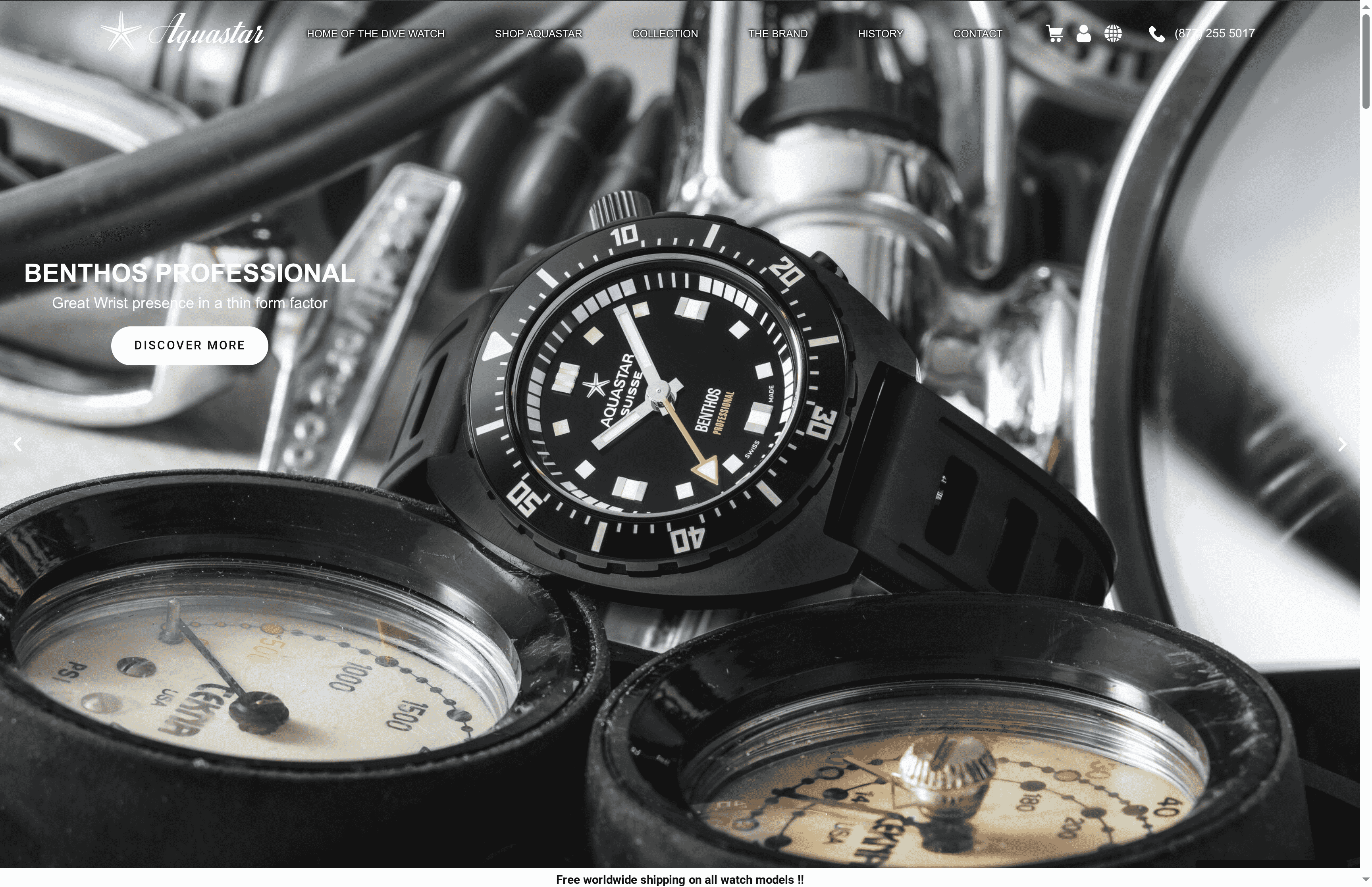
Whether you are building your first serious collection or adding a professional-grade timepiece to an established portfolio, our resources are built to help you make informed decisions at every stage. Explore our dive watch collecting guide for acquisition strategy, review our tool watch guide to understand what separates a true instrument from a fashion piece, and use our genuine dive watch identification resource to protect yourself from misrepresented pieces before you invest.
Frequently asked questions
Does luxury watch insurance cover accidental damage?
Specialty watch policies may cover a wider range of accidents than typical policies, but always review the fine print to confirm specific inclusions such as impact damage, scratched crystals, or water ingress.
How much does luxury watch insurance typically cost?
Premiums generally range from 1% to 2% of the insured watch’s appraised value annually, though rates vary by provider, region, and the specific risks covered.
Can vintage or pre-owned watches be insured?
Both new and vintage timepieces are eligible for coverage, but vintage watches typically require additional documentation such as service records, provenance history, and an independent expert appraisal.
Will insurance cover my watch while traveling abroad?
Many luxury watch insurance policies offer worldwide coverage, but confirm this feature explicitly before purchasing, as some policies restrict geographic coverage or require endorsements for international travel.
Do I need a new appraisal each year?
Regular appraisals help keep your policy accurate and claims smooth, and updating every two to three years is the recommended standard to ensure your coverage reflects current market values.
Recommended
- How to Collect Dive Watches: A Complete Collector’s Guide – Aquastar dive watches
- How to Identify Genuine Dive Watches Like a Pro – Aquastar dive watches
- Dive Watch Cases Explained: Complete Collector’s Guide – Aquastar dive watches
- Best Dive Watch Brands – Expert Comparison 2025 – Aquastar dive watches