
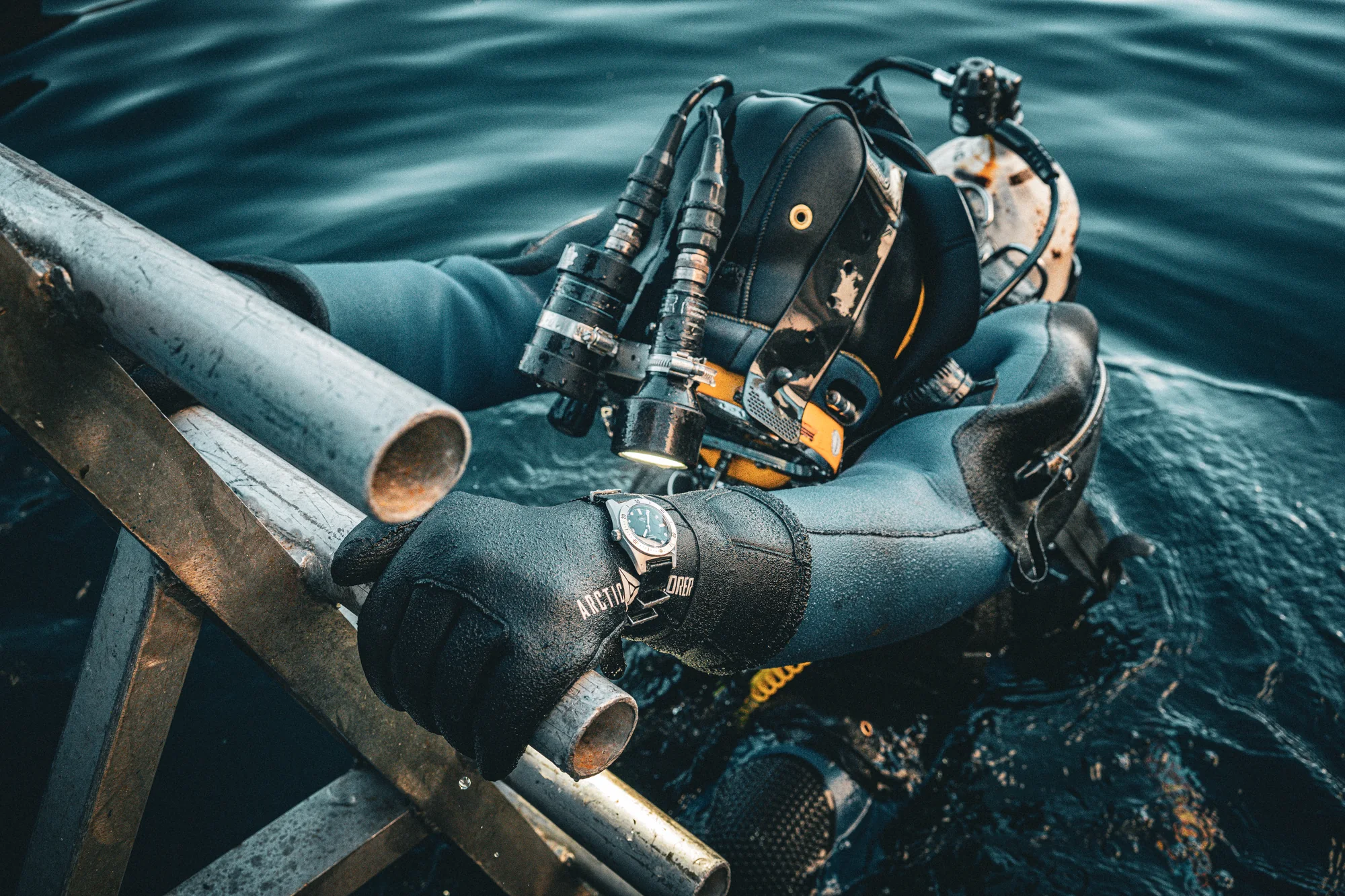
Top Vintage Aquastar Watches: at a glance
Top vintage Aquastar watches: 3 essential models to collect — the Benthos, the Deepstar and the Aquastar Navigator dive computer. Use this guide on top vintage aquastar watches to weigh design choices, engineering trade-offs and how the category translates to real Aquastar dive watches.
| Topic | Top vintage aquastar watches |
| Read time | 5-8 min |
| Source | Aquastar editorial |

TL;DR:
- Aquastar is renowned for pioneering dive watch innovations like the skin-diver case and 500m depth rating.
- Key vintage models include the Model 60, Benthos 500, and Regate, each representing different technical achievements.
- Authenticity relies on original markings, design details, and historical provenance; modern re-editions cannot fully replicate vintage engineering.
For serious collectors, few names carry the same weight as Aquastar when it comes to vintage Swiss dive watches. As the only Swiss watchmaker founded exclusively to produce dive watches, Aquastar built a legacy rooted in genuine underwater innovation, filing patents in the 1960s that shaped the entire category. Identifying the landmark models matters because each one represents a specific technical breakthrough, from the world’s first skin-diver case to the deepest-rated mechanical dive watch of its era. This guide walks through the most significant vintage Aquastar references, the criteria that make them collectible, and a direct comparison to help you decide which belongs in your collection.
Table of Contents
- How to identify the best vintage Aquastar watches
- Aquastar Model 60: The pioneer of skin-diver design
- Aquastar Benthos 500: The deep-diver legend
- Aquastar Regate: The ultimate regatta timer
- Comparison: Model 60 vs. Benthos 500 vs. Regate
- Why vintage Aquastar still sets the standard
- Explore Aquastar’s legacy and collector resources
- Frequently asked questions
Key Takeaways
| Point | Details |
|---|---|
| Historical leadership | Aquastar pioneered key design and technical benchmarks for dive watches in the 1950s–1970s. |
| Signature models | The Model 60, Benthos 500, and Regate are the most collectible, each breaking new ground. |
| Collector criteria | Look for originality, case details, movement types, and authentic accessories when buying. |
| Comparison guidance | Use side-by-side technical details to match watches to your collecting style or needs. |
How to identify the best vintage Aquastar watches
Not every old dive watch is a collector’s prize. When evaluating vintage Aquastar pieces, experienced collectors apply a consistent set of criteria that goes well beyond surface aesthetics.
- Historical importance. The model’s role in advancing dive watch technology matters enormously. Aquastar introduced the world’s first skin-diver case, a development that redefined how professional dive watches were built and worn.
- Rarity and production numbers. Lower production runs, especially for professional-grade references, translate directly to collector demand and long-term value.
- Mechanical innovation. Look for movements and complications that were genuinely ahead of their time, such as central minute counters designed for dive timing or regatta countdown mechanisms.
- Provenance and documentation. Original boxes, papers, and service records add measurable credibility. A watch with a documented history of professional use carries a different kind of weight.
- Condition and originality. Unpolished cases, original dials, and period-correct hands are non-negotiable for serious collectors. Refinished cases or replaced bezels significantly reduce value.
Case design is one of the most telling indicators. Early Aquastar models feature case proportions and lug shapes that were purpose-engineered for diving, not adapted from dress watch forms. The bezel type, whether unidirectional or bidirectional, also helps date a reference accurately.
Pro Tip: Examine the caseback engravings carefully. Authentic vintage Aquastar pieces carry specific reference numbers and depth ratings stamped directly into the steel. Modern re-editions exist and are well-made, but the original production markings are distinct and verifiable.
Context also matters. Many Aquastar Model 60 features have been reinterpreted in contemporary releases, which means collectors must know exactly what details are unique to the original production years. Now that you know what makes a vintage Aquastar truly collectible, let’s look at the most significant models.
Aquastar Model 60: The pioneer of skin-diver design
Launched in 1957, the Aquastar Model 60 holds a foundational place in dive watch history. It was the world’s first skin-diver cased watch, a purpose-built professional diver’s case that set the template for an entire generation of Swiss dive watches.
The Model 60’s design language is unmistakable. Key features include:
- 37mm 316L stainless steel case built to withstand the pressures of active diving
- Rotating bezel for elapsed-time tracking, available in both unidirectional and bidirectional configurations depending on the reference
- Signature dial markers with high-contrast indices designed for underwater legibility
- Proportions specific to skin-diving with a slimmer profile than later deep-dive references
The Model 60 details reveal a case form that was genuinely engineered from the ground up for diving rather than adapted from existing watch architectures. That distinction matters. Most Swiss watchmakers of the era modified existing case designs to meet diver specifications. Aquastar started with the diver’s needs and built outward.
“The Model 60 established the skin-diver case as a professional standard, combining a rotating bezel with a purpose-built case construction that no other Swiss manufacturer had produced before 1957.”
For collectors, the difference between an original vintage Model 60 and a modern re-edition comes down to specific dial printing styles, early lug geometry, and the precise bezel click mechanism. Reviewing detailed Model 60 design documentation helps authenticate period examples. Among other Aquastar models, the Model 60 remains the most historically significant starting point for any collection. With the criteria in mind, the Model 60 stands as the archetype. Next, we’ll see how Aquastar broke records with the Benthos 500.

Aquastar Benthos 500: The deep-diver legend
Released in 1970, the Aquastar Benthos 500 achieved something no other mechanical dive watch had done before: it reached 500m water resistance in a non-monobloc case construction. That engineering feat remains one of the most impressive achievements in professional dive watch history.
Key specifications and features of the Benthos 500 include:
- AS 2162 automatic movement with a unique central minute counter optimized for dive timing
- Non-monobloc construction allowing for greater serviceability compared to sealed-case competitors
- Screw-down crown and pushers providing the water resistance necessary for saturation diving
- Bold, high-contrast dial with luminous markers designed for deep-water visibility
The Benthos 500 also carries a remarkable piece of diving history. It was worn by Jacques Mayol, the legendary free-diver whose record-breaking descents inspired the film Le Grand Bleu. That association with one of diving’s most iconic figures adds a layer of provenance that few vintage watches can match.
Pro Tip: Authenticating an original Benthos 500 requires checking the pusher configuration and hand shape. Period-correct examples have a specific crown-and-pusher layout that differs from later variants. The Benthos 500 II features page provides useful reference points, and the Benthos 500 Chronograph shows how the platform evolved over time.
| Specification | Model 60 | Benthos 500 | Regate |
|---|---|---|---|
| Case size | 37mm | 42mm | 37.4mm |
| Water resistance | 60m | 500m | 30m |
| Movement | Manual/Auto | AS 2162 Auto | Felsa 4000N / Lemania 1345 |
| Production era | 1957 onward | 1970s | Mid-1960s to 1970s |
| Primary function | Skin diving | Deep saturation diving | Regatta timing |
From groundbreaking skin-diver to depth-defying engineering, the Benthos 500 set new records. But Aquastar also made its mark on the water’s surface with the Regate.
Aquastar Regate: The ultimate regatta timer
Produced from the mid-1960s through the 1970s, the Aquastar Regate occupies a unique position in the brand’s catalog. It was not designed for underwater use but for the equally demanding environment of competitive sailing, where precise countdown timing can determine race outcomes.
The Regate’s standout features include:
- 37.4mm case with a distinctive pusher and crown layout optimized for one-handed operation
- Felsa 4000N or Lemania 1345 movement depending on the reference, both known for reliability in demanding conditions
- Regatta countdown windows displaying the critical 5-minute pre-start sequence required by sailing race rules
- Reference 500141 as the most recognized and sought-after variant among collectors
The Regate’s regatta timing mechanism was a genuine innovation for competitive sailors. The 5-minute countdown window allowed helmsmen to track the pre-start sequence without complex mental calculations, a meaningful advantage in high-pressure racing situations.
“The Aquastar Regate brought the same precision engineering found in Aquastar’s dive watches to competitive sailing, giving professional crews a dedicated timing instrument built to the same standards as their underwater counterparts.”
Collectors are drawn to the Regate for its crossover appeal. It attracts both vintage watch enthusiasts and the sailing community, creating a broader collector base than most single-sport references. The distinctive pusher and crown layout is one of the easiest visual identifiers for authenticating a period example. Having seen Aquastar’s range beyond diving, it’s time to compare these icons directly.
Comparison: Model 60 vs. Benthos 500 vs. Regate
Choosing between these three references comes down to what you value most in a vintage collection. Each model represents a different chapter in Aquastar’s history and appeals to a distinct type of collector.
| Feature | Model 60 | Benthos 500 | Regate |
|---|---|---|---|
| Collector appeal | Historical first | Technical achievement | Crossover rarity |
| Wearability | Versatile daily size | Bold sport presence | Slim, elegant |
| Rarity | Moderate | High | High |
| Complication | Rotating bezel | Central minute counter | Countdown windows |
| Best for | History-focused collectors | Technical/professional diving fans | Sailing and watch crossover collectors |
The Benthos 500’s 500m depth rating was the best-in-class for any non-monobloc mechanical dive watch when it launched, a record that underscores why it commands strong collector interest today.
For collectors building a focused dive watch collection, the Model 60 is the essential starting point because of its foundational role in the category. Those drawn to extreme engineering and professional diving heritage will prioritize the Benthos 500. Collectors who want something genuinely different, a Swiss precision instrument that bridges sailing and horology, will find the Regate irreplaceable. With the core models compared, it’s time to reflect on what this all means for collectors today.
Why vintage Aquastar still sets the standard
There is a tendency among newer collectors to treat vintage re-editions as equivalent to original production pieces. That assumption deserves scrutiny. Modern Aquastar re-editions are well-executed and honor the original designs, but they cannot replicate the historical context or the specific technical decisions made under the constraints of their era.
The uncomfortable truth is that most collectors underestimate case construction. The engineering required to achieve 500m water resistance in a non-monobloc case in 1970 was not a cosmetic achievement. It required solving real mechanical problems with the materials and tolerances available at the time. That problem-solving is baked into every original Benthos 500 in a way that a modern re-edition, however faithful, simply cannot reproduce.
Aquastar’s legacy designs also reveal how interconnected the brand’s innovations were. The skin-diver case, the deep-dive engineering, and the regatta timer were not isolated products. They were expressions of a single design philosophy: build the most capable instrument for the specific demands of the user.
Always trace provenance and understand the evolution of each model before purchasing. A well-documented example with original components tells a richer story and holds its value far more reliably than a cosmetically perfect piece with an unclear history.
Explore Aquastar’s legacy and collector resources
If you want to go deeper into Aquastar’s history and build a more informed collection, the resources available through Aquastar’s official channels are genuinely useful. Whether you are authenticating a potential purchase or simply learning the category, starting with authoritative sources saves time and prevents costly mistakes.
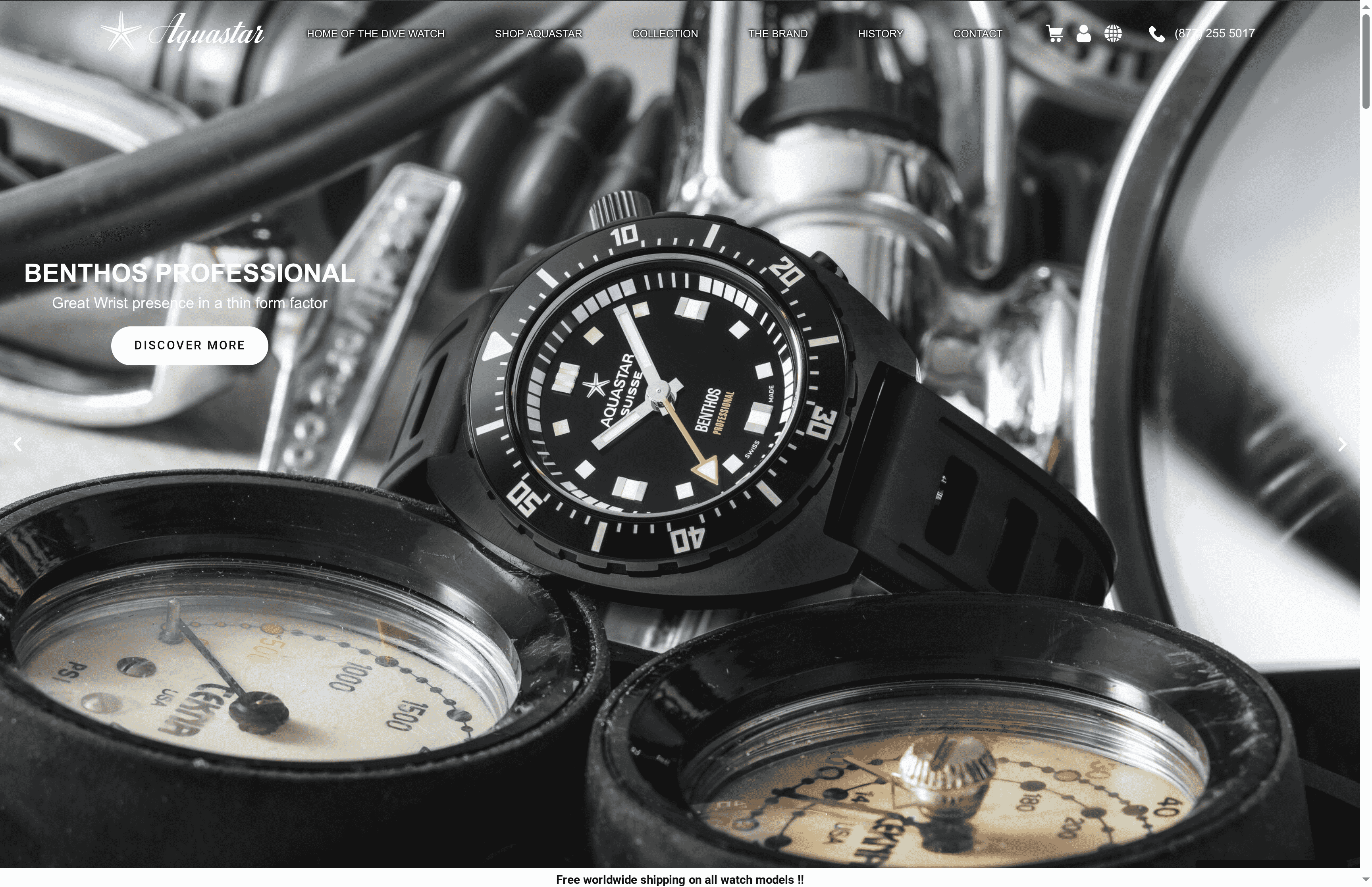
Aquastar’s collector’s guide covers the fundamentals of evaluating and acquiring vintage pieces, while the dedicated page on what is a skin diver provides essential context for understanding why the Model 60 matters. For a broader view of the brand’s range across eras, the full Aquastar model lineup is the most complete reference available. These are your next steps toward building a collection grounded in real knowledge.
Frequently asked questions
How can I tell if an Aquastar watch is a true vintage model?
Check for unique case markings, movement references, and period-correct features like bezel style and hand shape tied to production years. Authentic vintage pieces carry specific rotating bezel configurations and caseback engravings that differ clearly from modern re-editions.
What makes the Benthos 500 special among diver watches?
It was the world’s first non-monobloc 500m mechanical dive watch, combining extreme depth resistance with a serviceable case construction that set it apart from sealed-case competitors of the same era.
Are Aquastar Regate watches practical for daily use or just sailing?
Vintage Regate models are primarily designed for regatta countdown timing but are entirely wearable daily by enthusiasts who appreciate their slim profile and crossover heritage.
How do vintage Aquastar watches compare to other Swiss dive watches?
Aquastar pioneered both the skin-diver case and deep-dive mechanical engineering before most mainstream Swiss brands addressed those challenges, giving their vintage references a technical and historical edge that is difficult to match.