
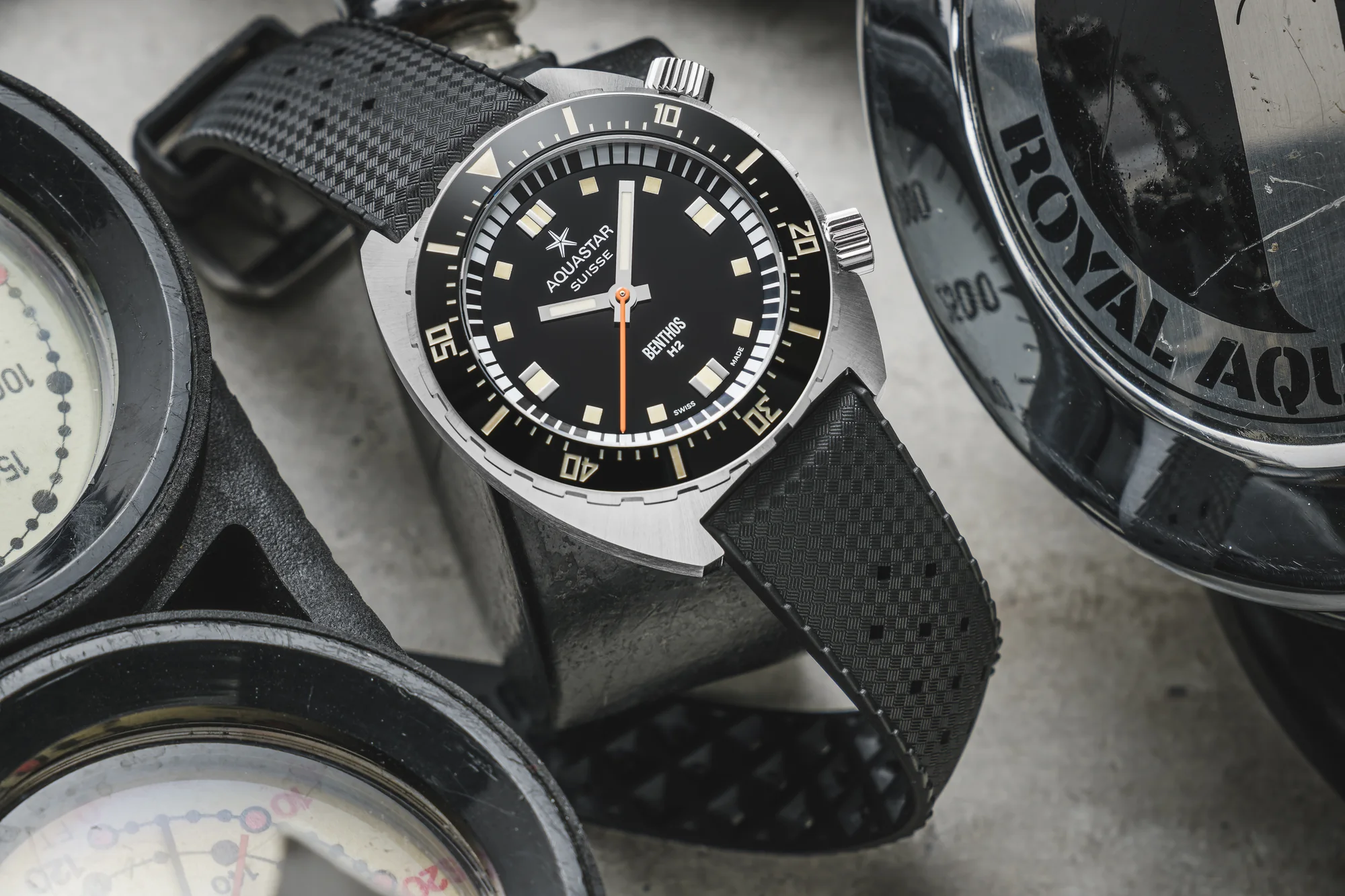
Types Of Dive Watches: at a glance
4 types of dive watches: mechanical automatic, quartz, analog dive computer and saturation watch — pick the right tool for your diving style and budget. Use this guide on types of dive watches to weigh design choices, engineering trade-offs and how the category translates to real Aquastar dive watches.
| Topic | Types of dive watches |
| Read time | 5-8 min |
| Source | Aquastar editorial |

4 dive watch types: 200m+ rated styles for 2026
Dive watch selection poses a complex challenge for collectors and divers in 2026. The market offers mechanical automatics, quartz precision timepieces, analog dive computers, and saturation watches, each engineered for distinct underwater environments. Understanding how movement types, water resistance ratings, bezel configurations, and historical innovations differ helps you match the right watch to your diving style, collecting goals, and budget. This guide breaks down selection criteria, compares four core watch types, and delivers situational recommendations to simplify your decision.
Table of Contents
- Understanding Dive Watch Selection Criteria
- Mechanical And Automatic Dive Watches
- Quartz Dive Watches And Their Precision Advantages
- Analog Dive Computers And Their Unique Features
- Saturation And Commercial Dive Watches
- Comparing Dive Watch Types: Features And Use Cases
- Situational Recommendations For Dive Watch Selection
- Explore Aquastar’s Range Of Dive Watches To Find Your Perfect Match
- Frequently Asked Questions About Dive Watch Selection
Key takeaways
| Point | Details |
|---|---|
| Selection criteria | Water resistance, movement type, bezel design, durability, and historical value shape your ideal dive watch choice. |
| Mechanical watches | Automatic and manual movements deliver craftsmanship and collector appeal with 200m+ water resistance. |
| Quartz precision | Battery-powered quartz watches offer accuracy within ±10 seconds per month and suit recreational divers. |
| Analog dive computers | Integrated time and depth tracking supports technical diving with patented innovations from the 1960s. |
| Saturation watches | Helium escape valves and 1000m+ ratings enable professional commercial diving in extreme conditions. |
Understanding dive watch selection criteria
Water resistance forms the foundation of any dive watch purchase. Mechanical automatic dive watches typically feature water resistance of at least 200 meters to comply with ISO 6425 standards, ensuring safe operation during recreational and professional dives. Movement type determines accuracy and maintenance requirements. Automatic and manual movements rely on mechanical gears and springs, delivering traditional craftsmanship but needing regular servicing every 3 to 5 years. Quartz movements use battery-powered oscillators for superior precision with minimal upkeep. Analog dive computers integrate depth sensors alongside timekeeping, while saturation watches withstand hyperbaric environments.
Bezel configuration directly impacts dive safety. Unidirectional bezels rotate counterclockwise only, preventing accidental extension of dive time if bumped underwater. Bidirectional bezels offer versatility for timing surface intervals but pose risks during active dives. Case design influences comfort and durability. Aquastar pioneered the skindiver ergonomic case in the 1960s, reducing bulk while maintaining structural integrity. Modern iterations balance slim profiles with robust construction.
Price and maintenance costs vary widely across watch types:
- Mechanical automatics: $2,000 to $15,000, requiring servicing every 3 to 5 years at $300 to $800 per session
- Quartz watches: $500 to $3,000, needing battery replacements every 2 to 3 years at $30 to $60
- Analog dive computers: $4,000 to $12,000, demanding calibration and sensor checks annually
- Saturation watches: $8,000 to $25,000, with specialized maintenance every 2 years
Pro Tip: Match your bezel type to your primary diving activity. Unidirectional bezels excel for bottom time tracking, while bidirectional models serve surface interval timing during multi-dive days.
Choosing a movement suited to your diving frequency enhances both safety and satisfaction. Technical divers benefit from analog dive computers tracking depth alongside elapsed time. Recreational divers find quartz reliability sufficient for weekend excursions. Collectors prioritize mechanical complexity and historical provenance. Budget-conscious buyers balance ISO 6425 certification with affordability. Understanding these criteria prepares you to evaluate specific watch types and their trade-offs.
Mechanical and automatic dive watches
Mechanical dive watches represent the traditional choice for collectors and diving purists. Automatic movements meet ISO 6425 standards with at least 200 meters of water resistance, ensuring reliable performance during recreational and technical dives. Manual-winding calibers offer slimmer case profiles, while automatic rotors eliminate daily winding routines. Power reserves typically span 40 to 70 hours, allowing weekend storage without losing timekeeping accuracy.
Craftsmanship defines mechanical appeal. Intricate gear trains, jeweled bearings, and hand-finished bridges create visual depth through transparent casebacks. Collectors value this mechanical artistry alongside historical significance. Aquastar’s 1960s patents introduced innovations like the skindiver case and analog depth integration, shaping modern dive watch evolution. These pioneering designs command premium prices in vintage markets and influence contemporary reissues.
Key features distinguish mechanical dive watches:
- Unidirectional bezels with luminous markers for safe dive timing
- Screw-down crowns and casebacks creating multiple seal points
- Anti-magnetic shields protecting movements from compass interference
- Luminous hands and indices using Super-LumiNova for low-light visibility
- Robust movements withstanding shocks from boat impacts and rocky entries
Accuracy varies based on regulation quality. Standard movements lose or gain 5 to 10 seconds daily, while COSC-certified chronometers maintain -4 to +6 seconds per day. This variance matters less for diving safety than for daily wear precision. Mechanical watches require servicing every 3 to 5 years to maintain water resistance and lubrication, adding $300 to $800 per session to long-term ownership costs.
Pro Tip: Before purchasing a vintage mechanical dive watch, request recent service records and pressure test results. Water resistance degrades over decades, and gasket replacement ensures modern diving safety.
Collectors seeking historical depth should explore models tied to military contracts, professional diving agencies, or pioneering case designs. Mechanical automatics blend functional diving capability with investment potential, making them ideal for enthusiasts who value tradition and craftsmanship over pure utility.
Quartz dive watches and their precision advantages
Quartz movements revolutionized dive watch accuracy when introduced in the 1970s. Battery-powered oscillators vibrate at 32,768 Hz, delivering precision within ±10 seconds per month compared to mechanical movements that drift 150 to 300 seconds monthly. This accuracy proves valuable for divers timing decompression stops or surface intervals where precise minute tracking matters. Quartz crystals maintain stable frequency across temperature changes, ensuring consistent performance in cold water environments.
Maintenance requirements favor quartz models for everyday recreational divers. Battery replacements every 2 to 3 years cost $30 to $60, avoiding the multi-year service intervals and $300+ costs associated with mechanical calibers. Simple construction reduces failure points. Fewer moving parts mean less wear and greater shock resistance during boat entries or rocky shore dives. Many divers prefer this reliability over the romantic appeal of mechanical movements.
Price accessibility opens quartz dive watches to budget-conscious buyers. Models meeting ISO 6425 standards range from $500 to $3,000, delivering professional-grade water resistance and dive features at a fraction of mechanical costs. This affordability lets divers allocate funds toward dive computers, wetsuits, or travel instead of premium watch movements. Quartz watches serve as excellent backup timers for technical divers carrying primary dive computers.
Common misconceptions suggest quartz watches lack diving legitimacy:
- Myth: Quartz movements cannot withstand deep diving pressures
- Reality: Quartz calibers meet the same 200m+ ISO 6425 requirements as mechanical movements
- Myth: Battery-powered watches fail more frequently underwater
- Reality: Sealed battery compartments and solid-state electronics improve reliability over mechanical gears
- Myth: Serious divers only trust mechanical watches
- Reality: Professional dive teams worldwide use quartz models for backup timing
Collectors generally favor mechanical watches over quartz models due to simpler construction and lower craftsmanship appeal. Quartz movements lack the visual complexity of automatic rotors and gear trains visible through exhibition casebacks. This perception affects resale values, with quartz watches depreciating faster than mechanical equivalents. However, divers prioritizing function over collecting find quartz precision and low maintenance ideally suited to active use. Quartz dive watch options balance affordability with ISO certification, making them practical choices for recreational diving enthusiasts in 2026.
Analog dive computers and their unique features
Analog dive computers merge traditional timekeeping with depth measurement, creating specialized tools for technical diving. Aquastar pioneered this technology with the Navigator model in the 1960s, integrating a mechanical depth gauge into a wristwatch format. This innovation predated digital dive computers by two decades, offering divers real-time depth data alongside elapsed time without requiring separate instruments. Modern analog dive computers continue this dual-function tradition with enhanced accuracy and reliability.
Integrated depth sensors differentiate analog dive computers from standard dive watches. Bourdon tube mechanisms or electronic pressure transducers measure water pressure, converting it to depth readings displayed on dedicated subdials or rotating indicators. You track current depth, maximum depth, and bottom time simultaneously on a single wrist instrument. This consolidation reduces task loading during technical dives where monitoring multiple gauges competes for attention with buoyancy control and navigation.
Technical and commercial divers benefit most from analog dive computer capabilities:
- Decompression planning: Track depth and time to calculate required safety stops
- Redundancy: Provide backup depth data if primary digital computers fail
- Ascent rate monitoring: Gauge depth changes to maintain safe ascent speeds below 30 feet per minute
- Multi-level diving: Record depth variations across complex wreck or cave profiles
Aquastar’s patented innovations improved dive safety throughout the 1960s and 1970s. The Navigator’s mechanical depth integration eliminated the need for separate console gauges, freeing hands for task completion. Skindiver case designs reduced snag hazards on wrecks and caves while maintaining pressure resistance. These advancements influenced competitors and established standards still used in professional diving watches today.
“The analog dive computer represents the pinnacle of mechanical diving innovation, combining Swiss watchmaking precision with practical depth measurement in a single waterproof instrument.”
Price and complexity reflect specialized engineering. Analog dive computers like the Aquastar Navigator range from $4,000 to $12,000, positioning them above standard mechanical dive watches but below high-end saturation models. Annual calibration ensures depth sensor accuracy, adding $200 to $400 to ownership costs. Collectors value these watches for historical significance and technical innovation, driving strong secondary market demand for vintage examples.
Saturation and commercial dive watches
Saturation dive watches support the most extreme underwater work environments. Commercial divers living in hyperbaric chambers for weeks at depths exceeding 300 meters require watches engineered beyond recreational standards. Water resistance ratings start at 1000 meters, with some models tested to 3000 meters or deeper. Helium escape valves release trapped gases during decompression, preventing crystal blowouts that destroy standard watches in saturation diving protocols.
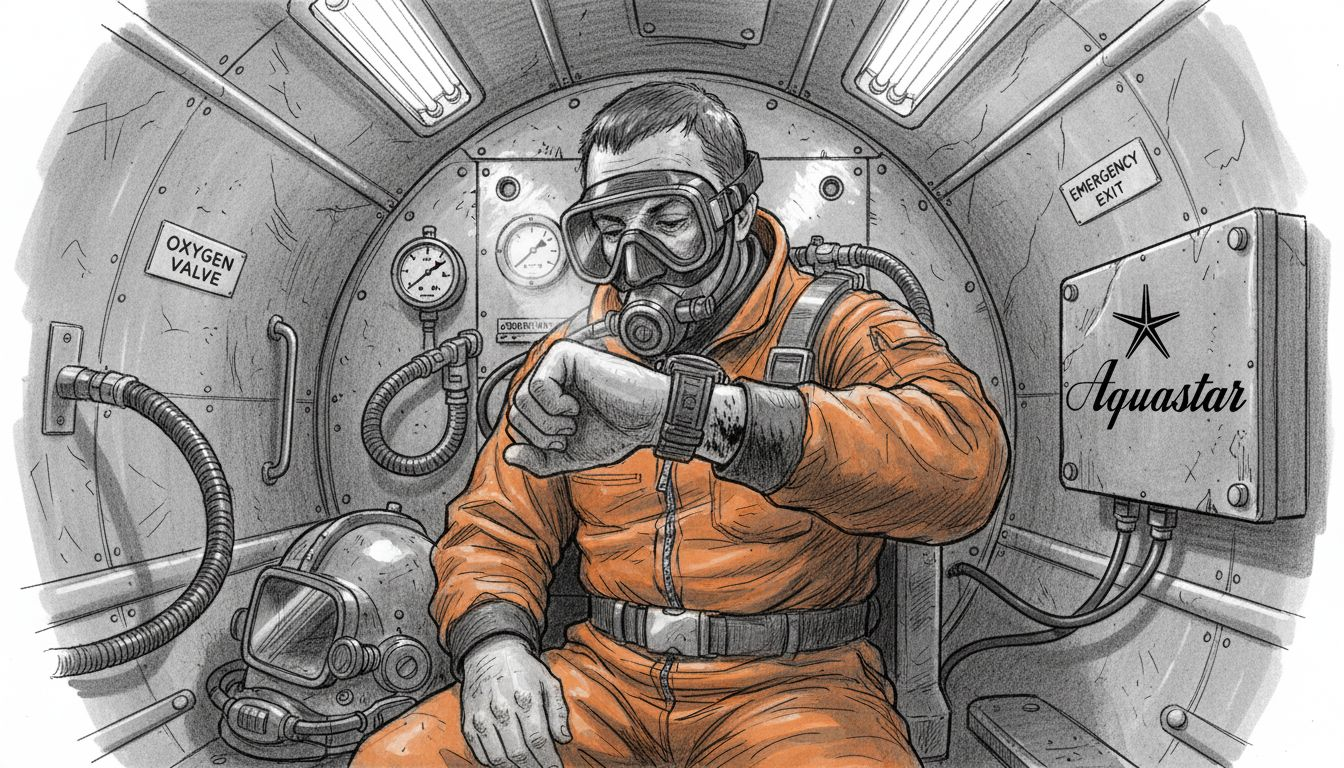
Helium molecules penetrate watch cases during extended deep dives. Saturation divers breathe helium-oxygen mixtures to avoid nitrogen narcosis, and tiny helium atoms infiltrate gasket seals over days of chamber exposure. During decompression, internal pressure builds faster than helium can escape through normal seals, potentially shattering crystals or popping casebacks. One-way valves automatically vent excess helium, maintaining case integrity throughout multi-day decompressions.
Corrosion resistance separates saturation watches from recreational models. Saturation dive watches outperform standard dive watches in corrosion resistance after 3 months saltwater exposure, maintaining seal integrity and crown function where standard watches fail. Specialized alloys, ceramic bezels, and titanium cases resist galvanic corrosion from prolonged seawater immersion. Commercial diving companies demand this durability for watches exposed to brine tanks, oil rigs, and subsea construction sites.
| Feature | Saturation Specification | Standard Dive Watch |
|---|---|---|
| Water resistance | 1000m to 3000m+ | 200m to 500m |
| Helium escape valve | Required | Not included |
| Corrosion resistance | 3+ months saltwater | 1 month typical |
| Case materials | Titanium, specialized alloys | Stainless steel |
| Price range | $8,000 to $25,000 | $2,000 to $8,000 |
Technical features enable professional use:
- Reinforced crystals using sapphire or acrylic composite materials
- Triple-sealed crowns with multiple O-ring barriers
- Oversized luminous markers for visibility in turbid water
- Screw-down crowguards protecting against accidental adjustments
Higher costs reflect extreme engineering and limited production volumes. Saturation watches serve a specialized market of commercial divers, military dive teams, and collectors seeking ultimate capability. Few recreational divers need 1000m+ ratings or helium valves, but professional dive watch features provide peace of mind for those pushing technical limits. Aquastar’s heritage in professional diving ensures their saturation models meet the rigorous demands of commercial work worldwide.
Comparing dive watch types: features and use cases
Direct comparison clarifies how each watch type serves distinct diving needs and collecting priorities. Mechanical automatic movements comply with 200m+ ISO 6425 water resistance standards, balancing traditional craftsmanship with recreational diving capability. Quartz precision suits budget-conscious divers prioritizing accuracy over mechanical complexity. Analog dive computers serve technical divers needing integrated depth tracking. Saturation watches provide extreme durability for commercial diving professionals.
| Watch Type | Water Resistance | Accuracy | Maintenance | Collector Appeal | Price Range |
|---|---|---|---|---|---|
| Mechanical Automatic | 200m to 500m | -5 to +10 sec/day | Service every 3-5 years, $300-$800 | High, valued for craftsmanship | $2,000 to $15,000 |
| Quartz | 200m to 500m | ±10 sec/month | Battery every 2-3 years, $30-$60 | Low, functional focus | $500 to $3,000 |
| Analog Dive Computer | 300m to 600m | ±5 sec/day + depth sensor | Annual calibration, $200-$400 | Medium, historical innovation | $4,000 to $12,000 |
| Saturation | 1000m to 3000m+ | Varies by movement | Specialized service every 2 years | High, extreme capability | $8,000 to $25,000 |
Durability patterns separate recreational from professional models. Standard mechanical and quartz watches withstand typical diving impacts and saltwater exposure with regular rinsing and annual pressure testing. Saturation watches exceed corrosion resistance benchmarks with 3+ months saltwater tolerance, essential for oil rig work and commercial salvage operations. Titanium cases and ceramic bezels reduce weight while improving scratch resistance compared to stainless steel.
Collector appeal follows mechanical complexity and historical significance:
- Mechanical automatics: Transparent casebacks reveal intricate movements, driving vintage market demand
- Quartz models: Simpler construction limits collecting interest, focusing value on functionality
- Analog dive computers: Patented depth integration and pioneering designs attract technology-focused collectors
- Saturation watches: Extreme specifications and limited production create niche collector segments
Price reflects both manufacturing costs and market positioning. Mechanical watches command premiums for hand-assembled movements and Swiss heritage. Quartz affordability opens diving to broader audiences without sacrificing ISO certification. Analog dive computers justify higher costs through integrated depth sensing that eliminates separate gauge purchases. Saturation watch pricing covers specialized materials, helium valves, and rigorous testing protocols.
Pro Tip: Calculate total cost of ownership over 10 years, including service intervals and battery replacements. A $3,000 mechanical watch requiring $600 servicing every 4 years costs $4,500 total. A $1,200 quartz watch needing $50 batteries every 2.5 years costs $1,400 total, potentially better value for active divers.
Use case alignment determines best value. Recreational weekend divers maximize value with quartz precision and low maintenance. Serious collectors investing in mechanical heritage should explore models with documented provenance. Technical divers benefit from analog dive computer redundancy backing up primary digital computers. Commercial divers require saturation specifications matching job site demands. Understanding ISO 6425 standards ensures any choice meets legitimate diving requirements rather than fashion watch marketing.
Situational recommendations for dive watch selection
Matching watch type to diving style and collecting goals optimizes both safety and satisfaction. Your primary use case determines which features matter most and where to allocate budget. Consider these targeted recommendations based on specific diving profiles and collecting priorities.
Commercial saturation divers working oil rigs, subsea construction, or military operations need saturation dive watches with helium escape valves and 1000m+ water resistance to survive hyperbaric chamber protocols and extended deep exposures.
Recreational divers exploring reefs, wrecks, and shore dives on weekends benefit from mechanical automatics rated 200m to 300m with unidirectional bezels, balancing diving functionality with everyday wearability and collecting potential.
Collectors seeking historical significance should prioritize models featuring Aquastar’s pioneering patents from the 1960s, including analog dive computers like the Navigator or original skindiver case designs that influenced modern dive watch evolution.
Budget-conscious buyers maximizing value can select ISO 6425-certified quartz watches delivering professional water resistance and precision timing at $500 to $1,500, allocating remaining funds toward dive training, equipment, or travel.
Technical divers conducting decompression dives, cave exploration, or wreck penetration gain redundancy from analog dive computers tracking depth and time simultaneously, providing backup data if primary digital computers fail during critical ascent phases.
Vintage collectors building diverse collections should explore each category: mechanical automatics for craftsmanship, early quartz models documenting technology transitions, analog dive computers representing innovation milestones, and saturation watches showcasing extreme engineering.
Budget allocation matters beyond initial purchase. Factor servicing costs, insurance, and replacement parts into long-term ownership calculations. Mechanical watches require regular maintenance eating into diving budgets. Quartz models free funds for additional dives and equipment upgrades. Analog dive computers and saturation watches justify higher costs through specialized capabilities unavailable in standard models.
Geographic considerations influence watch selection. Divers in tropical climates benefit from corrosion-resistant materials and frequent rinsing protocols. Cold water divers need movements maintaining accuracy across temperature extremes. Traveling divers prioritize durability and easy servicing through international networks. Military diver watch requirements demonstrate how operational environments shape feature priorities.
Start with honest assessment of your diving frequency, depth ranges, and long-term collecting intentions. Weekend recreational divers rarely need saturation specifications or analog dive computer complexity. Serious collectors value mechanical heritage over pure functionality. Technical divers appreciate redundancy and integrated depth tracking. Collecting recommendations help align purchases with both immediate needs and future collecting trajectories, ensuring your dive watch serves you well for years of underwater adventures.
Explore Aquastar’s range of dive watches to find your perfect match
Aquastar crafts professional dive watches spanning mechanical automatics, analog dive computers, and saturation models tailored to the selection criteria and use cases outlined above. Our heritage of 1960s patents and pioneering innovations ensures every watch delivers both historical significance and modern reliability. Whether you need a tool watch for professional use, want to understand automatic versus manual movements, or require professional diver watch features for technical diving, our detailed guides help you compare models and select the ideal timepiece.
Visit our collection pages to explore specifications, view movement details through interactive galleries, and access expert buying advice developed from decades of dive watch manufacturing. We continue our tradition of supporting both commercial and recreational divers with watches engineered to back up modern dive computers while honoring Swiss watchmaking craftsmanship.
Frequently asked questions about dive watch selection
What are the key criteria to choose the right dive watch?
Prioritize water resistance meeting ISO 6425 standards at 200m minimum, select movement type based on accuracy needs and maintenance willingness, verify unidirectional bezel for dive timing safety, and assess durability through case materials and corrosion resistance. Budget and collecting goals determine whether mechanical craftsmanship, quartz precision, or specialized features justify higher costs.
How do mechanical dive watches compare to quartz for actual diving use?
Mechanical automatics offer traditional craftsmanship and collector appeal but require servicing every 3 to 5 years and drift 5 to 10 seconds daily. Quartz models deliver superior accuracy within ±10 seconds monthly, need only battery changes every 2 to 3 years, and cost significantly less. Both meet ISO 6425 standards, making quartz ideal for active diving and mechanical preferred for collecting.
When should I choose an analog dive computer over a standard dive watch?
Select analog dive computers when conducting technical dives requiring integrated depth and time tracking, needing backup data if primary digital computers fail, or collecting watches representing pioneering 1960s innovations like the Aquastar Navigator. The higher cost and complexity suit experienced divers valuing redundancy and historical significance over basic timekeeping.
What makes saturation dive watches necessary for commercial diving?
Saturation diving involves living in hyperbaric chambers for extended periods at extreme depths, causing helium molecules to penetrate watch cases. Without helium escape valves, internal pressure during decompression shatters crystals and damages movements. The 1000m+ water resistance and enhanced corrosion resistance withstand prolonged saltwater exposure that destroys recreational dive watches within weeks.
How much should I budget for dive watch ownership beyond purchase price?
Mechanical watches require $300 to $800 servicing every 3 to 5 years. Quartz models need $30 to $60 batteries every 2 to 3 years. Analog dive computers demand $200 to $400 annual calibration. Saturation watches involve specialized servicing every 2 years. Calculate 10-year total ownership costs including insurance, pressure testing, and gasket replacements to compare true value across watch types.