
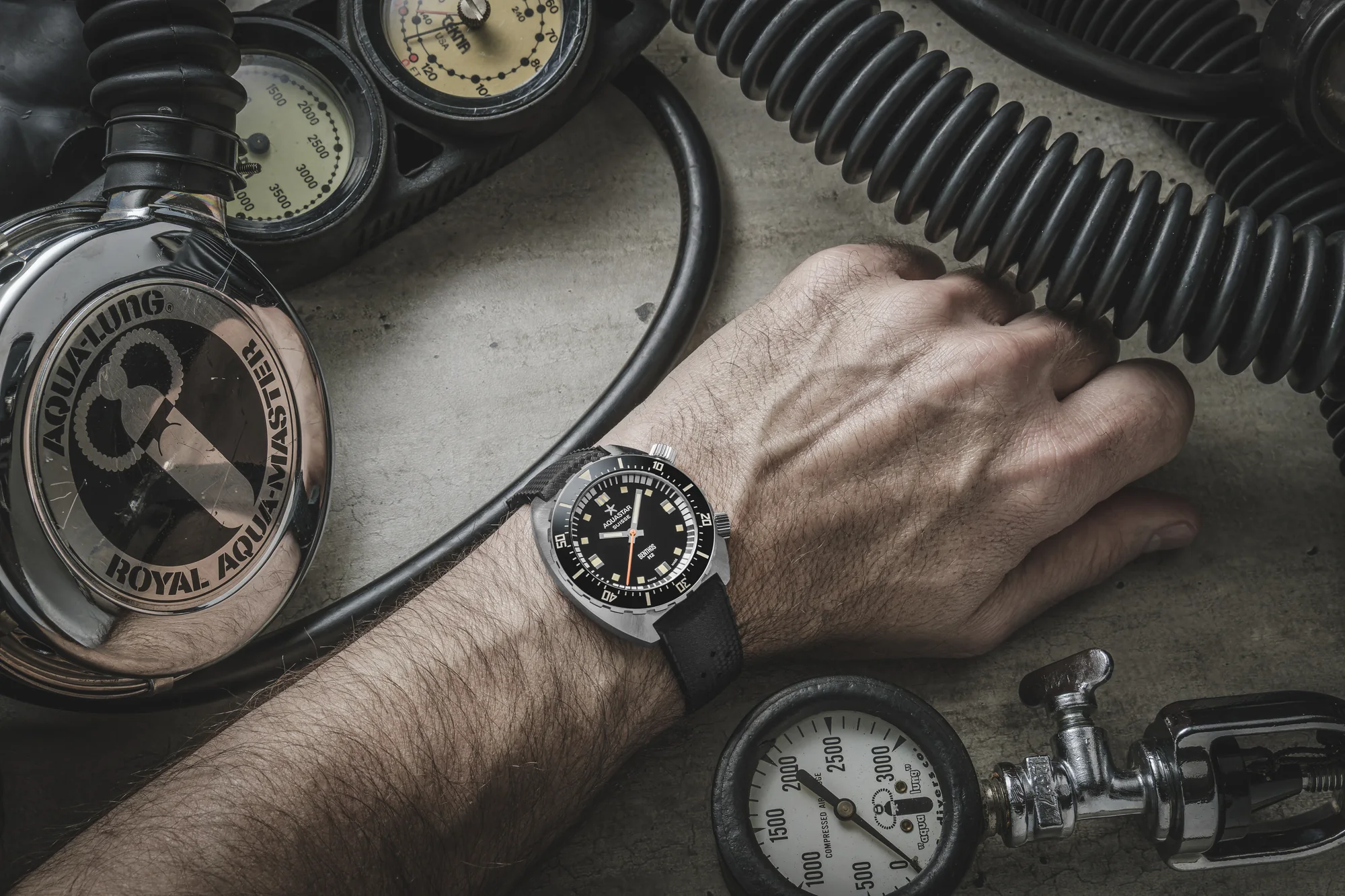
What Is A Nato Strap: at a glance
What is a NATO strap? 1973 British MoD origin, materials, security benefits for dive watches and how to spot authentic G10/G1098 specifications. Use this guide on what is a nato strap to weigh design choices, engineering trade-offs and how the category translates to real Aquastar dive watches.
| Topic | What is a nato strap |
| Read time | 5-8 min |
| Source | Aquastar editorial |

Many watch enthusiasts believe NATO straps were issued by the NATO military alliance. That’s false. These one-piece nylon straps originated from a 1973 British Ministry of Defence specification, designed to prevent watch loss during military and diving operations. Understanding their true heritage reveals why NATO straps remain the gold standard for dive watch security, combining military-grade durability with everyday versatility for professional and recreational divers alike.
Table of Contents
- History And Military Origins Of The NATO Strap
- Design And Functional Benefits For Dive Watches
- Authenticity, Materials, And Specifications
- Common Misconceptions About NATO Straps
- Comparison With Other Dive Watch Strap Options
- Care, Maintenance, And Practical Usage Tips
- Conclusion And Next Steps For Collectors
- Explore Aquastar’s Dive Watch Straps And Guides
Key takeaways
| Point | Details |
|---|---|
| Military origin | NATO straps originated from British MOD Def Stan 66-4 in 1973, not from NATO alliance procurement. |
| Security design | One-piece construction sliding under the watch case prevents loss if spring bars fail during dives. |
| Original material | Authentic straps used only Admiralty Grey nylon with chrome-plated brass hardware per military specs. |
| Dive watch benefits | Lightweight, quick-drying, breathable nylon suits humid environments and extended underwater wear. |
| Modern versatility | Today’s NATO straps come in multiple colors and materials while honoring the original security-first design. |
History and military origins of the NATO strap
The NATO strap originated from British MOD Def Stan 66-4 in 1973 as a standardized “Strap, Wrist Watch” for military personnel. Soldiers requisitioned these straps using form G10, which gave rise to the alternative name “G10 strap.” The specification demanded exacting quality standards to withstand harsh field conditions, from desert heat to underwater operations.
British military quartermasters issued only Admiralty Grey straps with chrome-plated brass hardware. This single-color approach reflected practical military doctrine: uniformity, reliability, and cost efficiency. The straps needed to function flawlessly whether attached to a basic field watch or a specialized military diver watch.
The name “NATO strap” emerged later from the NATO Stock Number system, a standardized coding method for military supplies across allied nations. This coding system allowed easy procurement and inventory management, but the strap design itself came solely from British MOD engineering, not from pan-NATO collaboration.
Key features established by the 1973 specification included:
- Woven nylon construction approximately 1.2mm thick
- Heat-sealed edges preventing fraying
- Chrome-plated brass buckles and keepers
- Single-piece design threading under spring bars
- Standard 20mm width fitting most military watches
This military legacy continues influencing modern NATO strap production. Collectors value straps meeting original British MOD specifications, while manufacturers use these standards as quality benchmarks. The history of NATO straps demonstrates how military necessity drives civilian watch innovation.
Design and functional benefits for dive watches
The NATO strap’s one-piece design creates a fail-safe system critical for underwater safety. Unlike two-piece straps attached only at the spring bars, NATO straps slide underneath the watch case. If one spring bar breaks, the watch remains secured to your wrist by the second bar and the nylon passing beneath the case.
The extra nylon flap provides fail-safe security even if a spring bar fails, keeping the watch on your wrist during diving and military operations. This redundant security matters when you’re 30 meters underwater relying on your timepiece for decompression stops. Professional divers consider this feature non-negotiable for backup timing instruments.
Nylon NATO straps are lightweight, water-resistant, and quick-drying, making them ideal for underwater and humid conditions where metal bracelets retain moisture. After saltwater exposure, nylon dries within minutes while metal bracelets can take hours. This quick-drying property prevents skin irritation and corrosion concerns.

The material’s breathability enhances comfort during extended wear. Divers often spend hours in wetsuits and diving gear. A breathable textile strap reduces sweat accumulation and provides superior ventilation compared to rubber or metal alternatives. The hypoallergenic nylon also suits sensitive skin better than some metal alloys.
Adjustment simplicity makes NATO straps practical for varying conditions:
- Easily fits over 5mm wetsuit sleeves
- Quick length adjustment without tools
- Multiple keeper positions secure excess material
- Standard width accommodates most dive watch lugs
Pro Tip: When diving, wear your NATO strap slightly looser than normal to accommodate wetsuit compression at depth. As you descend, neoprene compresses and your wrist circumference decreases. A too-tight strap becomes uncomfortable, while proper slack maintains security without restricting circulation.
These professional dive watch features work best when paired with appropriate straps. Some NATO variants integrate navigation compass elements for enhanced utility during underwater navigation exercises.
Authenticity, materials, and specifications
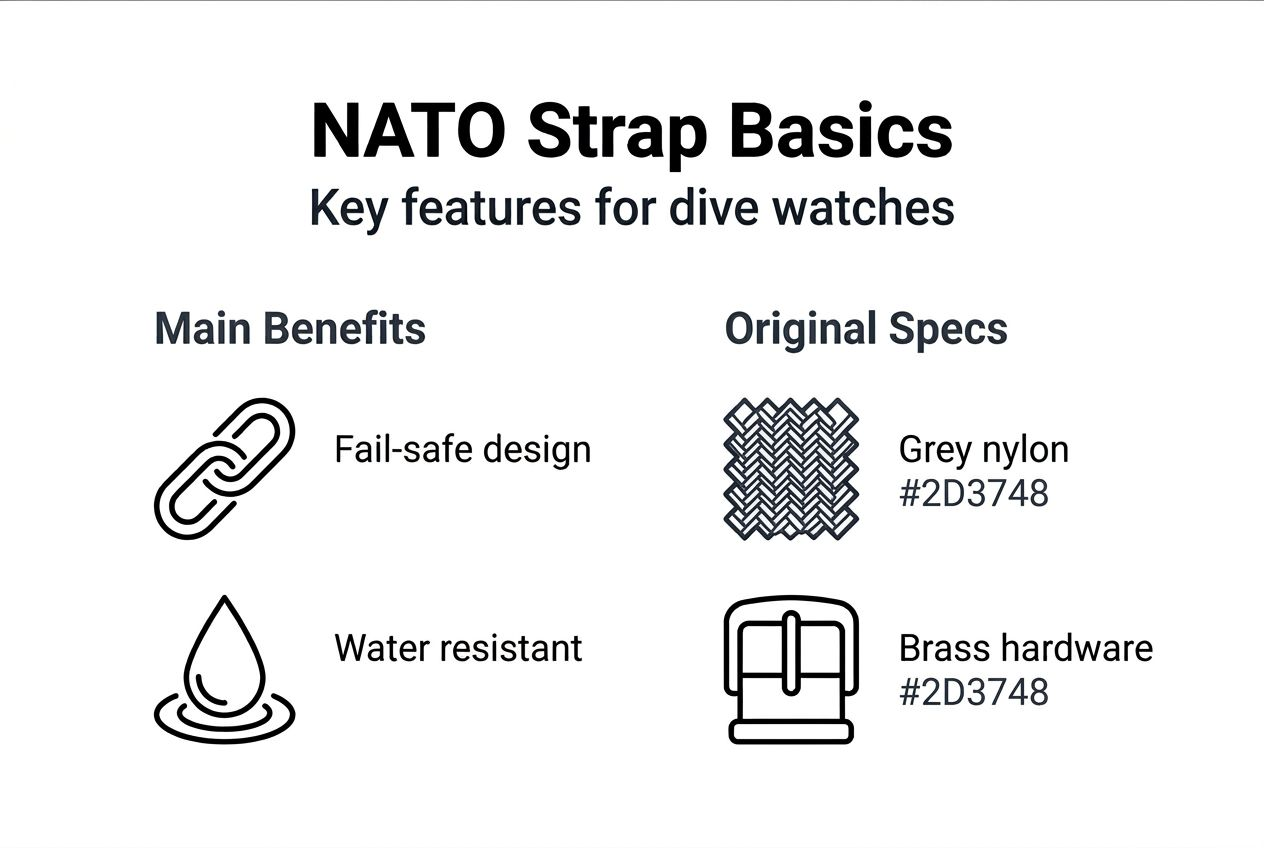
Authentic NATO straps originally came only in Admiralty Grey according to British color standard BS 4800 reference 18B25. This specific grey shade resulted from military color science: neutral enough to avoid visual detection, dark enough to hide dirt and wear, light enough to remain visible in low light conditions.
The material specification called for tough, woven nylon with a straight cross-weave pattern. This weave distributes stress evenly across the strap, preventing premature failure at stress points. The approximately 1.2mm thickness balances durability against excessive bulk under the watch case.
Manufacturers sealed strap edges through controlled heat application. This heat-sealing process melts nylon fibers together, creating a permanent barrier against fraying. Quality NATO straps show clean, uniform edge sealing without burnt discoloration or uneven melting.
Hardware components followed equally strict standards:
- Chrome-plated brass buckles stamped with British MOD markings
- Rectangular keepers preventing strap slippage
- Rounded edges eliminating sharp points that snag clothing
- Corrosion-resistant plating surviving saltwater exposure
Modern NATO straps expand beyond military specifications. You’ll find straps in hundreds of colors, premium materials like ballistic nylon, and hardware finishes from matte black to polished steel. Some manufacturers offer seatbelt-style NATO straps with different weave patterns and thickness profiles. The Aquastar Seatbelt NATO strap represents this evolution while maintaining core security principles.
Authenticity matters most for collectors seeking military-specification pieces. For functional dive watch use, modern interpretations often improve upon original designs through better materials and refined manufacturing. Choose based on your priorities: historical accuracy or optimized performance.
Common misconceptions about NATO straps
NATO straps derive their name from NATO Stock Number coding, not from NATO military alliance issuance. The British MOD designed these straps independently. NATO Stock Numbers simply provided a standardized procurement system across allied nations. No NATO headquarters ever mandated or distributed these straps to member militaries.
The single-color myth persists despite clear evidence. Original British MOD contracts specified only Admiralty Grey, true. However, modern NATO straps embrace the full color spectrum without compromising functional design. A navy blue or olive drab NATO strap offers identical security benefits to grey variants. Color choice affects only aesthetics, not performance.
Bulkiness concerns often discourage potential users. NATO straps do add approximately 2.4mm of material under your watch case (1.2mm per layer). This extra thickness raises the watch slightly off your wrist compared to standard two-piece straps. Most divers accept this minor bulk trade-off for the security advantages. If you prioritize minimal wrist profile, NATO straps may feel substantial initially.
Some believe NATO straps suit only military or tool watches. This narrow view ignores the strap’s versatility. While NATO straps excel on dive watches and field watches, enthusiasts pair them with everything from vintage chronographs to modern sports watches. The casual textile aesthetic works across multiple watch styles.
Common NATO strap myths include:
- Myth: All NATO countries issued these straps. Reality: Only British MOD specified this design.
- Myth: Grey is the only authentic color. Reality: Grey was the only military-issued color, but modern colors maintain authentic design.
- Myth: NATO straps are too bulky for daily wear. Reality: Many wearers adapt quickly to the extra thickness.
- Myth: Only military personnel should wear NATO straps. Reality: These straps serve any watch wearer valuing security and comfort.
Security design considerations outweigh thickness concerns for professional applications. Commercial divers, military operators, and serious recreational divers prioritize the fail-safe attachment over minimal wrist profile. Casual wearers might prefer slimmer alternatives depending on comfort preferences.
Comparison with other dive watch strap options
NATO straps provide superior security due to one-piece under-lug design preventing watch loss if a spring bar breaks. This fundamental advantage distinguishes them from rubber and metal alternatives. Understanding each option’s strengths helps you select the right strap for specific diving conditions.
| Feature | NATO Strap | Rubber Strap | Metal Bracelet |
|---|---|---|---|
| Security | Excellent (one-piece fail-safe) | Good (two-piece attachment) | Good (two-piece attachment) |
| Water resistance | Excellent (quick-drying nylon) | Excellent (waterproof material) | Good (water-resistant but slow drying) |
| Weight | Light (textile material) | Light to medium | Heavy (solid metal links) |
| Comfort | High (breathable, flexible) | High (soft, conforming) | Medium (rigid, can pinch) |
| Durability | High (military-grade nylon) | Medium (degrades over time) | Very high (metal construction) |
| Maintenance | Easy (machine washable) | Easy (wipe clean) | Moderate (requires link adjustment) |
| Cost | Low to medium | Low to medium | Medium to high |
Rubber straps offer water resistance and flexibility but lack the NATO strap’s fail-safe design. If a spring bar fails on a rubber strap, your watch detaches completely. Rubber also degrades from UV exposure, oils, and chemical reactions. You’ll replace rubber straps every few years, while quality NATO straps last decades.
Metal bracelets provide maximum durability and a premium aesthetic. They resist degradation better than any textile or rubber option. However, metal bracelets add significant weight, retain moisture between links, and require tools for adjustment. After saltwater diving, metal bracelets need thorough freshwater rinsing and drying to prevent corrosion.
NATO straps balance these factors effectively:
- Lightweight construction reduces wrist fatigue during long dives
- Breathable nylon prevents moisture buildup
- Tool-free adjustment accommodates wetsuits
- Inexpensive enough to own multiple colors
- Security design protects valuable watches
Your choice depends on diving conditions and personal priorities. Professional technical divers often prefer NATO straps for deep or overhead environment diving where watch loss could compromise safety. Recreational warm-water divers might choose rubber for comfort. Collectors wearing vintage dive watches on land often select metal bracelets for authenticity.
Explore various dive watch strap options to find combinations matching your specific needs. Many divers maintain multiple straps, swapping based on activity and environment. This dive watch strap comparison helps identify optimal configurations.
Care, maintenance, and practical usage tips
NATO straps suit active lifestyles involving water and sweat due to their easy cleaning and maintenance requirements. Regular care extends strap life and maintains hygiene, especially important for equipment exposed to saltwater, chlorine, and perspiration.
Follow these cleaning steps for optimal results:
- Remove the strap from your watch by sliding out the spring bars.
- Hand wash in lukewarm water with mild soap or machine wash in a mesh laundry bag.
- Scrub stubborn stains gently using a soft-bristled toothbrush.
- Rinse thoroughly until water runs clear and no soap residue remains.
- Air dry completely away from direct sunlight or heat sources.
- Reinstall once fully dry to prevent moisture trapped against your watch case.
Avoid harsh chemicals that degrade nylon fibers. Bleach, strong detergents, and solvents weaken the material structure and fade colors. Saltwater requires prompt rinsing. Salt crystals left in the weave attract moisture and accelerate fabric breakdown. After ocean diving, rinse your NATO strap in freshwater within hours.
Pro Tip: Keep three NATO straps in rotation for your primary dive watch. While one dries after cleaning, wear the second. The third serves as backup during extended dive trips. This rotation prevents wear concentration and ensures you always have a clean, dry strap ready.
Spring bar maintenance matters as much as strap care. Inspect spring bars monthly for:
- Corrosion spots indicating weakened metal
- Bent tips that don’t seat properly in lug holes
- Weak spring tension allowing easy compression
- Diameter wear creating loose fit
Replace questionable spring bars immediately. A $5 spring bar protects a watch worth hundreds or thousands of dollars. The NATO strap’s security design works only when both spring bars function correctly.
Rotating multiple straps extends their lifespan significantly. Continuous wear stresses the same fibers repeatedly. Allowing straps to rest between uses lets nylon recover elasticity. Budget-conscious divers appreciate how inexpensive NATO straps make rotation practical.
Store NATO straps flat or loosely coiled in a dry location. Avoid tight coiling that creates permanent creases. Keep them away from direct sunlight when not in use, as UV exposure fades colors over time. Proper storage between dive seasons prevents unnecessary degradation.
The Aquastar Seatbelt NATO strap features enhanced durability through premium materials, but still benefits from regular cleaning and rotation practices. Quality construction reduces maintenance frequency without eliminating it entirely.
Consult this NATO strap cleaning guide for detailed maintenance procedures and troubleshooting common issues like persistent odors or stubborn stains.
Conclusion and next steps for collectors
NATO straps unite military heritage with modern versatility, creating an ideal solution for dive watch enthusiasts. Their proven security design, born from 1973 British MOD specifications, continues protecting watches in demanding underwater environments. The fail-safe one-piece construction prevents the catastrophic watch loss that two-piece straps risk.
Beyond security, NATO straps deliver practical advantages:
- Lightweight comfort during extended wear
- Quick-drying performance after water exposure
- Breathable construction reducing sweat accumulation
- Tool-free adjustment for varying conditions
- Affordable pricing enabling diverse collection options
Professional commercial divers rely on NATO straps for backup timing instruments. Recreational enthusiasts appreciate the blend of function and style. Collectors value the historical significance while enjoying contemporary color options. This broad appeal stems from design fundamentals prioritizing wearer needs over aesthetic trends.
Understanding NATO strap history and function empowers better purchasing decisions. You can distinguish authentic military-specification pieces from modern interpretations. You recognize which features matter for your specific diving activities. You appreciate why certain design choices persist across decades of use.
Start building your NATO strap collection by selecting colors complementing your existing dive watches. A navy strap suits vintage pieces. Olive drab matches field watch aesthetics. Grey honors the original military specification. Experiment with different materials like ballistic nylon or seatbelt weave to discover your preferences.
The knowledge gained here prepares you to confidently select, maintain, and appreciate NATO straps. Whether you’re equipping a professional dive watch for technical diving or adding casual versatility to a recreational timepiece, NATO straps deliver proven performance. Their combination of security, comfort, and heritage makes them essential for serious dive watch collectors.
Explore specialized resources to deepen your dive watch expertise. The dive watch collecting guide covers broader collection strategies, helping you build a well-rounded portfolio of professional timepieces and accessories.
Explore Aquastar’s dive watch straps and guides
Aquastar’s commitment to professional dive watch manufacturing extends to offering straps that meet the demanding standards of commercial and recreational divers. Our selection includes NATO options engineered for reliability in underwater environments, honoring the security principles established by military specifications while incorporating modern materials.
Discover how professional dive watch features integrate with quality straps to create complete timing solutions. Aquastar’s heritage includes pioneering the first analog dive computer and introducing the skindiver case design. This innovation legacy informs our approach to every component, from cases to straps.
Browse our complete range of dive watch straps to find options matching your specific diving needs and style preferences. Whether you’re equipping a backup timing instrument for technical diving or accessorizing a vintage Aquastar piece, our strap selection provides reliable performance.
The dive watch collecting guide offers deeper insights into building and maintaining a professional dive watch collection. Learn preservation techniques, authentication methods, and investment strategies from experts who understand the intersection of horology and diving.
FAQ
What size NATO strap fits most dive watches?
Most dive watches accept 20mm NATO straps, the width established by original British MOD specifications. Measure between your watch lugs to confirm proper fit. Some larger dive watches use 22mm straps, while vintage pieces might require 18mm width.
Are NATO straps suitable for professional diving?
Yes, the one-piece design prevents watch loss if a spring bar fails, meeting professional divers’ security requirements. Many commercial divers use NATO straps on backup timing instruments. The fail-safe attachment provides redundancy critical for decompression diving and overhead environments.
How do I clean and maintain my NATO strap?
Nylon NATO straps tolerate machine washing in mesh bags or hand washing with mild soap. Rinse thoroughly after saltwater exposure to remove corrosive salt crystals. Air dry completely away from direct heat, and avoid bleach or harsh chemicals that degrade nylon fibers.
Can NATO straps be worn with formal or dress watches?
While designed for military and dive applications, some enthusiasts pair NATO straps with dress watches for casual styling. The textile construction creates a relaxed aesthetic unsuited to formal business settings. Consider the extra thickness under your watch case when evaluating dress watch compatibility.