
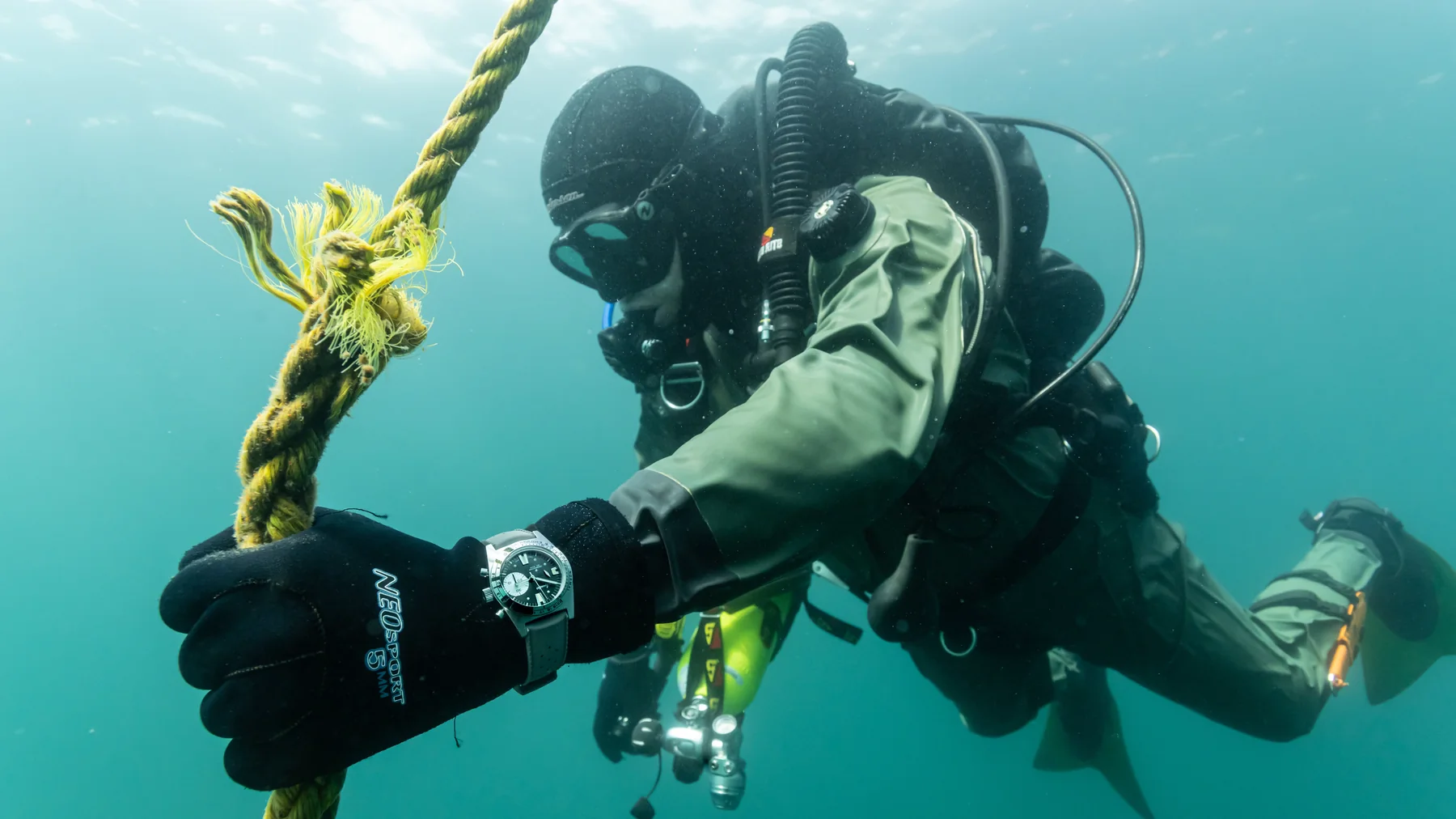
Waterproof Vs Water Resistant: at a glance
Waterproof vs water resistant dive watches in 2026: ATM ratings, ISO testing, design factors and the maintenance that keeps depth resistance honest. Use this guide on waterproof vs water resistant to weigh design choices, engineering trade-offs and how the category translates to real Aquastar dive watches.
| Topic | Waterproof vs water resistant |
| Read time | 5-8 min |
| Source | Aquastar editorial |

Despite marketing claims, no mechanical dive watch is truly waterproof under all conditions. The distinction between waterproof and water resistant matters far more than most divers realize. Understanding water resistance ratings and their limitations helps you choose the right timepiece, avoid costly damage, and maintain your watch’s protective capabilities for years of reliable underwater use.
Table of Contents
- Introduction: Defining Waterproof And Water Resistant In Dive Watches
- Understanding Water Resistance Ratings: ATM, Meters, And Testing Methodologies
- Design Features And Mechanisms That Enhance Water Resistance In Dive Watches
- Environmental And Usage Factors Impacting Water Resistance Durability
- Maintaining Your Dive Watch’s Water Resistance Over Time
- Common Misconceptions And Marketing Myths About Waterproof And Water Resistant Watches
- Choosing The Right Mechanical Dive Watch Based On Water Resistance Needs And Budget
- Explore Aquastar’s Expert Dive Watch Collection
Key takeaways
| Point | Details |
|---|---|
| Terminology clarity | Waterproof implies absolute impermeability, which no mechanical watch guarantees; water resistant indicates tested tolerance to specific pressures. |
| Testing limitations | Ratings reflect static lab conditions, not dynamic underwater pressures during actual dives. |
| Design features | Screw-down crowns, sealed case backs, and quality gaskets determine real-world water resistance performance. |
| Environmental impact | Temperature changes, movement, and seal aging reduce water resistance over time. |
| Maintenance necessity | Professional servicing every 3-5 years and pressure testing preserve protective capabilities. |
Introduction: defining waterproof and water resistant in dive watches
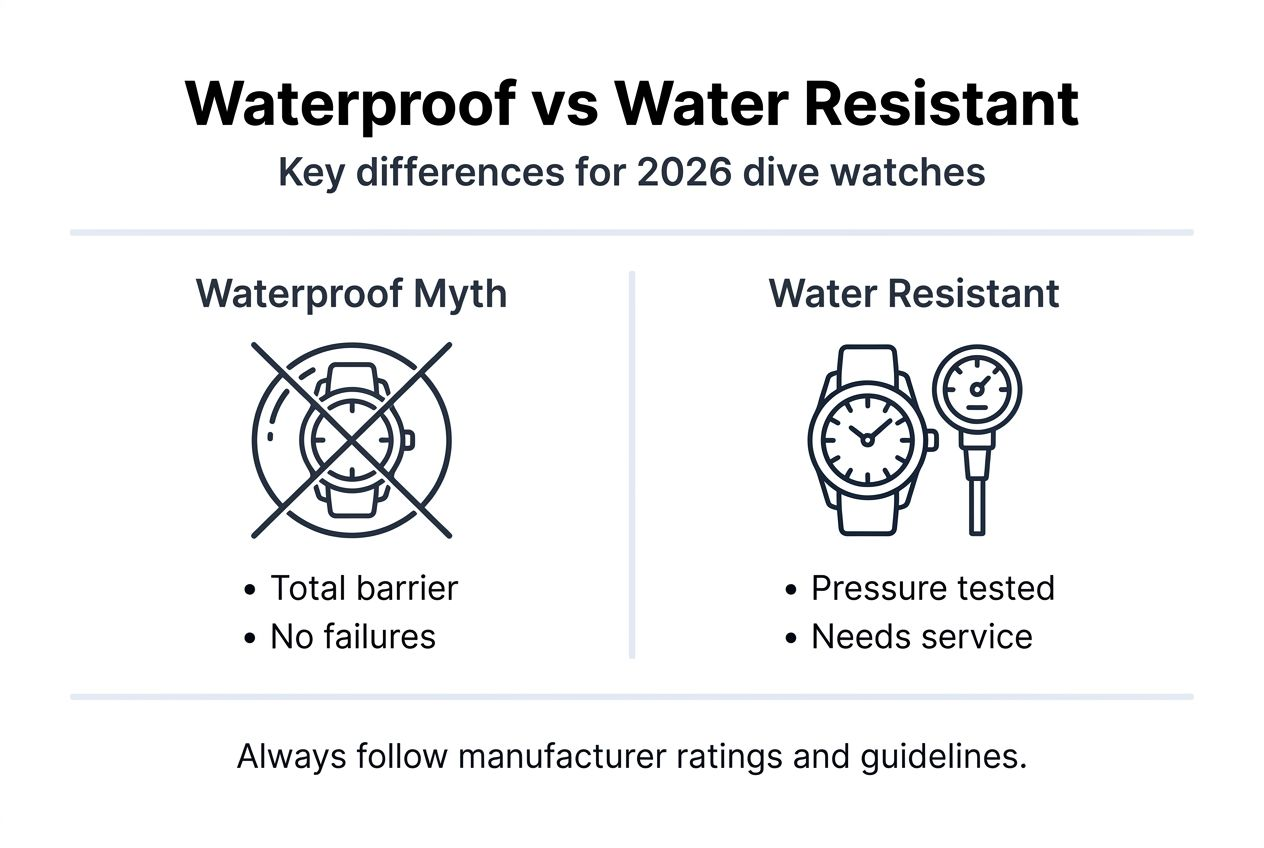
The terms waterproof and water resistant carry distinct technical meanings that directly impact how you should use your dive watch. Waterproof suggests complete impermeability to water under any circumstance, an impossible standard for mechanical watches with moving parts and necessary openings. This absolute claim cannot be guaranteed under all conditions and over extended periods.
Water resistant describes a watch’s tested tolerance to water ingress up to a specific pressure rating, measured in meters or atmospheres (ATM). This rating reflects laboratory conditions, not guarantees for every real-world scenario. Mechanical dive watches incorporate specialized features like reinforced cases, sealed crowns, and protective gaskets to achieve their water resistance specifications.
Regulatory agencies now restrict or ban waterproof as a marketing term because it misleads consumers about actual capabilities. Watch manufacturers must instead specify precise water resistance ratings, acknowledging that these ratings have limits and require ongoing maintenance.
Key distinctions include:
- Waterproof implies permanence; water resistant acknowledges testing boundaries
- Water resistance degrades over time without proper seal maintenance
- Mechanical dive watches need periodic servicing to maintain protective ratings
- Static pressure tests don’t replicate dynamic underwater movement conditions
- Professional dive watches feature construction elements absent in casual water resistant models
Understanding these differences helps you select appropriate watches for your diving depth, recognize when maintenance becomes necessary, and avoid misuse that could compromise your timepiece’s integrity.
Understanding water resistance ratings: ATM, meters, and testing methodologies
Water resistance ratings appear in two common formats: meters (M) and atmospheres (ATM), where 1 ATM roughly equals 10 meters of water pressure. However, ratings represent static pressure tests, not actual safe diving depths during active use.
Manufacturers test watches using controlled air pressure in laboratory environments. A 100M rating means the watch withstood static pressure equivalent to 100 meters of water depth while stationary. This methodology creates a critical gap between lab results and real diving conditions.
During actual dives, several factors create pressures exceeding static ratings:
- Arm movements while swimming generate dynamic pressure spikes
- Water entry like jumping or diving creates sudden pressure increases
- Temperature fluctuations affect seal integrity and material expansion
- Extended submersion time stresses gaskets differently than brief tests
The static air pressure testing method explains why watches sometimes fail at depths well below their stated ratings. A 50M rated watch might resist brief splashes but fail during swimming, where movement creates pressures beyond what static tests measure.
Professional divers should interpret ratings conservatively. A watch rated for 100M suits snorkeling and surface water sports, but serious diving requires 200M or higher ratings. The extra capacity provides safety margins for dynamic pressures and accounts for seal degradation between servicing intervals.
Pro Tip: Consider your watch’s rating as a maximum threshold under perfect conditions, not a safe operating limit. Choose watches rated at least twice your typical diving depth for adequate protection margins.
This conservative approach compensates for testing methodology limitations and real-world variables that static lab conditions cannot replicate. Understanding how manufacturers derive ratings helps you make informed choices aligned with your actual underwater activities.
Design features and mechanisms that enhance water resistance in dive watches
Mechanical dive watches achieve water resistance through carefully engineered sealing systems and construction methods. The primary defense against water ingress involves rubber or synthetic gaskets positioned at critical junctures: the case back, crown, and crystal edges. These gaskets compress under assembly to create watertight barriers.

Screw-down crowns represent perhaps the most important water resistance feature. Unlike push-pull crowns on casual watches, screw-down designs compress gaskets when tightened, creating secure seals that withstand significant pressure. The crown threads into the case tube, forcing the gasket against the case opening to prevent water entry.
Additional design elements include:
- Case back seals using thick gaskets compressed by screw-down backs
- Crystal gaskets sitting between the glass and case, held by bezels or retaining rings
- Multiple gasket layers at the crown for redundant protection
- One-piece case construction minimizing potential leak points
- Helium escape valves in saturation diving watches to release trapped gases
Material selection matters significantly. Professional dive watches use marine-grade stainless steel or titanium cases that resist corrosion and maintain structural integrity under pressure. Crystal materials like sapphire provide hardness and clarity while maintaining seals.
The difference between casual water resistant watches and professional diver models lies in these construction details. Professional models feature thicker gaskets, more robust screw threads, and higher-quality sealing compounds that maintain effectiveness across temperature ranges.
Pro Tip: Before any water exposure, verify your crown is fully screwed down by checking for gaps between the crown and case. An incompletely sealed crown is the most common cause of water damage in otherwise water resistant watches.
Regular inspection of crown threads and visible gaskets helps you catch wear before it compromises water resistance. Dirt, salt deposits, or damaged threads signal the need for professional cleaning and seal replacement.
Environmental and usage factors impacting water resistance durability
Laboratory ratings cannot account for the harsh realities watches face during actual diving. Temperature fluctuations create expansion and contraction in metal cases and rubber gaskets, potentially opening microscopic gaps that allow water ingress.
Heat exposure causes gasket materials to harden and lose elasticity over time. A watch exposed to hot tubs, saunas, or direct sunlight experiences accelerated seal degradation. Conversely, cold water causes materials to contract, potentially creating gaps between gaskets and case components.
Active underwater movement generates dynamic pressures that exceed static test conditions. Swimming strokes create pressure waves, diving entries produce sudden spikes, and rapid depth changes stress seals in ways laboratory tests never replicate.
Time itself degrades water resistance:
- Gasket materials dry out and crack with age
- Salt water exposure corrodes metal components and degrades seals
- UV light breaks down rubber compounds in gaskets
- Lubricants inside the crown tube dry up, allowing water pathways
- Micro-scratches in crystal gasket surfaces create leak points
A watch rated 200M when new might drop to 100M or less after several years without servicing. This degradation happens gradually and invisibly, making regular pressure testing essential for divers who depend on their watches.
Using watches beyond their specified ratings accelerates wear. A 50M watch worn while showering faces pressures and temperatures it was never designed to withstand repeatedly. Extended submersion times also stress seals more than the brief test exposures manufacturers use.
Environmental factors explain why two identical watches can perform differently. One stored in climate-controlled conditions and rinsed after salt water use will maintain water resistance far longer than one left in hot cars or exposed to chemicals.
Maintaining your dive watch’s water resistance over time
Preserving your dive watch’s protective capabilities requires proactive maintenance on a regular schedule. Professional servicing every 3-5 years ensures seals and gaskets maintain their effectiveness before age-related failures occur.
Pressure testing after each servicing verifies that technicians properly installed new seals and that the watch meets its rated specifications. Many dive shops and watch service centers offer pressure testing as a standalone service, allowing you to verify water resistance between full overhauls.
Avoid attempting DIY seal replacements unless you have proper tools and training. Incorrectly installed gaskets create dangerous false confidence. Professional watchmakers use specialized lubricants, sizing tools, and testing equipment that ensure proper seal function.
A comprehensive maintenance routine includes these steps:
- Visual inspection of crown threads and gasket surfaces for damage or debris
- Professional pressure testing annually for watches used regularly underwater
- Seal and gasket replacement during movement servicing every 3-5 years
- Complete disassembly, cleaning, and reassembly by certified technicians
- Post-service pressure testing to verify water resistance restoration
Between professional services, take these protective measures:
- Rinse watches with fresh water after salt water or chlorine exposure
- Avoid operating the crown or chronograph pushers while underwater
- Store watches away from extreme temperatures and direct sunlight
- Never expose watches to hot water, which rapidly degrades seals
- Have watches pressure tested before important dive trips
Pro Tip: Keep service records showing pressure test results over time. Declining test results indicate developing seal problems before complete failure occurs, allowing preventive action.
For collectors of vintage dive watches, understanding proper identification and care becomes especially important. Older watches may have dried gaskets or non-original parts that compromise water resistance. Regular maintenance documented in your collection management practices protects both watch functionality and investment value.
Common misconceptions and marketing myths about waterproof and water resistant watches
The watch industry’s historical use of waterproof created lasting confusion that persists despite regulatory bans on the term. Many consumers still believe waterproof watches need no maintenance or can withstand any aquatic activity indefinitely.
Regulators recognized that waterproof misleads consumers by suggesting permanent, absolute protection. Modern standards require specific ratings that acknowledge testing conditions and limitations. Despite these regulations, some manufacturers use creative language to imply waterproof capabilities without using the banned term directly.
Common misinterpretations include:
- Assuming a 200M rating means safe diving to 200 meters depth
- Believing water resistance is permanent and requires no maintenance
- Thinking higher ratings automatically mean better overall watch quality
- Expecting splash resistance ratings to protect during swimming or diving
- Trusting that new watches maintain their ratings indefinitely without servicing
Marketing often emphasizes impressive-sounding ratings without explaining the gap between static testing and dynamic use. A watch marketed for 300M might seem excessive for recreational divers, but that rating provides necessary safety margins for active underwater movement.
The misconception that water resistance requires no maintenance causes significant watch damage. Owners wear watches underwater for years without servicing, unaware their dried gaskets no longer provide protection. The damage often appears suddenly when seals finally fail completely, but degradation began years earlier.
Some buyers prioritize water resistance ratings over features actually important for their needs. A 500M rated watch offers no practical advantage over a 200M model for recreational diving, but costs significantly more due to the robust construction required.
Understanding these marketing realities helps you evaluate watches based on genuine capabilities rather than inflated claims. Focus on construction quality, maintenance requirements, and realistic ratings for your diving activities rather than pursuing maximum numbers.
Choosing the right mechanical dive watch based on water resistance needs and budget
Selecting an appropriate dive watch requires balancing water resistance requirements against budget constraints and practical features. Higher ratings increase costs due to more complex sealing systems and robust construction, but may exceed what most divers actually need.
| Feature | Entry Water Resistant (50-100M) | Professional Dive Watch (200M+) |
|---|---|---|
| Typical Price | $200-800 | $800-5000+ |
| Suitable Activities | Swimming, snorkeling, surface water sports | Professional diving, deep recreational diving |
| Crown Type | Push-pull or basic screw-down | Reinforced screw-down with multiple gaskets |
| Case Construction | Standard stainless steel | Marine-grade steel or titanium, one-piece design |
| Additional Features | Basic time display | Helium valves, unidirectional bezels, luminous markers |
| Maintenance Needs | Every 4-5 years | Every 3-4 years with annual pressure testing |
Match your watch to actual diving habits rather than aspirational depths. Recreational divers rarely exceed 40 meters, making 200M ratings more than adequate. The extra capacity provides safety margins for dynamic pressures and seal degradation between services.
Consider these selection factors:
- Maximum diving depth you regularly reach
- Frequency of underwater use requiring consistent reliability
- Budget available for initial purchase and ongoing maintenance
- Preference for automatic versus manual movements
- Essential features like unidirectional bezels and luminous markers
- Brand reputation and service network availability
Professional divers and serious enthusiasts benefit from watches rated 300M or higher with advanced features like helium escape valves. These watches handle saturation diving, extended deep dives, and provide maximum reliability as backup instruments to dive computers.
Budget-conscious buyers should prioritize proven designs and reliable servicing over maximum ratings. A well-maintained 200M watch from an established manufacturer outperforms a poorly serviced 500M watch from an unknown brand.
Researching reputable dive watch brands helps identify manufacturers with strong service networks and parts availability. Consider total ownership costs including periodic servicing, not just purchase price.
For collectors building dive watch collections, diversity in ratings and features creates more interesting holdings than focusing solely on maximum water resistance. Balance vintage pieces, modern professional models, and innovative designs to capture the evolution of dive watch technology.
Explore Aquastar’s expert dive watch collection
Aquastar has pioneered dive watch innovation since the 1960s, introducing groundbreaking designs like the first analog dive computer and the original skindiver case. As the only Swiss watchmaker founded exclusively for dive watches, Aquastar brings unmatched expertise to understanding water resistance requirements for professional and recreational divers.
Our comprehensive guides help you evaluate must-have features for professional reliability, compare automatic versus manual dive watch movements, and explore leading dive watch brands to find your ideal timepiece. Whether you need a backup instrument for technical diving or a reliable companion for recreational exploration, Aquastar’s collection combines heritage innovation with modern precision engineering.
FAQ
What is the difference between waterproof and water-resistant dive watches?
Waterproof implies complete impermeability under all conditions, which no mechanical watch can guarantee permanently. Water resistant indicates a watch passed specific pressure tests up to rated depths, acknowledging limitations and maintenance requirements. Regulatory agencies banned waterproof terminology to prevent misleading consumers about actual capabilities.
Can I rely on a 100M water resistance rating for deep diving?
No, 100M ratings reflect static laboratory pressure tests, not safe diving depths during active use. Dynamic movement and pressure variations during real dives require conservative interpretation of ratings. Professional diving demands watches rated 200M or higher to provide adequate safety margins for underwater activities.
How often should I service my dive watch to maintain water resistance?
Professional servicing every 3-5 years ensures gaskets and seals maintain protective capabilities. Pressure testing during service verifies water resistance meets specifications. Attempting DIY seal replacement risks improper installation and false confidence in compromised protection.
What design features should I look for to ensure better water resistance?
Screw-down crowns, sealed case backs, and high-quality gaskets form the foundation of reliable water resistance. Professional dive watches include reinforced sealing systems and marine-grade materials that withstand extreme pressures. Watches rated 200M or higher provide the robust construction necessary for serious underwater use.
Recommended
- 7 Must-Have Diver Watch Features for 300m+ Professional Use – Aquastar dive watches
- Dive Watch Cases Explained: Complete Collector’s Guide – Aquastar dive watches
- Best Dive Watch Brands – Expert Comparison 2025 – Aquastar dive watches
- How to Identify Genuine Dive Watches Like a Pro – Aquastar dive watches