
What Is A Helium Release Valve: at a glance
What is a helium release valve? How it prevents crystal blowout after saturation dives, when divers actually need it and what trade-offs come with it. Use this guide on what is a helium release valve to weigh design choices, engineering trade-offs and how the category translates to real Aquastar dive watches.
| Topic | What is a helium release valve |
| Read time | 5-8 min |
| Source | Aquastar editorial |

Most watch collectors believe helium release valves make watches more water resistant. That’s completely wrong. These specialized mechanisms serve one critical purpose: preventing your watch from exploding during decompression after deep saturation dives. Understanding how helium release valves work, when you actually need them, and what happens without them can save you thousands in repairs and help you choose the right professional dive watch for your needs.
Table of Contents
- Introduction To Helium Release Valves In Dive Watches
- Understanding Helium Gas And Its Impact On Dive Watches
- How Helium Release Valves Work Mechanically
- When Are Helium Release Valves Necessary?
- Common Misconceptions About Helium Release Valves
- Historical Context And Innovation In Helium Release Valves
- Tradeoffs And Design Considerations For Helium Release Valves
- Consequences Of Not Having A Helium Release Valve
- Discover Aquastar’s Expert Dive Watches With Helium Release Valves
- Frequently Asked Questions About Helium Release Valves
Key takeaways
| Point | Details |
|---|---|
| Purpose | Helium release valves equalize internal watch pressure during decompression to prevent crystal popping and seal damage. |
| Application | Essential only for professional saturation divers using helium-rich gas mixes at depths exceeding 150 meters. |
| Operation | Valves open automatically or manually at 3-5 psi pressure differential, releasing trapped helium gas safely. |
| Misconception | HRVs do not increase water resistance; they only manage internal gas pressure during decompression phases. |
| Cost tradeoff | Adding HRVs increases watch complexity and cost by 10-15% while improving durability for saturation diving. |
Introduction to helium release valves in dive watches
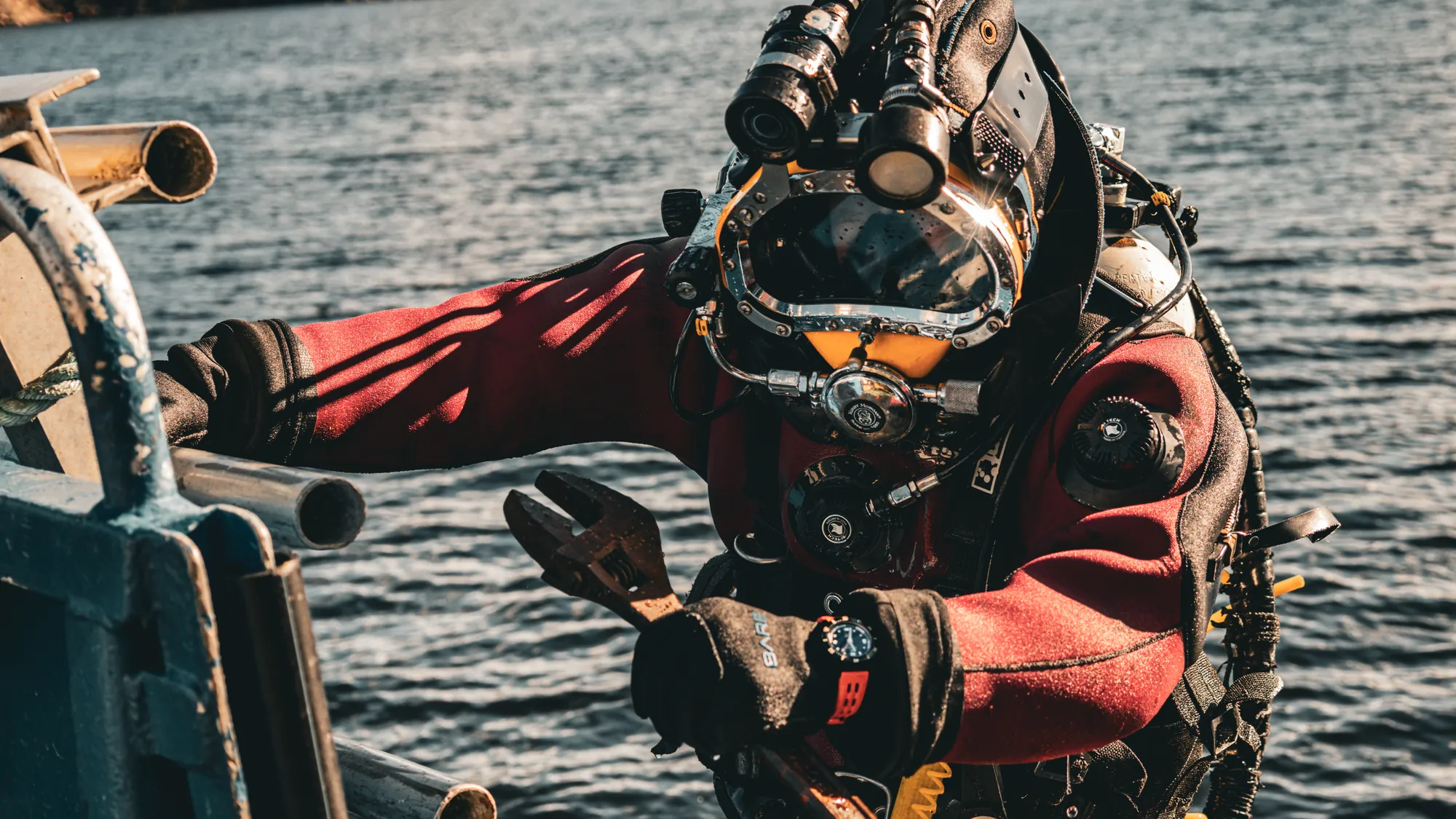
A helium release valve is a specialized pressure relief mechanism built into professional dive watches. These valves emerged in the 1960s specifically to protect timepieces worn by saturation divers working in helium-rich environments at extreme depths. The technical role is straightforward: during decompression phases, HRVs allow helium gas molecules trapped inside the watch case to escape safely before internal pressure exceeds structural limits.
Saturation diving involves prolonged exposure to pressurized helium environments, unlike recreational diving where divers spend brief periods underwater. Professional divers working on offshore oil platforms or conducting deep-sea research often live in pressurized chambers for weeks, breathing gas mixtures containing significant helium concentrations. Without proper pressure management, watches worn in these conditions face catastrophic failure.
The helium release valve solves this problem elegantly. When internal pressure builds to dangerous levels, the valve opens, releasing gas and preventing damage to seals, crystals, and cases. This feature represents a critical advancement in dive watch technology, separating true military diver watch guide specifications from recreational models.
Key characteristics of helium release valves include:
- Pressure-activated mechanisms that respond to internal gas buildup
- Designed specifically for saturation diving environments with helium-rich gas mixes
- Available in both automatic and manual operation modes
- Essential for maintaining watch integrity during extended deep-sea operations
- Not required for standard recreational diving activities
Understanding helium gas and its impact on dive watches
Helium possesses uniquely small molecular structures that create specific challenges for dive watches. During saturation dives, these tiny molecules penetrate watch seals and gaskets that normally block larger gas molecules like oxygen and nitrogen. Over hours or days of exposure at high pressure, helium molecules penetrate seals during saturation dives, gradually accumulating inside the watch case.
The real problem emerges during decompression. As external pressure decreases, the helium trapped inside your watch attempts to escape. However, gaskets and seals that allowed slow helium entry under pressure now act as barriers during rapid decompression. The result is a dangerous pressure differential: internal pressure rises significantly above external pressure.
This pressure imbalance can reach critical levels quickly. Imagine compressing a balloon inside a pressurized chamber, then suddenly releasing the external pressure. The balloon expands violently. Inside your watch, trapped helium creates similar forces, pushing against the crystal, case back, and seals with potentially destructive force.
When internal pressure exceeds structural limits, several failures occur:
- Watch crystals pop off completely, exposing movement to water damage
- Case back seals rupture, compromising water resistance permanently
- Gaskets compress and deform, creating long-term reliability issues
- Movement components may shift or sustain shock damage
The Aquastar Benthos Heritage II addresses these risks with precision-engineered helium release systems. Understanding helium behavior explains why professional saturation divers cannot rely on standard dive watches, regardless of their depth rating or build quality.
How helium release valves work mechanically
Helium release valves operate on a simple pressure differential principle. Most HRVs open when internal pressure reaches 3 to 5 psi above external pressure. This threshold provides adequate safety margin while preventing unnecessary valve activation during normal pressure fluctuations.
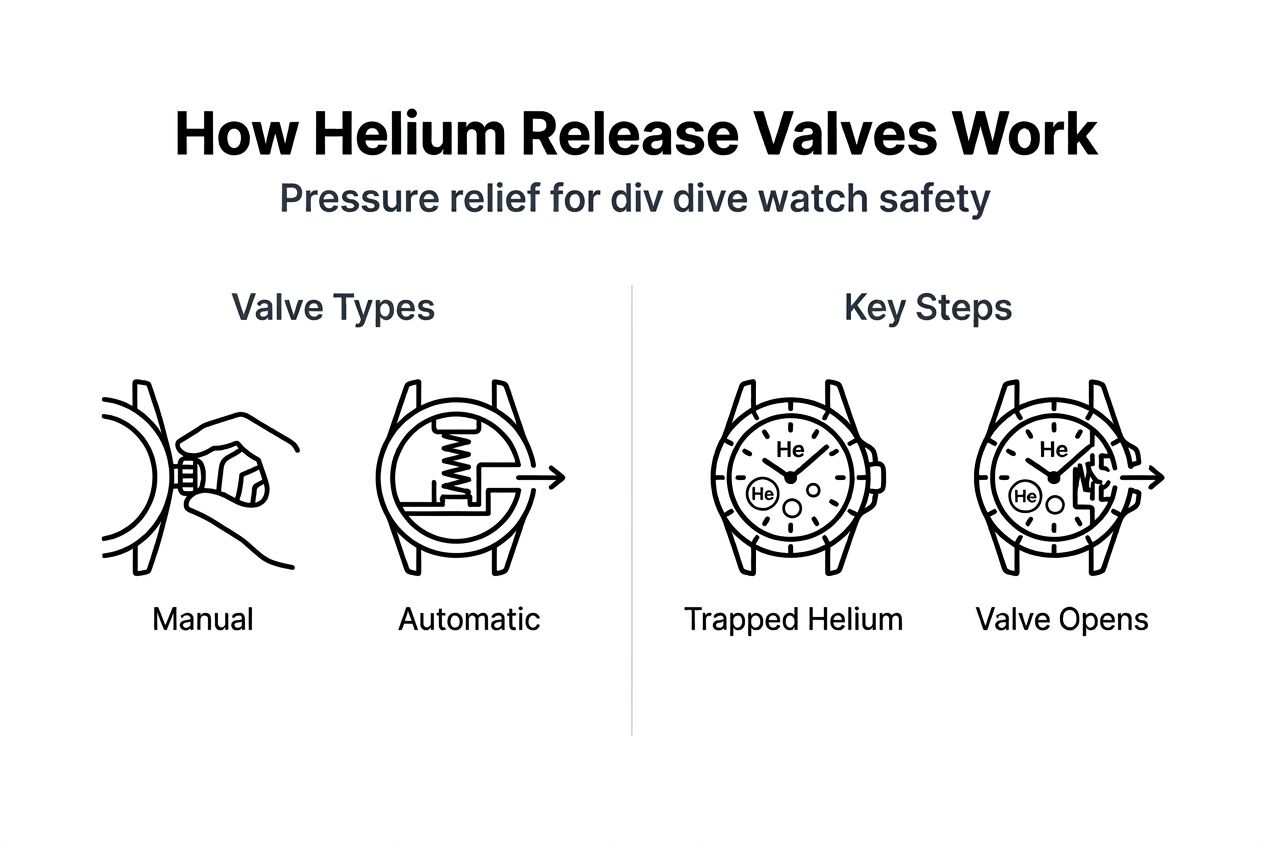
Two primary valve types exist: manual and automatic. Manual valves require diver activation, typically by unscrewing a crown-like mechanism before decompression begins. Automatic valves feature spring-loaded designs that open independently when pressure thresholds are exceeded, requiring no user intervention.
The operational sequence follows this pattern:
- During descent and bottom time, helium gradually enters the watch case through microscopic seal gaps
- Internal pressure equalizes with external pressure, causing no immediate issues
- Decompression begins, reducing external pressure while internal helium remains trapped
- Pressure differential increases until reaching the valve’s activation threshold
- Valve opens, releasing helium gas until internal and external pressures equalize
- Valve closes automatically once pressure balance is restored
Pro Tip: If you own a watch with a manual helium release valve, set a decompression reminder to open the valve before ascending. Forgetting this step defeats the entire purpose of having the feature.
| Valve Type | Activation Method | Pressure Threshold | Maintenance Needs |
|---|---|---|---|
| Automatic | Spring mechanism | 3-5 psi differential | Annual inspection |
| Manual | User-operated crown | 3-5 psi differential | Pre-dive checks required |
| Hybrid | Automatic with manual override | 3-5 psi differential | Quarterly servicing |
The valve mechanism itself consists of a one-way relief system. Gas flows outward only, maintaining water resistance while preventing external water entry. This design allows the watch to function normally at depth while providing critical pressure relief when needed. Understanding these mechanics helps you appreciate why automatic vs manual dive watches with HRVs command premium prices in the professional diving market.
When are helium release valves necessary?
Helium release valves serve a specific, narrow purpose that most divers will never encounter. Professional saturation divers working at depths exceeding 150 meters with helium-rich breathing gases require HRVs. These divers spend extended periods in pressurized environments where helium concentrations allow the gas to infiltrate watch cases over time.
Recreational divers operating at typical depths under 40 meters face no helium exposure risk. Standard air or nitrox mixtures contain no helium, eliminating the gas infiltration problem entirely. Even technical divers using trimix for deeper recreational dives rarely encounter conditions requiring HRVs, since exposure duration remains too brief for significant helium accumulation.
The critical factors determining HRV necessity include:
- Diving depth consistently exceeding 150 meters
- Use of heliox or trimix breathing gases with substantial helium concentrations
- Prolonged exposure periods typical of saturation diving operations
- Living in pressurized habitats or decompression chambers between dives
- Commercial diving work involving extended underwater construction or maintenance
If your diving activities don’t involve these specific conditions, an HRV adds complexity and cost without providing functional benefit. However, if you’re considering professional diving careers or already work in commercial diving, an HRV becomes a must-have diver watch features rather than optional equipment.
Many collectors purchase watches with HRVs for aesthetic reasons or brand heritage appreciation. That’s perfectly valid. Just understand you’re paying for a feature your recreational diving will never utilize. The valve won’t harm your watch or reduce reliability; it simply remains dormant unless you encounter the specific saturation diving conditions it was designed to handle.
Common misconceptions about helium release valves
The biggest myth about helium release valves claims they enhance water resistance. This is completely false. Water resistance depends entirely on case construction, seal quality, and gasket integrity. HRVs do not increase water resistance; they manage internal gas pressure, which is a completely separate function from keeping water out.
Another widespread misconception suggests every serious dive watch needs an HRV. Marketing departments love promoting this idea, but it’s misleading. Unless you’re a professional saturation diver, an HRV provides zero functional advantage. Recreational divers waste money buying features they’ll never use.
Many people assume all HRVs operate automatically. That’s incorrect. Manual valves require user activation before decompression begins. Forgetting to open a manual valve leaves your watch vulnerable to the exact pressure damage the valve was designed to prevent. Always verify whether your watch features automatic or manual operation.
The confusion between water resistance and pressure management causes expensive mistakes. A watch rated to 300 meters without an HRV will outperform a 200-meter watch with an HRV for recreational diving. Depth rating matters far more than HRV presence for typical diving activities.
Key myths to avoid:
- HRVs do not make watches more waterproof or increase depth ratings
- Not all dive watches require helium release valves for proper function
- Manual HRVs need user action; they don’t operate automatically
- HRV presence doesn’t indicate superior quality compared to non-HRV professional dive watches
- Standard recreational diving never requires HRV functionality
Understanding these distinctions prevents overspending on features that don’t match your actual diving needs. Focus on proven helium escape valve facts vs fiction rather than marketing hype when evaluating dive watch specifications.
Historical context and innovation in helium release valves
The 1960s marked a revolutionary period for dive watch technology. As commercial diving expanded into deeper waters requiring helium-based breathing gases, watchmakers confronted a new challenge: protecting timepieces from internal pressure damage during decompression. Swiss and European manufacturers filed patents for helium release valve systems, recognizing the growing saturation diving industry’s needs.
Aquastar played a pioneering role in this evolution. As the only Swiss watchmaker born exclusively to manufacture dive watches, Aquastar’s focus on professional diving applications drove innovation in pressure management systems. The company’s patent filings from the 1960s established foundational principles that modern HRV designs still follow today.
Early HRV implementations featured simple manual operation. Divers unscrewed a specialized crown before decompression, allowing trapped gas to escape through a controlled channel. These designs proved effective but required diver vigilance and proper training to operate correctly.
The development of automatic HRVs represented the next major advancement. Spring-loaded mechanisms eliminated human error by responding directly to pressure differentials. This innovation made professional dive watches more reliable for commercial operations where divers faced numerous decompression cycles.
Key historical milestones include:
- First HRV patents filed in the early 1960s by Swiss watchmakers
- Aquastar’s introduction of professional saturation diving watches with integrated pressure relief
- Development of the Aquastar model 60, featuring advanced case design for extreme depth operations
- Transition from manual to automatic HRV systems throughout the 1970s
- Modern refinements improving reliability and reducing maintenance requirements
This historical foundation explains why certain brands command premium prices among collectors. Early HRV-equipped watches represent significant technological achievements that enabled safer deep-sea exploration and commercial diving operations. Understanding this heritage adds depth to watch collecting beyond simple aesthetic appreciation.
Tradeoffs and design considerations for helium release valves
Incorporating helium release valves into dive watch designs introduces several practical considerations. Manufacturing complexity increases significantly, requiring additional machining operations, specialized seals, and quality control testing. This complexity typically adds 10 to 15 percent to the watch’s production cost, which manufacturers pass to consumers through higher retail prices.
Maintenance requirements also escalate with HRV inclusion. Manual valves need regular inspection to ensure proper operation when needed. Seals and gaskets around the valve mechanism require periodic replacement, adding to long-term ownership costs. Professional servicing intervals may shorten compared to non-HRV dive watches.
Despite these costs, HRVs provide crucial benefits for their intended users. Professional saturation divers gain significantly improved watch durability and reliability in helium-rich environments. The valve prevents catastrophic failures that would otherwise destroy expensive timepieces, potentially paying for itself after preventing a single crystal pop or seal rupture.
Design tradeoffs buyers should consider:
- Initial purchase price increases by 10 to 15 percent for HRV-equipped models
- Annual maintenance costs rise due to additional valve components requiring service
- Manual valves demand operational knowledge and pre-dive preparation
- Automatic valves reduce user error but may cost more to repair if damaged
- Overall watch reliability improves dramatically for saturation diving applications
Pro Tip: Before paying extra for an HRV, honestly assess your diving profile. If you’re not planning professional saturation diving work, invest those extra dollars in better movement quality or case construction instead.
The decision to choose an HRV-equipped watch depends entirely on matching features to actual diving needs. Recreational divers gain no functional advantage from HRVs, making the additional cost and maintenance burden unjustified. However, professional divers working in saturation environments find HRVs essential, making the tradeoffs worthwhile. Understanding your specific requirements helps balance these considerations effectively. Compare automatic vs manual dive watches to determine which valve type suits your diving style if you do require this feature.
Consequences of not having a helium release valve
Watches without helium release valves face severe risks during saturation diving operations. Trapped helium creates internal pressure that can exceed 10 psi above external pressure during rapid decompression. This force is sufficient to pop crystals completely off the case, expose movements to water intrusion, and destroy water resistance permanently.
Crystal popping represents the most common failure mode. The watch crystal acts as the weakest structural point under internal pressure. When trapped helium expands, the crystal detaches from the case, usually shattering in the process. This failure floods the movement immediately, causing total loss in most cases.
Seal damage occurs even when crystals remain attached. Gaskets compress and deform under internal pressure, creating permanent gaps that compromise water resistance. After returning to normal atmospheric pressure, these watches may appear functional but fail catastrophic water resistance testing.
Repair statistics reveal the financial impact. Watches without HRVs used in saturation diving show approximately 30 percent higher repair incident rates compared to properly equipped models. Repair costs for crystal replacement, seal restoration, and movement servicing typically exceed $800 to $1,500 per incident.
| Feature | With HRV | Without HRV |
|---|---|---|
| Crystal Failure Risk | Less than 2% | 25-30% |
| Seal Damage Rate | Minimal | 30-40% |
| Average Repair Cost | $200-400 | $800-1,500 |
| Useful Life in Saturation Diving | 10+ years | 6-18 months |
Long-term durability suffers dramatically without proper pressure management. Even if a watch survives initial saturation exposures, repeated pressure cycles gradually weaken seals and case structures. What begins as minor gasket compression evolves into chronic water resistance problems requiring frequent servicing.
Professional divers relying on watches as backup timing devices cannot afford these failures. The must-have diver watch features for saturation work always include HRVs, not as optional equipment but as essential safety components. Understanding how to identify genuine dive watches designed for professional use versus recreational marketing claims prevents costly mistakes.
Collectors should also consider these factors when building collections. Vintage dive watches lacking HRVs may show hidden damage from previous saturation use, even if currently functioning. Proper inspection and how to collect dive watches guide knowledge helps avoid acquiring compromised pieces. Learning dive watch cases explained guide principles reveals how case construction interacts with HRV effectiveness, further informing purchasing decisions.
Discover Aquastar’s expert dive watches with helium release valves
Aquastar continues its legacy of producing professional dive watches engineered for extreme conditions. Our current collection features models equipped with both automatic and manual helium release valves, designed specifically for commercial and saturation divers who demand reliability at depth. Each watch incorporates decades of innovation stemming from our pioneering 1960s patents that established industry standards.
Whether you’re a professional saturation diver requiring proven HRV technology or a collector appreciating authentic tool watch heritage, Aquastar offers timepieces built to perform. Explore our comprehensive guides covering must-have diver watch features and compare automatic vs manual dive watches to identify the perfect match for your needs. Our tool watches explained guide provides additional context on what separates genuine professional instruments from recreational alternatives. Discover how Aquastar’s commitment to dive watch excellence ensures your timepiece performs flawlessly when conditions matter most.
Frequently asked questions about helium release valves
Do I need a helium release valve for recreational diving?
No. Recreational divers using standard air or nitrox at depths under 40 meters never encounter helium gas exposure. HRVs only benefit professional saturation divers working in helium-rich environments at extreme depths exceeding 150 meters.
What’s the difference between automatic and manual helium release valves?
Automatic HRVs open independently when internal pressure reaches 3 to 5 psi above external pressure, requiring no user action. Manual valves need divers to unscrew a crown mechanism before decompression begins. Automatic systems prevent user error but typically cost more to manufacture and service.
Can a helium release valve fail or malfunction?
Yes. Valves can become clogged with debris, seals can degrade over time, and springs in automatic mechanisms can weaken. Regular maintenance and annual inspections prevent most failures. Manual valves face additional risk if divers forget to activate them before decompression.
How do I maintain a watch with a helium release valve?
Schedule annual inspections with qualified watchmakers familiar with HRV systems. Manual valves require pre-dive operational checks to ensure proper function. Avoid exposing the valve to chemicals, solvents, or impact that might damage seals. Replace gaskets according to manufacturer schedules, typically every two to three years.
Does having an HRV affect my watch’s water resistance rating?
No. The HRV is a separate system from water resistance. Depth ratings depend on case construction, seal quality, and gasket integrity. A properly designed HRV maintains water resistance while providing pressure relief. Poor HRV design or maintenance can compromise water resistance, but the feature itself doesn’t inherently reduce depth capability.
Will my watch crystal pop off without an HRV during normal diving?
Not during recreational diving with standard air or nitrox. Crystal popping only occurs when helium gas trapped inside the case expands during decompression. This situation arises exclusively in saturation diving operations using helium-rich breathing gases. Recreational dive profiles pose zero risk of helium-related pressure damage.
Recommended
- 7 Must-Have Diver Watch Features for 300m+ Professional Use – Aquastar dive watches
- How to Collect Dive Watches: A Complete Collector’s Guide – Aquastar dive watches
- Automatic vs Manual Dive Watches: Complete Guide – Aquastar dive watches
- Best Dive Watch Brands – Expert Comparison 2025 – Aquastar dive watches