
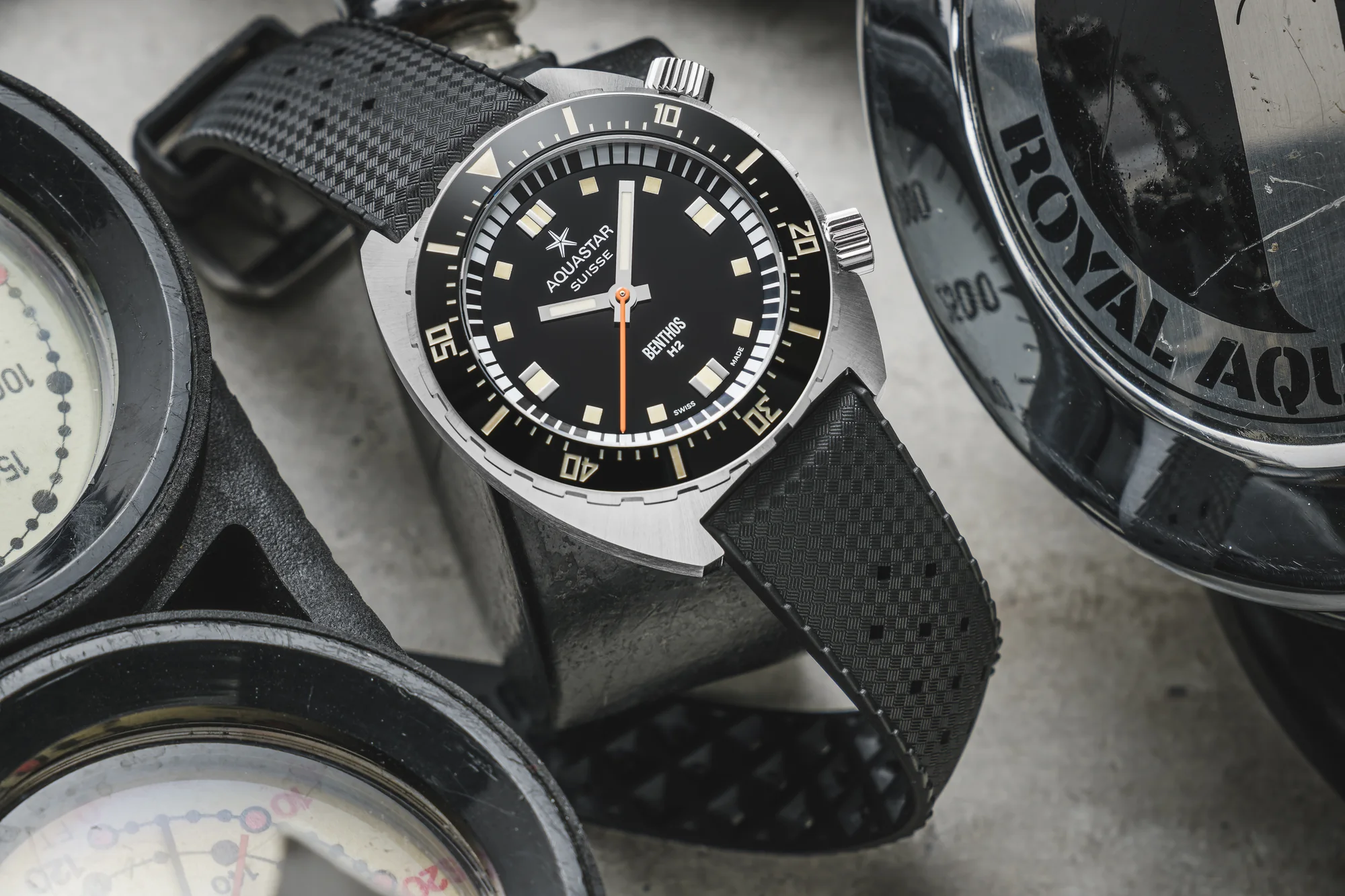
What Is Sapphire Crystal On A Watch: at a glance
What is sapphire crystal on a watch? Synthetic aluminum oxide, scratch resistance, AR coatings and why it's the standard for serious dive watches. Use this guide on what is sapphire crystal on a watch to weigh design choices, engineering trade-offs and how the category translates to real Aquastar dive watches.
| Topic | What is sapphire crystal on a watch |
| Read time | 5-8 min |
| Source | Aquastar editorial |

Many watch enthusiasts mistake sapphire crystal for natural gemstone sapphire, but it’s actually a synthetic material engineered specifically for durability. This lab-grown aluminum oxide provides exceptional scratch resistance and optical clarity, making it the preferred choice for luxury and dive watches. Understanding its properties, manufacturing methods, and limitations helps you appreciate why sapphire crystal remains the gold standard for professional timepieces in 2026.
Table of Contents
- Understanding Synthetic Sapphire Crystal In Watches
- Scratch Resistance And Brittleness: Balancing Durability In Watch Crystals
- Anti-Reflective Coatings And Optical Clarity Enhancements
- Sapphire Crystal’s Critical Role In Dive Watch Durability And Performance
- Frequently Asked Questions
Key takeaways
| Point | Details |
|---|---|
| Material composition | Synthetic sapphire is aluminum oxide (Al₂O₃) ranking 9 on Mohs hardness scale, far harder than mineral glass. |
| Manufacturing impact | Production methods like Verneuil, Kyropoulos, and Czochralski affect crystal quality and internal stress levels. |
| Scratch versus impact | Sapphire offers superior scratch resistance but brittleness makes it vulnerable to sharp impacts compared to mineral glass. |
| AR coating benefits | Anti-reflective coatings reduce glare from 8% to under 1%, dramatically improving dial visibility. |
| Dive watch advantage | Sapphire’s rigidity and clarity maintain water resistance integrity and aesthetics under extreme diving pressures. |
Understanding synthetic sapphire crystal in watches
Sapphire crystal used in watches bears no relation to natural sapphire gemstones mined from earth. Sapphire crystal is synthetic corundum grown in laboratories under controlled conditions. This lab-grown material consists purely of aluminum oxide (Al₂O₃), heated to over 2,000 degrees Celsius to create transparent crystals with exceptional hardness.
Manufacturing methods vary significantly and directly impact final crystal quality. The Verneuil process drops powdered aluminum oxide through an oxyhydrogen flame, creating crystals quickly and cost-effectively but introducing higher internal stresses. The Kyropoulos method grows larger, clearer crystals with fewer inclusions by slowly cooling molten material in a crucible. The Czochralski technique produces the highest purity crystals by pulling a seed crystal from molten aluminum oxide, though it’s more expensive.
Each manufacturing approach creates different optical properties and internal stress patterns. Watchmakers select specific crystal qualities based on their tool watch requirements and price points. Premium brands often specify Czochralski-grown crystals for superior clarity, while more affordable watches may use Verneuil-process sapphire.
The synthetic nature allows consistent quality control impossible with natural gemstones. Manufacturers can tune crystal properties for specific applications, making sapphire ideal for watch crystals where optical clarity, scratch resistance, and dimensional stability matter most. When comparing dive watch brands, crystal quality often separates professional-grade models from recreational alternatives.
Key characteristics of synthetic sapphire crystal include:
- Transparent to visible and infrared light wavelengths
- Chemically inert and resistant to most acids and alkalis
- Maintains optical properties across extreme temperatures
- Can be precisely cut and polished to tight tolerances
- Electrically insulating with high dielectric strength
Pro Tip: Hold a sapphire crystal watch at an angle under bright light. High-quality sapphire shows minimal color distortion and no visible inclusions, while lower-grade crystals may display slight cloudiness or color shifts.
Scratch resistance and brittleness: balancing durability in watch crystals
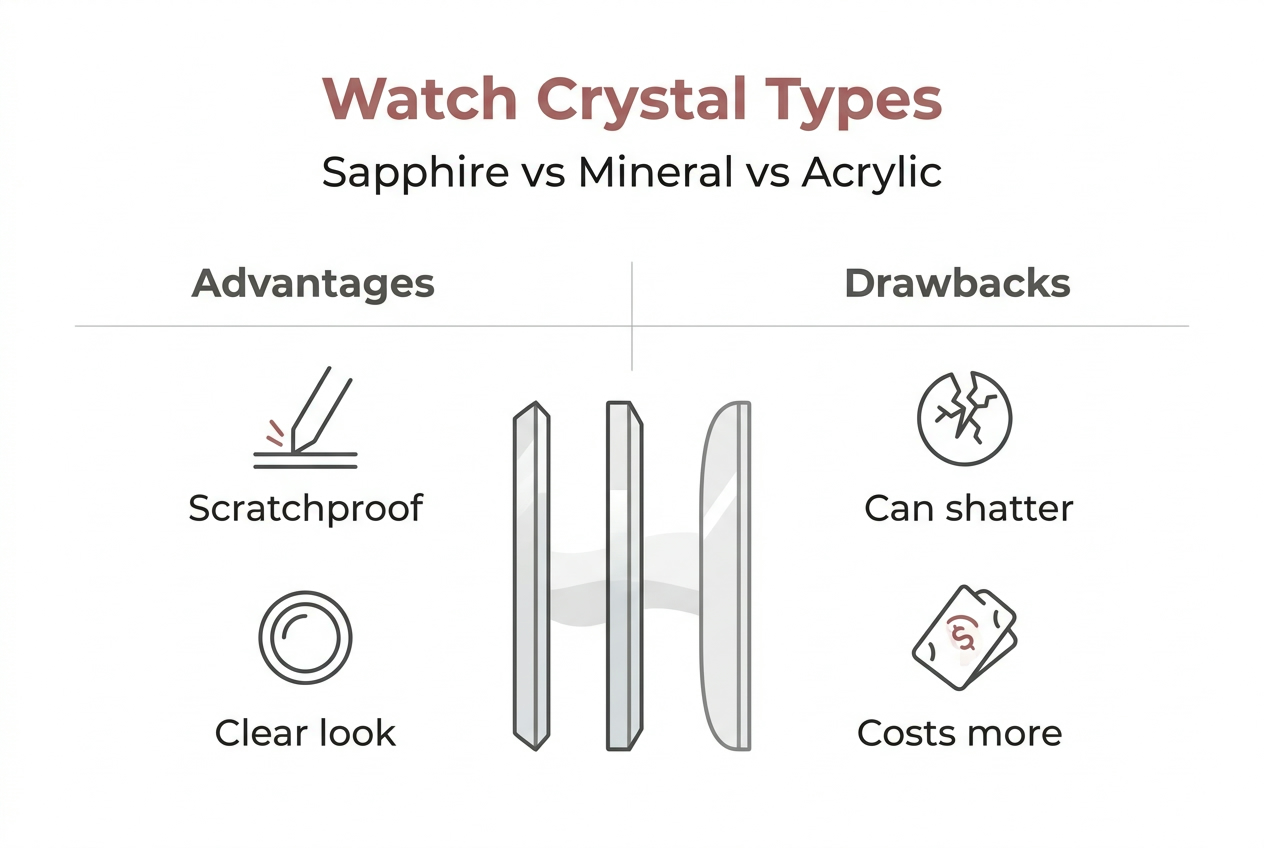
Sapphire crystal’s primary advantage lies in its exceptional hardness. Ranking 9 on the Mohs scale places sapphire second only to diamond at 10, making it dramatically harder than mineral glass at 5.5 to 6.5 or acrylic at 2.5. This hardness translates to outstanding scratch resistance during daily wear.
Most materials encountered in everyday life cannot scratch sapphire. Metal surfaces, sand, concrete, and glass all rank lower on the Mohs scale. Your watch crystal maintains pristine clarity for years, even with regular contact against desks, walls, and other surfaces. This scratch resistance is essential for maintaining aesthetics and legibility in professional watches.
However, hardness comes with a trade-off. Sapphire’s brittleness makes it vulnerable to sharp impacts despite its scratch resistance. Drop your watch onto a hard corner or strike it against a sharp edge, and sapphire can chip or shatter. This brittleness stems from sapphire’s crystalline structure, which resists deformation but fractures under sufficient force.
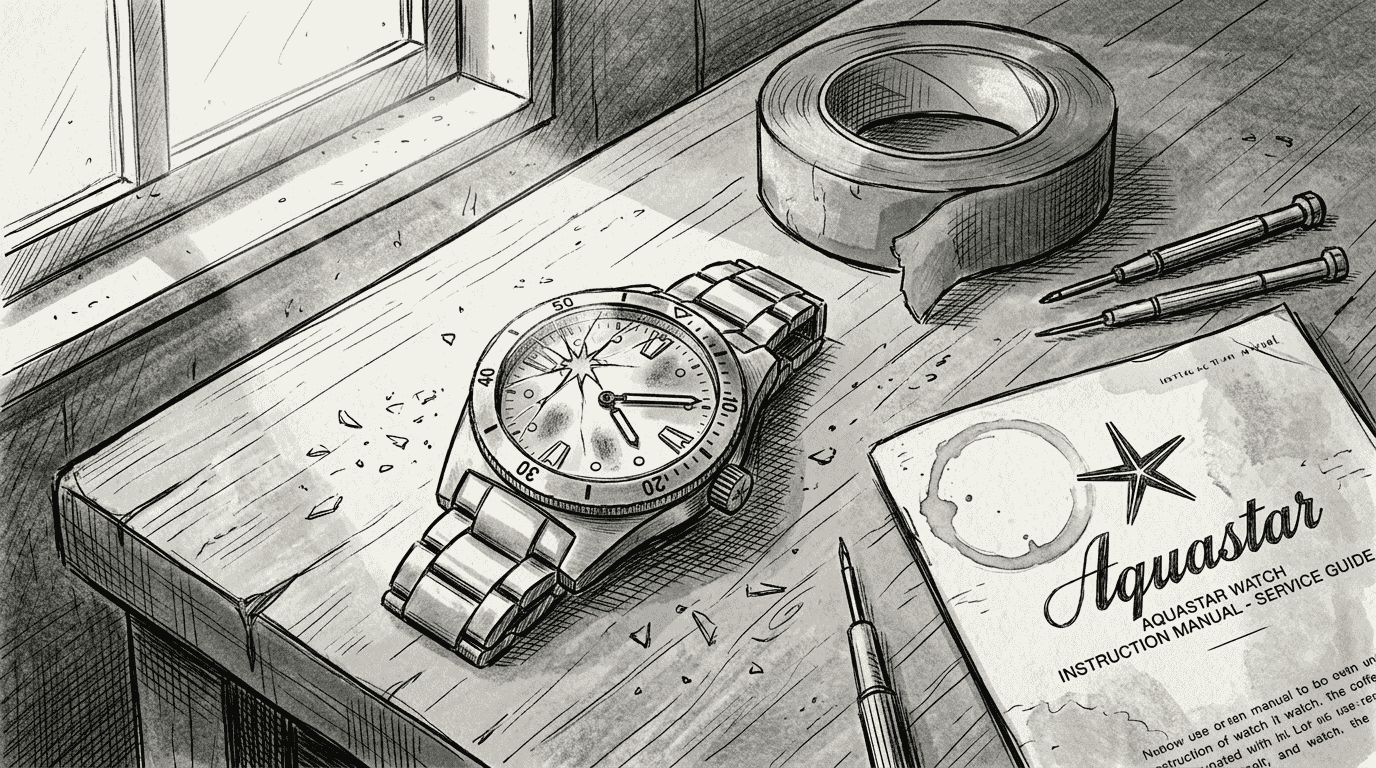
Mineral glass offers better impact resistance through flexibility. When struck, mineral glass can absorb energy by deforming slightly before breaking. This toughness makes mineral glass less likely to fail from accidental impacts. Yet mineral glass scratches easily, developing fine marks that accumulate over time and cloud the dial.
Acrylic crystals provide the best impact resistance but scratch if you look at them wrong. Acrylic’s plastic composition flexes dramatically, absorbing impacts that would destroy sapphire or mineral glass. The trade-off for this flexibility is terrible scratch resistance requiring frequent polishing.
| Crystal Type | Mohs Hardness | Scratch Resistance | Impact Resistance | Cost Ranking |
|---|---|---|---|---|
| Sapphire | 9 | Excellent | Fair | Highest |
| Mineral Glass | 5.5 to 6.5 | Good | Good | Medium |
| Acrylic | 2.5 | Poor | Excellent | Lowest |
Understanding diver watch features means recognizing when sapphire’s scratch resistance outweighs its brittleness concerns. For underwater use where abrasion from sand, rocks, and equipment poses constant threats, sapphire maintains clarity where mineral glass would become clouded.
Pro Tip: Despite marketing claims, sapphire crystal is not completely scratch-proof. Diamond jewelry, ceramic surfaces, and certain industrial compounds harder than 9 on Mohs scale can damage sapphire. Remove your watch when working with grinding tools or handling diamonds.
Key considerations for crystal durability include:
- Daily wear patterns and risk exposure
- Intended use environment
- Budget constraints and replacement costs
- Personal priorities between scratch and impact resistance
- Watch case protection features like raised bezels
Anti-reflective coatings and optical clarity enhancements
Sapphire crystal’s high refractive index creates a significant drawback for watch legibility. Uncoated sapphire reflects approximately 8% of incident light, producing distracting glare that obscures the dial. This reflection becomes especially problematic in bright sunlight or under artificial lighting where readability suffers.
Anti-reflective coatings solve this optical challenge through interference effects. Manufacturers apply ultra-thin layers of materials with specific refractive indices to the crystal surface. These layers cause reflected light waves to interfere destructively, canceling each other out. AR coatings reduce reflections to under 1%, dramatically improving dial visibility.
Single-layer AR coatings provide basic glare reduction at minimal cost. These coatings work effectively for narrow wavelength ranges and specific viewing angles. However, multi-layer AR coatings deliver superior performance across the entire visible spectrum and wider viewing angles. Premium watches often feature multi-layer coatings on both crystal surfaces for maximum clarity.
The application process requires precision and adds manufacturing complexity. Crystals enter vacuum chambers where coating materials vaporize and deposit in controlled thicknesses measured in nanometers. Each layer must achieve exact specifications or the interference effect fails. This multi-step process increases production time and costs.
AR coatings also affect watch aesthetics beyond pure functionality. Coated crystals often display subtle blue or purple tints when viewed at angles, a signature of quality AR treatment. Some collectors prefer this appearance, while others favor the neutral look of uncoated sapphire. When learning how to identify genuine dive watches, AR coating presence and quality serve as reliability indicators.
Durability concerns accompany AR coatings despite their benefits. Coating layers measure only hundreds of nanometers thick, making them vulnerable to abrasion and chemical damage. Harsh cleaners, solvents, and abrasive materials can damage or remove coatings over time. Proper care maintains coating integrity throughout the watch’s lifetime.
Pro Tip: Clean AR-coated crystals using only microfiber cloths and mild soap solutions. Avoid paper towels, which contain wood fibers hard enough to scratch coatings. Never use window cleaners containing ammonia, as they can degrade AR layers.
AR coating considerations include:
- Single versus multi-layer coating quality differences
- Interior, exterior, or double-sided application
- Color tint preferences and aesthetic impact
- Coating durability and maintenance requirements
- Cost implications for watch pricing
Sapphire crystal’s critical role in dive watch durability and performance
Dive watches demand exceptional crystal performance under extreme conditions. Water pressure increases approximately one atmosphere for every 10 meters of depth, creating enormous forces on watch components. Sapphire crystal’s rigidity helps maintain seal integrity by resisting deformation that could compromise gaskets.
Crystal thickness directly impacts pressure resistance capabilities. Professional dive watches rated for 300 meters or deeper use sapphire crystals measuring 3 to 4 millimeters thick. This thickness provides the structural strength to withstand pressure without flexing excessively. Thinner crystals might deform under pressure, stressing seals and potentially allowing water intrusion.
Sapphire’s scratch resistance proves invaluable in diving environments. Underwater work involves constant contact with rocks, coral, equipment, and boat surfaces. Sand and silt suspended in water act as abrasives during movement. Mineral glass crystals would develop scratches quickly, clouding dial visibility when clear information becomes critical for diver safety.
The crystal shape also affects water resistance performance. Flat sapphire crystals distribute pressure evenly across their surface but require thicker dimensions for equivalent strength. Domed or curved crystals gain structural rigidity from their shape, similar to an arch in architecture. Many professional dive watches use slightly domed sapphire to optimize strength while minimizing thickness.
Crystal integration with the watch case design determines overall water resistance. The crystal sits in a metal retaining ring with gaskets creating watertight seals. Sapphire’s dimensional stability across temperature changes helps maintain consistent gasket compression. Mineral glass expands and contracts more with temperature, potentially loosening seals over time.
| Depth Rating | Typical Crystal Thickness | Pressure (atmospheres) | Usage Category |
|---|---|---|---|
| 100m | 2.0 to 2.5mm | 10 atm | Recreational swimming |
| 200m | 2.5 to 3.0mm | 20 atm | Recreational diving |
| 300m | 3.0 to 3.5mm | 30 atm | Professional diving |
| 500m+ | 3.5 to 4.5mm | 50+ atm | Commercial/saturation diving |
Understanding these diver watch features helps you appreciate why professional models command premium prices. The engineering and materials ensuring reliability at depth involve precise tolerances and quality control. Sapphire crystal represents just one component in a comprehensive system designed for extreme environments.
Critical factors for dive watch crystals include:
- Adequate thickness for rated depth pressure
- Proper gasket materials and compression
- Crystal edge finishing and seal surface quality
- AR coating selection for underwater visibility
- Regular pressure testing and seal inspection
Pro Tip: Have your dive watch pressure tested annually by qualified technicians. Gaskets deteriorate over time even without visible damage. Testing confirms water resistance remains within specifications before you trust the watch underwater where failure could prove catastrophic.
Explore sapphire crystal dive watches at Aquastar
Aquastar has pioneered professional dive watch innovation since the 1960s, with sapphire crystal playing a central role in our timepiece durability and performance. Our collection features carefully selected sapphire crystals engineered for extreme underwater conditions, maintaining the clarity and reliability commercial and recreational divers demand.
Every Aquastar model incorporates the material science and manufacturing precision discussed throughout this guide. From crystal thickness optimization to AR coating selection, our watches demonstrate how proper sapphire implementation enhances professional dive watch capabilities. Explore our guides on essential diver watch features and how to identify genuine dive watches to understand what separates professional timepieces from recreational alternatives. Compare our approach with other manufacturers through our dive watch brands comparison to see why sapphire crystal quality matters for underwater reliability.
Frequently asked questions
What is sapphire crystal on a watch?
Sapphire crystal is synthetic aluminum oxide grown in laboratories, not natural gemstone sapphire. This lab-created material ranks 9 on the Mohs hardness scale, providing exceptional scratch resistance for watch crystals. Its transparency, durability, and optical properties make it ideal for premium and professional timepieces.
Does sapphire crystal scratch easily?
Sapphire crystal resists scratches from nearly all materials encountered in daily life due to its hardness. Only materials harder than 9 on the Mohs scale, like diamonds or certain ceramics, can scratch sapphire. However, sapphire is not completely scratch-proof and requires care around extremely hard surfaces.
Why do expensive watches use sapphire crystal?
Luxury watchmakers choose sapphire crystal for its superior scratch resistance, optical clarity, and long-term durability. Sapphire maintains pristine appearance for decades with minimal maintenance, preserving the watch’s aesthetics and value. The material’s cost reflects its performance advantages and manufacturing complexity.
Can sapphire crystal break or shatter?
Sapphire crystal’s hardness comes with brittleness that makes it vulnerable to sharp impacts despite excellent scratch resistance. Dropping a watch or striking it against hard corners can chip or crack sapphire. Mineral glass offers better impact resistance, though it scratches more easily than sapphire.
How do I clean sapphire crystal without damaging it?
Clean sapphire crystals using microfiber cloths and mild soap solutions to protect anti-reflective coatings. Avoid paper towels, harsh chemicals, and ammonia-based cleaners that can damage AR layers. Gentle cleaning maintains coating integrity and crystal clarity for years without compromising performance.
Is sapphire crystal worth the extra cost?
Sapphire crystal justifies higher costs for watches worn regularly or in demanding environments. Its scratch resistance maintains clarity and appearance far longer than mineral glass alternatives. For collectors and professionals who value long-term durability and aesthetics, sapphire represents a worthwhile investment in timepiece quality.