
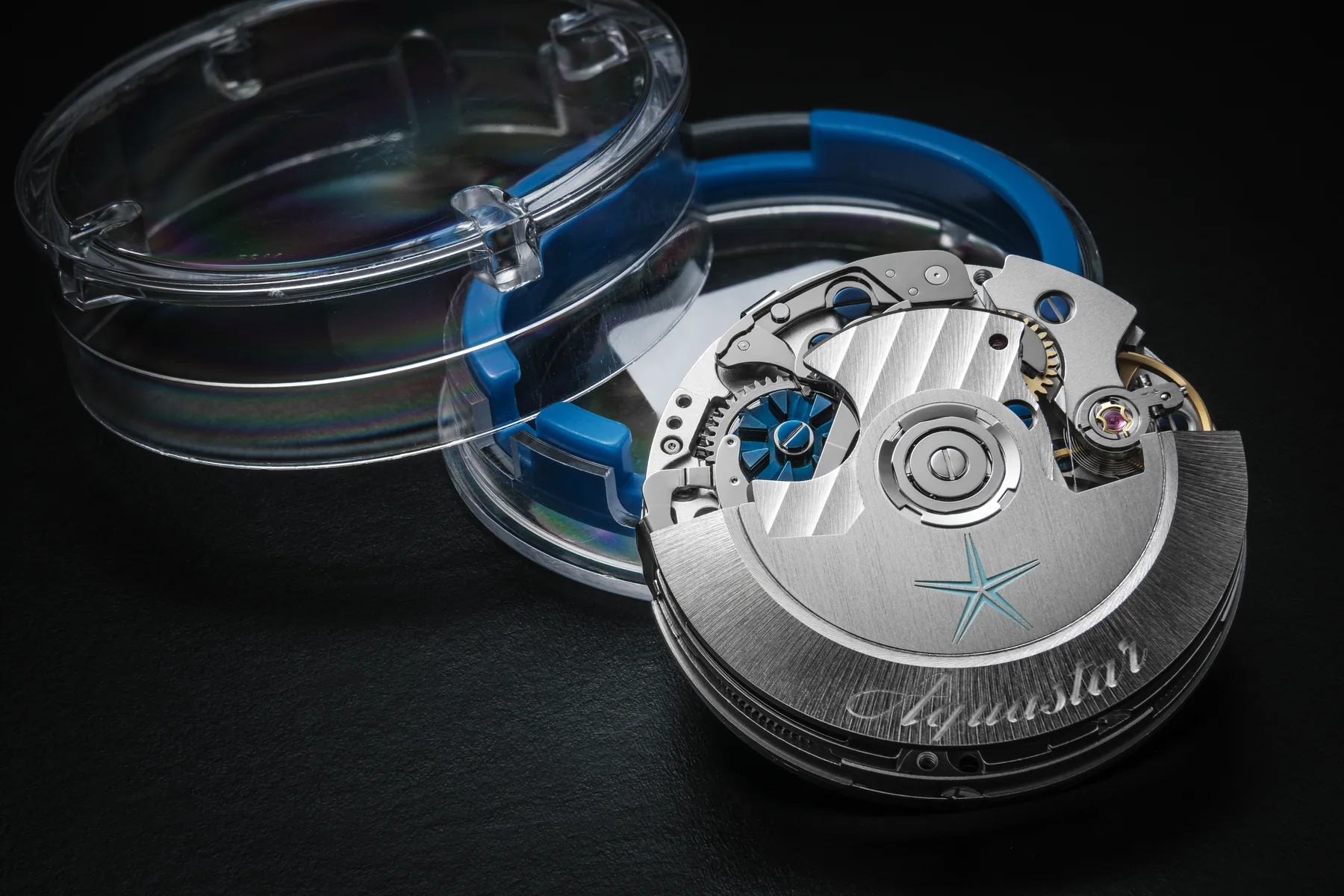
Anyone shopping for a mechanical watch runs into the same fork in the road: automatic or manual-wind? Both are fully mechanical, both keep time with a balance wheel and hairspring rather than a battery, and both can last for generations with proper care. The difference is simply how the mainspring gets wound. This guide breaks down the automatic vs manual watch decision in plain terms, covering power reserve, thickness, daily ritual, servicing, and where each one makes the most sense, including on a dive chronograph.
How Each Winding System Works
Every mechanical watch stores energy in a coiled mainspring housed inside the mainspring barrel. As that spring slowly unwinds, it drives the gear train and, through the escapement, releases energy in tiny regulated steps to turn the hands. The only real question is how you put energy back into the spring.
A manual-wind (or hand-wound) watch is charged by turning the crown between your fingers. You feel gentle resistance building as the spring tightens, and you stop when it reaches the end of its travel. This is the oldest and most direct arrangement in watchmaking.
An automatic (or self-winding) watch adds a weighted rotor, a semicircular mass that pivots freely as your wrist moves through the day. That motion winds the mainspring for you through a reduction gear train, so a watch worn regularly rarely needs manual intervention. Most automatics can still be wound by hand at the crown as well, which is useful after the watch has been sitting.
Power Reserve and Daily Convenience
Power reserve is the running time a fully wound watch delivers before it stops. Typical mechanical calibres land somewhere between 38 and 60 hours, with some modern movements stretching further. The winding system does not by itself determine the reserve, but it does change how you experience it.
An automatic worn every day tops itself up continuously, so it stays running and stays accurate without any thought. Take it off on Friday evening with a 42-hour reserve, though, and it may well be stopped by Sunday. That is where a longer reserve, or a watch winder, earns its keep for people who rotate through several watches.
A manual-wind watch asks for a small daily habit: a dozen or so turns of the crown each morning, ideally at the same time, to keep the reserve high and timekeeping stable. Some owners find this a chore. Others regard it as one of the quiet pleasures of ownership, a brief moment of connection with the mechanism before the day starts.
What About a Watch Winder?
A watch winder is a small motorised cradle that gently rotates an automatic watch while it sits unworn, keeping the mainspring charged so the piece is always running and set. For someone with one everyday automatic it is rarely necessary, since the watch simply restarts with a wind and a time-set. Collectors who rotate through many automatics, or who own a perpetual calendar that is tedious to reset, tend to find winders more useful. A manual-wind watch, by contrast, gains nothing from a winder, since it has no rotor for the motion to act on.
Thickness, Weight, and Wrist Feel
The rotor in an automatic movement adds height. Even with the flattest micro-rotor and peripheral designs, a self-winding calibre is generally thicker than the equivalent hand-wound movement, and the case has to grow to accommodate it. For a dress watch meant to slip under a shirt cuff, that extra millimeter or two matters, which is one reason many slim dress pieces remain manual-wind.
On a dive watch the calculation is different. A tool watch is already built with a substantial case, a rotating bezel, and enough water resistance to handle real depth, so the modest thickness of an automatic movement disappears into the overall package. The convenience of never having to unscrew and wind a crown, and therefore of disturbing the gaskets less often, is a genuine advantage for a watch that spends time in the water.
Reliability, Servicing, and Repair
Both systems are mature and dependable. A manual movement has fewer parts, since it omits the rotor, its pivots, and the reversing wheels of the automatic winding mechanism. Fewer components can mean slightly simpler service, though in practice both types follow the same maintenance rhythm: a full overhaul every several years to clean, re-lubricate, and reseal the movement, with gaskets checked on a dive watch at the same time.
Automatic winding does spare the mainspring some of the stress of being wound fully by hand every day, and it spares the crown and stem some wear. On the other hand, the rotor and its bearing are additional parts that can eventually need attention. Neither point should sway a purchase decision much; a well-made example of either type, serviced on schedule, will run reliably for decades.
One practical note for both: if a watch has been sitting unworn, give it a manual wind at the crown before setting the time and date. This gets the mainspring to a healthy tension immediately rather than waiting for wrist motion to build it up, which helps the movement keep good time from the first minute.
Which Should You Choose?
There is no universally correct answer, only the fit between the watch and how you live with it. A few guidelines help:
- Choose an automatic if you want a watch you can put on and forget, especially a daily-wear dive watch where fuss-free operation and undisturbed gaskets are worth having.
- Choose manual-wind if you value the thinnest possible case, enjoy the daily winding ritual, or are drawn to the mechanical purity of the oldest watchmaking layout.
- If you own several watches and rotate them, factor in that automatics left idle will stop, while a manual-wind piece was always going to need winding anyway.
In a dive chronograph the choice often leans automatic, because the watch is designed for active use and the self-winding rotor suits a piece that is worn hard and worn often. The Aquastar Benthos Professional, for example, is built around the Sellita SW200-1 automatic, a robust Swiss workhorse well suited to a tool watch that spends its life on the wrist rather than in a drawer. If you are weighing your options, it is worth handling both an automatic and a manual-wind piece in person, since the winding habit that reads as a nuisance on paper can feel very different once the watch is actually on your wrist. Explore the automatic dive watches in the Aquastar Benthos collection to see how a modern self-winding tool watch is put together.