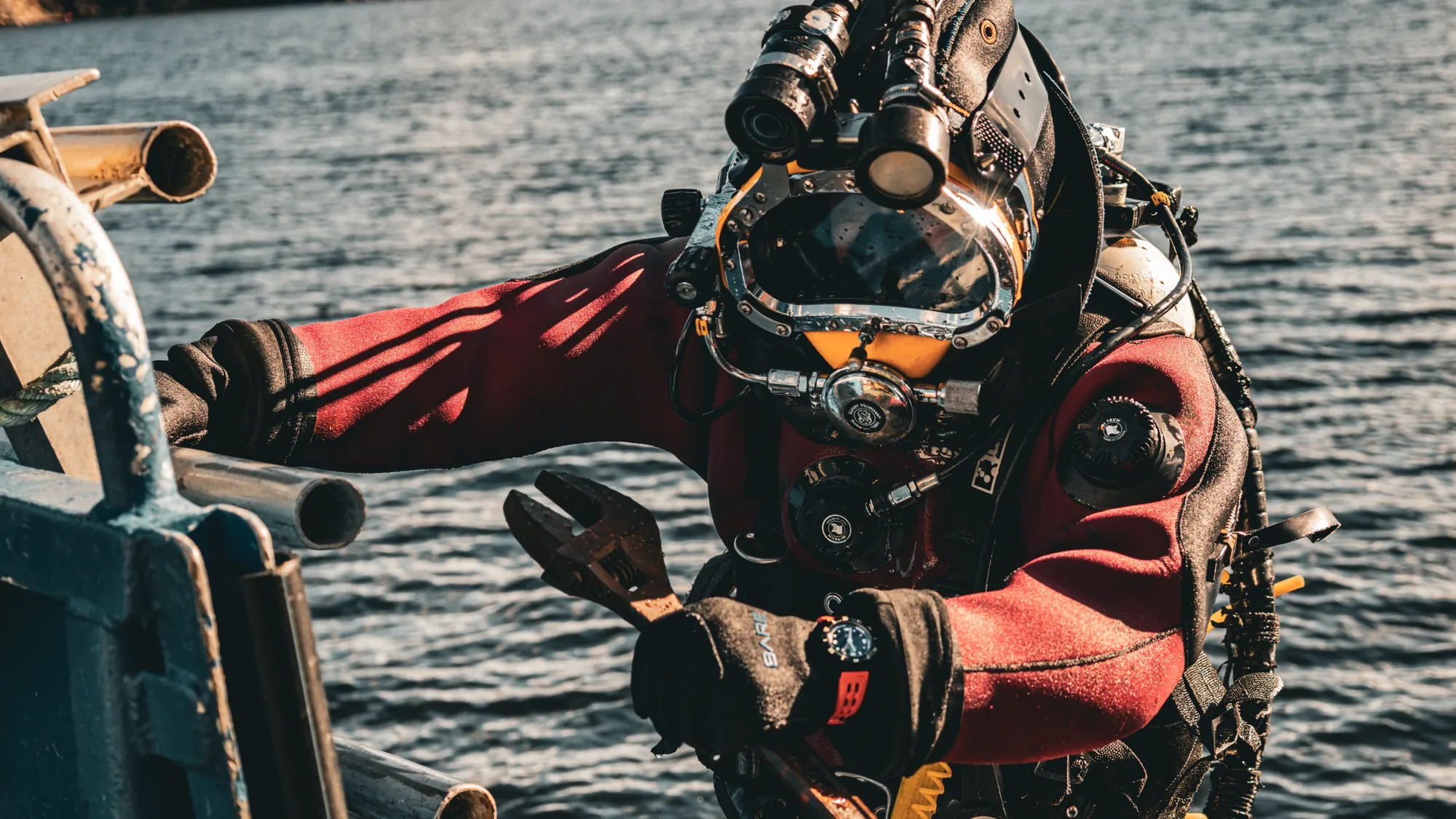
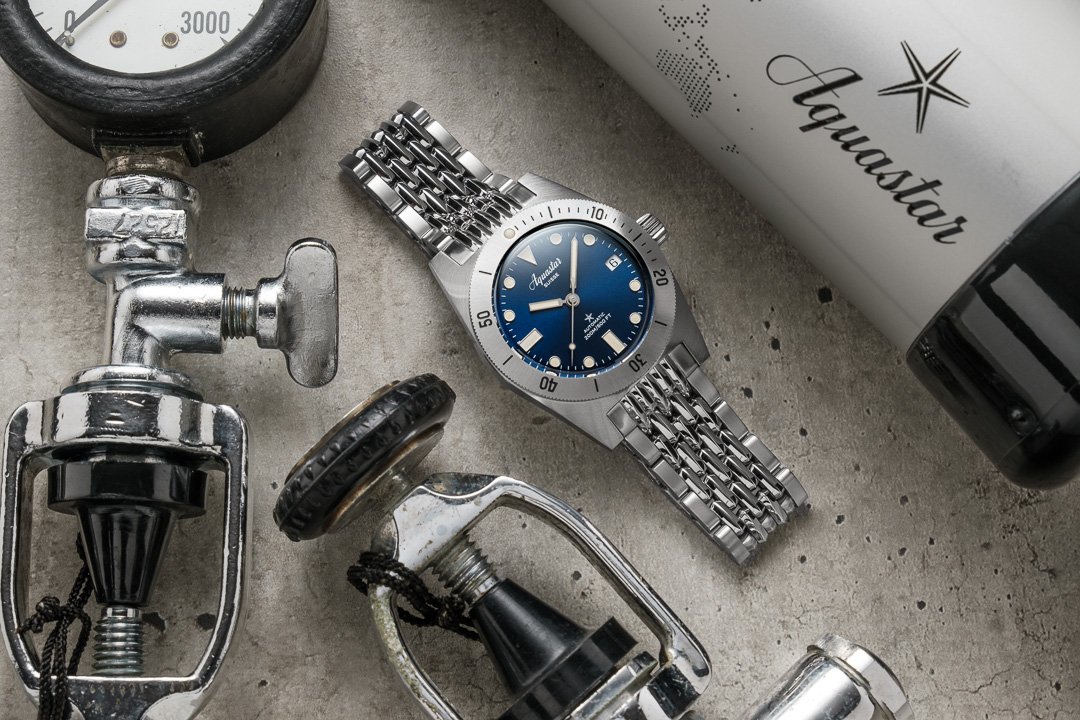
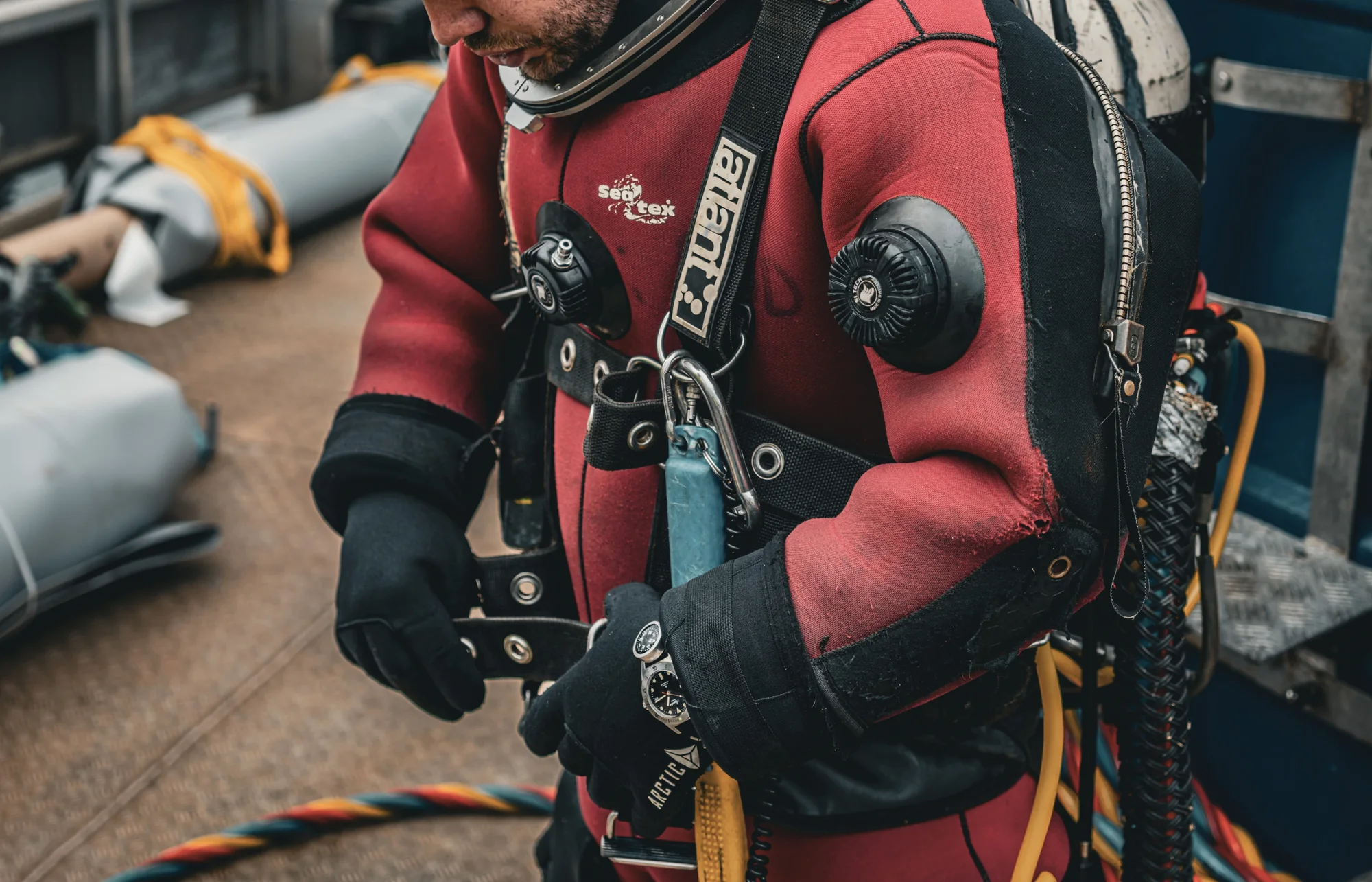
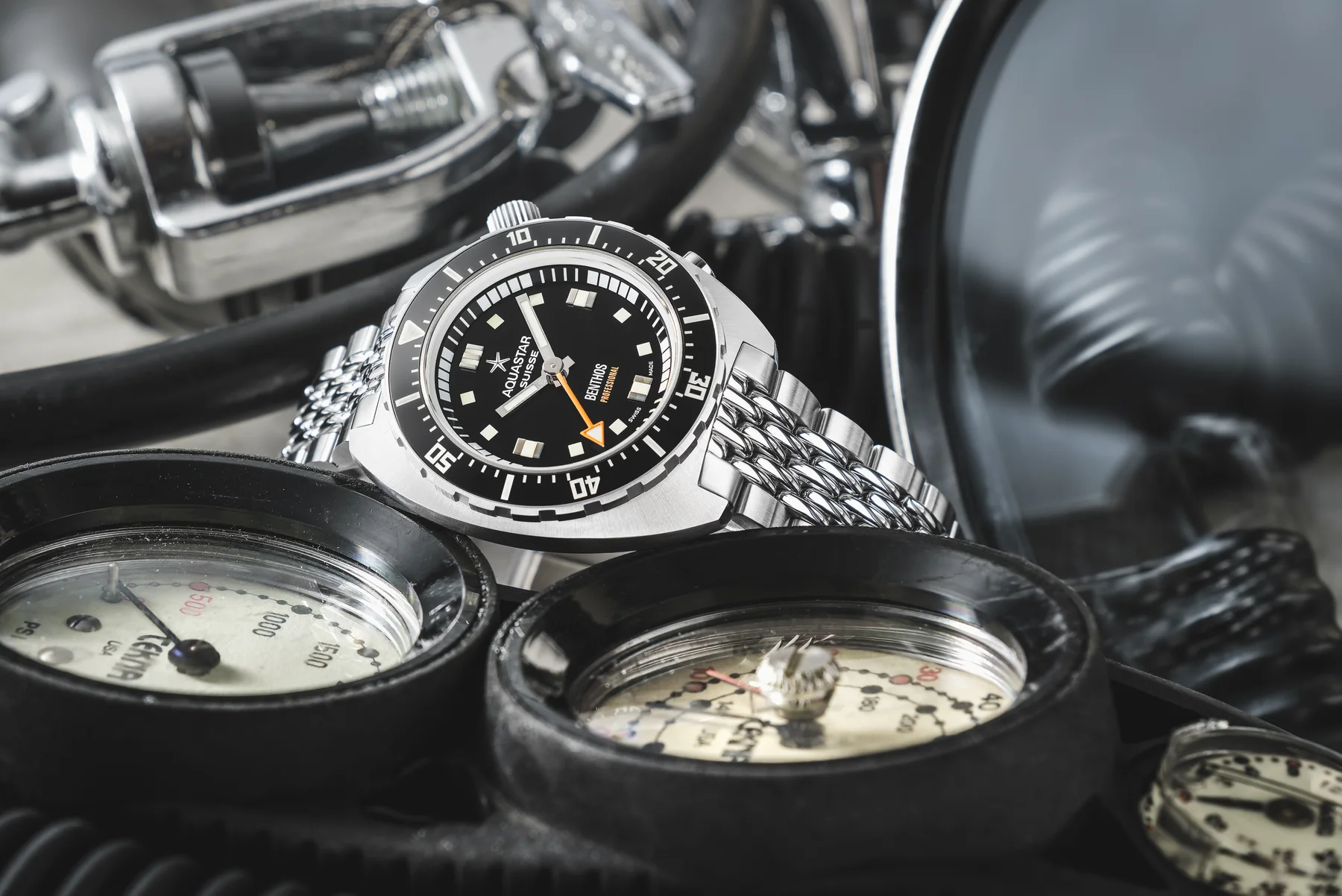
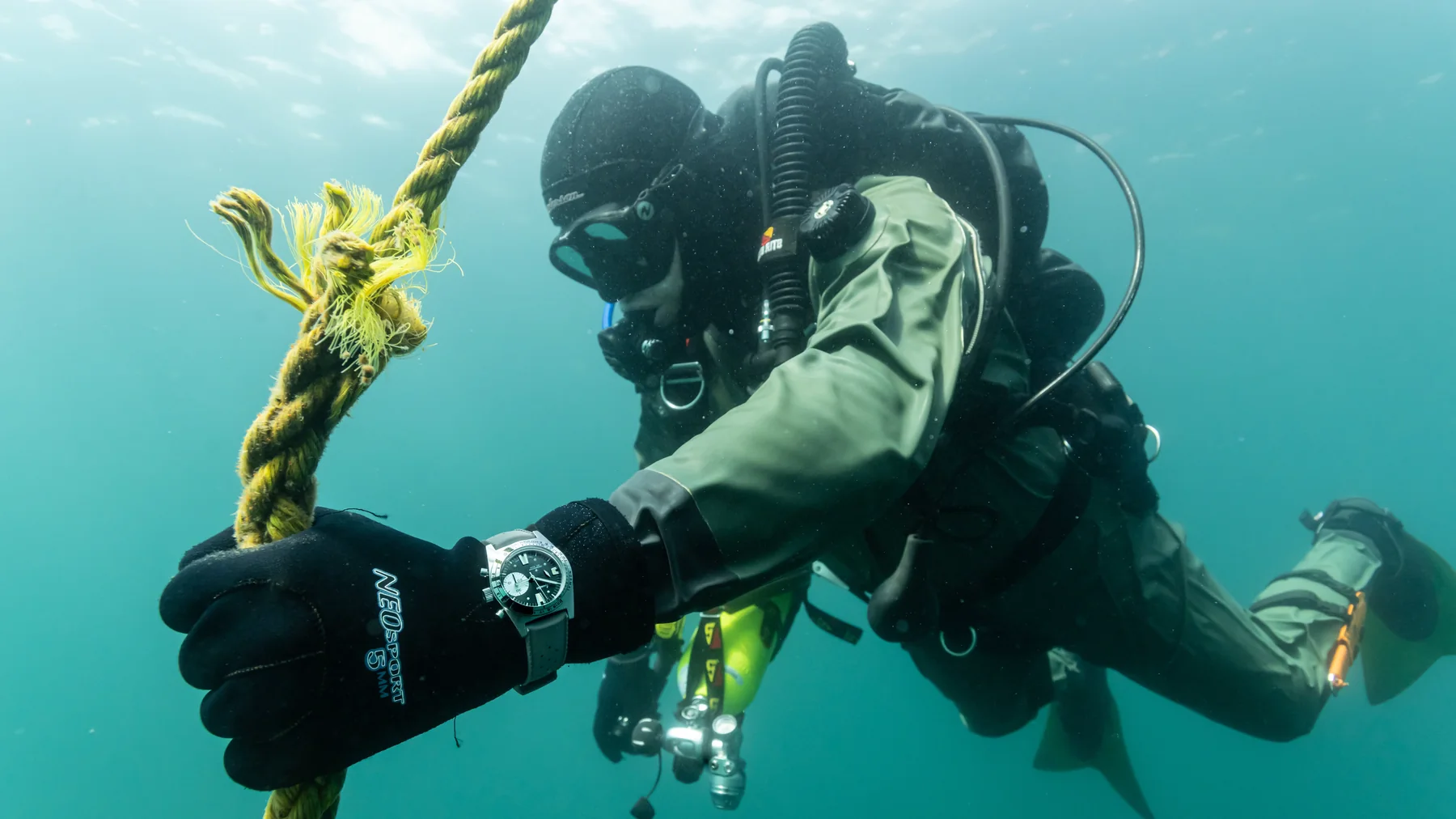
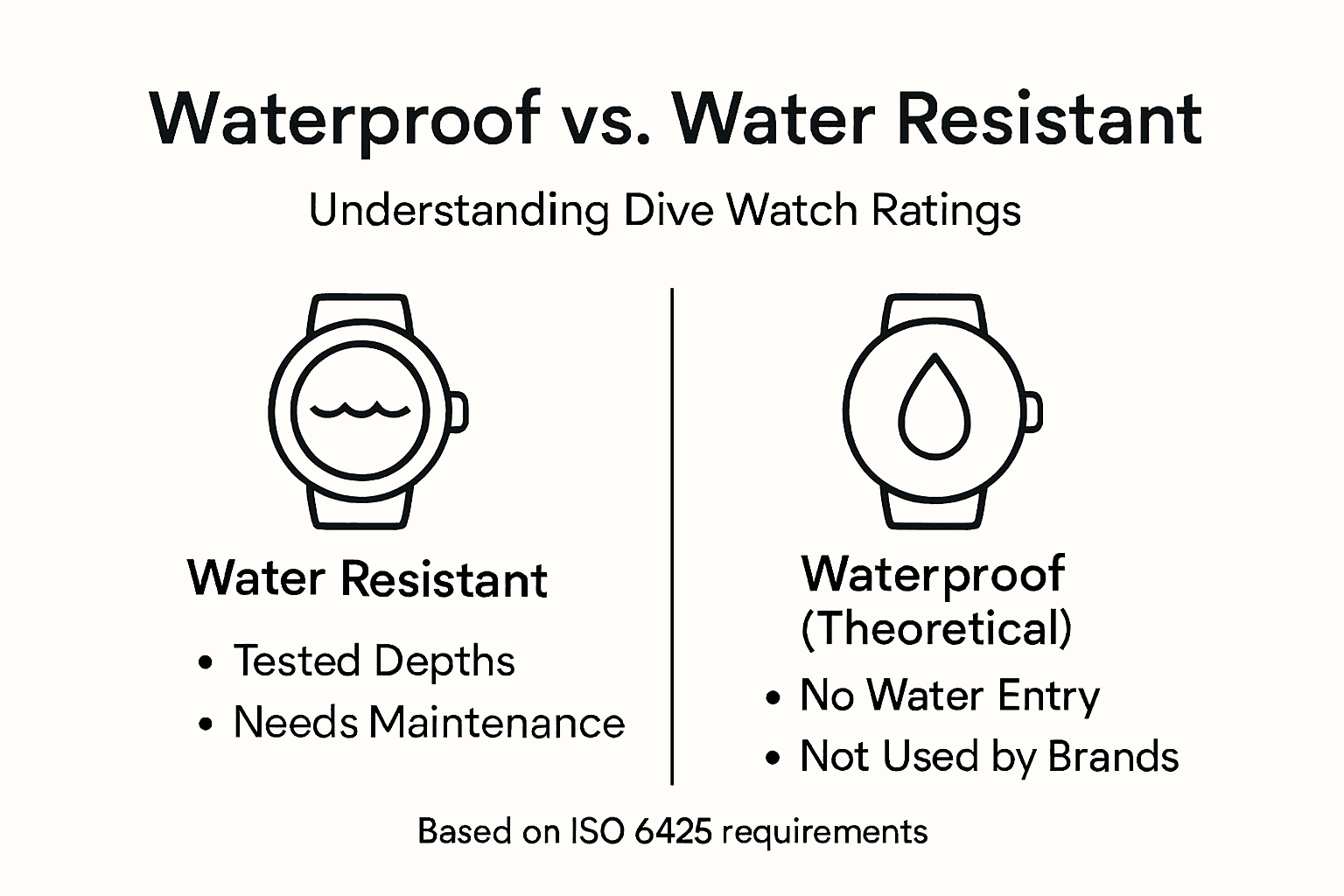
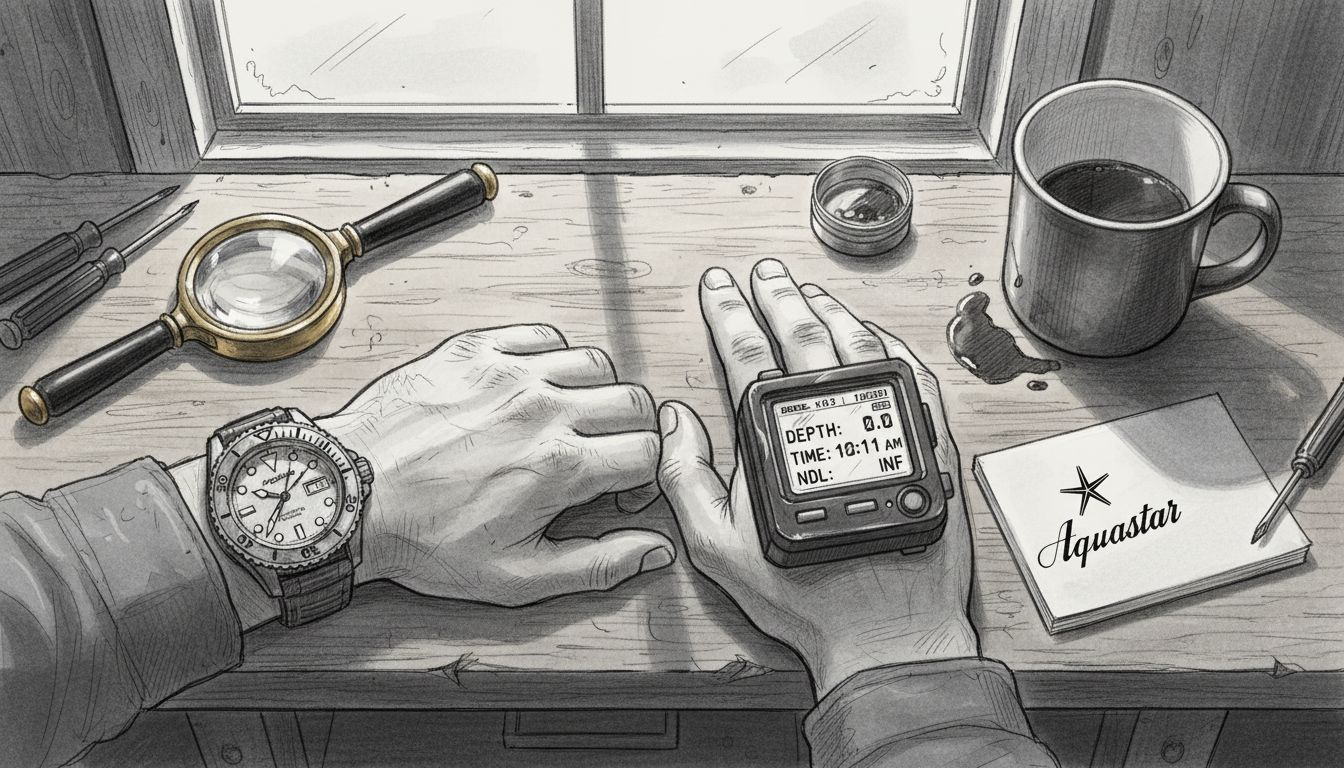
Is a 200m watch enough for real diving? Water resistance ratings explained — what 200m covers, what it doesn't, and why engineering matters more than depth. Use this guide on is a 200m watch enough to weigh design choices, engineering trade-offs and how the category translates to real Aquastar dive watches.
Topic
Is a 200m watch enough
Read time
5-8 min
Source
Aquastar editorial
A lot of watches claim 200 meters of water resistance. Far fewer are built with the kind of engineering that inspires confidence when the water turns cold, visibility drops, and timing matters. That is the real question behind is a 200m watch enough: not whether the number looks capable on a spec sheet, but whether the watch itself is designed as a true underwater instrument.
For most owners, a 200m watch is enough. It is more than enough for swimming, surface water sports, snorkeling, and the vast majority of recreational scuba diving. But water resistance is not the whole story, and treating the depth rating as the only measure of capability is where many buyers get misled.
Is a 200m watch enough for most people?
In practical terms, yes. A properly engineered 200m dive watch covers nearly every real-world use case outside saturation diving and a narrow band of specialized commercial work. Recreational divers rarely approach anywhere near 200 meters. In fact, standard recreational depth limits are a small fraction of that figure.
That does not mean every watch marked 200m deserves equal trust. Water resistance ratings are laboratory figures, measured under static test conditions. Real use introduces motion, temperature shifts, aging gaskets, crown handling mistakes, knocks to the case, and pressure changes that are far less forgiving than a clean factory test.
This is why serious dive watches have always been about system design, not marketing depth alone. Case architecture, crown construction, crystal thickness, gasket quality, bezel integrity, legibility, and strap security all matter just as much as the number on the dial or caseback.
What 200 meters water resistance actually means
The wording causes confusion because most people read 200 meters as if it were a guaranteed operating depth in any situation. It is better understood as a pressure rating. Under controlled conditions, the watch can withstand pressure equivalent to 200 meters of water.
That is very different from saying the watch should be casually treated as a deep-submergence instrument. Dynamic pressure from diving into water, repeated crown use, or poor maintenance can reduce real-world safety margin. The rating tells you the watch was built to meet a threshold. It does not excuse neglect, nor does it make every 200m watch a professional tool.
This distinction matters most in the luxury and enthusiast market, where some watches wear the dive watch look without fully embracing dive watch engineering. A unidirectional bezel and bold lume may suggest capability, but execution is what separates a genuine underwater instrument from a desk diver with decent seals.
When a 200m watch is enough – and when it is not
For swimming laps, open-water swimming, free diving at modest depths, snorkeling, and standard scuba profiles, a well-made 200m watch is entirely appropriate. In these scenarios, reliability, clarity, and secure construction matter more than chasing a higher printed number.
Where 200m becomes less convincing is in edge-case use. Saturation diving introduces helium exposure and prolonged high-pressure environments. Commercial diving can involve repetitive abuse, impact, and long service intervals under punishing conditions. Expedition use may demand additional margin simply because the consequences of failure are higher and support is farther away.
In those cases, divers often look toward 300m, 500m, or 1000m-rated watches, and sometimes to purpose-built saturation designs with helium management systems. Not because 200m is inherently weak, but because the mission profile changes. Professional by nature means matching the watch to the work, not assuming one rating fits every underwater job.
Why the quality of the 200m watch matters more than the number
A serious 200m dive watch with a screw-down crown, stout case construction, a properly seated sapphire crystal, tested gaskets, and clear timing capability is often more trustworthy than a poorly executed 300m watch built around inflated claims. Depth rating without engineering discipline is just typography.
Collectors and experienced divers know this instinctively. They look for the details that reveal intent: case tolerances, crown tube design, bezel grip, lume performance, dial contrast, and the brand’s history with actual underwater instruments. They understand that a watch built from authentic dive-watch DNA tends to perform with a different kind of honesty.
That heritage matters because the best dive watches were never designed merely to survive water. They were designed to be read instantly, handled with gloves, secured over a suit, and trusted under stress. That legacy still shows in the right modern watches, whether the rating is 200m or far beyond it.
Is a 200m watch enough for scuba diving?
Yes, for recreational scuba, a 200m watch is enough when it is a true dive watch in specification and execution. Many of the most respected dive watches ever made have operated within this range because it provides meaningful real-world capability without forcing unnecessary bulk.
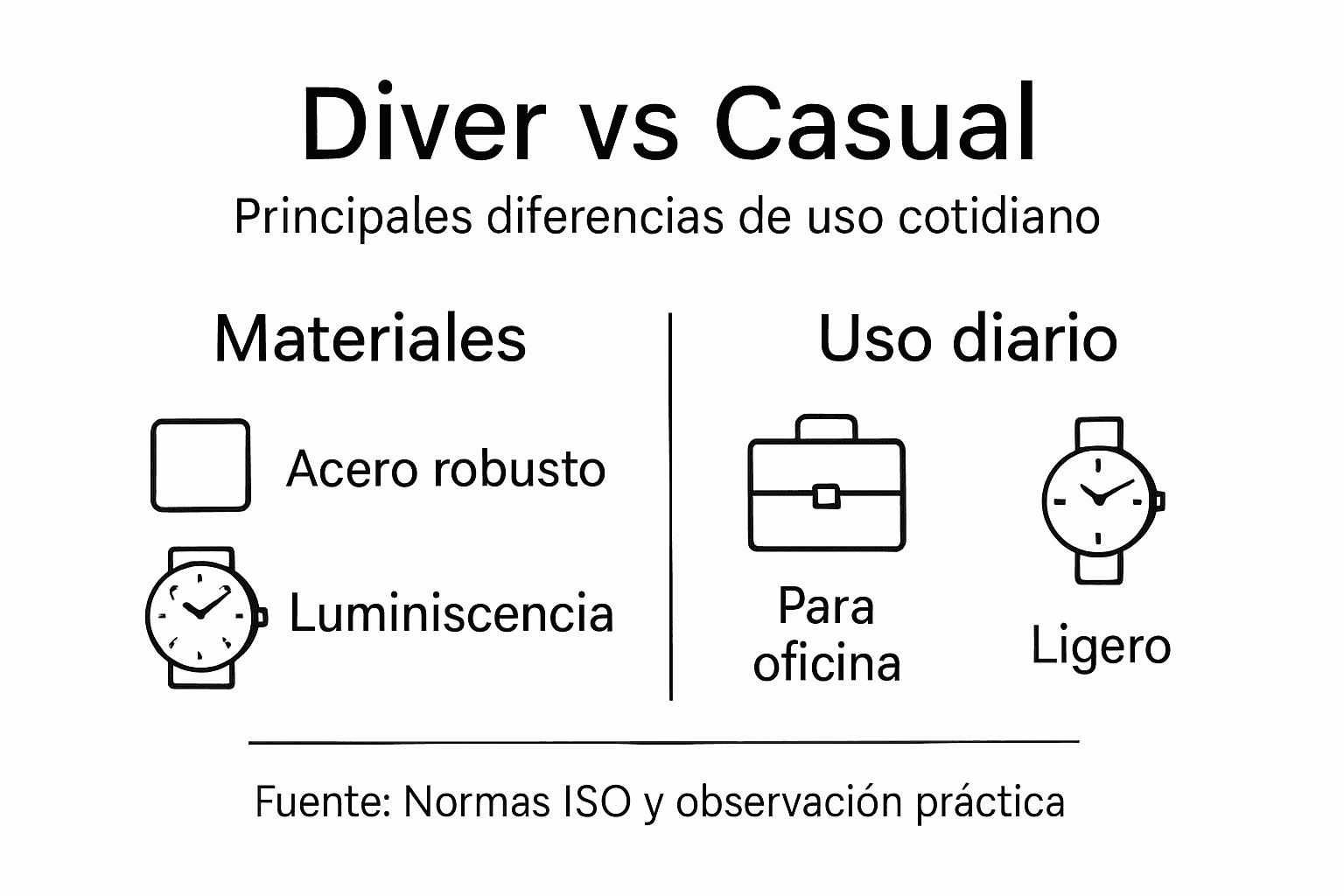
There is a trade-off here that enthusiasts appreciate. As water resistance climbs, cases often become thicker, heavier, and less versatile on the wrist. A 200m watch can strike the right balance between underwater legitimacy and daily wearability. It remains substantial enough to inspire confidence, yet refined enough to live above the surface without feeling like specialized equipment strapped to your cuff.
That balance is part of the enduring appeal of heritage-driven dive watches. They are not trying to win a paper contest. They are designed to do the job while preserving proportion, comfort, and mechanical integrity.
What to look for beyond the 200m rating
If you are judging whether a 200m watch is enough, examine the full specification rather than the headline claim. A screw-down crown is essential. So is a unidirectional bezel that can be gripped and set precisely. Strong lume and high dial contrast are not cosmetic details – they are central to underwater legibility.
Crystal material matters as well. Sapphire offers excellent scratch resistance, but thickness and fit are just as important as material choice. Caseback construction, gasket quality, and proper pressure testing all shape long-term reliability. A solid strap or bracelet with dependable attachment points is equally critical. A dive watch that separates from the wrist is no dive watch at all.
Service discipline also belongs in this conversation. Even the best 200m watch is only as trustworthy as its seals and maintenance history. Gaskets age. Impacts happen. Crowns get mishandled. If the watch is going to see regular water use, periodic pressure testing is part of ownership.
The common mistake buyers make
The mistake is assuming more meters always means more real capability. Sometimes it does. Often, it simply means a heavier case and a louder sales pitch. For most wearers, the better question is not whether 200m is enough, but whether the watch was honestly designed for underwater use in the first place.
That is where specialist brands have an advantage. They understand that dive watches are not fashion accessories wearing borrowed military language. They are instruments with a lineage. When a brand builds around genuine underwater heritage, the specification tends to be supported by purposeful design rather than inflated storytelling.
A watch like that earns trust differently. Not by shouting the biggest number, but by getting every essential detail right.
So, is a 200m watch enough?
If the watch is well made, properly maintained, and genuinely intended for diving, yes – a 200m watch is enough for almost everyone who will ever take a watch into the water. It is enough for swimming, enough for snorkeling, and enough for the overwhelming majority of scuba diving.
If your world involves saturation systems, commercial depth work, or extreme environments where failure is unacceptable and support is remote, then you should look beyond 200m and toward more specialized equipment. But that is a different category of use, not a flaw in the rating itself.
The wiser approach is to respect the difference between a number and a tool. Buy the watch built to endure, maintain it like the instrument it is, and let the specification serve the mission instead of the marketing.
In 1957, Aquastar designed the Model 60, the watch that defined the skindiver category. Full history, specs, and modern revivals. Use this guide on skindiver to weigh design choices, engineering trade-offs and how the category translates to real Aquastar dive watches.
Topic
Skindiver
Read time
5-8 min
Source
Aquastar editorial
A “skindiver” is a thin, comfortable, water-resistant tool watch designed for recreational diving and skin-diving (free-diving without scuba gear). Today the category is enjoying a quiet revival, with brands across the price spectrum reviving the look. The format itself, however, was largely defined by one watch: the Aquastar Model 60, designed in 1957 by Frédéric Robert in Geneva.
By the mid-1950s, dedicated dive watches existed but they were not designed for the kind of diving most people actually did. The 1953 Blancpain Fifty Fathoms and Rolex Submariner were built around military and commercial deep-sea use: thick cases, screw-down crowns, and water resistance ratings that exceeded any recreational requirement. They were also expensive and physically large for a wrist coming back from a beach dive.
Skin-divers (the term for recreational free-divers who used masks, fins, and a snorkel rather than tanks) needed something different: a watch that was thin enough to wear comfortably under a wetsuit cuff, light enough not to tire the wrist on a long swim, and water-resistant enough to handle 50 to 100 metres without ceremony.
That was the gap Frédéric Robert addressed.
1957: the Model 60 and what made it different
The Aquastar Model 60, designed in 1957, was deliberately compact: a 36 mm steel case (small by today’s standards, exactly right for the period), an arched profile that sat low on the wrist, and a clear, legible dial. The bezel rotated to mark elapsed dive time, and the crown sealed against a gasket system Robert had been refining.
The watch did not try to compete with saturation-grade tool watches on water resistance. It targeted the bracket where most recreational diving actually happens, which was its strength. It was a watch you would wear all day, not just on dive day.
The Model 60 also predated the Aquastar brand name itself. Frédéric Robert formally established Aquastar SA in Geneva in 1962, but the Model 60 design from 1957 is what the brand is built on. The watch went on to define what would become known as the skindiver category.
Why “skindiver” stuck as a category name
“Skindiver” came directly from the activity: skin diving was the popular post-war recreational practice of free-diving in coastal waters with mask, snorkel, and fins. The watches built for it inherited the name.
Through the late 1950s and 1960s, several other Swiss manufacturers offered watches in the same format. But the technical foundation, particularly the gasket and crown work that became the basis of Aquastar’s 1962 no-decompression bezel patent, traces back to the 1957 Model 60 design. By the time Frédéric Robert filed his ten patents between 1959 and 1977, the skindiver format had been established.
Skindiver vs Submariner vs Fifty Fathoms: the actual differences
Feature
Skindiver (Model 60)
Submariner
Fifty Fathoms
Year
1957
1953
1953
Typical case size
36 mm
38 mm
41 mm
Water resistance
100 metres
100 metres
91 metres (50 fathoms)
Profile
Thin, low-sitting
Tall, screw-down crown guards
Thick, military-spec
Intended user
Recreational free-diver
Professional diver, military
French Navy combat swimmer
The differences are not about which is the better watch. They’re about who each was built for. The Submariner and Fifty Fathoms were built for people whose job involved being underwater. The skindiver was built for people who chose to be underwater on the weekend, and wanted a watch they could keep wearing on Monday morning.
Modern skindivers: what survives, what’s been revived
The format went quiet through the 1980s and 1990s as dive watches got bigger, thicker, and more macho. The recent revival has been driven by collectors recognising that the vintage proportions actually work: 36 to 38 mm cases wear better, look more period-correct, and pair with strap options the larger watches cannot accommodate.
Aquastar reintroduced the Model 60 in 2023 with the Model 60 Re-edition, retaining the original case shape, the arched profile, and the steel-bezel format. Several other brands offer modern skindivers in various interpretations.
What unites the current revival is a return to the original brief: thin enough to wear all day, water-resistant enough for the diving most people actually do, sized correctly for the wrist.
Buying a skindiver today
If you are looking for a skindiver, the choice is between:
Vintage Aquastar Model 60 examples from the 1957–1970s window (rare, condition-dependent, but the original)
Modern Aquastar Model 60 Re-edition, built in Switzerland, available in the standard variants on the Aquastar collection
Other modern interpretations from various brands, each with their own approach to the format
What to look for: a case that sits low on the wrist (under 12 mm thick), a bezel you can grip with wet hands or gloves, a dial that stays legible underwater, and water resistance appropriate to what you will actually do with it. The skindiver format does not need to be a 300-metre saturation watch. It needs to be the watch you actually wear.
The category was defined in 1957 with one watch. The format works because it was thought through by someone who understood what recreational diving actually required. That logic still holds.
Vintage inspired tool watches pair proven design with modern reliability, giving collectors and divers real function, heritage, and daily wear value. Use this guide on vintage inspired tool watches to weigh design choices, engineering trade-offs and how the category translates to real Aquastar dive watches.
Topic
Vintage inspired tool watches
Read time
5-8 min
Source
Aquastar editorial
A watch tells you what its maker values in the first five seconds. Slab-sided cases, oversized markers, polished excess, and empty claims usually tell one story. Vintage inspired tool watches tell another. They speak in sharper terms – legibility, purpose, restraint, and the kind of design language that was earned underwater, in cockpits, and on working wrists rather than in a marketing meeting.
That distinction matters because this category has become crowded. Almost every brand now sells some version of a heritage piece. But not every retro-styled watch deserves to be called a true tool watch. For serious buyers, the difference is not nostalgia alone. It is whether a modern watch preserves the functional logic that made the original worth reviving in the first place.
What Makes Vintage Inspired Tool Watches Worth Buying
The best examples succeed because they do not treat the past as costume. They respect it as engineering precedent. When a watch revives a compressed case profile, a highly legible handset, a decompression scale, a regatta countdown, or a properly proportioned rotating bezel, those details are not decorative. They come from real use.
That is why this segment has lasting appeal among collectors and divers alike. Vintage watches carry undeniable charm, but they also bring compromised water resistance, aging lume, fragile crystals, scarce parts, and service anxiety. A well-executed modern interpretation offers a different proposition. You retain the geometry, character, and historical identity of the original format, while gaining sapphire crystal, modern seals, reliable Swiss movements, improved luminous material, and the kind of durability expected from a watch built to be worn rather than preserved.
There is also a design discipline here that many contemporary sports watches lack. Mid-century and late 20th-century tool watches were constrained by function, manufacturing limits, and professional need. The result was often cleaner and more coherent than what followed. When a brand revisits those proportions honestly, the watch tends to feel balanced on the wrist in a way many larger modern pieces do not.
The Difference Between Retro Styling and Real Tool Watch Heritage
This is where buyers should be demanding. A faux-aged dial and a domed crystal are easy. Reproducing the intent of a historic instrument is much harder.
A true vintage-inspired tool watch starts with an original purpose. Dive chronographs, skin divers, compressor-style cases, no-decompression bezels, and pilot timers were all answers to specific operational demands. The modern version should still make sense through that same lens. The bezel should be usable, not ornamental. The dial should prioritize contrast and reading speed. The case should wear securely and proportionally. If a watch looks historical but behaves like jewelry, it misses the point.
Execution matters just as much as concept. Many brands borrow visual codes from famous references without understanding why those cues existed. Broad arrow hands, crosshair dials, internal bezels, and bead-of-rice bracelets all have context. Remove the context and what remains can feel generic.
That is why heritage carries more weight when it belongs to a brand with genuine history in professional instruments. There is a difference between reviving your own archive and borrowing someone else’s visual memory. Collectors notice it immediately.
Why Proportion Is Everything
If there is one place where vintage inspired tool watches consistently outperform many modern sports watches, it is proportion.
Older professional watches were often thinner, shorter lug-to-lug, and more compact than current market norms. Not because they were trying to appear elegant, but because equipment worn in demanding conditions could not become cumbersome. A dive watch had to sit flat enough under gear, remain stable on a strap, and stay readable without dominating the wrist.
When modern brands preserve those dimensions, the result is stronger daily wearability. A 37 mm to 40 mm case with disciplined lug geometry often feels more serious than a bloated 43 mm watch trying to project toughness. Tool credibility is not measured in diameter. It is measured in usability.
This is also why case architecture deserves more attention than many buyers give it. The profile of the mid-case, the bezel height, the crystal shape, and the distance between lugs all affect whether a watch feels like a faithful instrument or an inflated tribute. Good re-editions understand that a millimeter added in the wrong place can flatten the entire design.
Modern Upgrades That Actually Matter
Purity has its place, but few experienced buyers want a literal recreation of every vintage limitation. The strongest watches in this category know where to modernize.
Sapphire crystal is the obvious example. Acrylic has warmth and distortion that many enthusiasts appreciate, but sapphire offers real-world scratch resistance that suits an everyday tool watch. The same logic applies to gaskets, crown systems, bezel action, and water resistance. A historic dive watch aesthetic paired with 200 meters or more of tested water resistance is a meaningful improvement, not a betrayal of the original idea.
Lume is another area where progress is welcome. Radium and tritium belong to their era. Modern Super-LumiNova gives the watch functional nighttime legibility without the instability or degradation associated with older compounds.
Movement choice is more nuanced. Some buyers want an automatic caliber for convenience, while others prefer hand-wound architecture if it preserves thinness or visual faithfulness. There is no single correct answer. What matters is reliability, serviceability, and whether the movement suits the watch’s purpose. A heritage chronograph should feel mechanically honest, not merely fashionable through a display caseback.
Why Collectors Keep Coming Back to This Category
Collectors are drawn to vintage inspired tool watches because they offer substance on several levels at once. There is historical continuity, mechanical interest, and often a stronger sense of identity than in mainstream luxury sports watches.
They also reward closer study. Enthusiasts notice stepped dials, correct bezel fonts, original hand shapes, asymmetric cases, and restrained branding. Those details create depth. They show that the watch was built by people who understand archives, not just trend cycles.
There is also a practical truth here. For many buyers, original vintage examples have become too expensive, too fragile, or too compromised to wear regularly. A modern heritage piece can satisfy the same emotional and aesthetic pull while remaining suitable for travel, swimming, and everyday use. That is not a lesser experience. In many cases, it is the more complete one.
At the higher end of the market, this segment also appeals because it resists disposable luxury. These watches are usually bought by people who care about case finishing, bezel construction, movement origin, and historical legitimacy. They are less interested in logo recognition for its own sake. They want a watch with a reason to exist.
How to Judge Vintage Inspired Tool Watches
The quickest way to evaluate one is to ask four questions. First, did the original design have a real professional purpose? Second, has the modern version preserved the core proportions and dial logic that defined it? Third, have the updates improved wearability and durability without diluting character? Fourth, does the brand have the credibility to tell this story honestly?
If the answer to those questions is yes, the watch has a strong foundation. If not, you are likely looking at retro styling rather than genuine heritage.
This is where experienced brands separate themselves. A company rooted in dive-watch history understands that archival design is not an aesthetic shortcut. It is a technical and cultural responsibility. Aquastar, for example, built its reputation on underwater instruments that were made for professional use first. That lineage creates a different standard for what a revival should be. The watch has to satisfy the archive and the ocean.
The Enduring Appeal of Vintage Inspired Tool Watches
These watches endure because they were never about novelty. They were about clear solutions to real problems, shaped into forms that happened to age exceptionally well. The best modern examples preserve that integrity. They feel grounded, not theatrical.
For buyers who care about mechanical substance, wearable proportions, and design with a legitimate past, that combination remains hard to beat. You are not buying an imitation of history. You are buying a watch built on lessons already tested in the field.
That is why this category continues to matter. In a market crowded with louder watches, vintage inspired tool watches still know how to say the right thing with very few words.
6 añadidos útiles para tu reloj de buceo: bisel unidireccional, lume, válvula de helio y más. Guía práctica para inmersiones seguras. Use this guide on añadidos útiles reloj de buceo to weigh design choices, engineering trade-offs and how the category translates to real Aquastar dive watches.
Saber elegir un reloj de buceo confiable puede marcar la diferencia entre una inmersión segura y un riesgo innecesario bajo el agua. La mayoría de los buceadores se enfrenta al desafío de distinguir qué características realmente importan cuando la visibilidad se pierde o surgen condiciones extremas. Evitar errores de temporización críticos o daños internos inesperados depende directamente de entender cómo funciona cada detalle de tu reloj.
Esta guía práctica te mostrará los elementos decisivos que hacen que un reloj de buceo sea verdaderamente seguro y funcional, desde el bisel giratorio unidireccional hasta materiales luminiscentes y mecanismos de protección contra gases. Prepárate para descubrir soluciones pensadas especialmente para tus necesidades de inmersión y consejos útiles que puedes aplicar en tu próxima aventura.
En las siguientes secciones encontrarás información concreta y fácil de aplicar para que elijas y uses tu reloj de buceo con la máxima confianza, aprovechando al máximo cada función pensada para tu seguridad y comodidad.
Previene errores de temporización al indicar menos tiempo de inmersión si gira accidentalmente. Esto te empuja hacia la seguridad.
2. La válvula de helio es esencial para buceo profundo
Protege tu reloj de daños por presión interna, permitiendo un ascenso seguro en inmersiones de saturación.
3. Los marcadores luminiscentes son vitales
Ayudan a leer el tiempo en condiciones de baja visibilidad, garantizando que mantengas la orientación durante la inmersión.
4. El cronógrafo permite un control preciso del tiempo
Facilita el rastreo de múltiples intervalos durante la inmersión sin confusión, mejorando la gestión del buceo técnico.
5. Un indicador de reserva de marcha ofrece tranquilidad
Muestra el tiempo de funcionamiento restante, asegurando que tu reloj no se detenga inesperadamente durante la inmersión.
1. 1. Bisel giratorio unidireccional para mayor seguridad
El bisel de tu reloj de buceo es más que un elemento estético. Es una herramienta que salva vidas y previene errores de temporización críticos bajo el agua.
El bisel giratorio mide cuánto tiempo llevas sumergido alineándose con la manecilla de minutos. Conforme transcurren los minutos, puedes ver de un vistazo exactamente cuántos minutos has estado bajo la superficie. Este mecanismo simple te ayuda a gestionar tu suministro de aire y asegura que asciendas antes de quedarte sin oxígeno.
Pero aquí es donde el diseño se vuelve brillante: el bisel gira solo en sentido antihorario. Esta rotación unidireccional no es accidental. Si tu bisel recibe un golpe o gira accidentalmente, solo mostrará menos tiempo de inmersión, nunca más. Esto significa que cualquier error te empuja hacia la seguridad en lugar del peligro.
¿Por qué importa esto para ti?
Si tu bisel se desplaza accidentalmente, pensarás que ha pasado menos tiempo, lo que te incita a salir más pronto
Un bisel que rotara en sentido horario podría ocultar el tiempo de inmersión y retrasar tu ascenso
Este diseño cumple con estándares ISO 6425 para relojes de buceo profesionales
El bisel presenta clics táctiles durante la rotación para que puedas ajustarlo con precisión incluso usando guantes gruesos o en condiciones de baja visibilidad. Materiales como aluminio, cerámica y acero inoxidable proporcionan durabilidad manteniendo la responsividad que necesitas bajo el agua.
Un bisel giratorio unidireccional no es solo una característica, es un mecanismo de seguridad que defaultea a proteger tu vida.
Tu reloj de buceo se convierte en más que equipo. Se convierte en un sistema de respaldo funcionando constantemente para mantenerte seguro, una rotación a la vez.
Consejo profesional:Antes de cada inmersión, verifica que el bisel gire suavemente en sentido antihorario y que los clics táctiles sean claros; esto garantiza que tu mecanismo de seguridad funcione correctamente.
2. Válvula de helio: protección en buceo profundo
El buceo de saturación te lleva a profundidades extremas donde la física del equipo se vuelve crítica. Para estos viajes al límite, tu reloj necesita protección especial contra un enemigo invisible: el helio.
Durante el buceo de saturación, respiras mezclas de gases que contienen helio a presiones muy altas. El helio es especial porque sus moléculas son extraordinariamente pequeñas, tan pequeñas que penetran la caja del reloj durante la inmersión. Mientras desciendes, el helio se filtra gradualmente hacia el interior. El problema surge durante la descompresión en el ascenso.
Conforme subes, la presión exterior disminuye pero el helio atrapado dentro mantiene su presión. Esta diferencia crea una acumulación de presión interna que puede dañar severamente la caja o cristal del reloj. Sin protección, tu equipo podría fallar exactamente cuando más lo necesitas.
Ahí entra la válvula de liberación de helio. Este mecanismo accionado por resorte monitorea constantemente la diferencia de presión dentro y fuera de la caja. Cuando la presión interna alcanza un nivel crítico durante el ascenso, la válvula se abre automáticamente para liberar el helio acumulado. Luego se cierra nuevamente cuando se equilibran las presiones.
Este sistema de protección funcionando sin intervención significa que tu reloj sobrevive a las inmersiones de saturación sin que tengas que hacer nada especial.
Los beneficios clave incluyen:
Prevención automática de daños causados por presión interna diferencial
Protección durante descompresiones lentas que duran horas
Funcionamiento completamente pasivo sin acción del buceador
Compatibilidad con técnicas modernas de buceo comercial
Si realizas buceo de saturación o contemplas inmersiones técnicas profundas, la válvula de liberación de helio representa tu línea de defensa contra daños mecánicos. Tu reloj necesita poder resistir no solo la presión, sino también los cambios radicales de presión que vienen con estos buceos especializados.
Una válvula de helio protege tu reloj cuando la física de la descompresión intenta destruirlo, permitiéndote enfocarte en la seguridad de tu ascenso.
Esta característica define la diferencia entre un reloj de buceo estándar y uno diseñado para ambientes extremos donde el helio es parte de tu atmósfera respirable.
Consejo profesional:Si buceas con helio regularmente, verifica periódicamente que la válvula de liberación funcione correctamente inmergiendo el reloj en agua caliente para simular la diferencia de presión y confirmar que se abre sin atascarse.
3. Manecillas y marcadores luminiscentes de alta visibilidad
Bajo el agua, la visibilidad desaparece rápidamente. A solo unos metros de profundidad, los colores se desvanecen. En buceo nocturno o en aguas turbias, la oscuridad total es tu realidad. Tu reloj necesita brillar cuando todo lo demás se vuelve negro.
Las manecillas y marcadores luminiscentes son lo que te permite leer la hora en esas condiciones imposibles. Sin ellos, tu reloj sería completamente inutilizable bajo el agua en momentos críticos. Con ellos, puedes ver exactamente dónde está cada manecilla sin importar la luz disponible.
Estos elementos están fabricados con materiales especiales que absorben luz y la convierten en brillo visible. El material luminiscente mantiene su intensidad durante largos períodos, garantizando que puedas leer tu reloj durante toda la inmersión. Esta no es una característica cosmética; es una cuestión de seguridad operacional.
Cuando buceas a profundidad, la luz natural disminuye exponencialmente. A 30 metros, prácticamente no hay luz azul. A 50 metros, la oscuridad es casi total incluso con linterna. En estos ambientes, tus ojos buscan desesperadamente cualquier punto de referencia. Tu reloj brillante se convierte en tu ancla visual para verificar el tiempo.
El brillo constante te permite:
Leer la hora sin perder orientación visual
Monitorear tu tiempo de inmersión sin confusión
Mantener la seguridad durante buceos nocturnos
Verificar la información del reloj incluso con visibilidad limitada
Confiar en tu equipo bajo estrés y condiciones adversas
Los materiales luminiscentes modernos mantienen su eficacia durante años, resistiendo la exposición repetida al agua salada y los cambios de presión. Las manecillas y marcadores luminiscentes garantizan una legibilidad consistente que define relojes de buceo confiables.
La luminiscencia no es un lujo; es una necesidad que te mantiene conectado con la información crítica cuando la naturaleza intenta ocultarla.
Cada vez que desciendes en la oscuridad, tus marcadores luminiscentes trabajan sin descanso para mantener tu reloj legible. Estos pequeños detalles transforman un reloj de superficie en un instrumento confiable de buceo.
Consejo profesional:Expón tu reloj a luz natural o artificial durante varios minutos antes de inmersiones nocturnas para maximizar la carga luminiscente, asegurando el brillo más brillante durante toda tu inmersión.
4. Cronógrafo integrado para control preciso del tiempo
Tu reloj de buceo ya mide el tiempo de inmersión con el bisel giratorio. Pero ¿qué pasa cuando necesitas medir intervalos específicos durante la inmersión o rastrear eventos secundarios con precisión de segundos? Ahí entra el cronógrafo integrado.
Un cronógrafo es un temporizador independiente dentro de tu reloj que funciona simultáneamente con la hora principal. Mientras tu bisel sigue el tiempo total de inmersión, tu cronógrafo puede medir algo completamente diferente: el tiempo de una parada de descompresión, la duración de un intervalo de exploración, o el tiempo desde que iniciaste una acción específica.
Esta dualidad de funciones te da control precisión absoluta sobre múltiples aspectos de tu inmersión. No estás limitado a una sola línea de tiempo. Puedes rastrear eventos simultáneamente sin confusión.
La mayoría de cronógrafos de buceo funcionan mediante pulsadores en la caja del reloj que activan y detienen el movimiento. Estos botones están diseñados para ser operables incluso con guantes gruesos de buceo. El cronógrafo registra tiempos con precisión de décimas de segundo, proporcionando exactitud que va mucho más allá de lo que puedes estimar visualmente.
Cuando buceas técnicamente, el cronógrafo se convierte en un instrumento indispensable:
Mide exactamente el tiempo de paradas de descompresión obligatorias
Registra intervalos de exploración en buceo de caverna o cueva
Permite rastrear múltiples eventos de tiempo simultáneamente
Proporciona datos precisos para tu cuaderno de buceo posterior
Funciona de manera independiente del bisel principal
La integración del cronógrafo en la caja significa que no ocupas espacio de muñeca adicional. Todo funciona en un solo reloj compacto. Cuando utilizas el cronógrafo submarino para medir tus inmersiones, descubres cómo este instrumento transforma tu capacidad de gestionar el tiempo de buceo.
Un cronógrafo integrado no es redundancia, es liberación; te permite rastrear múltiples tiempos críticos sin dividir tu atención.
Los buceadores recreativos usan cronógrafos para exigencias básicas. Los buceadores técnicos los consideran esenciales. La precisión temporal que proporciona transforma cómo entiendes y documentas cada inmersión.
Consejo profesional:Practica activar y detener tu cronógrafo en la superficie varias veces antes de sumergirte, garantizando que tus dedos encuentren los botones instintivamente incluso bajo estrés submarino o con visibilidad reducida.
5. Indicador de reserva de marcha en inmersiones largas
Durante una inmersión larga, tu reloj mecánico está consumiendo la energía almacenada en su muelle principal. A diferencia de un reloj de pulsera normal que usas ocasionalmente, tu reloj de buceo funciona continuamente durante horas bajo presión. ¿Cómo sabes cuándo está llegando al final de su reserva de energía?
Esta es la realidad que enfrentas sin un indicador de reserva de marcha. Solo cuando el reloj se detiene descubres que se acabó la energía, exactamente cuando más lo necesitas bajo el agua. El indicador de reserva de marcha elimina esta incertidumbre mostrándote visualmente cuánto tiempo más puede funcionar el reloj antes de necesitar recarga.
El indicador funciona mediante un subdial o aguja especializada que monitorea la tensión del muelle principal. Conforme el muelle se desenrolla durante el buceo, la posición del indicador se mueve progresivamente, mostrándote la energía restante. Algunos indicadores utilizan una escala de colores que cambia de verde a rojo para señalar peligro.
Esta funcionalidad es crítica para inmersiones largas. En una inmersión de 8 horas o una expedición submarina, necesitas saber que tu reloj sobrevivirá todo el viaje. El indicador te proporciona esa seguridad.
Los beneficios prácticos incluyen:
Conocer con precisión cuánta energía queda en tu reloj
Planificar inmersiones sabiendo la duración que puedes mantener
Evitar interrupciones inesperadas durante buceo profundo
Tomar decisiones informadas sobre cambios de planes
Garantizar que tu instrumento de seguridad funcione durante toda la experiencia
Algunos buceadores profesionales consideran el indicador de reserva de marcha como una característica de lujo. Sin embargo, cuando realizas buceos técnicos que exigen fiabilidad extrema, descubres que es prácticamente indispensable para la confianza total.
Un indicador de reserva de marcha no solo muestra números, muestra tranquilidad; sabes exactamente cuánto tiempo de funcionamiento te queda sin sorpresas.
La diferencia entre adivinar y saber puede ser la diferencia entre una inmersión completamente exitosa y una que requiere ajustes de emergencia.
Consejo profesional:Antes de inmersiones largas, recuerda completamente tu reloj mecánico y verifica que el indicador de reserva muestre carga máxima, asegurando que tienes toda la energía disponible para toda la duración de tu buceo.
6. Correa expandible adaptable al traje de neopreno
Imagina estar completamente equipado para tu inmersión, pero tu reloj se siente incómodo apretado sobre el traje de neopreno grueso. Una correa estándar diseñada para la piel simplemente no funciona cuando llevas 5 milímetros o más de neopreno. Necesitas una solución específicamente pensada para esta realidad del buceo.
Una correa expandible es la respuesta. Está diseñada con tamaño extra y flexibilidad para adaptarse cómodamente sobre trajes de neopreno de distintos grosores sin comprometer la seguridad o comodidad. Tu reloj se mantiene seguro sin ejercer presión excesiva en tu muñeca.
El material es fundamental. Las correas para buceo utilizan caucho, silicona o nylon, cada uno ofreciendo ventajas específicas. El caucho proporciona resistencia extrema al agua y flexibilidad superior. La silicona ofrece comodidad y durabilidad sin absorber agua. El nylon brinda resistencia contra rozaduras en condiciones extremas.
La correa Bobroff BFSTN es un ejemplo de diseño profesional pensado específicamente para esta necesidad. Su material de caucho ofrece resistencia completa al agua salada y la capacidad de expandirse sin perder tensión. Muchos buceadores europeos recurren a correas diseñadas específicamente para neopreno porque entienden que comodidad significa seguridad bajo el agua.
Los beneficios de una correa expandible incluyen:
Ajuste cómodo sobre trajes de neopreno grueso de cualquier espesor
Material resistente al agua salada que no se degrada
Flexibilidad que se adapta a los movimientos de tu brazo
Seguridad mejorada porque el reloj no se desliza
Durabilidad extrema para buceos repetidos y prolongados
Una correa expandible no es un accesorios opcional, es la interfaz crítica entre tu cuerpo y tu instrumento de seguridad.
La diferencia entre una correa inadecuada y una diseñada correctamente puede transformar una inmersión incómoda en una experiencia segura y placentera.
Consejo profesional:Selecciona una correa expandible que permita ajuste adicional mediante velcro o hebilla para personalizar el apriete sobre tu traje específico, garantizando que puedas modificar la tensión durante la inmersión si es necesario.
NO_TABLE
Protege y Optimiza tus Inmersiones con Relojes Aquastar
Las inmersiones exitosas dependen de contar con un reloj que no solo resista la presión, sino que también te brinde herramientas esenciales como biseles unidireccionales, válvulas de helio para buceo profundo y manecillas luminiscentes que garantizan visibilidad total en las profundidades. Aquastar, fabricante suizo pionero en relojes de buceo profesionales, ofrece soluciones mecánicas diseñadas para enfrentar los desafíos que mencionamos en el artículo “6 añadidos útiles reloj de buceo para mejorar tus inmersiones”. Descubre cómo estas características combinadas potencian tu seguridad y control durante cada bajada.
¿Quieres experimentar la precisión y fiabilidad que solo un reloj nacido para el buceo puede ofrecer? Explora nuestra colección exclusiva en AQUASTAR – Aquastar dive watches y conoce los modelos que han revolucionado la forma de medir el tiempo bajo el agua. No dejes que un equipo inadecuado ponga en riesgo tu aventura. Visita aquastar.ch ahora y adquiere el reloj que se adapta perfectamente a tus necesidades profesionales y recreativas. También puedes revisar otros modelos innovadores en nuestra sección Uncategorized – Aquastar dive watches para encontrar la opción ideal. Tu seguridad y confianza en cada inmersión comienzan con la elección correcta.
Preguntas Frecuentes
¿Por qué es importante un bisel giratorio unidireccional en un reloj de buceo?
El bisel giratorio unidireccional es crucial porque garantiza que siempre puedas medir el tiempo de inmersión con seguridad. Asegúrate de alinearlo correctamente con la manecilla de minutos antes de cada inmersión para evitar confusiones durante tu tiempo bajo el agua.
¿Cómo funciona la válvula de liberación de helio en un reloj de buceo?
La válvula de liberación de helio se abre automáticamente para liberar la presión interna acumulada de helio durante el ascenso. Verifica periódicamente que la válvula funcione correctamente sumergiendo el reloj en agua caliente para asegurarte de que se abra sin inconvenientes.
¿Cuál es la ventaja de tener manecillas y marcadores luminiscentes en un reloj de buceo?
Las manecillas y marcadores luminiscentes permiten la lectura fácil de la hora en condiciones de baja visibilidad, como durante la noche o en aguas turbias. Antes de tus inmersiones nocturnas, expón tu reloj a luz natural o artificial durante varios minutos para maximizar su brillo.
¿Cómo puedo utilizar el cronógrafo integrado durante mis inmersiones?
El cronógrafo integrado te permite medir intervalos específicos, como el tiempo de paradas de descompresión. Practica activar y detener el cronógrafo en la superficie varias veces antes de sumergirte para que puedas utilizarlo instintivamente sin distracciones.
¿Por qué necesito un indicador de reserva de marcha en un reloj de buceo?
El indicador de reserva de marcha te muestra cuánto tiempo de funcionamiento queda en tu reloj, eliminando la incertidumbre durante inmersiones largas. Antes de cada buceo, verifica que el indicador marque carga máxima para asegurarte de tener energía suficiente durante toda la inmersión.
¿Qué materiales son ideales para una correa expandible en un reloj de buceo?
Las correas expandibles deben estar hechas de materiales como caucho, silicona o nylon para adaptarse cómodamente sobre trajes de neopreno. Selecciona una correa que permita ajustes mediante velcro o hebilla para personalizar el apriete durante la inmersión.
What is a hackable movement? How second-hand control synchronizes dive watches with computers and master chronometers — and why it matters at depth. Use this guide on what is a hackable movement to weigh design choices, engineering trade-offs and how the category translates to real Aquastar dive watches.
Topic
What is a hackable movement
Read time
5-8 min
Source
Aquastar editorial
Precision timing remains a cornerstone of safe diving, whether you work off the coast of France or explore reefs in the Caribbean. For professional divers and serious watch aficionados across North America and Europe, the hackable movement offers exact second-hand control for synchronizing backup instruments with dive computers and master chronometers. This article uncovers the mechanics behind hacking systems, dispels widespread myths, and explains why modern dive watches with hackable movements deliver real-world reliability for both commercial and recreational applications.
Hackable movements enable precise synchronization of timepieces, crucial for accurate timing in diving and navigation.
Common Myths Debunked
Many misconceptions exist about hackable movements, such as them damaging the mechanism or being exclusive to military watches.
Importance for Divers
A hackable movement is essential for divers to ensure accurate time coordination with dive computers for safety verification.
Maintenance Recommendations
Regular maintenance, including rinsing after dives and professional servicing every 3 to 5 years, is vital to prolong the lifespan of dive watches.
Defining Hackable Movements and Common Myths
A hackable movement refers to a mechanical watch mechanism that allows you to stop the seconds hand precisely and reset it without affecting the overall timekeeping function. This capability enables you to synchronize your watch with a reference timepiece, a feature originally developed for military operations where coordinated timing was critical.
The core function works through the crown. When you pull the crown outward, the movement halts the second hand completely, giving you exact control over time setting. Originally, hack watches served navigation and military missions by allowing instant synchronization with a master chronometer.
How Hacking Actually Works
The mechanism involves a simple lever that engages when the crown is pulled. This lever physically stops the escape wheel, which prevents the seconds hand from advancing. Once you release the crown, the movement resumes its regular operation without any accuracy loss.
Key technical elements include:
A lever or cam connected to the crown stem
Direct contact with the escape wheel
Zero-resistance reset capability
No impact on watch rate or accuracy
Separating Fact From Fiction
Misunderstanding about hackable movements is common among watch enthusiasts. Here are the actual truths:
Myth: Hacking damages the movement over time. Reality: The hack mechanism is engineered for repeated use without wear concerns.
Myth: Only military watches have this feature. Reality: Many modern mechanical and quartz watches include hacking functionality for everyday use.
Myth: Vintage watches always have hacking. Reality: Many vintage timepieces lack this feature entirely—it became standard later.
Myth: You must hack the watch to set it. Reality: Hacking is optional. You can still adjust time normally through the crown.
Hacking exists to improve your control over synchronization, not to fix broken watches or solve timing problems that don’t exist.
For dive watches specifically, precision timing matters. Professional divers use backup watches to verify dive computer functionality underwater. A hackable movement on your backup instrument means you can synchronize it exactly with your primary dive computer before descent, adding a critical layer of safety verification.
Aquastar recognized this need early, building hackable movements into professional dive instruments designed specifically for commercial and recreational divers who require backup timekeeping reliability.
Pro tip:Before any dive requiring precise timing verification, test your watch’s hack function on the surface. Pull the crown fully and confirm the seconds hand stops cleanly—this simple check ensures your backup instrument functions when you need it most.
Key Types and How They Function Mechanically
Hackable movements fall into distinct mechanical categories based on how they stop the balance wheel. Understanding these types helps you recognize what your dive watch offers and why it matters for your backup timing needs.
The most common approach uses a lever or brake mechanism that directly engages the balance wheel when you pull the crown outward. This is the foundational design found in most mechanical watches today. When activated, the hacking lever halts balance wheel oscillation, which stops all gear movement downstream, including the seconds hand. Release the crown and the lever disengages automatically, allowing normal operation to resume.
The Direct Engagement System
This type works through three core components working in concert:
Crown stem acts as your control interface
Setting lever translates crown movement into mechanical action
Hacking lever physically stops the balance wheel
When you pull the crown, the setting lever lifts, and the hacking lever engages the balance wheel’s hub, halting its oscillation instantly. This design is both reliable and predictable, making it ideal for professional diving applications where you need consistent, repeatable control.
The Balance Wheel Stop Method
Stopping the balance wheel’s oscillation is the mechanical reality behind all hacking systems. When the balance wheel stops vibrating, the entire train of gears freezes because they’re all mechanically linked. This creates the zero-resistance reset capability.
The sequence works like this:
Pull crown outward to position two
Setting lever engages and lifts hacking lever
Hacking lever contacts balance wheel hub
Balance wheel halts mid-oscillation
All downstream gears stop immediately
Seconds hand freezes in place
Push crown back in to resume
Why This Matters for Divers
Precision timing control directly affects your safety underwater. Aquastar built hackable movements into professional dive instruments because commercial and recreational divers need to synchronize backup watches with dive computers before descent. A reliable hack function means you can coordinate timing exactly, not approximately.
The mechanical simplicity of these systems ensures they function consistently across thousands of dive cycles without degradation or maintenance complications.
The hack mechanism is purely mechanical, requiring no electronics or additional components—it either works reliably or it doesn’t, with no ambiguity in between.
Pro tip:When testing your dive watch’s hack function, pull the crown slowly to full extension and listen for a slight mechanical click or feel a subtle resistance—this tactile feedback confirms the hacking lever has engaged properly with the balance wheel.
Time Synchronization in Diving and Navigation
Precise time synchronization represents one of the oldest operational requirements in maritime and diving activities. Before electronic communication systems dominated navigation, coordinated timing between portable instruments and master references was absolutely critical for mission success.
Historically, hack watches synchronized portable timepieces with ship-mounted marine chronometers during celestial navigation. Naval personnel would set their personal instruments exactly to the master chronometer, enabling coordinated actions across multiple crew members. This same principle applies underwater today, where divers must synchronize backup watches with dive computers before descent.
Why Synchronization Matters in Diving
Your dive computer tracks depth, bottom time, and decompression requirements with precision. A properly synchronized backup watch serves as verification, allowing you to cross-check critical timing information during ascent procedures. Without exact synchronization before entering the water, timing discrepancies accumulate and create safety ambiguity.
The stakes are straightforward:
Safety verification requires matching your backup instrument to primary dive computer
Decompression stops depend on accurate elapsed time tracking
Emergency backup relies on your secondary timepiece functioning at exact intervals
Navigation tasks underwater require coordinated team timing
The Practical Synchronization Process
Synchronization happens on the surface before any descent. You position your dive watch next to your dive computer and use the hack function to freeze the seconds hand at an exact moment. When both instruments show identical time, you have achieved precision synchronization.
The process involves these steps:
Retrieve your dive computer and watch
Hold both instruments where you can view them simultaneously
Wait for an exact second mark on the dive computer
Pull your watch crown to engage the hack function
Align your watch seconds hand to match the computer display
Push the crown back in to resume normal operation
Verify both instruments now show identical time
Modern Diving Applications
Commercial divers and recreational divers operating at depth rely on this synchronization for coordinated team operations. Aquastar recognized this need decades ago, designing professional dive instruments specifically built for backup timekeeping reliability. The hackable movement enables the precision control required to match instruments exactly.
Without a hackable mechanism, you would struggle to synchronize your backup watch with your dive computer, introducing timing uncertainty when you need absolute certainty most.
Precise time synchronization on the surface directly prevents confusion and timing errors underwater, where communication is limited and decompression calculations are non-negotiable.
Pro tip:Synchronize your dive watch with your dive computer at least five minutes before entering the water, then verify the match one final time immediately before descent to ensure no drift has occurred.
Hackable Versus Non-Hackable: Benefits and Drawbacks
Choosing between a hackable and non-hackable watch movement involves understanding real operational differences. Each approach offers distinct advantages and limitations that directly affect how you interact with your dive instrument.
Hackable movements provide the ability to freeze the seconds hand at any point, enabling precise synchronization with reference timepieces. This control proves invaluable when coordinating dive operations or matching your backup watch to a dive computer before descent. Stopping the seconds hand during time setting allows you to achieve exact temporal alignment without guesswork.
Non-hackable movements keep the seconds hand continuously running regardless of crown position. This means you cannot pause the hand to synchronize precisely with an external reference. The tradeoff is a potentially simpler mechanical design with fewer moving parts.
Comparing Core Differences
Understanding the practical implications helps you select the right instrument for your needs:
Here’s a comparison of hackable and non-hackable watch movements and their impacts on dive operations:
Feature
Hackable Movement
Non-Hackable Movement
Seconds Hand Stop
Yes, for precise alignment
No, continuous movement
Synchronization
Exact time matching possible
Only approximate setting
Dive Safety Value
Enables backup verification
Limits safety checks
Mechanical Complexity
Additional lever required
Fewer moving parts
Suitability for Divers
Essential for professionals
More suited to surface use
Hackable: Precise synchronization possible; additional lever mechanism; typical in modern professional watches
Non-hackable: No synchronization capability; fewer mechanical components; common in vintage or entry-level watches
Hackable: Required for coordinated dive team operations; essential for backup timekeeping verification
Professional divers operating in commercial environments or complex recreational scenarios depend on hackable movements. The ability to synchronize multiple instruments instantly becomes critical when team safety depends on coordinated timing.
Aquastar built its professional dive watch collection around hackable movements because commercial and recreational divers require this precision control. When your backup watch cannot synchronize exactly with your dive computer, you introduce timing uncertainty where certainty is mandatory.
Non-hackable designs offer mechanical simplicity, but that simplicity comes at the cost of operational precision you need underwater.
For diving applications where backup timing verification is non-negotiable, hackable movements provide essential control that non-hackable designs simply cannot match.
The Real-World Consideration
If you dive with a dive computer and carry a backup watch for safety verification, you need a hackable movement. If you wear a watch purely for telling time at surface level, the distinction becomes less critical. Your operational context determines whether the extra mechanical complexity provides genuine value.
Pro tip:Before purchasing any backup dive watch, confirm it features a hackable movement by pulling the crown to position two and verifying the seconds hand stops completely—this single check prevents timing headaches during your dive operations.
Best Practices and Maintenance for Longevity
A hackable dive watch represents a significant investment in precision instrumentation. Protecting that investment requires understanding how mechanical movements age and what preventive care actually extends their operational lifespan.
Mechanical watch movements depend entirely on lubrication, precise tolerances, and component alignment. Over time, oils break down, dust accumulates, and microscopic wear develops. Regular maintenance prevents minor issues from becoming expensive repairs. The industry standard calls for servicing mechanical watches every 3 to 5 years to keep your movement functioning reliably.
Protecting Against Environmental Threats
Your dive watch faces specific hazards that non-diving watches never encounter. Saltwater, pressure changes, and thermal cycling all stress mechanical components over time. Prevention is far more effective than repair.
Key protection strategies include:
Avoid magnetic fields that can magnetize components and disrupt accuracy
Prevent moisture ingress by keeping crown fully screwed down when not in use
Shield from impacts by removing your watch during non-diving activities
Protect against temperature extremes that affect lubricant viscosity
Rinse thoroughly with fresh water after saltwater exposure
These practices take minimal time but yield significant longevity gains:
This table summarizes dive watch care routines and their effect on longevity:
Maintenance Step
Purpose
Impact on Longevity
Freshwater Rinse
Removes salt residue
Prevents corrosion
Regular Wearing
Maintains lubrication flow
Reduces internal wear
Professional Servicing
Inspects and relubes movement
Restores accuracy and durability
Avoid Excessive Force
Prevents mechanical damage
Preserves component integrity
Shield from Magnetism
Protects accuracy
Prevents unwanted time drift
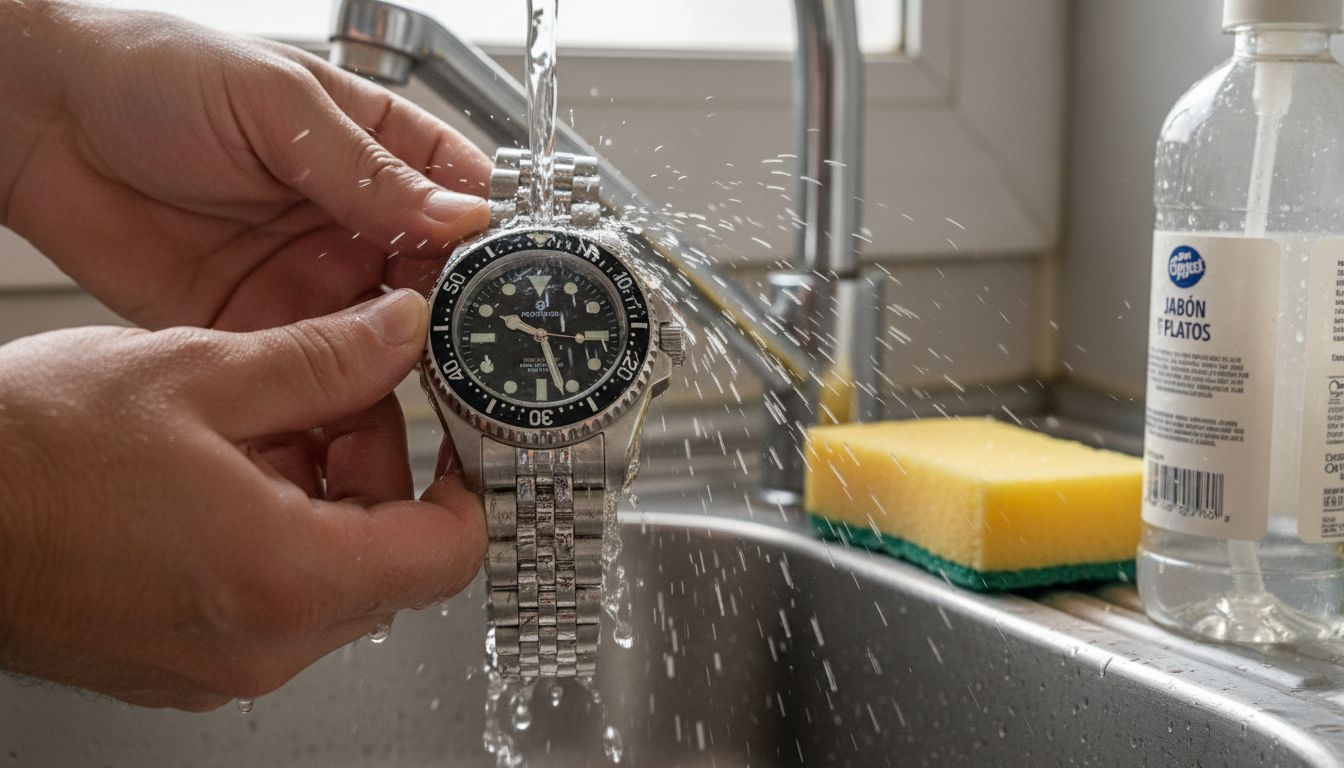
Rinse your dive watch with fresh water after every saltwater dive
Dry completely before storing in a cool, dry location
Wear your watch regularly to maintain oil circulation
Avoid winding the crown excessively or applying excessive force
Never attempt internal adjustments yourself
Schedule professional servicing before problems develop
Professional Servicing Intervals
A qualified watchmaker examines, cleans, and relubes your entire movement during servicing. This process restores accuracy and prevents wear progression. Skipping servicing doesn’t save money; it creates expensive damage that could have been prevented.
Aquastar recommends professional service intervals aligned with your dive activity level. Commercial divers may need servicing annually, while recreational divers operating at moderate depths might extend intervals to five years.
Preventive maintenance costs a fraction of emergency repairs—schedule professional servicing before your watch develops problems, not after.
Pro tip:After every dive, immediately rinse your watch thoroughly with fresh water, then soak the crown assembly separately for several minutes to flush any saltwater residue from the stem and hacking mechanism before allowing it to air dry completely.
Ensure Precision Dive Timing with Aquastar Hackable Movements
Diving demands flawless timing and exact synchronization to keep you safe underwater. This article highlights the critical advantage of hackable movements in professional dive watches such as the ability to stop the seconds hand for precise alignment with your dive computer. If you want a reliable backup instrument that allows perfect synchronization before every dive, then choosing a watch equipped with such a hackable mechanism is essential.
Experience the heritage and innovation behind Aquastar watches. As the only Swiss watchmaker born exclusively to create dive watches, Aquastar pioneered groundbreaking designs including the first analog dive computer and skindiver case. Today, we continue to build professional dive watches with hackable movements engineered specifically for both commercial and recreational divers requiring trusted backup timing precision. Discover how our patented technology and dedication to precision can enhance your dive safety. Visit Aquastar official site to explore our collection and secure your ultimate dive companion now.
Frequently Asked Questions
What is a hackable movement in watches?
A hackable movement is a mechanical watch mechanism that allows you to stop the seconds hand when setting the time, enabling precise synchronization with other timepieces.
How does the hack function work in a dive watch?
The hack function works by pulling the crown outward, which engages a lever that stops the balance wheel, freezing the seconds hand to allow for exact time adjustments.
Why is synchronization important for divers using backup watches?
Synchronization is crucial for divers as it ensures that their backup watches match their dive computers, providing accurate timing for safety verification and decompression requirements during dives.
What are the maintenance tips for ensuring the longevity of a hackable dive watch?
Regularly rinse your watch with fresh water after saltwater exposure, wear it regularly to maintain lubrication, and schedule professional servicing every 3 to 5 years to keep the movement functioning reliably.
Por Qué La Profundidad Máxima Importa: at a glance
Profundidad máxima certificada en relojes de buceo: clases de resistencia, estándares internacionales y cómo afecta a tu seguridad en cada descenso. Use this guide on por qué la profundidad máxima importa to weigh design choices, engineering trade-offs and how the category translates to real Aquastar dive watches.
Elegir el reloj perfecto para una inmersión en aguas profundas no es solo cuestión de estilo, sino de seguridad vital. Para buceadores profesionales y recreativos en Europa y América del Norte, comprender la profundidad máxima certificada cambia totalmente la forma en que planifican y viven cada descenso. Saber hasta qué punto tu reloj ha sido probado y aprobado bajo presión te ofrece confianza real y elimina riesgos innecesarios durante cualquier inmersión desafiante.
Por Qué La Profundidad Máxima Importa: Tabla de Contenidos
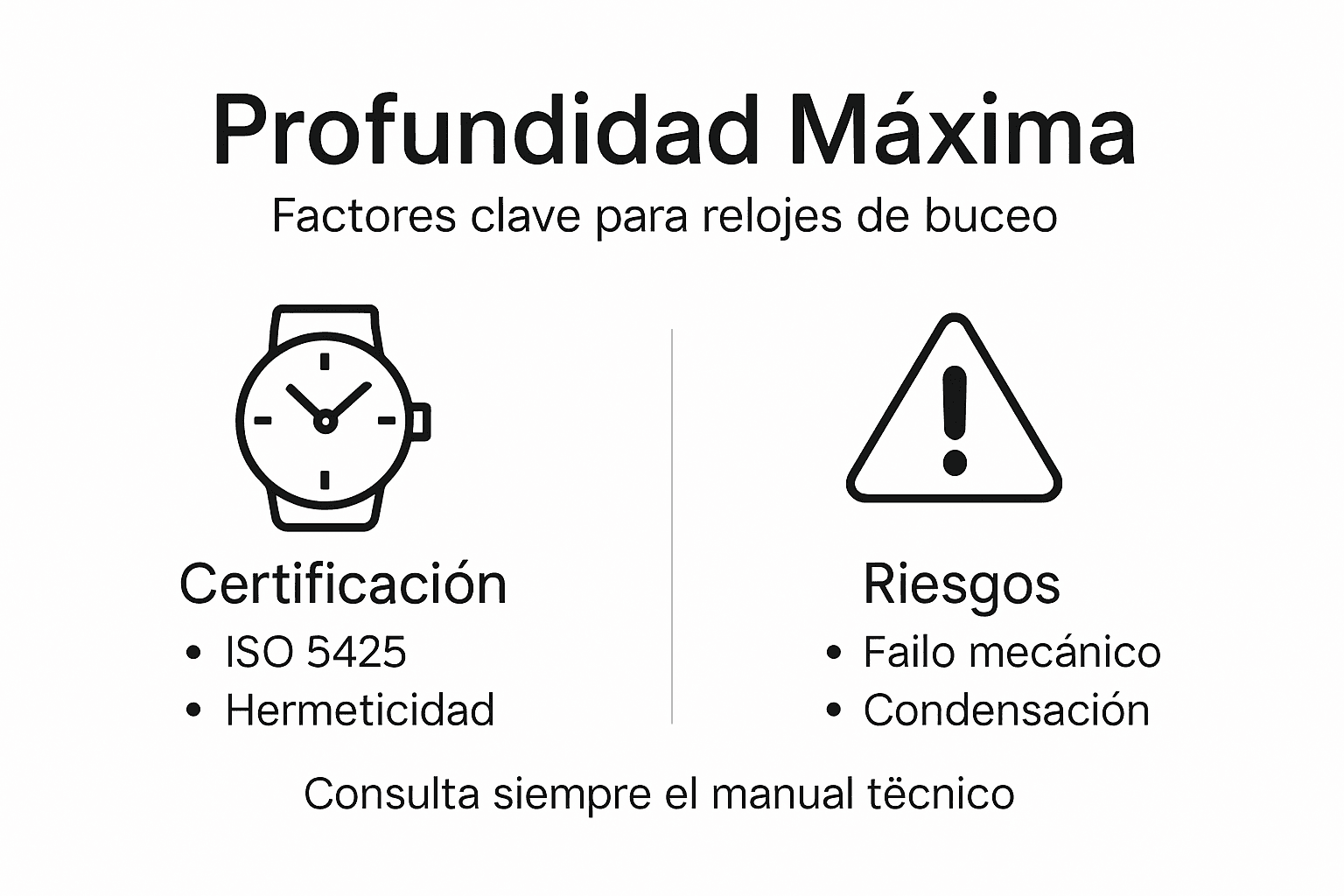
Un reloj de buceo debe tener una profundidad máxima certificada para garantizar su funcionalidad en condiciones extremas. Verifica siempre esta certificación antes de sumergirte.
Norma ISO 6425
Busca el marcado ISO 6425 en el reloj; este indica que ha sido verificado por organismos independientes y cumple con estándares internacionales.
Riesgos de Superar Límites
Superar la profundidad máxima certificada puede provocar fallos en el reloj y poner en riesgo tu seguridad. Establece límites personales para evitar compromisos peligrosos.
Selección del Reloj Adecuado
Elige un reloj cuya certificación de profundidad exceda tu límite de buceo planificado en al menos 50 a 100 metros para asegurar un margen de seguridad adecuado.
Qué significa profundidad máxima certificada
La profundidad máxima certificada es el límite verificado y garantizado al que un reloj de buceo puede funcionar sin perder sus propiedades de hermeticidad ni su precisión. No es una cifra aleatoria, sino el resultado de pruebas rigurosas bajo presión controlada.
Un reloj de buceo requiere resistencia mínima de 100 metros según la norma ISO 6425 para ser considerado adecuado para el buceo profesional y recreativo. Esta certificación es el respaldo técnico que necesitas antes de confiar en tu reloj a profundidades críticas.
La certificación implica dos aspectos clave:
Prueba de hermeticidad: El fabricante somete el reloj a presión equivalente a esa profundidad para confirmar que el agua no entra en la caja.
Verificación de precisión: Se comprueba que el movimiento del reloj mantiene su exactitud bajo presiones extremas.
Esta diferencia entre “resistencia al agua” y “profundidad certificada” es fundamental. Un reloj de 50 metros resiste salpicaduras, pero uno de 300 metros ha sido realmente testado en condiciones de buceo real.
Los límites fisiológicos y técnicos del buceo influyen directamente en las certificaciones. La presión parcial de oxígeno, el riesgo de narcosis por nitrógeno y la densidad del gas determinan a qué profundidad es seguro bucear, y el reloj debe soportar esas presiones.
Los organismos certificadores internacionales establecen protocolos específicos:
Presiones de prueba superiores a la profundidad certificada para crear un margen de seguridad.
Ciclos de compresión y descompresión que simulan descensos y ascensos reales.
Inspección de componentes críticos como los cristales, coronas y cierres de fondo.
No todos los relojes con “300 metros” en la esfera tienen la misma validez. Un reloj certificado por normas ISO 6425 ha pasado por verificaciones independientes. Uno sin certificación es solo un reclamo del fabricante.
Esta certificación también es tu respaldo en emergencias. Si algo falla bajo profundidad certificada, tienes garantía de que el fabricante cumplió con los estándares internacionales de seguridad.
La profundidad máxima certificada no es solo un número: es la promesa verificable de que tu reloj funcionará cuando más lo necesites bajo presión extrema.
Consejo profesional:Revisa siempre el certificado de tu reloj de buceo antes de usarlo en profundidades cercanas a su límite; busca sellos de organismos reconocidos como el ISO o certificadores suizos independientes.
Clases de resistencia y estándares internacionales
Los relojes de buceo no se crean todos de la misma manera. Existen clases de resistencia definidas internacionalmente que determinan exactamente para qué tipo de buceo es adecuado cada reloj. Estos estándares protegen tu seguridad bajo el agua.
Los relojes de buceo deben cumplir con la norma ISO 6425, que impone requisitos estrictos de resistencia al agua, legibilidad bajo el agua, resistencia a golpes y capacidad para soportar profundidades certificadas. Esta es la norma internacional que establece el mínimo aceptable para cualquier reloj de buceo profesional.
Las principales clases de resistencia son:
Hasta 100 metros: Resistencia básica para buceo recreativo superficial y snorkel.
100-200 metros: Buceo recreativo estándar con equipamiento deportivo.
200-300 metros: Buceo técnico ligero y profesional con equipamiento especializado.
Más de 300 metros: Buceo técnico profundo, expediciones y operaciones comerciales.
Cada clase tiene requisitos técnicos específicos que van más allá del simple sellado:
Válvulas de escape de helio para descompresiones prolongadas.
Coronas atornilladas que crean un cierre hermético adicional.
Biseles giratorios unidireccionales para medir tiempo de inmersión con seguridad.
Cristales de zafiro resistentes a presiones extremas.
Movimientos cronométricamente certificados para mantener precisión bajo presión.
La diferencia entre un reloj de 100 metros y uno de 300 metros no es cosmética. El primero puede fallar bajo presión real de buceo profundo. El segundo ha sido sometido a ciclos de compresión y descompresión que simulan descensos y ascensos del mundo real.
No confundas la certificación ISO 6425 con simples certificaciones de resistencia al agua. ISO 6425 incluye pruebas de legibilidad bajo el agua, resistencia al impacto, hermeticidad de coronas y funcionamiento de biseles. Un reloj simplemente “resistente al agua” no tiene estas garantías.
Esta estandarización internacional también te protege como buzo. Sabes exactamente a qué profundidad tu reloj funcionará, sin sorpresas. Los organismos certificadores independientes verifican que el fabricante cumple con cada requisito.
Los estándares internacionales no son limitaciones: son tu garantía de que el reloj funcionará exactamente como promete cuando más lo necesites en profundidad.
Consejo profesional:Busca siempre el marcado “ISO 6425” o “Diver” en la esfera de tu reloj; estos términos confirman que ha pasado pruebas independientes rigurosas, no solo cumplimiento de especificaciones del fabricante.
A continuación se muestra una tabla que resume la aplicación práctica de la profundidad certificada en relojes de buceo internacionales:
La profundidad máxima no es solo un número en tu reloj. Es el factor determinante que define cómo planificas, qué equipamiento necesitas y cuán segura es tu inmersión. A mayor profundidad, todo cambia.
Los riesgos fisiológicos aumentan dramáticamente con la profundidad:
Narcosis por nitrógeno: Desorienta el buceador a partir de 30 metros de profundidad.
Toxicidad por oxígeno: A profundidades extremas, el oxígeno se convierte en veneno.
Densidad del gas: El aire se vuelve más denso, haciendo más difícil respirar.
Aumento de presión: Cada 10 metros equivalen a una atmósfera adicional de presión.
Un reloj certificado para 100 metros puede fallar completamente a 300 metros. No es cuestión de “casi funcionar”. La presión romperá los sellos, el agua entrará, y perderás tu único instrumento de monitoreo confiable bajo el agua.
Tu reloj tiene tres funciones críticas a profundidad:
Medir el tiempo real bajo el agua para evitar descompresiones forzadas.
Mantener precisión bajo presión extrema para confiabilidad absoluta.
Resistir la presión sin comprometer su hermeticidad durante toda la inmersión.
Si el reloj no está certificado para esa profundidad, no cumple ninguna de estas funciones. Es una distracción en tu muñeca, no un dispositivo de seguridad.
La profundidad máxima también determina qué tipo de buceador eres. Buceo recreativo superficial requiere un reloj de 100 a 200 metros. Buceo técnico profundo exige 300 metros o más. Cada nivel tiene equipamiento, entrenamiento y certificaciones específicas que tu reloj debe reflejar.
Tu reloj es el último dispositivo de seguridad cuando todo lo demás falla. Debe estar certificado para la profundidad exacta donde buceas, sin excepciones.
Consejo profesional:Elige un reloj certificado para una profundidad 50-100 metros mayor que tu límite de buceo planificado; este margen de seguridad te protege en casos de emergencia o descensos accidentales.
Esta tabla compara los principales riesgos fisiológicos y técnicos según la profundidad alcanzada:
Riesgo principal
Profundidad crítica
Consecuencia en el reloj
Medida preventiva
Narcosis de nitrógeno
Desde 30 metros
Lectura imprecisa
Certificación adecuada
Toxicidad de oxígeno
Más de 50 metros
Fallos de movimiento
Margen extra de profundidad
Presión excesiva
Cada 10 metros
Pérdida de hermeticidad
Sellos reforzados
Densidad de gas aumentada
Más de 100 metros
Cristal quebrado
Materiales de alta calidad
Riesgos y errores comunes por superar límites
Superar la profundidad máxima certificada no es una opción valiente. Es un error potencialmente mortal que compromete tu seguridad bajo el agua. Los riesgos aumentan exponencialmente a cada metro adicional.
Superar límites de profundidad incrementa riesgos como narcosis, toxicidad por oxígeno y problemas de descompresión grave. Tu cuerpo no puede adaptarse a esas presiones, sin importar tu experiencia. Los reloj que no cumplen normas fallan bajo presión, eliminando tu control del tiempo bajo el agua.
Los errores más comunes al superar límites son:
Mala planificación: No calcular correctamente el tiempo de fondo y paradas de descompresión.
Confianza excesiva: Creer que la experiencia supera las limitaciones fisiológicas reales.
Equipos no certificados: Usar relojes o computadoras de buceo sin certificación para esa profundidad.
Ignorar síntomas: Desconocer los signos de narcosis o toxicidad por oxígeno.
Descensos accidentales: Perder control y descender más allá del plan establecido.
Cada error tiene consecuencias físicas inmediatas. La narcosis por nitrógeno comienza alrededor de 30 metros y se intensifica rápidamente. A 100 metros, actúa como una borrachera severa que afecta tu juicio crítico.
Los errores comunes incluyen mala planificación y dependencia en equipos no certificados que pueden presentar fallos de hermeticidad. Un reloj certificado para 200 metros que usas a 350 metros fallará. El agua entra. Pierdes tu referencia de tiempo. La descompresión se vuelve caótica.
Los riesgos específicos del reloj incluyen:
Pérdida de hermeticidad: El agua entra en la caja, corrosionando el movimiento.
Fallo mecánico: El cristal se quiebra o los sellos ceden bajo presión extrema.
Imprecisión del tiempo: El movimiento no funciona correctamente, dando lecturas falsas.
Imposibilidad de reparación: Una falla bajo el agua no se puede solucionar en ese momento.
La realidad es brutal: si tu reloj no está certificado para esa profundidad, no tienes forma confiable de monitorear tu tiempo bajo el agua. Y sin tiempo preciso, no puedes planificar paradas de descompresión. Sin descompresión correcta, el riesgo de embolia o enfermedad descompresiva es real.
Un reloj que falla a profundidad no es un inconveniente. Es una emergencia que puede terminar en tragedia.
Consejo profesional:Establece un límite personal 20 metros por debajo de tu certificación de buceo y usa un reloj certificado 100 metros más profundo que tu límite personal; esto crea capas de seguridad que previenen decisiones impulsivas bajo presión.
Elegir el reloj adecuado según la profundidad
Elegir el reloj correcto no es una decisión cosmética. Tu reloj es tu instrumento de seguridad más personal bajo el agua. Debe estar diseñado específicamente para la profundidad donde buceas.
El primer paso es conocer tu tipo de buceo. ¿Eres buceador recreativo que explora arrecifes a 30-40 metros? ¿Buceas técnico que desciende a 100 metros o más? Tu respuesta determina todo lo demás.
Para elegir un reloj adecuado, considera su certificación ISO 6425 y la profundidad máxima certificada. Los relojes profesionales para buceo profundo resisten 300 metros o más, mientras que para buceo recreativo bastan modelos certificados para 100-200 metros. La certificación ISO 6425 es tu garantía de que alguien independiente verificó cada especificación.
Los criterios esenciales para seleccionar son:
Profundidad certificada: Debe ser 50-100 metros mayor que tu límite planificado.
Certificación ISO 6425: Busca este marcado en la esfera, no es opcional.
Válvula de helio: Necesaria si bucas con mezclas especiales o descompresiones largas.
Bisel unidireccional: Protege contra cálculos erróneos de tiempo si lo giras accidentalmente.
Corona atornillada: Crea un sello hermético adicional bajo presión extrema.
Resistencia a impactos: El reloj debe soportar golpes en rocas o equipamiento.
Cada profundidad tiene requisitos mínimos. A 100 metros necesitas un reloj con movimiento cronométrico preciso. A 300 metros, añade válvula de helio y materiales de mayor resistencia. A 600 metros, solo relojes específicamente diseñados para buceo técnico profundo funcionarán.
No confundas “resistencia al agua” con “certificación de buceo”. Un reloj “resistente a 300 metros” puede colapsar bajo buceo real. Uno “certificado para 300 metros” ha pasado pruebas de hermeticidad bajo esa presión.
Consideraciones prácticas al elegir:
Verifica que el fabricante pueda proporcionar certificado de prueba de profundidad.
Revisa la legibilidad bajo el agua: fuente clara y contraste visible.
Prueba la corona atornillada: debe ser fácil de abrir pero hermética cuando está cerrada.
Confirma que el movimiento es apropiado para la profundidad certificada.
Asegúrate de que el bisel gira suavemente sin juego excesivo.
Tu reloj es tu respaldo cuando todo lo demás falla. El ordenador de buceo puede averiarse. La mano del compañero puede quedar fuera de alcance. Tu reloj sigue ahí, en tu muñeca, midiendo tiempo con precisión bajo cualquier condición.
El reloj adecuado para tu profundidad no es lujo. Es la herramienta básica que determina si regresas a la superficie con seguridad.
Consejo profesional:Antes de comprar, revisa la documentación de prueba de profundidad del fabricante y busca opiniones de buceadores profesionales que usen el mismo modelo a profundidades similares a las tuyas.
Protege tu inmersión con un reloj que cumple con la profundidad máxima certificada
La seguridad bajo el agua depende de un equipo que soporte las exigencias reales de la profundidad máxima certificada. Como explica el artículo, superar los límites de resistencia puede causar fallos severos que ponen en riesgo tu vida y anulan la función esencial de monitoreo del tiempo. En Aquastar entendemos esas necesidades porque desde los años 60 hemos desarrollado relojes diseñados exclusivamente para buceo profesional y recreativo, con la tecnología y certificaciones que garantizan hermeticidad, precisión y resistencia bajo presiones extremas.
No pongas en juego tu seguridad con productos sin respaldo comprobado. Descubre nuestra gama de relojes de buceo profesionales que respaldan cada inmersión con innovación y experiencia suiza. Estar equipado con un reloj Aquastar significa elegir un instrumento validado para las profundidades donde tú exploras. Visita ahora Aquastar y prepárate para sumergirte con confianza y el mejor soporte a tu lado.
Preguntas Frecuentes
¿Qué es la profundidad máxima certificada de un reloj de buceo?
La profundidad máxima certificada es el límite verificado al que un reloj puede funcionar sin perder sus propiedades de hermeticidad ni su precisión. Es resultado de pruebas bajo presión controlada.
¿Cuáles son los riesgos de usar un reloj no certificado para profundidades mayores?
Usar un reloj no certificado para profundidades mayores puede resultar en fallos de hermeticidad, pérdida de precisión y, en última instancia, poner en riesgo la seguridad del buzo al no poder medir el tiempo de inmersión correctamente.
¿Qué diferencia hay entre resistencia al agua y profundidad máxima certificada?
La resistencia al agua se refiere a la capacidad del reloj para soportar ciertas condiciones, mientras que la profundidad máxima certificada es la prueba específica que garantiza que el reloj funcionará adecuadamente a una cierta presión y profundidad.
¿Qué características debe tener un reloj para buceo en profundidades extremas?
Un reloj para buceo en profundidades extremas debe tener características como una certificación ISO 6425, válvulas de escape de helio, coronas atornilladas, y cristales de zafiro, todo ello diseñado para soportar condiciones extremas bajo el agua.
Diferencias entre reloj diver y casual: certificación ISO 6425, funciones técnicas, materiales y cómo elegir la pieza adecuada para cada uso. Use this guide on diferencias de diver y reloj casual to weigh design choices, engineering trade-offs and how the category translates to real Aquastar dive watches.
Elegir entre un reloj diver y uno casual puede parecer sencillo hasta que la seguridad bajo el agua entra en juego. Para coleccionistas de Europa y buceadores recreativos, la diferencia clave es la certificación internacional ISO 6425, que garantiza la resistencia y funcionalidad del diver en profundidades extremas. Comprender estas distinciones te permitirá seleccionar la pieza adecuada, ya sea para tus inmersiones en el Mediterráneo o para destacar en una reunión sofisticada en París.
Diferencias De Diver Y Reloj Casual: Tabla de Contenidos
Un reloj Diver está diseñado para buceo y cumple con estándares de seguridad internacionales, mientras que un reloj Casual se centra en estética y comodidad diaria.
Importancia de la certificación ISO 6425
Verifica que el reloj Diver cuente con la certificación ISO 6425, garantizando su resistencia y funcionalidad bajo el agua.
Componentes esenciales de un Diver
Asegúrate de que el Diver tenga características como una corona roscada y un bisel unidireccional para máxima seguridad en el agua.
Materiales y durabilidad
Prefiere un Diver de acero inoxidable 316L o titanio para una mejor resistencia a la corrosión y longevidad.
Qué distingue a los relojes diver y casuales
Los relojes de buceo y los casuales parecen similares a primera vista, pero sus diferencias técnicas son profundas y determinantes. Un reloj diver está construido para cumplir funciones específicas bajo el agua, mientras que un casual prioriza la estética y el confort diario. Conocer estas distinciones te ayudará a elegir el reloj correcto según tus necesidades reales.
La diferencia más fundamental radica en las certificaciones internacionales. Los relojes diver auténticos cumplen con la norma ISO 6425 para resistencia al agua, lo que significa que resisten al menos 200 metros de profundidad con garantías de seguridad. Los relojes casuales no persiguen estas certificaciones porque no están diseñados para buceo profesional.
Características técnicas que definen un diver
Un reloj diver auténtico posee rasgos específicos que lo hacen funcional bajo el agua:
Corona roscada: Sella herméticamente para evitar entrada de agua durante el buceo
Bisel unidireccional: Permite medir el tiempo de inmersión sin riesgo de lectura errónea
Manecillas luminiscentes: Ofrecen visibilidad clara en aguas profundas y oscuras
Cristal resistente: Soporta la presión extrema sin deformarse ni romperse
Caja robusta: Construcción reforzada que garantiza integridad estructural
Estas características no son decorativas. En buceo recreativo, una corona que falla puede inundar el reloj en segundos. Un bisel que gira accidentalmente puede costarte la vida si pierdes la referencia de tiempo de descompresión.
Los relojes diver no son lujos estéticos; son herramientas de seguridad que respaldan tu ordenador de buceo con información de tiempo confiable.
Los relojes casuales carecen de estas exigencias. Pueden tener agua resistencia de 30 a 100 metros, lo que significa que sobreviven salpicaduras y duchas, pero se inundarían inmediatamente bajo presión de buceo. Sus coronas no están roscadas, sus biseles no son unidireccionales y sus manecillas no brillan lo suficiente en profundidad.
Diferencias en materiales y construcción
Los diver emplean acero inoxidable de mayor espesor y aleaciones resistentes a la corrosión marina. Los casuales usan materiales más ligeros porque no enfrentan presiones extremas. Esta diferencia de peso y densidad refleja propósitos completamente distintos.
La luminiscencia en divers utiliza compuestos de larga duración que brillan durante horas bajo oscuridad total. En relojes casuales, la luminiscencia es secundaria y a menudo menos efectiva. Como buceador, necesitas leer tu reloj a 30 metros de profundidad sin luz natural; un casual simplemente no cumple.
Para comprender mejor los beneficios prácticos de un diver frente a un reloj casual, aquí se resumen sus impactos en situaciones reales:
Escenario de uso
Diver certificado
Reloj casual
Buceo recreativo
Seguridad y funcionalidad total
Riesgo elevado por fallos
Exposición a golpes
Protege mecanismo y cristal
Puede alterar precisión
Agua salada frecuente
Sin corrosión a largo plazo
Deterioro acelerado
Entornos magnéticos
Mantiene precisión
Posibles desviaciones
Uso urbano diario
Más pesado y robusto
Ligero y cómodo
También existen diferencias en tamaño y forma. Los divers suelen ser más grandes (40-45 mm típicamente) para mejorar legibilidad bajo el agua y en condiciones de visibilidad reducida. Los casuales tienden a ser más delgados y discretos para uso cotidiano en ciudad.
Diseño y propósito de uso
Un diver se construye pensando en funcionalidad bajo presión y oscuridad. Cada elemento sirve un propósito de seguridad. Un casual se diseña para belleza, comodidad y versatilidad en la vida diaria. Son filosofías de diseño opuestas.
Como coleccionista en Europa, quizás tengas un casual para reuniones de trabajo y un diver para tus viajes de buceo recreativo. Intentar usar un casual para buceo sería como usar zapatos de ciudad para escalar montañas: pueden verse bien, pero fallarán cuando los necesites.
Consejo profesional:Si buceas regularmente, invierte en un diver certificado como tu reloj principal acuático; será tu compañero confiable durante décadas, mientras que un casual podría traicionarte en el momento crítico.
Funciones y certificaciones técnicas del diver
Un reloj diver no es simplemente un reloj que resiste agua. Es un instrumento certificado que cumple estándares internacionales rigurosos para garantizar tu seguridad bajo el agua. La certificación ISO 6425 es el sello de confianza que distingue un verdadero diver de una imitación costosa.
La norma ISO 6425 establece requisitos específicos que todo reloj diver debe cumplir. Esta certificación no es opcional; es lo que diferencia un reloj seguro para buceo de uno que simplemente parece de buceo. Los fabricantes deben pasar pruebas exhaustivas para obtenerla, y los requisitos son claros y no negociables.
Requisitos principales de certificación
Todo reloj certificado bajo ISO 6425 debe resistir al menos 100 metros de profundidad con garantías de seguridad. Pero la profundidad es solo el comienzo. Existen otros requisitos críticos que debes conocer:
Visibilidad en oscuridad total: Debe leerse claramente a 25 cm de distancia sin luz externa
Resistencia a golpes: Soporta impactos sin perder funcionalidad
Protección magnética: Los campos magnéticos no pueden afectar la precisión
Corrosión salina: El reloj resiste exposición prolongada al agua salada sin deterioro
Marcado autorizado: Incluye texto que identifica la profundidad certificada
Estos requisitos responden a situaciones reales de buceo. Un golpe accidental contra una roca, la proximidad a equipos magnéticos, o inmersiones repetidas en agua salada son peligros comunes que un diver debe tolerar.
La certificación ISO 6425 no es publicidad; es una garantía legal que tu reloj ha superado pruebas que simulan condiciones extremas de buceo.
Funciones técnicas específicas del diver
Cada componente de un diver certificado sirve una función directa de seguridad. La corona roscada mantiene hermético el reloj bajo presión. El bisel unidireccional te permite calcular con precisión cuánto tiempo lleva sumergido. Las manecillas luminiscentes brillan horas bajo oscuridad total, incluso después de no estar expuesto a luz.
La caja presurizada distribuye fuerzas de presión de forma equilibrada, evitando que el cristal se quiebre o que la esfera se colapse. Esta arquitectura no es accidental; es el resultado de décadas de experiencia en diseño de instrumentos acuáticos.
Los materiales también cumplen funciones específicas. El acero inoxidable de alta calidad resiste la corrosión marina mejor que aleaciones estándar. Los cristales de zafiro soportan presión sin rayarse ni opacarse.
Pruebas que debe superar
Un reloj diver debe pasar pruebas de presión que simulan profundidades extremas. También se somete a pruebas de resistencia química con agua salada sintética durante períodos prolongados. Los campos magnéticos se aplican intentando desmagnetizar el movimiento. Los impactos se distribuyen desde múltiples ángulos.
Estas no son pruebas teóricas. Cada requisito corresponde a un escenario de buceo real que podría causar fallo catastrófico si el reloj no estuviera certificado.
Consejo profesional:Antes de comprar un diver, verifica que lleve el marcado “ISO 6425” y la profundidad máxima certificada en la esfera o caseback; sin estas marcas, no es un diver certificado aunque sea costoso.
Materiales y construcción frente al uso diario
Un reloj diver no es un complemento frágil que requiere cuidados especiales. Está construido para soportar tanto inmersiones profundas como el desgaste cotidiano de la vida real. Los materiales utilizados en su construcción determinan su longevidad y confiabilidad en ambos contextos.
Los relojes casuales privilegian la estética y la ligereza. Un diver prioriza la resistencia absoluta. Esta diferencia de filosofía se refleja en cada componente, desde la caja hasta el cristal. Un diver bien construido puede acompañarte durante décadas sin perder funcionalidad.
Materiales de la caja y durabilidad
La mayoría de divers profesionales utilizan acero inoxidable 316L o titanio para máxima resistencia a la corrosión. El acero 316L contiene molibdeno, que lo hace significativamente más resistente al agua salada que el acero estándar. El titanio es aún más ligero y resistente, aunque más costoso de fabricar.
Los relojes casuales frecuentemente usan acero inoxidable estándar o aleaciones más económicas. Estos materiales funcionan bien para el día a día, pero su resistencia a la corrosión marina es limitada. Después de años de exposición al agua salada, pueden desarrollar manchas y corrosión superficial.
La diferencia es palpable. Una caja de diver mantiene su acabado después de décadas de uso. Una caja casual puede mostrar signos de deterioro en pocos años si se expone regularmente a agua salada.
Cristales y resistencia al impacto
Todos los divers auténticos utilizan cristal de zafiro sintético. Este material es extremadamente duro y resistente a arañazos. Un cristal de zafiro puede golpearse contra rocas submarinas y mantener claridad óptica perfecta. Los cristales casuales frecuentemente usan acrílico o cristal mineral, que se rayan más fácilmente.
La diferencia se nota cuando buceas. Un crystal rayado reduce la visibilidad y arruina la estética del reloj. El zafiro es casi imposible de rayar en condiciones normales, incluso after años de uso.
Cajas presurizada versus cajas estándar
Los divers tienen cajas robustas con arquitectura presurizada que distribuyen fuerzas de presión equilibradamente. Los casuales tienen cajas más delgadas diseñadas para comodidad y estética.
Una caja diver puede parecer más voluminosa en la muñeca, pero esa volumen sirve a un propósito. Las paredes más gruesas y la arquitectura reforzada evitan que el reloj implote bajo presión extrema. Las cajas casuales colapsarían rápidamente bajo la presión de buceo.
Comparación de durabilidad
Esta tabla muestra cómo difieren los materiales entre ambos tipos:
Aspecto
Diver
Casual
Material caja
Acero 316L o titanio
Acero estándar
Cristal
Zafiro sintético
Acrílico o mineral
Resistencia salina
Excepcional
Moderada
Durabilidad bajo presión
Certificada
No testada
Vida útil esperada
20-30+ años
5-10 años
Un diver bien mantenido puede servir a múltiples generaciones de buceadores. Un casual es un accesorio temporal que eventualmente mostrará signos de envejecimiento.
Consejo profesional:Elige un diver con acero 316L o titanio si buceas regularmente en agua salada; estos materiales requieren menos mantenimiento y conservan su apariencia durante décadas sin necesidad de pulido profesional costoso.
Errores frecuentes al elegir reloj para buceo
Muchos buceadores cometen errores críticos al elegir reloj, priorizando apariencia sobre funcionalidad. Estos errores pueden comprometer tu seguridad bajo el agua y resultar en una inversión desperdiciada. Conocer los errores más comunes te ayudará a tomar decisiones informadas y seguras.
El error más grave es confundir “reloj que parece diver” con “diver certificado”. Un reloj puede lucir profesional, tener bisel giratorio y parecer resistente, pero carecer completamente de certificación ISO 6425. Esta diferencia es la que separa seguridad de riesgo potencial durante tus inmersiones.
Error 1: Confundir apariencia con certificación
Muchos fabricantes producen relojes que imitan características de buceo sin cumplir estándares internacionales. Tienen biseles que giran, coronas que se ven roscadas y manecillas que brillan. Pero sin certificación ISO 6425 real, son simplemente relojes bonitos que se inundarán a profundidad.
La solución es verificar siempre el marcado en la esfera o caseback. Un diver auténtico tendrá “ISO 6425” grabado claramente. Si no ves esta certificación, no es un diver profesional sin importar su precio.
Este error es costoso. Algunos buceadores gastan cientos de euros en “divers” de marcas desconocidas que lucen impresionantes pero carecen de protección real.
Error 2: Elegir profundidad nominal insuficiente
Muchos casuales tienen “resistencia al agua 100 metros”. Suena profesional, pero 100 metros nominales son insuficientes para buceo recreativo seguro. El buceo recreativo llega típicamente a 40 metros, pero tienes margen de seguridad si tu reloj está certificado para 200 metros o más.
Algunos divers de nivel entrada están certificados para exactamente 100 metros. Es mejor elegir 200 metros como mínimo, proporcionando margen de seguridad para emergencias o profundidades inesperadas.
Error 3: Ignorar la legibilidad en oscuridad
Un reloj que funciona perfectamente en tu casa bajo luz artificial puede ser prácticamente ilegible a 30 metros de profundidad en agua turbia. La luminiscencia de baja calidad se desvanece después de minutos bajo oscuridad total. Los divers auténticos usan luminiscencia de larga duración que brilla horas.
Antes de comprar, prueba la luminiscencia en completa oscuridad. Enciérralo en un cajón durante la noche y revísalo a la mañana. Si apenas brilla, no es adecuado para buceo.
Error 4: Descuidar componentes esenciales
Algunos relojes carecen de características fundamentales que los hacen seguros bajo agua:
Corona no roscada: Se abre por presión de agua
Bisel bidireccional: Gira accidentalmente y pierdes referencia de tiempo
Cristal débil: Se empaña o raya impidiendo visibilidad
Batería estándar: Muere sin advertencia en buceo
Verifica que tu diver tenga todos estos componentes antes de invertir.
A continuación, se presenta un resumen sencillo de los errores más comunes al elegir un reloj de buceo y cómo evitarlos:
Error típico
Riesgo principal
Solución recomendada
Guiarse solo por la apariencia
Inundación bajo presión
Verificar existencia de certificación
Elegir profundidad insuficiente
Falla en inmersiones reales
Optar por mínimo 200 metros
Ignorar legibilidad en oscuridad
Difícil lectura bajo agua
Probar luminiscencia duradera
Descuidar los componentes críticos
Falla mecánica en buceo
Exigir corona roscada y bisel seguro
Elegir cuarzo barato
Fallas sin aviso
Preferir mecanismos automáticos
Los errores en selección de reloj diver no son cosméticos; pueden costarte la vida si el reloj falla en profundidad.
Error 5: No considerar el mecanismo
Los movimientos mecánicos automáticos son más confiables que cuarzo en buceo profesional. Funcionan sin batería y mantienen precisión bajo condiciones extremas. Los relojes casuales frecuentemente usan cuarzo económico que consume batería rápidamente.
Como coleccionista europeo, probablemente aprecies la mecánica. Invierte en un reloj con movimiento fiable certificado, no en uno que dependa de batería de consumo rápido.
Consejo profesional:Siempre solicita el certificado ISO 6425 del fabricante antes de comprar; si no pueden proporcionarlo o dudan, busca otro reloj independientemente del precio o marca.
Confía en un Diver Auténtico para tu Seguridad y Estilo
Entender las diferencias entre un reloj diver certificado y un reloj casual es vital para preservar tu seguridad bajo el agua. Si buscas un reloj que ofrezca funcionalidad real, durabilidad y cumplimiento con la norma ISO 6425, la elección correcta marcará la diferencia en cada inmersión. No te arriesgues a usar un reloj que solo quiere parecer un diver; necesitas un compañero confiable diseñado para resistir presiones extremas, golpes y corrosión marina.
Descubre cómo Aquastar, el único fabricante suizo dedicado exclusivamente a relojes de buceo profesionales, puede respaldar tu pasión y seguridad. Con patentes pioneras y una historia que sostiene los avances innovadores en relojería submarina, nuestros relojes mecánicos fueron creados para superar las exigencias que describimos en el artículo. Visita Aquastar y explora por qué un reloj diver profesional no es solo un accesorio sino una herramienta vital. Aprende más sobre su construcción y certificaciones aquí. Da el siguiente paso y equipa tu muñeca con la confianza que solo un verdadero diver puede ofrecer.
Preguntas Frecuentes
¿Cuál es la principal diferencia entre un reloj diver y un reloj casual?
Un reloj diver está diseñado específicamente para buceo, cumpliendo con la norma ISO 6425, mientras que un reloj casual prioriza la estética y no está construido para resistir presiones extremas.
¿Qué características técnicas debe tener un reloj diver?
Un reloj diver debe tener una corona roscada, bisel unidireccional, manecillas luminiscentes, un cristal resistente y una caja robusta. Estas características aseguran su funcionalidad bajo el agua.
¿Por qué es importante la certificación ISO 6425 en un reloj de buceo?
La certificación ISO 6425 garantiza que el reloj ha sido sometido a pruebas rigurosas y puede resistir al menos 100 metros de profundidad, asegurando su fiabilidad durante el buceo.
¿Puedo usar un reloj casual para buceo recreativo?
No se recomienda utilizar un reloj casual para buceo, ya que, aunque pueden resistir salpicaduras, no están diseñados para soportar la presión y las condiciones extremas bajo el agua.
Guía de compra de relojes de buceo en 2025: necesidades reales, innovaciones, autenticidad, certificaciones y reputación de fabricantes. Use this guide on guía de compra de relojes en 2025 to weigh design choices, engineering trade-offs and how the category translates to real Aquastar dive watches.
Elegir un reloj de buceo mecánico de alta calidad puede ser un desafío para coleccionistas y buceadores profesionales en Europa y América del Norte. Las demandas específicas de profundidad, resistencia y autenticidad marcan la diferencia entre una herramienta confiable y una inversión valiosa. En este artículo encontrarás cómo identificar tus necesidades reales y qué innovaciones en materiales, certificaciones y reputación de fabricantes son clave para obtener un reloj verdaderamente excepcional.
Guía De Compra De Relojes En 2025: Tabla de Contenidos
Determina si bucearás recreativamente o profesionalmente para elegir el reloj adecuado.
2. Considera innovaciones y materiales
Busca materiales modernos como aleaciones avanzadas y zafiro antirreflectante para mayor durabilidad.
3. Verifica autenticidad y certificaciones
Asegúrate de que el reloj tenga documentación y certificaciones internacionales como ISO 6425.
4. Inspecciona resistencia y funcionalidad
Revisa la clasificación de profundidad y el funcionamiento de los botones para asegurarte de su fiabilidad.
5. Investiga la reputación del fabricante
Opta por marcas con buena trayectoria y servicio al cliente para garantizar un producto duradero.
Paso 1: Identifica tus necesidades de buceo y colección
Antes de comprar tu primer reloj de buceo o agregar uno a tu colección, necesitas entender exactamente qué tipo de uso le darás. Esto determina directamente qué características técnicas debes buscar y cuál será el reloj adecuado para ti.
Primero, responde estas preguntas clave sobre tu actividad de buceo:
¿Necesitas funciones de cronógrafo o solo lectura de tiempo?
¿Es este reloj un instrumento funcional o una pieza de colección?
La profundidad es el factor más importante. Los relojes de buceo requieren resistencia mínima de 100 metros según estándares internacionales, pero los buceadores profesionales necesitan resistencias superiores a 300 metros. Si buceas ocasionalmente a 20-30 metros, un reloj de 300 metros es suficiente. Si practicas buceo técnico o comercial, necesitarás mayor resistencia.
También considera si tu reloj será un instrumento de trabajo junto a tu ordenador de buceo o un complemento estético. Los profesionales certificados por organizaciones como PDI International requieren herramientas confiables. Los coleccionistas pueden priorizar la historia, el diseño y la autenticidad mecánica del movimiento.
La diferencia entre un reloj para usar en cada inmersión y uno para coleccionar es significativa. Un reloj funcional necesita resistencia comprobada, cristal de zafiro resistente a ralladuras y cierre de seguridad en la correa. Un reloj de colección puede ser más raro o histórico, con movimientos exclusivos.
A continuación se presenta una tabla comparativa entre un reloj de buceo para uso funcional y uno de colección, para facilitar tu decisión:
Criterio
Reloj funcional
Reloj de colección
Uso principal
Actividades de buceo bajo presión
Valor histórico y estético
Material preferido
Titanio, acero resistente, zafiro
Metales preciosos, bronce histórico
Certificaciones requeridas
ISO 6425, pruebas de laboratorio
Certificado de autenticidad, historia
Valor a futuro
Durabilidad y fiabilidad diaria
Potencial revalorización a largo plazo
Tu decisión aquí define si buscas un reloj deportivo resistente o una pieza mecánica valiosa con provenance claro.
Documenta tus necesidades específicas en una lista. Esto te ayudará a filtrar opciones cuando comiences a investigar modelos concretos y a no desviarte por relojes hermosos que no se adaptan a tu uso real.
Consejo profesional:Habla con buzos experimentados en tu nivel de certificación; ellos conocen qué relojes funcionan realmente bajo presión y qué características son marketing versus funcionalidad probada.
Paso 2: Explora las innovaciones y materiales del mercado
En 2025, el mercado de relojes de buceo ha evolucionado significativamente con materiales y tecnologías que afectan directamente la durabilidad, precisión y valor de colección. Entender estas innovaciones te permite tomar decisiones informadas al comprar.
Los materiales modernos definen el rendimiento de tu reloj bajo agua. Los fabricantes ahora utilizan aleaciones avanzadas, cerámicas resistentes a la corrosión y cristales de zafiro mejorados. Estos elementos no solo protegen el movimiento sino que también afectan la estética y el valor a largo plazo.
Considerablemente, las ciencias de materiales avanzadas introducen metamateriales con propiedades únicas que mejoran la resistencia sin aumentar peso. Esto permite relojes más cómodos y confiables para inmersiones prolongadas.
Explorá estos elementos clave cuando busques:
Correa y cierre: Busca titanio o acero inoxidable de grado 300M resistente a agua salada
Cristal: Zafiro sintético con tratamiento antirreflectante es estándar en modelos profesionales
Caja: Acero quirúrgico o bronce para resistencia comprobada a la corrosión marina
Movimiento: Mecánica suiza o automática con reserva de marcha superior a 40 horas
La fabricación actual también incorpora tecnologías como la impresión 3D avanzada que permite precisión extrema en componentes internos. Algunos fabricantes experimentan con biomateriales sostenibles sin sacrificar funcionalidad.
Para ayudarte a comparar innovaciones recientes, consulta esta tabla de materiales y tecnologías clave para relojes de buceo en 2025:
Componente
Material/Innovación
Beneficio principal
Correa/cierre
Titanio, acero 300M
Resistencia máxima a la corrosión
Cristal
Zafiro antirreflectante
Mayor durabilidad y visibilidad
Caja
Acero quirúrgico, bronce
Protección ante ambientes marinos
Movimiento
Suizo automático ≥40 horas
Precisión prolongada y fiable
Componentes internos
Impresión 3D avanzada
Precisión y fabricación personalizada
Materiales verdes
Biomateriales sostenibles
Reducción del impacto ambiental
Compara especificaciones técnicas entre modelos. Dos relojes de 300 metros no son idénticos; uno puede usar cristal de plexiglás económico mientras otro utiliza zafiro de clase superior. Esta diferencia impacta durabilidad y reventa.
Los mejores relojes de buceo combinan tradición mecánica con materiales contemporáneos que responden a condiciones extremas reales.
Visitá sitios técnicos especializados, revistas de relojería y foros de coleccionistas. Compará el mismo modelo en diferentes años para ver cómo evolucionaron los materiales. Esto te da perspectiva sobre qué innovaciones son duraderas versus tendencias pasajeras.
Consejo profesional:Solicita certificados de autenticidad de materiales y pruebas de resistencia; los fabricantes respetables documentan estas especificaciones claramente en sus relojes de colección.
Paso 3: Evalúa la autenticidad y las certificaciones del reloj
Antes de invertir en un reloj de buceo, necesitas verificar que es auténtico y cuenta con las certificaciones necesarias. Un reloj falsificado o sin documentación apropiada no solo pierde valor rápidamente sino que también puede ser peligroso bajo el agua.
La autenticidad comienza con la documentación. Todo reloj profesional debe venir con certificado de garantía, documentación del fabricante y especificaciones técnicas verificables. Comprueba que coincidan el número de serie del reloj con el del certificado.
Busca las certificaciones internacionales que respaldan la calidad. Los relojes de buceo profesionales cumplen con estándares internacionales específicos que garantizan resistencia al agua, precisión y durabilidad bajo condiciones extremas. La certificación ISO 6425 es el estándar de oro para relojes de buceo.
Verifica estos elementos de autenticidad:
Número de serie: Debe estar grabado en la caja y coincidir con documentación oficial
Movimiento: Inspecciona el mecanismo interno; debe ser limpio y preciso
Acabado: Busca imperfecciones; los falsificados suelen tener detalles toscos
Peso: Un reloj auténtico tiene peso específico según sus materiales
Funcionamiento: La precisión debe estar dentro de especificaciones de fábrica
Hoy en día, muchos fabricantes serios utilizan sistemas de verificación digital mediante códigos seguros que puedes validar en línea. Ingresa el código en el sitio oficial del fabricante para confirmar que tu reloj es legítimo.
Solicita certificados de pruebas de resistencia al agua. Los laboratorios independientes verifican que el reloj mantiene estanqueidad en la profundidad declarada. Estos documentos son fundamentales para coleccionistas serios.
Un reloj sin certificación o con documentación dudosa no es una ganga; es un riesgo, tanto financiero como de seguridad bajo el agua.
Compra solo a vendedores autorizados o con historial verificable. Los distribuidores oficiales pueden proporcionar documentación completa y responden por la autenticidad. Si algo te parece sospechoso respecto a la documentación, camina hacia otro vendedor.
Consejo profesional:Contacta directamente al fabricante con el número de serie antes de comprar; ellos pueden confirmar si el reloj es auténtico y qué garantía aún le corresponde.
Paso 4: Verifica características de resistencia y funcionalidad
La resistencia al agua y la funcionalidad son lo que distingue un reloj de buceo genuino de un reloj elegante con estuche de buceo. Necesitas entender cómo se prueban estos atributos y qué significan realmente para tu uso.
Todo reloj de buceo profesional debe cumplir con la norma ISO 6425 para pruebas rigurosas que garantiza resistencia a profundidades de 100 metros o superior con uso repetido. Esto significa que el reloj fue sometido a presiones hidráulicas extremas en laboratorio, no solo sumergido brevemente.
La profundidad nominal no es la máxima a la que puedes bucear. Un reloj de 300 metros puede usarse seguramente a esa profundidad, pero bucear a la máxima profundidad constantemente reduce su vida útil. Considera usar el reloj a entre 50 y 70 por ciento de su clasificación nominal para máxima durabilidad.
Verifica estos aspectos específicos cuando inspecciones un reloj:
Clasificación de profundidad: Debe estar claramente grabada en la caja trasera
Cierre de la corona: Debe enroscar firmemente sin huecos ni movimiento lateral
Válvula de escape de helio: Esencial para buceo técnico a profundidades extremas
Funcionamiento de botones: Los pulsadores deben responder sin pegarse bajo presión
Movimiento de agujas: Deben rotar suavemente sin fricción visible
La resistencia al agua tiene clasificaciones específicas según la norma ISO 2281, y cada clasificación tiene limitaciones reales. Un reloj de 30 metros resiste salpicaduras, uno de 100 metros soporta nado, pero solo relojes de 300 metros en adelante son verdaderamente aptos para buceo profesional.
Prueba el reloj personalmente si es posible. Sumérgelo en agua destilada durante varios minutos observando si hay condensación en el cristal o entrada de agua. Esto indica fallo de sellado. Verifica que todas las funciones funcionen bajo presión sin resistencia anormal.
Un reloj de buceo debe ser tan confiable bajo agua como en tierra; cualquier duda es motivo para rechazarlo.
Solicita documentación de pruebas de resistencia realizadas por laboratorios independientes. Estas pruebas confirman que el reloj cumple especificaciones declaradas bajo condiciones reales extremas.
Consejo profesional:Antes de sumergirte con un reloj nuevo, llévalo a una inmersión de prueba a profundidad baja; observa el comportamiento del reloj en entorno real antes de confiar en él para buceos más profundos.
Paso 5: Confirma la reputación y garantías del fabricante
La reputación del fabricante es tan importante como las características del reloj. Un fabricante confiable responde por su producto, ofrece garantías claras y mantiene servicio al cliente excepcional durante años.
Investiga la historia del fabricante. ¿Cuánto tiempo llevan en el mercado? ¿Tienen presencia en ferias internacionales de relojería? ¿Fabrican bajo su propio nombre o producen para terceros? Los fabricantes con décadas de trayectoria demuestran compromiso real con la calidad.
Verifica estos indicadores de reputación confiable:
Garantía escrita: Debe ser clara, específica en duración y cobertura sin ambigüedades
Servicio postventa: ¿Ofrecen reparación autorizada? ¿Cuál es el tiempo de respuesta?
Política de devolución: ¿Permiten inspección completa antes de compra final?
Comunicación: ¿Responden preguntas técnicas con detalle y profesionalismo?
Certificaciones: ¿Son miembros de organizaciones relojeras internacionales reconocidas?
Busca opiniones en comunidades de coleccionistas establecidas. Foros especializados, grupos en redes sociales y publicaciones de relojería ofrecen perspectivas reales de otros compradores. Ten cuidado con reseñas que parecen publicitarias; busca crítica equilibrada.
Verifica si el fabricante responde consultas antes de compra. Un correo técnico respondido rápidamente indica que valoran clientes. Un silencio prolongado es bandera roja.
Una garantía fuerte de un fabricante con buena reputación es más valiosa que un precio bajo de un desconocido.
Contacta con otros coleccionistas que posean relojes del fabricante. Pregunta cómo fue su experiencia con garantía, servicio y disponibilidad de repuestos después de años de uso.
Consejo profesional:Antes de comprar, solicita referencias de al menos tres coleccionistas que hayan usado el servicio postventa del fabricante; sus experiencias reales te mostrarán exactamente qué esperar.
Eleva tu colección con relojes de buceo profesionales y auténticos
El desafío principal de esta guía es ayudarte a identificar un reloj de buceo que no solo sea funcional y resistente bajo el agua sino también una pieza auténtica válida para coleccionistas exigentes. Sabemos que buscas calidad comprobada, materiales innovadores y garantías que respalden tu inversión, aspectos críticos para diferenciar un reloj funcional de uno de colección con verdadera revalorización a futuro.
En Aquastar entendemos perfectamente estas necesidades. Somos la única manufactura suiza enfocada exclusivamente en relojes de buceo profesionales, creadores de piezas icónicas como el primer ordenador analógico de buceo y expertos en innovación técnica que garantizan resistencia y precisión conforme a los estándares ISO. Al elegir un reloj Aquastar accedes a movimientos mecánicos fiables, materiales resistentes a la corrosión marina y un legado que respalda cada movimiento.
Descubre cómo transformar tu experiencia de buceo y la fortaleza de tu colección con un reloj que combina historia, tecnología y autenticidad. No dejes pasar la oportunidad de proteger tu próxima inversión con la garantía y reputación de Aquastar. Visita Aquastar ahora y da el salto hacia un reloj que marcará la diferencia en cada inmersión y en tu colección.
Para conocer más sobre nuestra historia y tecnología pionera visita nuestra página principal y empieza hoy mismo a vivir la excelencia suiza diseñada solo para buzos reales.
Preguntas Frecuentes
¿Cómo puedo identificar un reloj de buceo auténtico para mi colección?
Para identificar un reloj de buceo auténtico, verifica su documentación, especialmente el número de serie y el certificado de autenticidad. Asegúrate de que el reloj tenga la certificación ISO 6425 y que todo coincida con lo que indica el fabricante.
¿Cuáles son las características esenciales que debo buscar en un reloj de buceo para coleccionistas?
Busca características como resistencia al agua de al menos 300 metros, cristal de zafiro, y un cierre de seguridad. Además, asegúrate de que el movimiento sea automático o mecánico, ya que estos son preferidos por los coleccionistas.
¿Cómo afecta el material del reloj a su valor y durabilidad?
El material del reloj tiene un impacto significativo en su valor y durabilidad. Materiales como el acero inoxidable de alta calidad o el titanio son ideales para la resistencia al agua y la corrosión, mientras que los metales preciosos pueden aumentar su valor de colección.
¿Qué tipo de certificaciones son importantes para un reloj de buceo de colección?
Es crucial que el reloj tenga certificaciones como la ISO 6425, que garantiza su resistencia y funcionalidad bajo el agua. Además, busca certificaciones de autenticidad y calidad que avalen el valor del reloj a largo plazo.
¿Cómo determinar si un reloj de colección tiene potencial de revalorización?
Evalúa la historia del fabricante, la rareza del modelo y las revisiones del mismo. Puedes observar si ha habido una tendencia de aumentos en su valor en el mercado secundario en los últimos cinco años, lo que indicaría un buen potencial de revalorización.
¿Qué precauciones debo tomar al comprar un reloj de buceo usados?
Al comprar un reloj de buceo usado, revisa cuidadosamente su estado general, funcionalidad y certificaciones. También es recomendable solicitar un período de garantía o una política de devolución para asegurarte de que clarificas cualquier duda post-compra.
What is a waterproof watch? The myth of the term, depth ratings, ISO 6425 and the seals that actually protect your timepiece underwater. Use this guide on what is a waterproof watch to weigh design choices, engineering trade-offs and how the category translates to real Aquastar dive watches.
Topic
What is a waterproof watch
Read time
5-8 min
Source
Aquastar editorial
Choosing the right dive watch can be confusing when manufacturers use terms like waterproof and water-resistant interchangeably. For professional divers across North America and Europe, understanding these definitions is more than marketing—it’s about ensuring accurate backup timing and safety underwater. This article clears up myths about waterproof watches, explains why depth ratings don’t tell the whole story, and shows how features like quality seals and ISO certification protect your investment during demanding dives.
Watches labeled as waterproof are typically water-resistant, with specific depth ratings that dictate their real-world usage.
Regular Maintenance is Crucial
Gaskets and seals degrade over time; regular servicing every 5 to 10 years is recommended to maintain water resistance.
Depth Ratings are Misleading
A watch rated for a certain depth does not mean it can be used safely at that depth due to varying pressure conditions.
ISO Certification Matters
Look for ISO 6425 certification to ensure a watch meets professional diving standards and is reliable for safety underwater.
Defining Waterproof Watches and Common Myths
Waterproof watches are not actually waterproof in the absolute sense. What manufacturers call “waterproof” is more accurately described as water resistant—the watch can withstand exposure to water under specific conditions tested in laboratory environments.
Manufacturers express water resistance in two ways: atmospheres (bar) or meters. A watch rated at 3 bar (approximately 30 meters) means it withstood 3 atmospheres of pressure for 10 minutes in a controlled laboratory test—nothing more.
Here’s what each rating actually means for real-world use:
3-5 bar (30-50m): Splash and brief immersion only; avoid showers
10 bar (100m): Swimming and snorkeling permitted
20 bar (200m): Freediving and recreational diving
300+ bar: Professional saturation diving equipment
Common Myths That Get Divers Into Trouble
The most dangerous myth is that a watch rated “100 meters” can be worn to 100 meters depth. This is completely false. Laboratory testing doesn’t account for real-world conditions like dynamic pressure from swimming movements, temperature changes, or water entry through crown operation.
Another common misconception involves salt water versus fresh water. Many divers assume water resistance applies equally to both. Salt water is more corrosive and demands higher-quality sealing mechanisms.
A watch tested to 100 meters in a controlled lab may fail at 30 meters depth when subjected to the dynamic pressures of active diving.
Additionally, many assume a waterproof watch requires no maintenance. Seals degrade over time and need periodic inspection and replacement. Even professional dive watches from manufacturers specializing in diving equipment like Aquastar require regular servicing to maintain integrity.
Temperature fluctuations present another overlooked problem. A watch sealed in cold water may allow water ingress when exposed to sudden heat. Your watch might pass pressure tests yet fail under thermal stress.
Pro tip:Have your dive watch professionally serviced every 5 to 10 years and always check manufacturer guidance before immersing any watch beyond its rated depth.
Waterproof vs. Water-Resistant: Key Differences
The terms “waterproof” and “water-resistant” are not interchangeable, yet manufacturers and consumers use them loosely. Understanding the distinction protects your investment and keeps you safe underwater.
Waterproof means complete imperviousness to water. A truly waterproof product blocks water entry entirely, even under pressure or full submersion. Water-resistant means the product can withstand limited water exposure like splashes or light rain, but will eventually fail if submerged.
Most dive watches are actually water-resistant, not waterproof. The terminology matters when selecting equipment for professional diving.
Here’s how water-resistant and waterproof watches differ in real-world reliability and maintenance:
Attribute
Water-Resistant Watches
Waterproof (Theoretical) Watches
Real-World Reliability
Prone to seal degradation, needs regular servicing
Would resist water entry indefinitely if they existed
Suitability for Diving
Suitable up to tested limits only
No known model meets true requirements
Maintenance Needs
Gasket replacement and frequent checks required
Hypothetical, would need no seal work
Manufacturer Claims
Marked with tested pressure rating
Never used due to liability and limits
The Practical Difference for Divers
IP ratings quantify protection levels for both water and solid particles. A watch rated IP67, for example, means it survives temporary immersion to 1 meter for 30 minutes but is not suitable for diving.
Here’s how these terms translate to real diving scenarios:
Water-resistant only: Safe for washing hands, light rain, splashes at the pool edge
Water-resistant (20+ bar): Suitable for snorkeling and recreational diving
Water-resistant (30+ bar): Designed for professional commercial diving operations
Waterproof (rare in watches): Theoretically submersible indefinitely under any condition
Why Manufacturers Avoid the Word “Waterproof”
No manufacturer of precision watches uses “waterproof” because it implies zero risk of water entry—an impossible standard given seals degrade over time. Even professional dive watches from heritage makers like Aquastar are engineered as water-resistant because this term acknowledges that maintenance and proper use matter.
Using a water-resistant watch beyond its rated depth creates dangerous situations. Your backup timing device fails exactly when you need it most—during emergency decompression procedures.
A 300-meter water-resistant watch is not waterproof; it is designed to resist 300 meters of static pressure under controlled conditions, nothing more.
Always review the manufacturer’s specifications and intended use case. A watch rated for snorkeling fails at diving depth. A professional dive watch may not be suitable for saturation diving.
Pro tip:Select your dive watch based on your actual diving depth and operations, then stay within manufacturer specifications—your safety depends on this clarity.
Features That Ensure True Waterproof Performance
True waterproof performance in dive watches depends on specific engineering elements working together. These features separate reliable backup timing devices from watches that fail when divers need them most.
The foundation starts with sealing technology. Gaskets made from rubber, nylon, or Teflon are positioned at every critical junction where water could enter the watch case. These gaskets compress when the watch is closed, creating a watertight seal.
Critical Sealing Points
Three main areas require aggressive sealing:
Crystal gasket: Sits between the watch face and case, enduring constant pressure changes
Crown gasket: Protects the mechanism that winds and adjusts the watch; the most vulnerable entry point
Case back gasket: Seals the back of the watch after movement assembly
Many professional dive watches feature screw-down crowns and case backs that provide additional mechanical sealing beyond gaskets alone. These threaded components lock tightly, eliminating loose points where pressure forces water inward.
Material Selection Matters
The watch case itself must resist corrosion from salt water and pressure. Stainless steel and titanium are industry standards for professional dive watches because they resist oxidation and maintain structural integrity under stress. Cheaper alloys degrade quickly in salt water environments.
Internal sealing coatings fill microscopic gaps between components that gaskets alone cannot reach. These protective layers add another defense layer, especially critical for professional operations in harsh conditions.
Static laboratory testing reveals nothing about how seals perform under dynamic water pressure from swimming movements and depth changes divers experience regularly.
Beyond materials, design quality determines performance. Professional dive watches from makers like Aquastar incorporate these features because commercial and recreational divers depend on accurate timing for decompression calculations. Each component undergoes rigorous testing beyond minimum standards.
Regular maintenance preserves waterproof integrity. Gaskets compress permanently over time and must be replaced every few years. Service intervals vary by manufacturer and usage intensity, but skipping this maintenance guarantees eventual water entry.
Pro tip:Request gasket replacement and pressure testing at the recommended service interval (every 5 to 10 years) to maintain your watch’s waterproof integrity for critical diving operations.
International Standards and Dive Watch Regulations
Dive watches are not created equally. International standards exist to separate watches suitable for diving from ordinary timepieces marketed as waterproof. These regulations protect divers by establishing minimum safety requirements.
ISO 6425:2018 is the gold standard for dive watch certification. ISO 6425 defines requirements and test methods for any watch claiming to be suitable for diving operations. This standard requires watches to withstand 100 meters of water depth minimum and includes rigorous testing protocols updated as recently as 2024.
What ISO 6425 Actually Requires
A watch cannot claim “dive watch” status without meeting these core specifications:
Water resistance tested to 125% of rated depth pressure
Unidirectional rotating bezel or time-control mechanism for decompression tracking
Crystal and case construction resistant to shock and impact
Legibility in complete darkness without external light sources
Shock resistance to prevent movement damage from impact
Corrosion resistance for salt water environments
These requirements separate professional-grade equipment from consumer watches with superficial waterproofing.
Voluntary Certification vs. In-House Testing
Participation in ISO testing remains voluntary for manufacturers, meaning some brands perform independent in-house testing instead. However, ISO 6425 certification remains the industry benchmark because it provides third-party verification and standardized protocols.
Watches meeting ISO 6425 standards carry a distinct marking on the case back or dial. This certification indicates the manufacturer invested resources to prove their product meets professional diving requirements. Aquastar’s legacy includes pioneering dive watch innovation alongside these international safety standards.
See how international standards enhance dive watch safety compared to in-house testing:
Standard Type
Testing Protocols
Third-Party Verification
Typical Markings
ISO 6425 Certified
Rigorous, scenario-based
Yes
Mark or emblem on case/dial
In-House Brand Testing
Varies by manufacturer
No
May lack external marking
No Formal Testing
None or basic checks only
No
Marketing claims only
ISO 6425 certified watches have undergone testing to ensure they perform reliably under actual diving conditions, not just laboratory controlled environments.
North American and European divers should prioritize ISO-certified watches as backup timing devices. The standard ensures your watch will function during critical decompression procedures when accuracy determines safety.
Regulatory compliance varies by jurisdiction. Commercial diving operations in North America and Europe often require ISO 6425 certification for backup equipment. Recreational divers benefit from this same protection even when not legally mandated.
Pro tip:Always verify ISO 6425 certification on any watch before using it as a backup timing device for diving operations, regardless of manufacturer claims.
Risks, Misuse, and Common Failure Points
Waterproof watches fail most often due to operator error, not manufacturing defects. Understanding how divers commonly damage their watches prevents expensive repairs and dangerous situations underwater.
The most critical mistake involves misunderstanding what depth ratings actually mean. Depth ratings indicate static pressure tolerance, not actual safe diving depth. Dynamic pressure from swimming movements, rapid depth changes, and body motion creates forces far exceeding laboratory test conditions.
Common Misuse Scenarios
These actions damage water-resistant watches faster than anything else:
Exposing watches to hot water or steam: Temperature changes force seals to expand and contract, creating microscopic gaps where water enters
Failing to screw down crowns: An unsecured crown allows water to flow directly into the movement, causing immediate damage
Wearing watches in chlorinated pools: Chlorine corrodes gaskets and seals, degrading waterproof integrity in weeks
Using soap or salt water without rinsing: Mineral deposits crystallize on seals, creating permanent damage pathways
Operating the crown while submerged: Water rushes into the movement when you pull out the crown at depth
Seal Degradation Over Time
Gaskets and seals are not permanent. Seals degrade gradually from age and chemicals, losing their compression ability even without obvious damage. A watch that passed pressure testing three years ago may fail at half that depth today.
Temperature extremes accelerate seal failure dramatically. Cold water followed by warm showers creates thermal stress that damages seals internally. Your watch might appear fine but fail catastrophically on the next dive.
A watch rated 300 meters will fail if seals are degraded, the crown is loose, or dynamic pressure exceeds static lab testing conditions.
Water entry causes visible and hidden damage. Moisture inside the case creates rust on metal components and fogging on the crystal. But unseen movement corrosion can affect timekeeping accuracy months after water entry occurs.
Poor maintenance accelerates all these failure modes. Professional divers skip servicing intervals at their peril. Regular gasket replacement and pressure testing catch problems before they become dangerous.
Pro tip:Never operate your dive watch crown while underwater, and rinse immediately with fresh water after any saltwater exposure to prevent seal degradation.
Choose True Reliability with Aquastar Dive Watches
Understanding the challenges of waterproof watches reveals how critical precise water resistance is for dive safety. The article highlights common myths, seal degradation, and the vital need for professional maintenance. For divers seeking a dependable timing device that meets rigorous standards and overcomes these pitfalls Aquastar offers a proven solution. Our heritage as the only Swiss watchmaker born exclusively to make dive watches means our designs integrate patented innovations that maintain integrity under dynamic water pressure and harsh environments.
Experience peace of mind during every dive with Aquastar’s professional mechanical watches engineered for commercial and recreational divers. Dive confidently knowing your backup timing device is crafted to withstand real-world conditions unlike generic water-resistant watches. Visit Aquastar’s official website now to explore dive watches that combine history innovation and uncompromising waterproof performance. Don’t risk failure underwater choose Aquastar and equip yourself with a watch designed specifically for the depths you explore.
Frequently Asked Questions
What does it mean when a watch is labeled as waterproof?
A watch labeled as waterproof is actually water-resistant, meaning it can withstand water exposure under specific conditions, but is not impervious to water entirely.
How are water resistance ratings determined for watches?
Water resistance ratings are tested in controlled laboratory environments and expressed in bar or meters, indicating the depth and pressure the watch can withstand for a limited time.
Can I wear a watch rated for 100 meters while diving to that depth?
No, a watch rated for 100 meters can only handle static pressure in lab conditions and may fail under dynamic water pressure from swimming and other activities at that depth.
What maintenance should I perform on my dive watch to ensure its waterproof integrity?
Regular servicing every 5 to 10 years, including seal inspections and replacements, alongside pressure testing, is essential to maintain the waterproof integrity of your dive watch.
Why choose a dive watch: heritage, engineering and the patented innovations behind serious underwater instruments — beyond marketing claims and ratings. Use this guide on why choose a dive watch to weigh design choices, engineering trade-offs and how the category translates to real Aquastar dive watches.
Topic
Why choose a dive watch
Read time
5-8 min
Source
Aquastar editorial
Not all dive watches with similar water resistance ratings deliver equal underwater reliability. A 300m rated watch from one brand might fail where another thrives because certification depth alone doesn’t guarantee robust engineering, tested seals, or proven durability. This article clarifies what separates authentic professional dive watches from marketing claims, exploring technical standards, historical innovations like Aquastar’s 1960s patents, and practical guidance for collectors and divers seeking timepieces that honor heritage while meeting modern underwater demands.
Dive watches must meet strict standards for water resistance, luminosity, shock resistance, and magnetic protection to ensure professional underwater reliability.
Historical Innovation
Aquastar pioneered critical dive watch technologies in the 1960s, including the first analog dive computer and skindiver case design.
Mechanical Advantage
Mechanical dive watches often surpass digital models in pressure cycling durability and temperature resistance under extreme conditions.
Collector Appeal
Over 65% of dive watch collectors prioritize historical patents and brand heritage when selecting timepieces for their collections.
Modern Integration
Dive watches serve as essential backup instruments complementing dive computers for enhanced safety and redundancy underwater.
Understanding What Makes a Dive Watch Unique
ISO 6425 defines minimum requirements that separate genuine dive watches from water resistant fashion pieces. These standards mandate 100m minimum depth rating, luminous markers visible at 25cm in darkness, resistance to magnetic fields and physical shocks, plus documented pressure testing protocols. Without this certification, a watch might handle rain but fails under actual diving stress.
Aquastar’s heritage traces exclusively to dive watch manufacturing since founding. This singular focus drove innovations that established frameworks modern brands still follow. Their 1960s patents addressed timing precision, pressure resistance, and case engineering challenges that plagued early underwater timepieces. Understanding these technical foundations helps you evaluate whether a watch withstands real diving conditions or merely passes shallow water tests.
The difference matters during descents. A watch lacking proper ISO 6425 certification might flood at 30m despite claiming 200m resistance because rating tests differ from prolonged underwater exposure. Certification requires surviving thermal shock tests, sudden pressure changes, and sustained immersion that simulate actual dive profiles.
Historical Innovations That Shaped Dive Watches Today
Aquastar revolutionized underwater timekeeping by creating the first analog dive computer in the 1960s. The Aquastar Navigator combined depth measurement with elapsed time tracking, giving divers critical decompression data before digital computers existed. This innovation solved a life threatening problem where divers relied on separate depth gauges and timers, increasing error risk during complex ascents.
The brand introduced the skindiver case design that improved underwater ergonomics and comfort. Previous dive watches used bulky cases that snagged equipment or caused wrist fatigue during extended dives. Aquastar’s streamlined profile reduced drag while maintaining structural integrity under pressure, influencing case architecture across the industry.
Filing multiple patents in the 1960s covering timing mechanisms and pressure resistant case designs
Pioneering the integration of dive timing complications in mechanical movements
Establishing waterproof crown systems that prevented accidental adjustment underwater
Developing luminous materials that remained legible at extreme depths
These innovations weren’t marketing gimmicks. They solved real problems commercial and military divers faced daily. The Aquastar Model 60 became standard issue for professional dive teams because it delivered reliable timing when electronic alternatives didn’t exist or failed in saltwater environments.
Many modern dive watch features trace directly to Aquastar’s patent work. Unidirectional bezels preventing accidental time reduction, redundant gasket systems, and shock mounted movements all emerged from solving practical underwater challenges. This legacy explains why collectors value brands with documented innovation history over newcomers copying established designs without contributing technical advances.
Technical Features Driving Dive Watch Performance
Helium escape valves enable saturation diving where divers live in pressurized chambers for days. During decompression, helium molecules trapped inside the watch case can crack the crystal if pressure releases too quickly. These valves automatically vent accumulated gas, protecting the watch during controlled ascents from extreme depths.
Advanced gasket materials determine real world water resistance. Modern dive watches use synthetic compounds like Viton or silicone that resist saltwater corrosion, temperature extremes, and compression set. Multiple gasket locations at the crown, case back, and crystal create redundant seals. If one gasket degrades, others maintain water resistance until service.
Movement engineering addresses underwater challenges:
Temperature compensated balance wheels maintain accuracy despite thermoclines
Anti magnetic shielding protects timing from electronic dive equipment interference
Shock absorption systems prevent impact damage from equipment handling
Sealed movements exclude moisture that causes lubricant breakdown
Pro Tip: Service your dive watch every three to four years even without visible issues. Gaskets degrade from saltwater exposure and age, compromising seals before you notice leaks. Pressure testing during service verifies continued water resistance.
Technical dive watch features must work together as an integrated system. A watch might have 500m depth rating but fail if the crown gasket deteriorates or the case back loosens slightly. Professional grade construction ensures every component meets the same reliability standard, preventing single point failures that could compromise the entire timepiece during critical dive phases.
Luminous materials require specific chemistry for underwater visibility. Modern Super LumiNova absorbs light quickly and glows for hours, unlike older radium based paints that were radioactive. The thickness and application method affect brightness underwater where ambient light drops dramatically below 30m. Quality dive watches apply luminous coating generously to hands and hour markers, creating clear contrast even in turbidity.
Common Misconceptions about Dive Watches
Water resistance ratings mislead buyers who assume higher numbers guarantee better performance. A watch rated 300m isn’t necessarily more reliable than a 200m model because ratings measure static pressure tolerance, not dynamic underwater conditions. Seal design, gasket quality, and case construction matter more than the rating number alone.
Mechanical dive watches often outperform digital models under repeated pressure cycling. Digital watches use electronic components and batteries vulnerable to pressure induced failures or temperature extremes. Mechanical movements have fewer failure points and tolerate wider environmental ranges. Professional saturation divers prefer mechanical watches for multi week chamber operations where battery replacement isn’t possible.
Key misconceptions that cause poor decisions:
Assuming any water resistant watch works for diving without ISO 6425 certification
Believing dive watches replace dive computers for decompression calculations
Thinking higher depth ratings automatically mean better build quality
Expecting dive watches to function perfectly without regular servicing
Dive watches serve as backup timing instruments, not primary dive computers. Computers calculate real time decompression obligations based on depth profiles, gas mixtures, and previous dive history. Dive watches provide redundant timing if computers fail, ensuring you can execute emergency ascent procedures. Confusing these roles creates dangerous situations where divers rely on insufficient information for safe decompression.
Another common misconception involves maintenance neglect. Owners assume dive watches need no service if they keep running. Gaskets degrade gradually from saltwater exposure, UV radiation, and age. By the time you notice moisture inside, corrosion has often damaged the movement. Proactive servicing prevents expensive repairs and maintains the watch’s dive readiness.
Comparing Mechanical and Digital Dive Watches for Professional Use
Mechanical dive watches deliver superior durability during saturation diving and extended underwater operations. They require no batteries, tolerate extreme pressure cycling without electronic failure, and maintain timing through temperature variations that affect digital components. Servicing intervals stretch five years or longer with proper care, reducing maintenance during remote deployments.
Digital dive watches excel at data logging and real time decompression tracking. They record depth profiles, calculate tissue loading, and alert divers to ascent rate violations. Battery powered operation means lighter weight and often lower cost than comparable mechanical models. However, batteries fail unexpectedly, especially in cold water, and electronic components are vulnerable to pressure related failures.
Feature
Mechanical Dive Watch
Digital Dive Watch
Power Source
Manual or automatic winding
Battery (1 to 3 year life)
Pressure Tolerance
Excellent under cycling
Good but electronic vulnerable
Decompression Data
None (backup timer only)
Real time calculations
Servicing Interval
4 to 5 years
Battery changes plus periodic
Cold Water Performance
Unaffected
Battery life reduced
Depth Recording
Manual bezel tracking
Automatic logging
Your diving style determines the right choice. Technical divers conducting decompression dives need digital computers for safety critical calculations. Mechanical watches serve as backup timing to execute contingency plans if computers fail. Commercial divers in saturation prefer mechanical reliability during weeks long chamber operations where battery replacement creates complications.
Recreational divers benefit from both types:
Digital for primary dive computer functions and logging
Mechanical for backup timing and post dive wearability
Mechanical models often have better long term value retention
Digital provides more data for improving dive skills
Pro Tip: Carry a mechanical dive watch as backup even if you dive primarily with digital computers. Electronics fail, batteries die unexpectedly, and flooding can destroy a digital watch instantly. A mechanical backup ensures you can time safety stops and ascents if your primary computer fails at depth.
The mechanical versus digital debate isn’t about superiority but appropriate application. Serious divers own both, using digital for primary operations and mechanical as bulletproof backup. Collectors often prefer mechanical for heritage value, craftsmanship, and the satisfaction of owning functional art that requires no batteries.
Why Dive Watches Matter to Collectors: Heritage and Practicality
Over 65% of dive watch collectors prioritize historical innovation and documented patents when purchasing timepieces. This preference reflects appreciation for brands that contributed genuine technical advances rather than copying existing designs. Patents represent solved problems, risk taking innovation, and engineering creativity that elevated the entire industry.
Aquastar’s unique position as the only Swiss manufacturer founded exclusively for dive watches creates distinct collector appeal. While other brands added dive models to existing catalogs, Aquastar’s entire expertise focused on underwater performance from day one. This specialization drove innovations other manufacturers later adopted, giving Aquastar pieces historical significance beyond their technical specifications.
Collectors value practical considerations alongside heritage:
Predictable servicing intervals reduce long term ownership costs
Mechanical reliability means decades of use with proper maintenance
Brand heritage increases resale value and collector demand
Documented dive use history adds provenance and authenticity
Durability enhances ownership satisfaction beyond the initial purchase. A well maintained mechanical dive watch functions for generations, becoming an heirloom that appreciates in value. Digital watches become obsolete as technology advances, but mechanical timepieces retain relevance because fundamental physics hasn’t changed. This longevity appeals to collectors viewing watches as long term investments.
The collector value of dive watches extends beyond financial returns. Owning a piece that pioneered technical solutions divers still rely on creates connection to horological history. Wearing an Aquastar Navigator knowing it invented the analog dive computer adds meaning routine timekeeping can’t match. This emotional connection drives collecting passion beyond mere acquisition.
Brand authenticity matters increasingly as dive watch popularity grows. Many manufacturers now produce dive styled watches that look the part but lack genuine dive heritage or ISO certification. Collectors research patents, historical dive team use, and technical innovations to separate authentic dive watches from fashion pieces borrowing the aesthetic without the substance.
Integrating Dive Watches with Modern Dive Technology
Dive watches complement electronic dive computers by providing redundant timing if primary systems fail. Computer flooding, battery death, or electronic malfunction can leave you without decompression data mid dive. A mechanical dive watch lets you time safety stops and ascent rates, executing conservative emergency procedures until you surface safely.
Coordinated use balances mechanical reliability with digital precision. Start your dive computer and note start time on your watch bezel simultaneously. Monitor both throughout the dive. If your computer fails, the watch provides elapsed time for calculating emergency decompression using standard tables you should carry as backup.
Modern integration practices:
Wear dive watch on opposite wrist from computer for easy simultaneous viewing
Set bezel at dive start matching computer activation time
Check both instruments during safety stops to verify agreement
Service watch regularly so it’s ready when computer fails
Commercial divers working in zero visibility or contaminated water often rely more heavily on mechanical watches. Electronic screens can malfunction in turbidity, while luminous mechanical dials remain visible. Gloves and thick drysuits make touchscreen computers difficult to operate, whereas large dive watch crowns and bezels work even with limited dexterity.
Modern applications extend beyond backup timing. Dive watches serve as surface interval timers between repetitive dives, track bottom time during commercial operations, and provide reliable timekeeping during equipment decontamination when you can’t access your phone. This versatility makes them practical tools, not just nostalgic accessories.
Recreational divers benefit from redundancy during travel. Remote dive locations might lack repair facilities if your computer breaks. A mechanical dive watch ensures you can continue diving safely using tables while your computer gets repaired or replaced. This backup capability provides peace of mind and protects your dive vacation investment.
Summary and Practical Advice for Choosing Your Dive Watch
Selecting the right dive watch requires balancing technical standards, heritage value, and practical application. Follow these steps to make an informed choice matching your diving needs and collecting interests.
Verify ISO 6425 certification ensuring the watch meets professional underwater reliability standards rather than marketing claims.
Research brand heritage and patent history to assess genuine innovation contributions versus design copying.
Compare mechanical and digital features based on your diving style, whether recreational, technical, or commercial.
Evaluate servicing logistics including local watchmaker availability and typical maintenance costs over ownership.
Consider how the watch integrates with your existing dive computer and equipment for practical redundancy.
Check luminous material quality and dial legibility ensuring visibility in conditions you typically dive.
Assess case size and weight for comfort during extended wear both underwater and as daily timepiece.
Pro Tip: Prioritize watches with documented dive team use or military service history. These provide proven reliability evidence beyond manufacturer specifications and often have interesting provenance adding collector value.
Choosing the right dive watch means understanding your priorities. Technical divers need robust backup timing above all. Collectors value historical significance and brand innovation legacy. Recreational divers want reliable tools that transition from water to daily wear. Your primary use case determines which features matter most and where to invest your budget.
Authentic dive watches represent the intersection of engineering excellence and horological artistry. They solve real problems divers face while honoring decades of innovation that made modern diving safer. Whether you’re building a collection or gearing up for your next dive trip, selecting watches that combine proven heritage with contemporary reliability ensures satisfaction for years to come.
Explore Aquastar’s Legacy of Professional Dive Watches
Aquastar offers dive watches meeting rigorous ISO 6425 standards while embodying the historical innovations that shaped modern underwater timekeeping. Each piece reflects decades of exclusive dive watch focus, from the pioneering Navigator analog dive computer to contemporary models serving commercial and recreational divers worldwide.
Discover how professional dive watch features combine with Swiss craftsmanship in timepieces built for actual underwater use, not just dive styling. Whether you’re adding to your collection or selecting your first serious dive watch, Aquastar’s range balances technical excellence with the heritage serious collectors value. Explore their collector’s guide to understand what separates authentic dive watches from fashion pieces, or learn more about tool watch philosophy that prioritizes function over form. Each Aquastar watch represents commitment to the innovations their 1960s patents pioneered, continuing that legacy for today’s divers who demand reliability when it matters most.
Why Choose a Dive Watch FAQ
What makes a dive watch different from a regular watch?
Dive watches meet ISO 6425 standards requiring minimum 100m water resistance, luminous visibility at 25cm in darkness, and tested shock plus magnetic resistance. Regular watches lack these certifications and use lighter sealing that fails under diving pressure. The robust construction, pressure tested cases, and unidirectional bezels make dive watches reliable underwater tools rather than just water resistant accessories.
Can I use a dive watch instead of a dive computer?
Dive watches serve as backup timing instruments but cannot replace dive computers’ real time decompression calculations and depth monitoring. Computers track nitrogen loading across multiple dives and gas mixtures, providing safety critical data dive watches don’t offer. Using both together creates redundancy where your mechanical watch ensures safe ascent timing if your computer fails at depth.
How often should I service my dive watch to maintain water resistance?
Service intervals typically range from three to five years depending on diving frequency and environmental exposure. Saltwater, temperature extremes, and UV radiation degrade gaskets gradually even if the watch keeps running. Regular pressure testing during service verifies continued ISO 6425 compliance and prevents moisture damage that occurs before you notice visible leaks.
Why do collectors prefer mechanical dive watches over digital models?
Mechanical dive watches offer superior longevity, require no batteries, and maintain value through generations with proper care. Historical significance from brands like Aquastar that pioneered dive watch innovations adds heritage appeal digital watches lack. Collectors appreciate the craftsmanship, documented patents, and proven dive team use history that mechanical pieces provide alongside their practical backup timing function.