
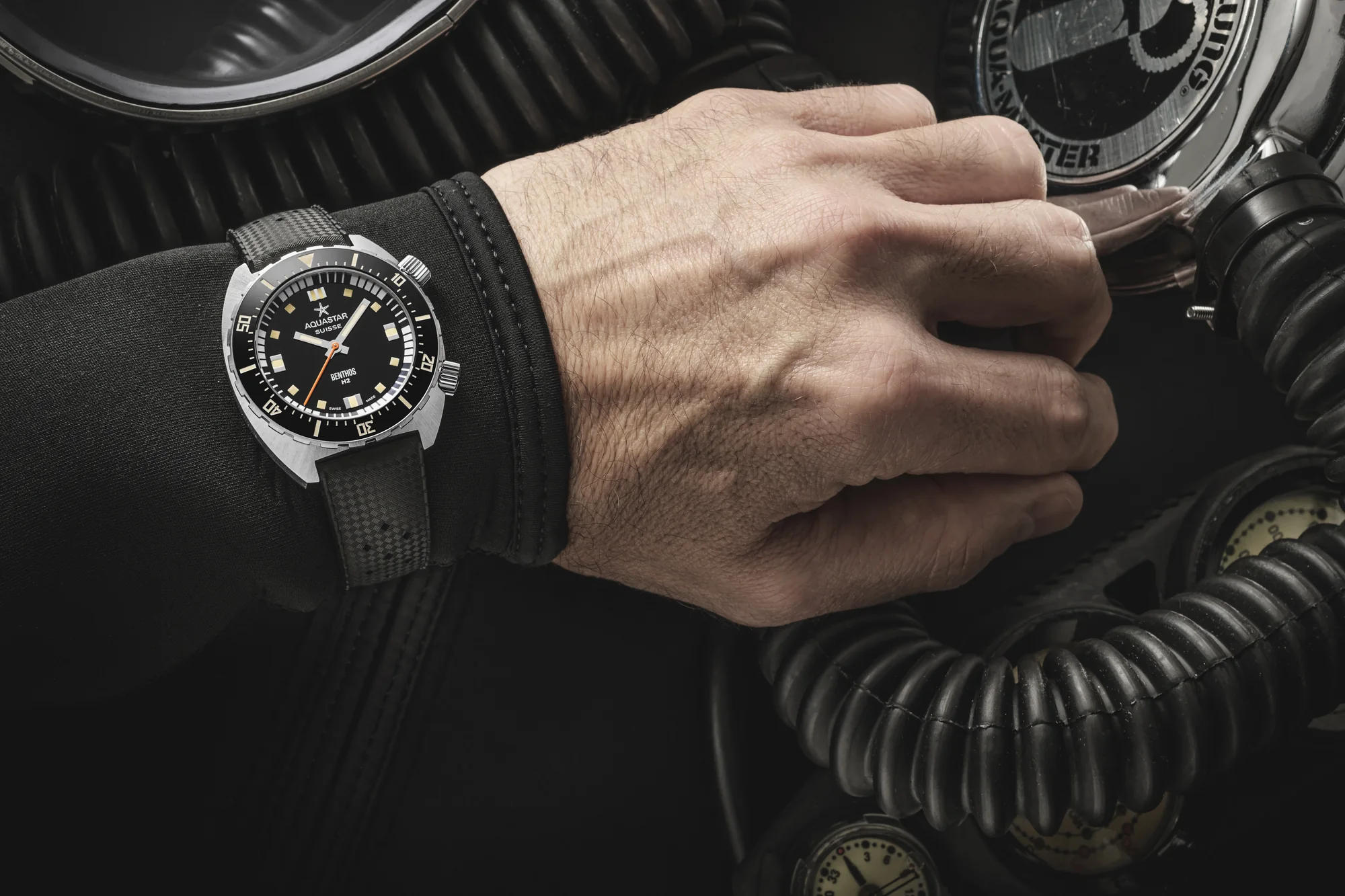
A dive watch can have impeccable specs on paper and still feel wrong the moment it hits the wrist. That disconnect is usually not about movement quality, finishing, or even diameter alone. It is about proportion. This dive watch proportions guide is built for collectors and serious buyers who know that the difference between a watch that looks purposeful and one that wears awkwardly often comes down to a few millimeters used well.
Dive watches have always lived under stricter design conditions than dress watches or casual sports models. They need legibility, secure handling, meaningful water resistance, and a case architecture that can survive pressure, impact, and daily abuse. Those demands shape the watch. The best examples balance those requirements without becoming bloated, top-heavy, or visually confused.
Why dive watch proportions matter more than raw size
A 40mm dive watch can wear larger than a 42mm one. An apparently slim case can feel thicker if the mid-case is tall and the caseback protrudes. A broad bezel can visually shrink a dial, while a wide dial opening can make the same watch feel more expansive on the wrist. Proportion is not one measurement. It is the relationship between all of them.
That is especially true in heritage-informed dive watches. Many historic professional models were compact by modern standards, yet they delivered remarkable presence because every element served a purpose. Case diameter, bezel width, lug length, crystal profile, and handset scale worked together. When a reissue or modern dive watch ignores those relationships, it may be technically impressive but lose the discipline that gave the original its authority.
The core measurements in any dive watch proportions guide
Diameter gets the most attention because it is easy to compare, but it is only the starting point. For most buyers, the real wearing experience is shaped by diameter, lug-to-lug length, thickness, lug width, and bezel-to-dial ratio.
Case diameter
For modern dive watches, 38mm to 42mm is the range where most wrists find a natural fit. At 38mm to 39mm, a diver can feel compact, agile, and very close to mid-century tool watch norms. At 40mm to 41mm, you often get the strongest balance of presence and versatility. At 42mm and above, the watch begins to make a more assertive statement, which can be right for professional lineage or heavier gear-driven use, but it also raises the stakes for every other dimension.
Diameter alone can mislead. A watch measured across the bezel may sound substantial, yet if the dial opening is narrow it can wear restrained. Another model with short printed minute tracks and a wide crystal opening may appear larger even at a smaller stated size.
Lug-to-lug length
If diameter is the headline figure, lug-to-lug is often the number that decides comfort. This is the span from the tip of the upper lugs to the lower lugs, and it determines how much of your wrist the watch occupies.
For many wrists, once lug-to-lug approaches or exceeds the flat width of the wrist, the watch begins to overhang or lose visual balance. A 41mm diver with a 47mm lug-to-lug may wear better than a 39mm diver with long, straight lugs stretching past 49mm. Curved lugs help, but they do not erase excess length.
On a serious dive watch, shorter and more disciplined lug architecture usually feels more intentional. It keeps mass centered and helps a steel bracelet or rubber strap wrap naturally.
Thickness
Dive watches earn some of their height. Water resistance, crystal strength, bezel construction, and automatic movements all take space. Still, thickness must be judged in context.
A watch at 13mm can wear cleanly if the caseband is sculpted, the crystal is integrated well, and the caseback does not create a tall center of gravity. A watch at 12mm can feel clumsy if the sides are slab-like and the bezel is too thin to visually break up the profile. The key is not pursuing the thinnest possible diver. It is avoiding unnecessary bulk.
A useful rule is to examine where the thickness lives. Domed sapphire can add vintage character without making the watch feel brick-like. Excessive mid-case height, by contrast, is harder to hide and easier to feel.
Bezel-to-dial ratio
This is where many dive watches either look like instruments or look like generic sports watches with timing bezels added later. A proper diver usually benefits from a bezel with enough width to feel functional and secure. Too narrow, and the watch can lose its underwater identity. Too wide, and the dial can feel pinched.
The strongest bezel-to-dial ratio depends on the watch’s intent. A chronograph diver may already have a busier dial, so the bezel should frame that complexity without choking it. A time-only diver can tolerate a broader bezel if the dial furniture remains bold and legible.
Dive watch proportions guide for real wrist fit
Wrist size matters, but wrist shape matters just as much. A flat 6.75-inch wrist can carry a different case than a round 7-inch wrist. That is why trying to reduce fit to simple diameter charts usually fails.
For wrists under 6.75 inches, many divers between 38mm and 40mm with a lug-to-lug under 47mm will feel composed and usable. For wrists in the 6.75- to 7.25-inch range, 39mm to 41mm often lands in the sweet spot. Above that, 41mm to 42mm can look entirely natural, provided the lugs remain controlled and the watch is not excessively tall.
But these are starting points, not laws. Some collectors prefer a smaller, authentic vintage stance. Others want the visual authority of a larger professional instrument. Both are valid. The mistake is assuming bigger always means more capable, or smaller always means more refined.
The role of strap and bracelet width
Lug width shapes how planted a dive watch feels. A 20mm bracelet on a 40mm case is a classic formula because it supports the case without making the watch look bottom-heavy. At 21mm or 22mm, the watch gains more visual muscle and often a more modern stance.
There are trade-offs. Wider straps can stabilize a head-heavy watch, especially on rubber. Narrower bracelets can make a case appear larger, sometimes in a good way, sometimes not. If the taper is too dramatic, the watch may lose some of its tool-watch credibility. If there is no taper at all, comfort can suffer.
Dial furniture and visual weight
Large hands, oversized hour plots, and a strong minute track can make a moderate-sized diver feel substantial. That is often preferable to simply increasing case diameter. Professional underwater legibility comes from contrast and scale on the dial, not from inflating the watch indiscriminately.
This is where many heritage designs still teach the right lesson. The best vintage-derived divers were not trying to dominate the wrist. They were trying to communicate instantly, under pressure, in poor light, with wet hands and limited time.
Where modern dive watches go wrong
The most common error is proportion inflation. Brands enlarge an archival design to satisfy modern assumptions, then add thicker sapphire, wider rehauts, taller bezels, and heavier bracelets. The result can be a watch that has all the historic cues but none of the original restraint.
Another mistake is chasing versatility at the cost of identity. A diver trimmed too aggressively can become a generic everyday sports watch. A bezel that is too thin, hands that are too delicate, or a dial opening that is too fashion-oriented strips away the instrument character that made dive watches compelling in the first place.
A well-judged modern diver respects both realities. It should wear comfortably in daily life, yet still look built for salt, pressure, and timing duty. That balance is where true design discipline shows itself.
How to judge proportions before you buy
Start with lug-to-lug, not diameter. Then look at side-profile photography and ask where the height sits. Check whether the dial opening feels in proportion to the bezel. Consider the bracelet end links, because male end links can add effective length and change the fit more than expected.
Then think honestly about how you wear watches. If you spend long days at a desk, thickness and case flank shape matter more. If you favor rubber straps and want a compact instrument feel, shorter lugs and a secure bezel edge should move up your list. If your collection already leans large, a more disciplined diver may bring more versatility than another oversized case.
For heritage-driven brands such as Aquastar, the strongest pieces tend to understand that historic proportion is not nostalgia for its own sake. It is part of the watch’s engineering logic. Cases designed for underwater use developed their form through need, not marketing.
The right dive watch should feel settled on the wrist, legible at a glance, and coherent from every angle. When those proportions click, the watch stops asking for attention and starts earning trust. That is usually the moment you know you have found the one worth wearing hard for years.