
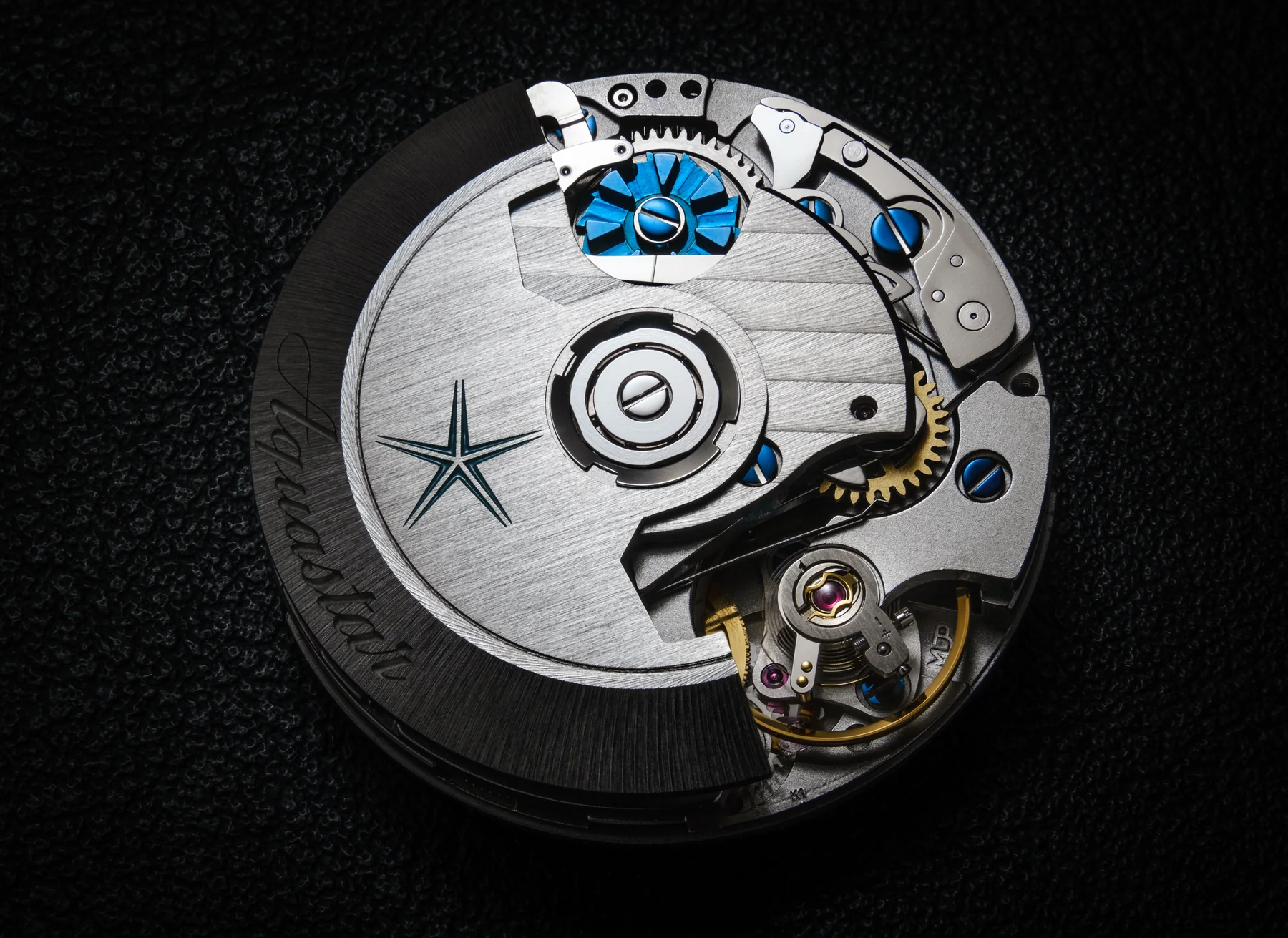
A good vintage-style chronograph is decided in seconds. You see the dial layout, the bezel, the hand shapes, the proportion between case and crystal, and you know whether it carries real historical weight or just borrows the costume. That is why the market for top vintage style chronographs has become so crowded. Many watches get the colors right. Far fewer get the architecture, restraint, and purpose right.
For serious buyers, that distinction matters. A chronograph with vintage cues should do more than imitate patina or print a faux-retro logo on the dial. The best examples preserve the design logic of an earlier era while meeting modern expectations for reliability, serviceability, and wearability. They feel connected to an archive, not assembled from trend forecasts.
What makes the top vintage style chronographs stand out
The strongest vintage-inspired chronographs share one trait: cohesion. Every element belongs to the same historical language. The dial, pushers, tachymeter or diving scale, case thickness, lug shape, and crystal profile should support one another. If one component leans 1940s, another 1970s, and another fully modern luxury-sport, the watch usually feels confused on the wrist.
Proportion is where good intentions often fail. True mid-century chronographs were typically compact by modern standards, but shrinking a case without rethinking bezel width, subdial spacing, and lug span can leave a reissue looking cramped. On the other hand, enlarging an archival design too aggressively destroys the elegance that made the original compelling. The best watches respect the tension between vintage size and modern presence.
Material choices matter too. Acrylic crystals have undeniable charm, but sapphire is the practical answer for most buyers. The same goes for movements. A hand-wound caliber may be historically appropriate and deeply satisfying, yet many owners will prefer the convenience and durability of a modern automatic movement. There is no universal answer here. It depends on whether you value ritual, specification, or strict historical fidelity.
8 top vintage style chronographs worth knowing
1. Aquastar Airstar Chronograph
A chronograph with true dive-watch blood is rare enough. One with coherent historical credibility is rarer still. The Airstar Chronograph succeeds because it does not treat vintage design as decoration. Its visual identity is rooted in a period when chronographs were built as instruments first, with compact dimensions, sharp legibility, and dial balance that serves function before fashion.
This is where heritage matters. A watch born from a specialist tool-watch lineage carries a different authority than a broad luxury brand trying on retro styling. The appeal is not nostalgia for its own sake. It is continuity – a design language preserved because it still works.
2. Omega Speedmaster ’57
The Speedmaster ’57 is one of the cleaner examples of how to modernize a legend without sanding off its personality. It retains the straight-lug spirit and restrained dial layout associated with early Speedmasters, but the finishing and movement technology are unmistakably contemporary.
Its trade-off is obvious. This is not a strict reproduction, and it does not try to be. Buyers looking for the rougher, more elemental feel of a true vintage-inspired tool chronograph may find it slightly polished. Buyers who want heritage with modern execution will see that as a strength.
3. TAG Heuer Carrera Glassbox
The Carrera has always worked because the original formula was disciplined. The latest Glassbox models understand that. The curved crystal, open dial, and clean sub-registers give the watch vintage character without forcing artificial aging or exaggerated throwback details.
What makes it compelling is clarity. It feels motorsport-driven, not generic retro. It also wears with more visual fluidity than many modern chronographs, which can become overly technical in their design language.
4. Longines Heritage Classic Chronograph
Longines has one of the deepest archives in Swiss watchmaking, and when it exercises restraint, the results are convincing. The Heritage Classic Chronograph is a strong example. It captures the formality and elegance of mid-century chronographs without drifting into costume-piece territory.
This watch is less aggressive than many sport chronographs on the market. That will appeal to collectors who want vintage style in a more refined, dress-capable package. If your ideal chronograph needs rotating bezels, oversized lume, or obvious tool-watch energy, this may feel too reserved.
5. Breitling Top Time
The modern Top Time has done well because it understands the emotional side of vintage design. It is playful where many brands are self-serious, and that confidence helps. The dial executions, cushion-inspired forms, and motorsport associations give it a distinct personality.
Still, personality is not the same as purity. Some references lean harder into modern lifestyle positioning than strict archival faithfulness. That is not a flaw if you want a vintage-style chronograph with energy and character rather than museum-like restraint.
6. Hamilton Intra-Matic Chronograph
Hamilton’s Intra-Matic Chronograph remains one of the most accessible entries in this category, and accessibility should not be mistaken for compromise. The panda and reverse-panda dial approach is familiar for a reason – it works. High contrast, clean symmetry, and uncomplicated case lines deliver immediate appeal.
Its strongest feature is honesty. It does not pretend to be something overly exotic. It gives buyers a straightforward vintage racing chronograph profile with solid everyday usability. For many enthusiasts, that is enough.
7. Zenith Chronomaster Original
Zenith occupies an important place in chronograph history, and the Chronomaster Original uses that lineage well. The tri-color registers, compact proportions, and sharply faceted case create a watch that feels historically anchored while still mechanically ambitious.
This is one of the better examples of a watch that delivers both archive credibility and movement interest. The high-frequency caliber gives it serious enthusiast appeal. The trade-off, naturally, is cost. You are paying not only for design, but for one of the category’s most historically significant chronograph pedigrees.
8. Tudor Black Bay Chrono
The Black Bay Chrono is a more divisive pick, but it deserves a place in the conversation because it shows how vintage style can be filtered through a contemporary sport-watch lens. The snowflake hands, bold case construction, and muscular bracelet give it a heavier modern footprint than purists might prefer.
Yet it works for buyers who want some vintage chronograph cues without sacrificing presence or robustness. It is less delicate, less literal, and more versatile as a daily sports watch. Whether that makes it better depends entirely on what you expect from the category.
How to judge a vintage-style chronograph before you buy
Start with the case. Diameter alone tells you very little. Look at lug-to-lug length, thickness, bezel width, and how high the crystal sits above the case. A 39mm chronograph can wear larger than a 41mm one if the dial opening is broad and the lugs are long and flat.
Then study the dial. The best vintage-inspired pieces tend to show restraint. Printing is crisp but not cluttered. Subdials feel properly spaced. The handset belongs to the era the watch is referencing. A beautiful case cannot rescue a dial that feels overdesigned.
The movement deserves equal scrutiny. Column-wheel architecture, vertical clutches, hand-wound layouts, and power reserve figures all matter, but not every buyer needs the same thing. If the watch will be worn often, convenience and service access may outweigh romantic movement specifications. If collectability and mechanical character are the priority, a more traditional caliber may justify the extra attention it demands.
Finally, ask whether the watch has a real reason to exist. The strongest top vintage style chronographs are not assembled from generic retro signifiers. They are tied to a genuine archive, a historically coherent design code, or a professional use case that shaped the watch in the first place. That sense of purpose is hard to fake, and experienced collectors usually recognize it immediately.
Why this category keeps growing
The appetite for vintage-inspired chronographs is not just a passing taste cycle. It reflects fatigue with oversized, over-styled sports watches that confuse mass with presence. Collectors want proportion again. They want details that were drawn by necessity, not committee. They want watches that feel specific.
Chronographs are especially suited to this return because the genre carries so much visual and technical history. Racing, aviation, diving, military timing, industrial timing – each left a mark on the design language. When a modern brand treats that history with discipline, the result can feel richer than either a pure reissue or a fully contemporary design.
The challenge is knowing when vintage style is backed by substance. A good watch can borrow the mood. A great one preserves the logic. If you are shopping this category, buy the chronograph that still makes sense once the nostalgia wears off. That is usually the one you keep.