
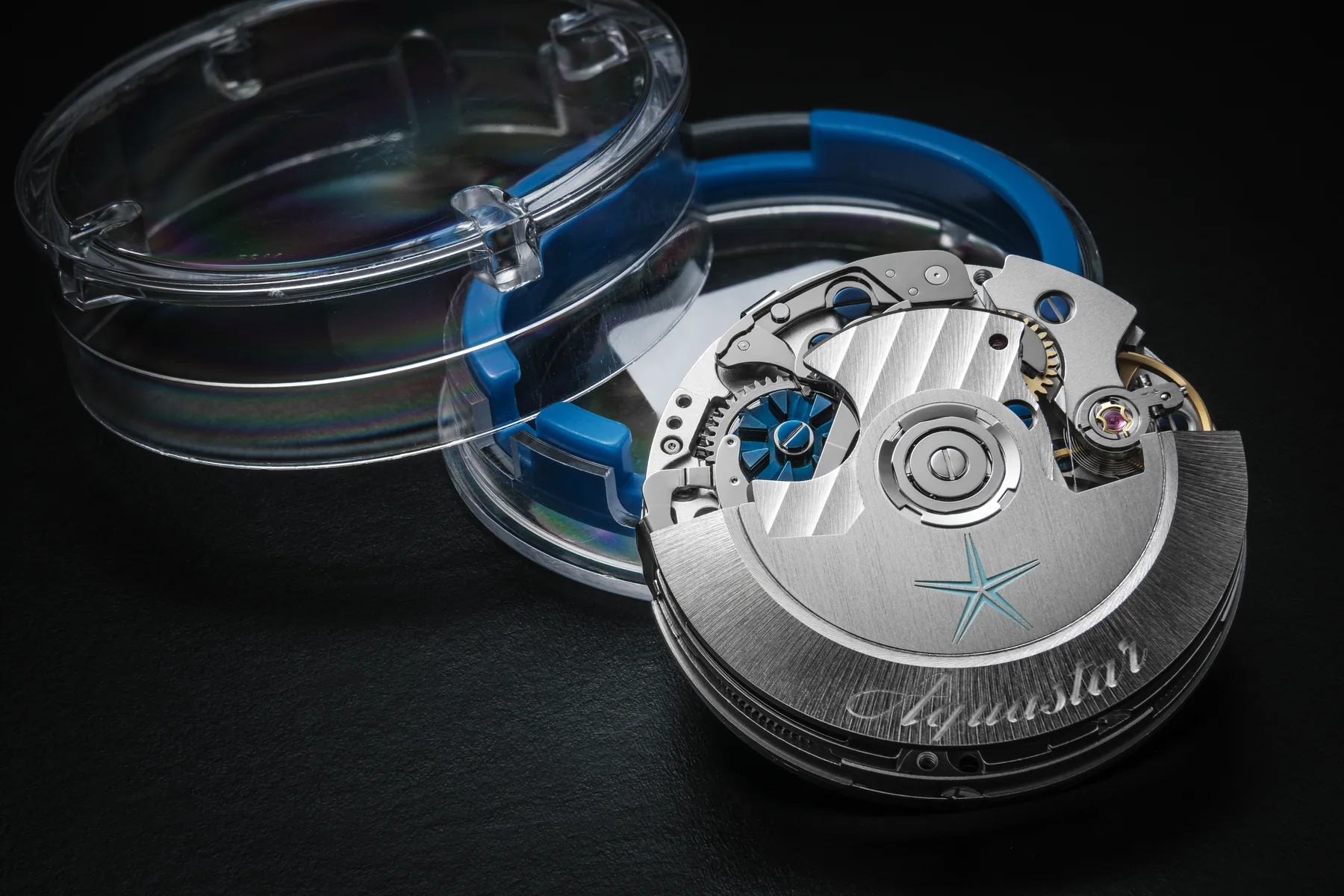
Behind almost every mechanical Swiss watch sits a small, intricate engine called the movement, and behind that movement sits an industry most buyers never see. When people compare watches, they tend to focus on the case, the dial, and the brand on the dial. Yet the question of who actually designs and builds the movement inside is one of the most important things to understand about Swiss watch movements. This guide explains what an ebauche maker does, how brands integrate movements into finished watches, and why independent specialists such as ETA, Sellita, and La Joux-Perret matter, especially in dive watches and premium chronographs.
What Is a Watch Movement, and Why Sourcing Matters
A mechanical movement is the assembly of gears, springs, and regulating parts that turns stored energy into the steady motion of the hands. It is the single most complex component of a watch, and designing one from a blank sheet of paper is enormously expensive. Tooling, prototyping, testing, and the machinery to produce parts to micron tolerances can take years and large capital outlay before a single watch is sold.
For this reason, the Swiss industry has long worked on a division of labour. Some companies specialise in producing movements, or the unfinished base of a movement, and supply them to watch brands who then case them up, regulate them, and finish them to their own standards. This is not a shortcut or a sign of lower quality. It is the structure that has allowed Switzerland to produce reliable mechanical watches at scale for more than a century, and it is the reason a relatively small brand can still offer a robust, serviceable calibre.
What an Ebauche Maker Actually Does
The French word ebauche refers to the unfinished base movement: the mainplate, bridges, gear train, barrel, and the rough mechanism, supplied without the regulating organ fully fitted, and usually without final decoration or adjustment. An ebauche maker engineers and manufactures this base, often in large volumes, so that it can be bought by many different brands.
The buying brand then takes that base and adds value. That can mean fitting the escapement and balance, regulating the watch to tighter accuracy, decorating the bridges, adding a custom rotor, and casing the movement to its own design. Two watches built on the same ebauche can end up performing quite differently depending on how carefully each brand assembles, regulates, and tests the finished product. Understanding this helps explain why two watches sharing a base calibre can sit at very different price points.
ETA: The Backbone of the Swiss Industry
ETA is the largest and best known movement manufacturer in Switzerland and forms part of the Swatch Group. For decades its calibres have been the default mechanical engines of the Swiss industry, found in watches across an enormous range of prices. The automatic families that ETA produces have powered countless dive watches and everyday three-hand watches, and they are prized for being robust, accurate, and well understood by watchmakers everywhere.
That ubiquity is exactly the point. Because so many ETA movements have been made and serviced over the years, parts and expertise are widely available, which is good news for anyone who wants a watch they can keep running for decades. A movement that any competent watchmaker can open, diagnose, and repair is a quiet but real advantage, particularly for a tool watch that is meant to be used rather than left in a drawer.
Sellita: The Independent Alternative
Sellita began as a company that assembled movements for other firms, including ETA, and over time developed its own line of calibres. When the Swatch Group signalled it would reduce supply of ETA movements to brands outside the group, Sellita became the obvious independent alternative, and today it is a major supplier in its own right.
The Sellita SW200-1 is one of the most widely used automatic movements in the modern Swiss industry. It is a 26-jewel automatic calibre that has become a workhorse for independent and mid-sized brands building reliable, serviceable watches. The Aquastar Benthos Professional uses the Sellita SW200-1, a deliberate choice in favour of a movement that is proven, accurate, and straightforward for watchmakers to service anywhere in the world. For a dive watch built to be worn hard, that practicality counts for a great deal.
La Joux-Perret: Specialists in Complications
Not every movement is a simple time-and-date automatic. Chronographs, with their stopwatch function and additional pushers, are far more complex, and this is where specialist movement makers earn their reputation. La Joux-Perret is an independent Swiss manufacturer known for developing and producing higher complication calibres, including chronograph movements used in premium watches.
Aquastar uses La Joux-Perret calibres in its chronographs, including the L113 and the related L100 family. These are column wheel chronograph movements, an architecture associated with smoother pusher action and finer build quality than the simpler cam-actuated approach. Choosing a specialist chronograph movement reflects a decision to prioritise the mechanical quality of the stopwatch function, which is the heart of a chronograph and historically central to dive timing.
In-House vs Supplied Movements: A Fairer Way to Think About It
Marketing language often treats an in-house movement, one designed and built by the brand itself, as automatically superior to a supplied one. The reality is more nuanced. An in-house calibre can be a genuine engineering achievement, but it can also be harder and more expensive to service, because only the originating brand may hold the parts and knowledge.
A well-chosen supplied movement, by contrast, brings decades of refinement, wide parts availability, and a global network of watchmakers who already know how to service it. For a tool watch, and especially a dive watch that may be worn for many years, that serviceability is a feature, not a compromise. The honest question is not whether a movement is in-house, but whether it is accurate, reliable, and repairable.
What This Means When You Buy a Watch
When you compare Swiss watch movements, look past the marketing and ask a few practical questions. Which calibre is inside, and who makes it? Is it widely serviceable? What is the power reserve and accuracy specification? Is it an automatic or a manual wind, and does that suit how you will wear the watch? A clear answer to these questions tells you more about a watch’s long-term character than the name printed on the dial.
- ETA: the industry standard, proven and widely serviceable, part of the Swatch Group.
- Sellita: the leading independent alternative, with the 26-jewel SW200-1 as a modern workhorse.
- La Joux-Perret: a specialist in complications, including column wheel chronograph calibres.
Aquastar draws on this ecosystem deliberately: the Sellita SW200-1 in the dive-focused Benthos Professional, and La Joux-Perret column wheel chronograph calibres where the stopwatch function takes centre stage. If you want to see how a movement choice translates into a finished dive watch, explore the Benthos collection and read the calibre details listed on each model page.