Posted on

Waterproof vs water resistant watches: what collectors need to know

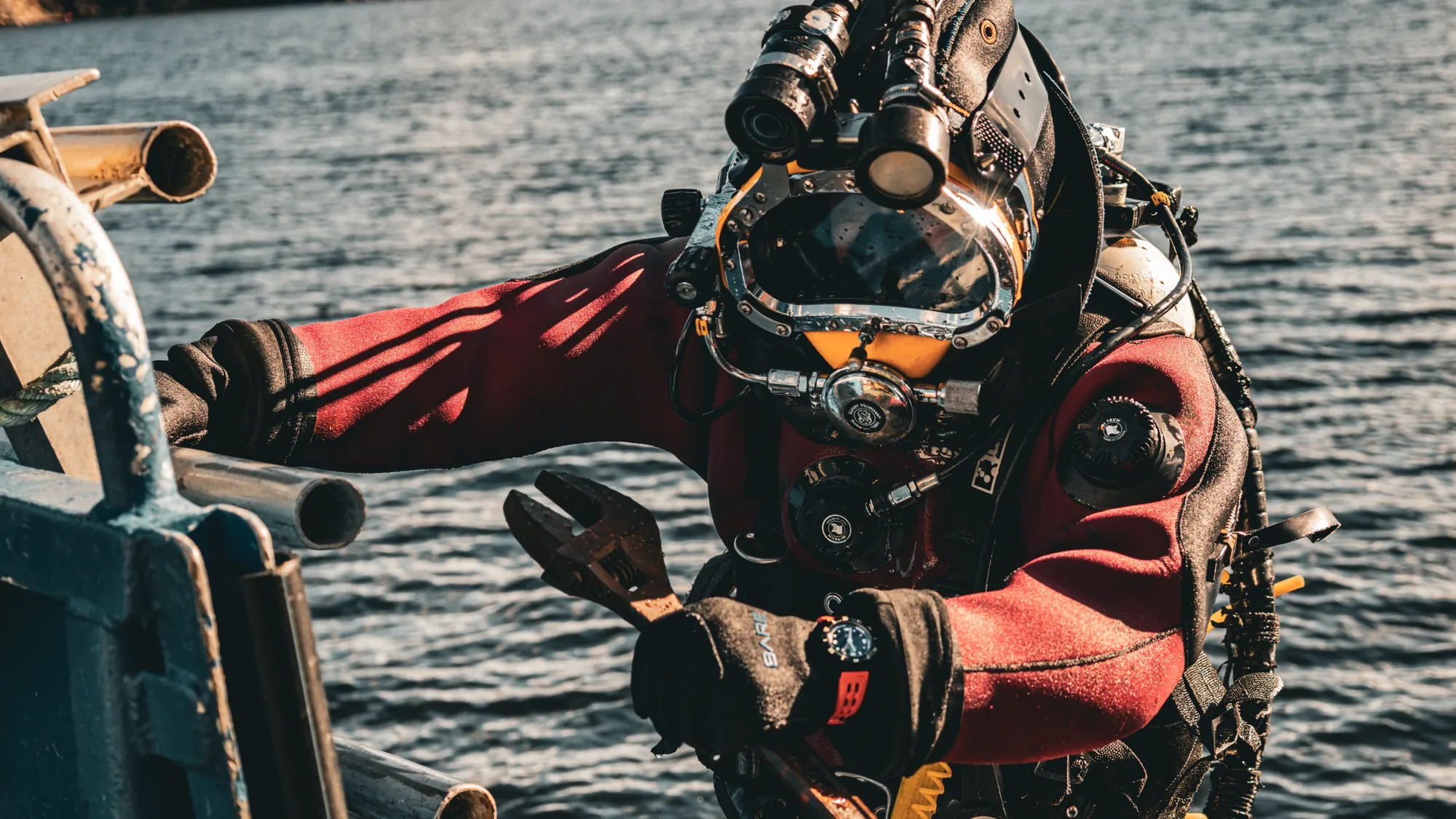
A commercial diver in a Kirby Morgan helmet climbing aboard a dive boat, wearing an Aquastar Benthos Professional

Waterproof Vs Water Resistant Watches: at a glance

Waterproof vs water resistant watches: what collectors need to know about ratings, ISO 6425, depth markings and what your watch actually survives. Use this guide on waterproof vs water resistant watches to weigh design choices, engineering trade-offs and how the category translates to real Aquastar dive watches.

TopicWaterproof vs water resistant watches
Read time5-8 min
SourceAquastar editorial

Waterproof vs water resistant watches: what collectors need to know - waterproof vs water resistant watches

The words “waterproof” and “water resistant” appear on watch dials, spec sheets, and vintage advertisements with equal confidence, yet they carry fundamentally different meanings. For collectors and enthusiasts, treating them as interchangeable is not just a semantic error; it is a practical risk that can result in damaged movements, voided warranties, and ruined pieces. Understanding the distinction matters whether you are acquiring a vintage skindiver, a modern professional dive watch, or anything in between. This article covers the regulatory history behind both terms, how resistance ratings are measured and applied, a direct comparison of the two standards, and a practical framework for matching any watch to its intended environment.

Table of Contents

Key Takeaways

PointDetails
No true waterproof watchesThe term ‘waterproof’ is banned and misleading; only ‘water resistant’ is recognized in modern standards.
Lab ratings vs real useATM or meter ratings are tested in labs and may not reflect actual use during swimming or diving.
Select for your activityChoose your watch’s water resistance level based on your real-world activities, not just terminology.
Regular maintenance mattersRoutine servicing and seal checks are vital for preserving water resistance in any watch.

What does ‘waterproof’ really mean?

The short answer is that no modern watch is truly waterproof. The Federal Trade Commission banned the term in the 1960s after it became clear that the label created unrealistic expectations among consumers. Watches marketed as “waterproof” were regularly returned with water damage, and the gap between the claim and reality was impossible to close. Today, “waterproof” is banned in modern watch marketing, and reputable brands use “water resistant” instead.

The problem with “waterproof” was never just legal. It was psychological. Owners who saw that word on a dial assumed total protection under any condition, at any depth, for any duration. That assumption led to watches being worn during deep dives, high-pressure showers, and water sports far beyond any tested limit. The result was predictable.

“No watch can be guaranteed impervious to water under all conditions. Water resistance is always a matter of degree, not an absolute state.”

Vintage advertisements and original packaging from the 1950s and 1960s still use the term freely, which creates a specific hazard for new collectors. A piece described as “waterproof” in its original catalog does not meet any modern standard. The seals have aged, the gaskets have compressed, and the rating, whatever it once was, no longer applies. Collectors exploring spotting genuine dive watches quickly learn that original labeling is a historical artifact, not a functional guarantee.

High-end watchmakers now submit their pieces to standardized ISO testing protocols, which produce documented, reproducible resistance ratings. Those ratings are expressed in meters, ATM (atmospheres), or Bar, and each comes with specific test conditions. The shift from “waterproof” to “water resistant” was not just a regulatory compliance exercise. It was a move toward precision and honesty that serious collectors should appreciate.

Key reasons “waterproof” became obsolete in professional watchmaking:

  • No universal test existed to verify the claim
  • Seals degrade over time, making any permanent claim impossible
  • Dynamic water pressure during movement always exceeds static depth ratings
  • Consumer protection law required verifiable, testable standards
  • ISO 6425 established a rigorous benchmark that replaced subjective claims

How water resistance is measured

After dispelling the myth of “waterproof,” it is essential to understand how water resistance is properly defined and measured. The three units you will encounter are meters (m), ATM (atmospheres), and Bar. One ATM equals one Bar and roughly equals 10 meters of static water depth. These units are often used interchangeably on spec sheets, though meters remain the most intuitive reference for divers.

The critical word in that definition is static. Ratings measure static lab pressure, but real-world dynamic pressure from movement often exceeds the stated figure. A watch rated to 100m does not automatically survive the impact of a cannonball dive into a pool, because the instantaneous pressure spike at water entry can far exceed what the rating covers.

ActivityMinimum recommended rating
Handwashing, rain exposure30m / 3ATM
Swimming, snorkeling100m / 10ATM
Recreational scuba diving200m / 20ATM
Professional or saturation diving300m+ / 30ATM+

Think of the rating as a laboratory maximum, not a real-world ceiling. The test is conducted at room temperature with still water and controlled pressure application. Your wrist is not a laboratory.

The numbered steps below describe how a standard ISO 6425 pressure test works:

  1. The watch is placed in a pressure chamber filled with water
  2. Pressure is raised to 125% of the stated rating and held for a defined period
  3. The watch is inspected for any moisture ingress inside the crystal
  4. A condensation test is performed by placing the watch on a heated surface and applying a cold water drop to the crystal
  5. A passing result confirms the watch meets its stated resistance at the time of testing

For collectors investing in dive watch case construction, understanding the role of screw-down crowns, case back gaskets, and crystal seals is essential. Each is a potential point of failure.

Dive watch gaskets and components close-up

Pro Tip: Never expose a watch to water when the crown is unscrewed or in a pulled position. Even a 300m-rated professional dive watch will flood immediately if the crown is not fully secured. This is the single most common cause of water damage in high-rated watches, and it is entirely preventable. Watches built for professional diving reliability incorporate screw-down crowns precisely to eliminate this risk.

Waterproof vs water resistant: direct comparison

Now that you know how resistance ratings work, seeing the direct side-by-side differences clears up any lingering confusion. The core issue is that “waterproof” and “water resistant” are not interchangeable; only “water resistant” is regulated, with specific standards governing how the claim is tested and documented.

AttributeWaterproofWater resistant
Regulatory statusBanned in modern marketingRegulated by ISO 6425 and FTC
Testing standardNone (historical claim only)Standardized pressure and condensation tests
Warranty coverageNot applicableCovered under defined conditions
Real-world reliabilityUnknown, unverifiableDocumented to tested rating
Collector riskHigh, especially on vintage piecesLow when rating matches activity

Several practical points follow from this comparison:

  • A watch with a documented 200m water resistance rating is objectively more trustworthy than one labeled “waterproof” with no test data
  • Regulatory standards protect buyers by requiring manufacturers to back their claims with reproducible test results
  • Professional watches, sports watches, and dress watches use different resistance standards because their use cases differ significantly
  • Dress watches rated at 30m are not designed for swimming; professional dive watches rated at 300m+ are engineered for sustained underwater use
  • Collectors evaluating top dive watch brands should prioritize documented ratings over marketing language

The distinction also matters when insuring or reselling a piece. An insurer or buyer can verify a water resistance rating. They cannot verify a “waterproof” claim.

Choosing the right watch for your needs

After understanding what the ratings mean, it is time to apply this knowledge to make smart selections as a watch enthusiast or collector. The most common mistake is selecting a watch based on aesthetics or brand prestige without confirming that the resistance rating matches the intended use.

A 30m/3ATM watch handles splashes, 100m/10ATM suits swimming, and 200m or more is appropriate for diving. These are not arbitrary thresholds. They reflect the actual pressure demands of each activity.

Here is a practical selection sequence:

  1. Define your primary use case before evaluating any watch
  2. Identify the minimum resistance rating required for that activity using the table above
  3. Read the spec sheet carefully, confirming the rating is ISO-tested, not self-declared
  4. Check whether the crown is screw-down or push-pull, as this affects real-world reliability significantly
  5. Confirm the service interval for gasket replacement with the manufacturer or authorized service center
  6. For dive watches, verify the bezel is unidirectional and the crystal is mineral or sapphire

Pro Tip: Annual pressure testing is not optional for any watch used in water. Gaskets degrade with temperature changes, UV exposure, and chemical contact. A watch that passed its factory test three years ago may no longer meet its stated rating today. Collectors who take collecting dive watches seriously schedule pressure checks as part of routine maintenance, not as a response to problems.

For those drawn to purpose-built instruments, military dive watches represent the most demanding end of the specification range, where resistance ratings are tested under conditions that exceed recreational diving by a significant margin.

Common mistakes with water resistance

Equipped with the selection framework, beware of these hazards that even seasoned collectors sometimes overlook. Users often expose watches beyond rated limits, assume vintage “waterproof” means modern reliability, and neglect seals or crown position. Each of these errors is avoidable with the right habits.

The most frequent mistakes include:

  • Wearing a watch in a hot tub or sauna, where heat degrades gaskets far faster than cold water
  • Trusting a vintage “waterproof” label without having the watch pressure tested by a qualified watchmaker
  • Ignoring the crown position before water exposure, which is the leading cause of preventable flooding
  • Skipping service intervals and assuming a watch that passed last year will pass this year
  • Overestimating a rating by confusing static lab pressure with real-world dynamic pressure

“Even a watch rated to 300m can fail if the crown gasket has not been replaced during service. The rating reflects the watch as tested, not as aged.”

Servicing routines that prevent water ingress include replacing all gaskets at every service, pressure testing after any case opening, and avoiding temperature extremes immediately before or after water exposure. A watch moved from a cold environment into warm water experiences rapid thermal expansion that can compromise seals temporarily.

For collectors weighing automatic vs manual dive watches, note that automatic movements with exhibition case backs introduce an additional sealing surface that requires careful attention during service.

Why ‘waterproof vs water resistant’ is the wrong question for collectors

Veteran collectors understand something that newcomers often miss: the label on the dial is the least important factor in a watch’s long-term water performance. What matters is the maintenance history, the condition of the seals, and whether the watch has been used within its rated parameters.

The obsession with finding a “waterproof” watch is a distraction. No such thing exists in modern horology, and chasing the highest ATM rating without a corresponding commitment to regular pressure testing and servicing produces worse outcomes than owning a moderately rated watch that is properly maintained. A 200m watch serviced annually outperforms a 1000m watch with degraded gaskets every time.

The smartest approach is scenario-based selection combined with scheduled maintenance. Define the environment the watch will operate in, match the rating to that environment with appropriate margin, and build a service schedule around the manufacturer’s recommendations. Collectors who apply this framework, rather than focusing on label language, consistently report fewer failures and greater confidence in their pieces. Exploring tool watches through this lens reveals that the best instruments are defined by reliability under specific conditions, not by the most impressive number on the spec sheet.

Explore professional-grade dive watches and learning resources

For collectors and enthusiasts who want to go beyond label reading and understand the engineering behind reliable underwater performance, Aquastar provides both the timepieces and the technical knowledge to make informed decisions.
https://aquastar.ch

Aquastar has been engineering professional dive watches since the 1960s, filing patents that shaped the modern dive watch category and producing the first analog dive computer. The resources available cover everything from must-have diver watch features to a detailed comparison of automatic vs manual dive watches. For those ready to see what purpose-built professional dive watches look like in practice, the full Aquastar dive watch collection is the logical next step.

Frequently asked questions

Can I swim or dive with a watch labeled only as water resistant?

You can swim with a water-resistant watch if it carries at least a 100m/10ATM rating; for recreational diving, only use watches rated 200m or higher to ensure adequate pressure margin.

Why do some old watches say ‘waterproof’ but modern ones do not?

The FTC banned “waterproof” in watch marketing during the 1960s because the claim was unverifiable and misleading; current regulatory standards only recognize “water resistant” with documented test results.

How often should water resistance be tested?

Experts recommend testing at least annually and always after any case opening, battery change, or service, because neglecting pressure tests leads to failures even in high-rated watches.

Does a higher ATM rating always mean better protection?

A higher ATM reflects greater lab-tested resistance, but real-world dynamic pressure can exceed stated ratings, meaning seal condition, crown position, and maintenance history ultimately determine actual performance.

Posted on

Dive Watch Timing Bezels: Safety, Use, and Pro Tips

Aquastar dive watch

Dive Watch Timing Bezels: at a glance

Learn how dive watch timing bezels work, their critical safety role, and proper usage techniques. Discover why professional divers rely on mechanical…. Use this guide on dive watch timing bezels to weigh design choices, engineering trade-offs and how the category translates to real Aquastar dive watches.

TopicDive watch timing bezels
Read time5-8 min
SourceAquastar editorial

Dive Watch Timing Bezels: Safety, Use, and Pro Tips - dive watch timing bezels

Most divers believe timing bezels track remaining air supply. This is a dangerous misconception. A timing bezel’s primary function is measuring elapsed time underwater, particularly for decompression and safety stops. Understanding how these mechanical instruments work can mean the difference between a safe ascent and decompression sickness. You’ll learn the true purpose of timing bezels, how to use them correctly during dives, and why professional divers still rely on this mechanical backup even with modern dive computers.

Table of Contents

Key Takeaways

PointDetails
Purpose of timing bezelThe timing bezel helps divers track elapsed time for decompression and safety stops, not air supply.
Backup safety toolTiming bezels remain essential mechanical backups even with modern dive computers.
Proper use mattersAlign the bezel at the start of a dive and check regularly to avoid miscalculations.
Choosing quality materialsSelect bezels made from materials like ceramic or steel for durability during frequent dives.

What is a timing bezel?

A timing bezel is a rotating ring mounted on a dive watch that allows you to monitor elapsed time during underwater activities. Unlike decorative bezels found on dress watches, dive watch bezels serve a critical safety function. The bezel features minute markings around its circumference, typically with the first 15 or 20 minutes highlighted for quick reference during safety stops.

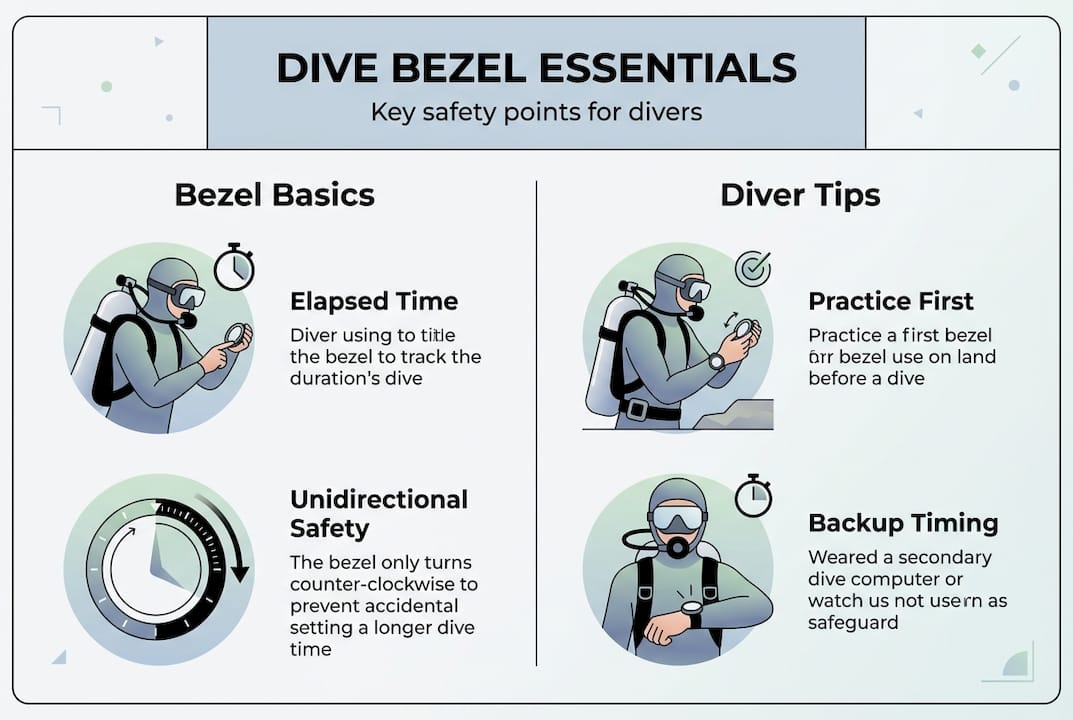
Most professional diver watch features include unidirectional bezels that rotate only counterclockwise. This design prevents accidental bumps from extending your perceived dive time, which could lead to insufficient decompression. If the bezel moves during a dive, it can only reduce the displayed elapsed time, adding a margin of safety rather than risk.

The primary applications of timing bezels include:

  • Decompression stop timing: Monitoring required stops at specific depths based on dive tables
  • Safety stop tracking: Ensuring you complete the recommended 3-5 minute stop at 5 meters
  • Dive stage management: Tracking time spent at various depths during multi-level dives
  • Bottom time calculation: Recording total time spent below the surface

Timing bezels help divers make decompression stops using dive tables by aligning the bezel to depth and time parameters. This mechanical system requires no batteries, displays no error messages, and functions reliably in conditions where electronic devices might fail.

Infographic with dive bezel key safety points

The evolution and mechanics of bezels in dive watches

Timing bezels emerged in the 1950s when recreational diving gained popularity and divers needed reliable tools to manage underwater time. Before dive computers became standard equipment in the 1980s, mechanical timing bezels were the primary method for tracking elapsed time and calculating decompression obligations. Aquastar pioneered several innovations during this era, filing patents that established standards still used in modern dive watches.

The mechanical design of timing bezels incorporates several safety features:

  1. Ratcheting mechanism: Creates distinct clicks (typically 60 or 120 per rotation) that provide tactile feedback, allowing divers to adjust the bezel even with thick gloves
  2. Unidirectional rotation: A spring-loaded pawl engages with internal teeth, permitting only counterclockwise movement
  3. Friction fit: Sufficient resistance prevents accidental rotation while allowing intentional adjustment
  4. Luminous markers: Applied to the zero marker and key intervals for visibility in low-light conditions
EraBezel InnovationSafety Impact
1950sFirst rotating bezelsBasic elapsed time tracking
1960sUnidirectional mechanismsPrevention of time extension errors
1970sImproved ratchet systemsEnhanced tactile feedback
1980sLuminous marker standardsBetter low-visibility operation
2000sCeramic insertsScratch resistance and longevity

Modern dive computers provide comprehensive data including depth, temperature, ascent rate, and nitrogen loading. However, timing bezels offer mechanical backup in case electronic dive computers fail. Battery depletion, water ingress, or electronic malfunction can render a dive computer useless, but a mechanical bezel continues functioning regardless of conditions.

When identifying genuine dive watches, examine the bezel’s construction quality and rotation feel. Professional-grade watches like the Benthos 500 Chronograph feature precisely engineered bezels with consistent click spacing and zero play in the mounting system.

Hands inspecting dive watch bezel on table

How to use a timing bezel during a dive

Operating a timing bezel correctly requires understanding both the mechanism and your dive plan. The process is straightforward but demands attention to detail, particularly when wearing gloves or managing other equipment.

Follow these steps for proper timing bezel operation:

  1. Pre-dive setup: Before entering the water, rotate the bezel so the zero marker aligns with the minute hand of your watch. Some divers prefer aligning with the hour hand for longer dives, but minute hand alignment provides greater precision.

  2. Descent monitoring: As you descend, glance at your watch to confirm the bezel hasn’t shifted. The minute hand’s position relative to the bezel’s markings shows elapsed time since you started your dive.

  3. Bottom time tracking: Throughout your dive, the minute hand moves clockwise while the bezel remains stationary. The bezel marking aligned with the minute hand indicates total elapsed time.

  4. Safety stop timing: When you reach your safety stop depth (typically 5 meters), note the bezel position. Wait until the minute hand advances the required duration, usually 3-5 minutes, before ascending.

  5. Surface interval: After surfacing, you can leave the bezel in position to track surface interval time, or reset it for the next dive.

Pro Tip: Practice bezel operation in a pool or shallow water before relying on it during deeper dives. Familiarize yourself with the click spacing and rotation resistance while wearing your diving gloves, as the tactile experience differs significantly from bare-handed operation.

A common mistake is attempting to use the timing bezel for calculating remaining air supply. Divers use timing bezels for measuring elapsed time, not to estimate air supply. Your pressure gauge or dive computer provides accurate air consumption data. The bezel tracks time only, which you then reference against your dive tables or computer to determine decompression obligations.

When comparing automatic vs manual dive watches, remember that bezel operation remains identical regardless of movement type. The bezel’s mechanical independence from the watch movement ensures it functions even if the watch stops running.

Safety stops, decompression, and what most people get wrong

The relationship between timing bezels and dive safety centers on decompression management. When you breathe compressed air underwater, nitrogen dissolves into your tissues at rates determined by depth and time. Ascending too quickly without proper decompression allows this nitrogen to form bubbles in your bloodstream, causing decompression sickness.

Bezel timing is essential for 3-5 minute safety stops at 5 meters, not for air limit estimation. Even on no-decompression dives, this precautionary stop allows excess nitrogen to off-gas, significantly reducing decompression sickness risk. The timing bezel provides a simple, reliable method for tracking this critical safety interval.

Dive computers have largely replaced manual calculations using dive tables, but they haven’t eliminated the need for timing bezels. Consider these scenarios:

SituationDive ComputerTiming Bezel
Battery dies mid-diveNon-functionalContinues working
Water ingress damageDisplays errorsUnaffected
Accidental mode changeShows incorrect dataMaintains accuracy
Extreme cold conditionsMay freeze or slowMechanical reliability

Pro Tip: Set your timing bezel at the start of your dive even when using a computer. This redundancy costs nothing and provides peace of mind. If your computer fails, you can complete your dive using the bezel and conservative dive table estimates.

The most dangerous misconception about timing bezels is that they indicate when you’ll run out of air. This misunderstanding has led to accidents where divers focused on bezel time rather than monitoring their pressure gauges. Your air consumption rate varies based on depth, exertion level, breathing efficiency, and individual physiology. No timing bezel can account for these variables.

“A timing bezel tracks one thing: elapsed time. It cannot measure air consumption, calculate nitrogen loading, or determine safe ascent rates. These functions require either dive computers or manual calculations using pressure gauges and dive tables. The bezel’s simplicity is its strength, providing reliable time measurement without attempting to replace specialized instruments.”

Understanding professional dive watch features means recognizing that each component serves a specific purpose. The timing bezel handles elapsed time, the pressure gauge monitors air supply, and the depth gauge tracks your position in the water column. Using each tool for its intended function creates a comprehensive safety system.

Choosing and maintaining a reliable timing bezel

Selecting a dive watch with a dependable timing bezel requires evaluating materials, construction quality, and maintenance requirements. The bezel experiences constant exposure to saltwater, sand, and physical impacts, making durability a primary concern.

Material considerations for timing bezels:

  • Stainless steel: Corrosion-resistant, affordable, and easily serviced, though susceptible to scratches that can affect legibility over time
  • Ceramic: Extremely scratch-resistant and colorfast, maintaining appearance for decades, but more expensive and potentially brittle under severe impacts
  • Aluminum: Lightweight and traditional, found on vintage models, but prone to fading and wear
  • Titanium: Combines light weight with excellent corrosion resistance, though specialized tools may be required for servicing

The bezel insert, which carries the minute markings, deserves particular attention. Ceramic bezel inserts resist scratching and maintain legibility even after years of use. Luminous markers should use modern compounds that remain visible throughout a dive without requiring light exposure.

Maintenance practices extend bezel life and ensure reliable operation:

  • Freshwater rinse: After every dive, rinse the watch thoroughly, rotating the bezel under running water to flush out salt, sand, and debris
  • Rotation check: Weekly, rotate the bezel through its full range, feeling for consistent click spacing and smooth movement
  • Alignment verification: Confirm the zero marker aligns precisely with the 12 o’clock position when set
  • Professional servicing: Every 2-3 years, have a watchmaker inspect the bezel mechanism, replace gaskets, and verify water resistance

Sand ingress represents the most common bezel problem. Fine particles work their way between the bezel and case, creating grinding sensations and potentially damaging the ratchet mechanism. If you notice decreased rotation smoothness or inconsistent clicks, seek professional cleaning immediately rather than forcing the bezel.

Mechanical backup through timing bezels remains a best practice for serious divers. Models like the Benthos Professional incorporate bezels engineered to professional standards, with precise tolerances and materials selected for long-term reliability in demanding conditions.

When evaluating bezel quality, test the rotation yourself. A professional-grade bezel should rotate smoothly with consistent resistance throughout its range. Each click should feel distinct and evenly spaced. Excessive play or wobble indicates poor manufacturing tolerances that may worsen with use.

Discover top dive watches with professional-grade timing bezels

Aquastar has pioneered dive watch innovation since the 1960s, when the company filed patents that established standards for modern timing bezels and dive watch construction. As the only Swiss watchmaker founded exclusively to manufacture dive watches, Aquastar understands the critical role timing bezels play in diver safety.

https://aquastar.ch

The brand’s commitment to professional-grade equipment extends beyond historical significance. Today’s Aquastar models incorporate decades of field experience and feedback from commercial and recreational divers who rely on mechanical backups to complement their dive computers. Each timing bezel undergoes rigorous testing to ensure it meets the demands of professional diving environments.

Explore comprehensive resources to understand what separates professional dive watches from recreational models. The diver watch features guide details the specific characteristics that define reliable dive instruments, while the tool watch explained guide provides context for how dive watches fit within the broader category of purpose-built timepieces. For those comparing options across manufacturers, the best dive watch brands analysis offers objective evaluation criteria based on construction quality, heritage, and real-world performance.

Frequently asked questions

Why is the bezel on a dive watch unidirectional?

A unidirectional bezel rotates only counterclockwise, so accidental bumps can only shorten, not extend, elapsed dive time. This design prioritizes safety by ensuring timing errors favor caution rather than risk.

Can a timing bezel replace a dive computer?

A bezel serves as backup rather than replacement. While computers provide more data, bezels offer simple, reliable timing for critical dive stages if electronics fail.

Do all timing bezels use the same materials?

No, materials vary significantly. Ceramic and steel are popular for durability and underwater legibility, while aluminum and titanium offer different advantages in weight and corrosion resistance.

Is the bezel used to track air supply?

No, timing bezels measure elapsed time only. Use a pressure gauge or dive computer to monitor remaining air supply accurately.

Posted on

7 Must-Have Diver Watch Features for 300m+ Professional Use

Aquastar dive watch

Diver Watch Features: at a glance

7 must-have diver watch features for 300m+ professional use: bezel, lume, water resistance, crown, crystal, movement and bracelet. Use this guide on diver watch features to weigh design choices, engineering trade-offs and how the category translates to real Aquastar dive watches.

TopicDiver watch features
Read time5-8 min
SourceAquastar editorial

7 Must-Have Diver Watch Features for 300m+ Professional Use - diver watch features

Choosing a professional dive watch means navigating claims about depth ratings, movements, and certifications that often confuse even experienced divers. Not every watch marketed as a “diver” meets the rigorous ISO 6425 standards that define true professional capability. This guide breaks down the seven essential features mechanical dive watches must deliver for reliable performance at depth, from 200m minimum water resistance to unidirectional bezels and luminous dials that function when your safety depends on them.

Table of Contents

Key Takeaways

PointDetails
ISO 6425 certification ensures minimum 200m water resistance and safety features like unidirectional bezels required for professional useProfessional divers typically choose 300m+ ratings for added safety margins during deep commercial work
Automatic mechanical movements eliminate battery failure risks and deliver smooth timing precision critical underwaterSwiss automatic calibers maintain accuracy within acceptable thresholds without electronic components vulnerable to pressure
Unidirectional rotating bezels with ceramic inserts prevent accidental dive time extension that could cause decompression sickness120-click mechanisms provide precise one-minute increments while ceramic resists scratching and fading better than aluminum
Super-LumiNova markers provide up to 8 hours of visibility in dark water conditions where timing accuracy prevents safety risksHigh contrast dials with large indices enable quick glances during task-loaded diving scenarios
Corrosion-resistant materials like 316L stainless steel, sapphire crystals, and ceramic bezels withstand saltwater exposureProfessional dive watches require annual servicing to maintain seal integrity and movement reliability

Water Resistance and Pressure Endurance Standards

Water resistance separates genuine dive watches from casual timepieces. The ISO 6425 standard establishes that professional dive watches must achieve a minimum 200 meters of water resistance, though commercial divers routinely prefer 300 meters or more for deeper work that pushes equipment limits. This rating directly correlates with pressure endurance, where each 10 meters of depth adds roughly one atmosphere of pressure to the watch case.

Manufacturers test water resistance by submerging watches in pressure chambers that simulate depth conditions, applying 25% overpressure to ensure safety margins. A 200m rated watch actually withstands testing at 250m equivalent pressure. This buffer accounts for dynamic pressure from arm movements underwater and aging gasket materials over time. Understanding these ratings helps you match watches to actual dive profiles rather than relying on marketing claims.

Technician tests diver watch in pressure chamber

Professional applications demand higher ratings because safety margins matter when equipment failure could prove fatal. Saturation divers working at 100m depths choose 300m watches not for the extra capability but for the redundancy that maintains function if seals degrade slightly. Recreational divers at 30m benefit from the same principle, where a 200m watch provides ample margin but a 300m model offers peace of mind.

Water resistance ratings translate to real-world capability:

  • 100m ratings suit snorkeling and surface swimming but lack professional certification
  • 200m represents the ISO 6425 minimum for certified dive watches used in recreational diving
  • 300m+ provides commercial diving capability with margins for saturation work
  • 500m+ serves specialized deep diving and identifying genuine dive watches built for extreme conditions

Critical specification: ISO 6425 requires more than depth rating. Watches must also feature visible timing bezels, luminous displays readable at 25cm in darkness, and resistance to magnetic fields and thermal shock.

Mechanical Movement and Reliability Advantages

Automatic mechanical movements form the heart of professional dive watches because they eliminate the single point of failure that plagues quartz alternatives: battery exhaustion. When you descend to depth with mission critical timing needs, knowing your watch operates purely through mechanical energy from wrist motion removes anxiety about electronic failure. The smooth sweeping second hand of an automatic movement provides precise timing reference points that quartz step motors cannot match.

Swiss automatic movements set the professional benchmark through decades of refinement and testing. Comparative evaluations demonstrate that Swiss-made automatic dive watches deliver superior accuracy, durability, and certified features compared to budget quartz alternatives when subjected to pressure cycling and temperature extremes. These movements typically maintain accuracy within a range of negative two to positive five seconds per day, which satisfies professional timing requirements for dive planning and decompression schedules.

While quartz movements initially appear more accurate on paper, their electronic components prove less resilient under repeated pressure cycling that characterizes professional diving. Crystal oscillators can drift under temperature changes, and moisture intrusion affects circuits more severely than mechanical components. Automatic movements feature fewer vulnerability points and can be serviced completely, whereas quartz modules often require full replacement.

Mechanical movement advantages for diving applications:

  • No battery replacement eliminates a failure mode and service requirement
  • Smooth second hand sweep aids precise timing for decompression stops
  • Mechanical components tolerate pressure cycling better than electronics
  • Full serviceability allows complete restoration rather than module replacement
  • Heritage Swiss calibers prove reliability through decades of professional use

Pro Tip: Before diving, verify your automatic watch has adequate power reserve by wearing it for at least 8 hours or manually winding the crown 20 to 30 rotations. Most quality automatics provide 38 to 48 hours of reserve, ensuring function through extended dive days.

Exploring the differences between automatic vs manual dive watches helps you understand winding mechanisms and power reserves. When comparing options, reviewing best dive watch brands reveals which manufacturers prioritize movement quality and certification standards.

Bezel Functionality for Safe Dive Timing

The unidirectional rotating bezel serves as your primary dive timing instrument and safety mechanism. This critical feature prevents accidental lengthening of dive duration, which could lead to decompression sickness if you miscalculate bottom time. The bezel rotates only counterclockwise, meaning any accidental bump shortens your perceived dive time rather than extending it, building in a safety margin that could save your life.

Modern professional bezels incorporate 120-click mechanisms that provide precise one-minute increments for timing. Each click represents a distinct detent you can feel through gloves, allowing adjustments without visual confirmation. This tactile feedback proves essential when task-loaded or in low visibility conditions where you cannot easily see the bezel position. The mechanism must resist accidental rotation from impacts while remaining easy enough to operate with cold, gloved fingers.

Ceramic bezel inserts have largely replaced aluminum in professional watches because they resist scratching and maintain legibility over years of hard use. Aluminum bezels fade and scratch easily, making timing marks difficult to read after exposure to rocks, boat decks, and gear. Ceramic maintains its finish and contrast indefinitely, ensuring the bezel remains functional throughout the watch’s service life. The material also resists corrosion from saltwater better than aluminum.

Essential bezel characteristics for professional use:

  • Unidirectional rotation that only moves counterclockwise for safety
  • 120-click mechanism providing one-minute increment precision
  • Ceramic insert material for scratch and fade resistance
  • High contrast luminous markers visible in low light conditions
  • Adequate grip texture for operation with gloves in cold water

Bezel Material Comparison:

MaterialScratch ResistanceFade ResistanceWeightCost
CeramicExcellentExcellentLightHigh
AluminumPoorPoorVery LightLow
SteelGoodExcellentHeavyMedium

Pro Tip: Before each dive, align the bezel’s zero marker with your minute hand to start timing. At a glance, the minute hand position on the bezel shows elapsed dive time without calculation. Always verify the bezel is properly set before descent.

Using your bezel correctly means aligning its zero or triangle marker with the minute hand at dive start. Reading elapsed time becomes instant, as the minute hand points directly to the minutes shown on bezel markings. Understanding safe bezel features helps you evaluate quality and functionality when selecting professional dive watches.

Dial Legibility and Lume Performance

Luminous dial elements separate functional dive watches from decorative pieces. Super-LumiNova provides up to 8 hours of visibility in complete darkness, allowing you to read time during night dives, in murky water, or inside wrecks where ambient light disappears. Professional watches apply thick layers of this phosphorescent material to hands, hour markers, and bezel indicators, creating redundant timing references that remain visible when natural light cannot penetrate.

Dial design impacts readability as much as lume quality. High contrast combinations like white markers on black dials or vice versa allow instant recognition of hand positions during quick glances. Large Arabic numerals or geometric indices at cardinal positions provide reference points that smaller markers cannot match. Your eyes must distinguish time information in a fraction of a second while managing other dive tasks, so dial clarity directly affects safety and efficiency.

Marker shapes and sizes vary by manufacturer, but professional models favor bold designs over decorative details. Rectangular or circular hour markers in substantial sizes catch your eye immediately, while thin lines or small dots require focused attention. Hands should be clearly differentiated in both shape and size, with the minute hand extending nearly to the chapter ring and the hour hand stopping well short to prevent confusion.

Critical dial legibility elements:

  • Super-LumiNova or equivalent long-lasting phosphorescent material
  • High contrast color combinations for instant visibility
  • Large, bold hour markers at key positions
  • Clearly differentiated hand shapes and lengths
  • Minimal dial clutter that could confuse quick readings

Pro Tip: Charge your watch’s lume before diving by exposing it to bright light for 30 seconds. LED flashlights work well for this purpose and ensure maximum brightness for the first hours underwater when you need it most.

The choice between different lume colors affects performance in specific conditions. Green typically appears brightest to human eyes and works well in most situations. Blue lume offers excellent visibility in shallow tropical water but may appear dimmer in deep or murky conditions. Some manufacturers use multiple lume colors on different elements for quick differentiation between hours and minutes. Learning about dial legibility features helps you evaluate watches for real-world underwater performance.

Case, Bezel, and Crystal Materials for Durability

Material selection determines whether your dive watch survives years of saltwater exposure or corrodes into failure. Stainless steel grades 316L and 904L provide maximum corrosion resistance in marine environments, with 904L offering superior performance but at higher cost. These alloys resist pitting and oxidation from salt, maintaining structural integrity and aesthetic appearance through thousands of dives. Lower grade steels may appear similar initially but develop surface corrosion and staining that compromises seals and function.

Sapphire crystal protects the dial while offering scratch resistance that mineral glass cannot approach. Sapphire ranks 9 on the Mohs hardness scale, second only to diamond, making it virtually impossible to scratch during normal use. Impacts against rocks, boat rails, or gear leave mineral glass scratched and clouded, reducing legibility and potentially compromising water resistance if cracks develop. Professional dive watches universally specify sapphire for this reason, accepting slightly higher cost for dramatically improved durability.

Ceramic bezel inserts complement sapphire crystals by providing similar scratch resistance on the most exposed component. Early dive watches used aluminum inserts that scratched easily and faded from UV exposure, rendering timing marks illegible within years. Modern ceramic maintains perfect clarity and contrast indefinitely, ensuring your bezel remains functional throughout decades of service. The material also resists chemical damage from sunscreen, fuel, and cleaning products that divers regularly encounter.

Professional dive watch material specifications:

  • 316L or 904L stainless steel cases and bracelets for corrosion resistance
  • Sapphire crystal with anti-reflective coating for scratch protection
  • Ceramic bezel inserts that maintain legibility permanently
  • Screw-down crowns with multiple gaskets for water resistance
  • Solid case backs or exhibition backs with sapphire windows

Case construction quality matters as much as material choice. Screw-down case backs, crowns, and bezels create compression seals that maintain water resistance under pressure. Snap-on components lack the sealing capability professional diving demands. Thread quality and gasket material determine long-term reliability, with silicone and fluoropolymer gaskets outperforming basic rubber. Understanding case and crystal materials helps you evaluate build quality when comparing dive watches at different price points.

Additional Safety Features for Saturation Diving

Helium escape valves serve a specialized but critical function for commercial saturation divers. During decompression from deep saturation diving, helium molecules accumulate inside watch cases and must be safely released to prevent crystal blowout. The valve allows gas to escape while maintaining water resistance, protecting both watch integrity and diver investment in professional equipment. Without this feature, pressure differentials during ascent can literally explode the crystal from the case.

Saturation diving involves living in pressurized environments for extended periods, allowing helium used in breathing mixtures to permeate watch seals. Standard recreational diving does not expose watches to this phenomenon because surface intervals allow trapped gases to equalize naturally. Commercial divers working from saturation habitats need the valve because their decompression happens much faster than gas can escape through seals alone.

The valve adds bulk and complexity to watch cases, typically appearing as a small crown at the 9 or 10 o’clock position. Some designs require manual operation while others activate automatically at specific pressure differentials. This feature appears primarily on watches rated for 300m or greater depth, as these models target the commercial diving market where saturation work occurs. Recreational divers gain no benefit from helium valves and may prefer simpler cases without the added complication.

Helium escape valve considerations:

  • Essential only for saturation diving in mixed gas environments
  • Automatic or manual operation depending on manufacturer design
  • Adds case thickness and weight compared to standard dive watches
  • Typically found on 300m+ rated professional models
  • Unnecessary complexity for recreational diving applications

If your diving involves technical deep dives but not saturation work, you can safely skip the helium valve feature. The valve serves a specific commercial application and adds cost without benefit for most users. Focus instead on core features like water resistance rating, movement quality, and bezel functionality that apply to all diving scenarios.

Maintenance and Care of Professional Dive Watches

Professional dive watches demand more frequent servicing than casual timepieces. Most professional divers service their mechanical dive watches annually rather than following the typical three to five-year interval recommended for daily wear watches. Repeated pressure cycling, saltwater exposure, and physical impacts accelerate seal degradation and movement wear that could compromise water resistance or timing accuracy.

After each dive, rinse your watch thoroughly in fresh water to remove salt, sand, and organic material that accelerates corrosion. Pay special attention to the bezel, crown, and case back areas where debris accumulates. This simple habit extends service intervals and prevents seal damage from crystallized salt deposits. Never operate the crown or bezel while the watch remains wet, as this can draw water past seals and flood the movement.

Complete maintenance routine for professional dive watches:

  1. Rinse thoroughly in fresh water after every saltwater dive
  2. Verify crown is screwed down completely before water exposure
  3. Check bezel rotation smoothness and alignment monthly
  4. Test water resistance annually at authorized service centers
  5. Replace gaskets and service movement every 12 to 18 months for professional use
  6. Store in a cool, dry location away from magnetic fields when not wearing
  7. Avoid extreme temperature changes that stress seals and lubricants

Pro Tip: Keep a dive log noting each time your watch enters saltwater. After 50 dives or one year, whichever comes first, schedule professional service. This proactive approach prevents water damage that costs far more to repair than routine maintenance.

During service, technicians disassemble the movement, clean all components, replace lubricants, and install fresh gaskets throughout the case. They pressure test the watch to verify water resistance meets original specifications. Skipping service to save money risks catastrophic water damage that destroys movements and costs multiples of routine maintenance. Proper care maintains the accuracy and reliability that justify investing in professional dive watches. Learning about tool watch maintenance and reviewing care procedures for professional dive watches ensures your investment delivers decades of reliable service.

Ergonomics and Usability Considerations

Case size affects both legibility and comfort during extended wear. Professional dive watches typically measure 40mm to 44mm in diameter, balancing dial visibility with wrist comfort. Larger cases provide more room for bold markers and longer hands but can snag on wetsuit sleeves or feel cumbersome during surface intervals. Smaller cases wear more comfortably but may sacrifice legibility, especially for divers with larger hands or those wearing thick gloves.

Strap selection impacts usability as much as case dimensions. Rubber and silicone straps integrate seamlessly with wetsuits, sliding easily over neoprene sleeves and adjusting quickly with wetsuit extension clasps. Metal bracelets look attractive but add weight, conduct cold, and prove difficult to size over changing exposure suit thicknesses. Professional divers overwhelmingly choose rubber straps for diving while keeping bracelet options for surface wear.

Screw-down crowns enhance water resistance by creating compression seals that push-pull crowns cannot match. The threading provides positive mechanical engagement rather than relying solely on gasket compression. This design requires deliberate action to operate, preventing accidental crown pull that could flood the watch during a dive. The minor inconvenience of unscrewing the crown for time adjustments pays off in dramatically improved reliability.

Ergonomic factors for professional dive watch selection:

  • 40mm to 44mm case diameter for balance of legibility and comfort
  • Rubber or silicone straps that integrate with wetsuit sleeves
  • Screw-down crown providing secure water resistance
  • Reasonable weight distribution for all-day wear
  • Crown guards protecting against accidental impacts and pulls

Consider how you will actually use the watch beyond diving. If you plan to wear it daily, weight and bulk matter significantly. A 200g watch feels substantial initially but becomes tiresome during office work or sleeping. Test different sizes on your wrist while simulating the arm positions you use during diving and daily activities. The best professional dive watch balances technical capability with real-world wearability for your specific needs.

Summary Comparison of Must-Have Diver Watch Features

Evaluating dive watches requires comparing multiple attributes against your specific requirements. This summary consolidates the essential features discussed throughout the guide into a reference framework for decision making. Use these criteria to objectively score watches you are considering, weighting each attribute by its importance to your diving profile and intended use cases.

Essential Professional Dive Watch Features:

FeatureMinimum SpecProfessional SpecPriority LevelKey Benefit
Water Resistance200m ISO 6425300m+CriticalSafety margin for depth and seal aging
Movement TypeAutomatic mechanicalSwiss certified automaticHighNo battery failure risk, serviceability
BezelUnidirectional 120-clickCeramic insert unidirectionalCriticalDive timing safety, durability
CrystalSapphireAR coated sapphireHighScratch resistance, clarity
Case Material316L stainless steel904L stainless steelMediumCorrosion resistance, longevity
LumeSuper-LumiNovaMulti-color Super-LumiNovaCriticalLow light legibility, safety
Helium ValveNot required recreationalRequired saturation divingSituationalPrevents crystal blowout in saturation

Critical features directly impact your safety and should never be compromised. A watch lacking adequate water resistance, a unidirectional bezel, or quality lume fails at its primary purpose regardless of other attributes. High priority features like sapphire crystals and certified movements separate professional-grade watches from consumer models but may accept minor compromises based on budget. Medium and situational priorities depend entirely on your specific diving applications.

When comparing specific models, create a scoring matrix using these attributes weighted by your priorities. A commercial saturation diver requires the helium valve and maximum water resistance, making those attributes critical. A recreational diver prioritizes movement reliability and bezel functionality while treating helium valves as unnecessary complexity. Match the watch to your actual needs rather than pursuing maximum specifications you will never use.

Situational Recommendations: Choosing the Right Dive Watch

Your ideal dive watch depends on the specific diving you perform and the environment where you operate. Commercial saturation divers working from offshore platforms need different capabilities than recreational divers exploring Caribbean reefs on vacation. Understanding these distinctions helps you invest appropriately without overpaying for features you will never use or underbuying and compromising safety.

For commercial saturation diving, prioritize models rated 300m or greater with helium escape valves. The Omega Seamaster Professional 300m represents the minimum serious commercial divers consider, offering proven reliability and the safety features deep technical work demands. Budget $4,000 to $8,000 for watches meeting these specifications from established manufacturers with service networks worldwide.

Deep recreational diving between 30m and 40m requires robust 200m to 300m rated watches with automatic movements and ceramic bezels. The Rolex Submariner sets the standard in this category, delivering exceptional build quality and movement accuracy that justifies its $9,000+ price for divers who demand the absolute best. More accessible options like the Seiko Prospex Marinemaster provide the same core functionality at $1,000 to $2,000 for divers prioritizing value.

Application-specific dive watch recommendations:

  • Saturation diving: 300m+ with helium valve, Swiss movement, ceramic bezel
  • Deep recreational: 200-300m, automatic movement, sapphire crystal, proven reliability
  • Casual diving: 200m ISO certified, quality automatic, good lume, comfortable sizing
  • Backup instrument: Simple time-only dial, maximum legibility, proven durability

Consider buying once properly rather than upgrading repeatedly. A quality professional dive watch serves reliably for decades with proper maintenance, making the initial investment insignificant when amortized over its service life. Cheap alternatives require replacement within years and lack the safety margins professional diving demands. Your life depends on timing accuracy and reliability, making this the wrong place to compromise on quality.

Explore High-Performance Mechanical Dive Watches at Aquastar

Aquastar pioneered professional dive watch development in the 1960s, filing patents that established standards still used industry-wide today. As the only Swiss manufacturer founded exclusively for dive watch production, Aquastar understands the demanding requirements commercial and recreational divers face. Our mechanical dive watches incorporate every essential feature discussed in this guide, from ISO 6425 certification to ceramic bezels and Swiss automatic movements.

https://aquastar.ch

Learn more about professional watch categories and their specific features through our comprehensive tool watch guide. Compare movement types and understand the operational differences with our detailed automatic versus manual dive watch analysis. When you’re ready to invest in proven professional capability, explore the Deepstar 39mm Chronograph, which combines heritage design with modern materials for exceptional underwater performance.

Frequently Asked Questions

What is the minimum water resistance required for a professional dive watch?

ISO 6425 certification requires at least 200 meters of water resistance for watches marketed as professional dive instruments. Commercial and serious recreational divers typically choose 300m or greater ratings to provide safety margins that account for seal aging and dynamic pressure from arm movements underwater.

Why are automatic mechanical movements preferred over quartz in dive watches?

Automatic movements eliminate battery failure as a potential breakdown mode, providing reliable timekeeping powered purely by wrist motion. The smooth sweeping second hand offers more precise timing reference than quartz step motors, and mechanical components tolerate repeated pressure cycling better than electronic circuits vulnerable to moisture and temperature extremes.

What makes a bezel safe for dive timing?

Unidirectional rotation ensures any accidental bezel movement shortens your perceived dive time rather than extending it, building in a safety margin that prevents decompression sickness from miscalculated bottom time. Quality bezels feature 120-click mechanisms for one-minute precision and ceramic inserts that resist scratching to maintain legibility throughout years of professional use.

How often should professional dive watches be serviced?

Professional divers typically service mechanical dive watches annually due to harsh underwater conditions that accelerate seal degradation and movement wear. Saltwater exposure, pressure cycling, and physical impacts demand more frequent maintenance than the three to five-year intervals appropriate for casual daily wear watches to ensure continued water resistance and timing accuracy.

Posted on

No Decompression Limit: Why It Matters for Divers

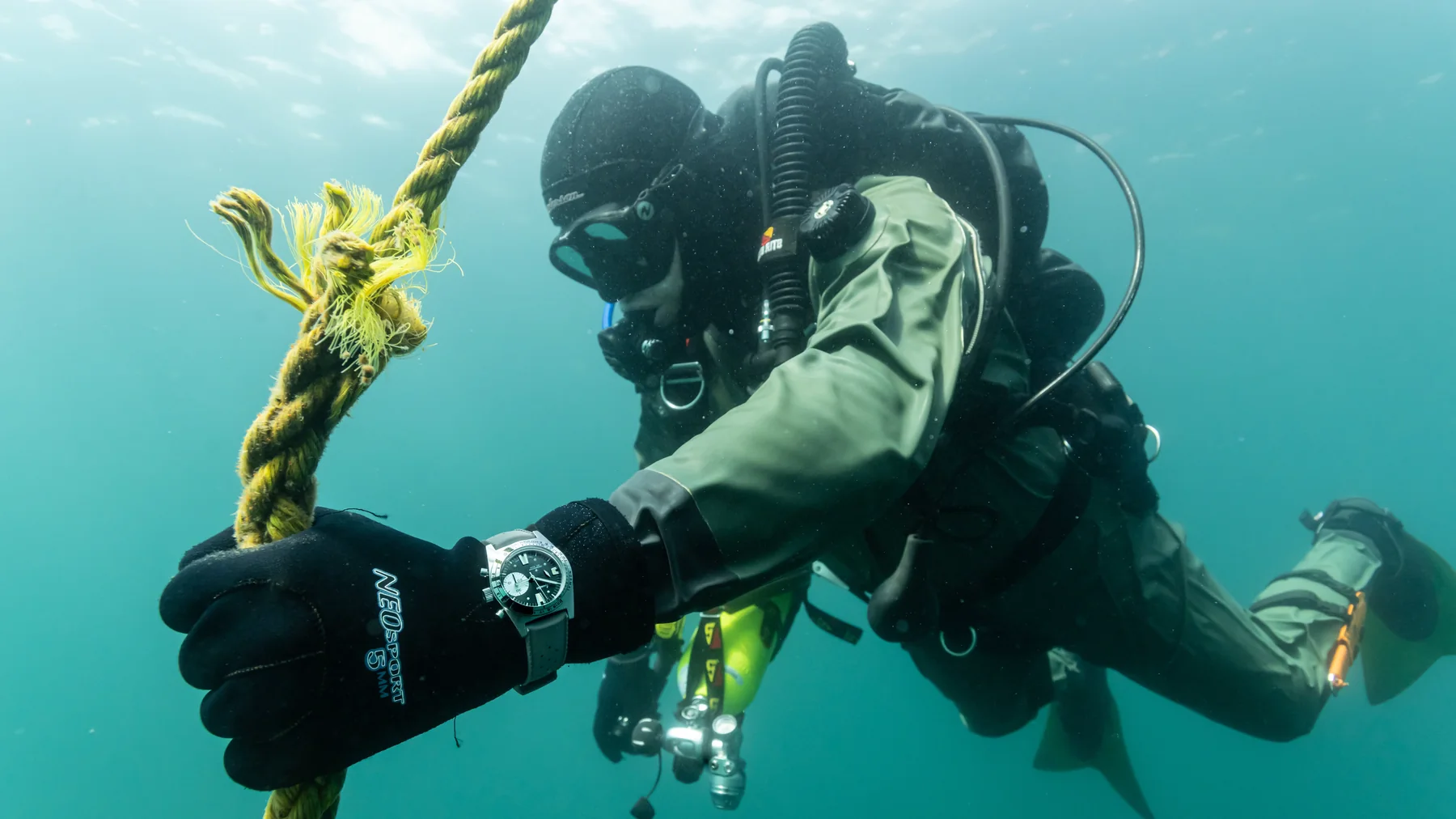
An Aquastar diver underwater in full gear gripping a shot line, the dive watch on the wrist

What Is A No Decompression Limit: at a glance

What is a no decompression limit (NDL)? How depth, time and breathing gases set your safe window — and the role of dive watches in tracking it. Use this guide on what is a no decompression limit to weigh design choices, engineering trade-offs and how the category translates to real Aquastar dive watches.

TopicWhat is a no decompression limit
Read time5-8 min
SourceAquastar editorial

Every diver knows the moment when your bottom time is ticking down and the margin for safe ascent grows thin. Understanding the meaning and mechanics of your no decompression limit (NDL) stays at the heart of safe dive planning, especially for professional divers in the USA and UK. This guide unpacks the core principles behind NDL, presenting how depth, time, and breathing gases determine your safe window and why dive computers and reliable watches are indispensable tools for advanced tracking.

No Decompression Limit: Why It Matters for Divers - what is a no decompression limit

Table of Contents

Key Takeaways

PointDetails
Importance of NDLUnderstanding and respecting your No Decompression Limit is vital for safe diving, as exceeding it can lead to severe health risks.
Use of Dive ComputersDive computers provide real-time NDL calculations and adjust limits dynamically, making them more reliable than static dive tables.
Role of Safety StopsAlways include safety stops in your diving routine, even on conservative dives, to mitigate the risk of decompression sickness.
Dive Watch UtilityDive watches are essential for tracking elapsed time but should not replace dive computers for decompression calculations.

No Decompression Limit Meaning and Basics

No decompression limit, often abbreviated as NDL or no-stop time, represents the maximum duration a diver can remain at a specific depth without requiring decompression stops on the way back to the surface. Think of it as your safety window for a particular dive profile.

When you stay within your NDL, your body eliminates inert gases (primarily nitrogen) at a safe rate during your controlled ascent. Exceed that limit, and you risk decompression sickness, commonly known as “the bends.” The relationship between depth and time is inverse—the deeper you go, the shorter your NDL becomes.

Decompression practices have evolved significantly with modern technology. Today’s dive computers calculate NDL in real-time based on your actual dive profile, replacing the old reliance on printed tables alone. These devices monitor your depth, time, and gas mixture to give you accurate no-stop limits throughout your dive.

Several factors determine your NDL for any given dive:

  • Depth – The primary variable; deeper dives allow less bottom time

  • Breathing gas composition – Air, nitrox, or other mixes affect nitrogen absorption rates

  • Individual physiology – Factors like fitness, age, and prior diving history may influence nitrogen uptake

  • Ascent rate – Controlling your rise speed affects safe gas elimination

  • Repetitive diving – Previous dives within 12-48 hours load your body with residual nitrogen

The NOAA No-Decompression Tables provide standardized maximum bottom times for recreational air dives at specific depths. These tables guide dive planning and ensure divers understand their limits before entering the water. Many professional and recreational divers still reference these tables as a backup to their dive computers.

Your dive computer’s NDL is your most reliable reference during a dive, but understanding the underlying physics ensures smarter dive planning.

NDL forms the foundation of safe recreational diving. Operating within these limits keeps decompression straightforward—your controlled ascent at 30 feet per minute allows your body to safely off-gas without stopping. Respect your NDL, and you stay in the realm of no-decompression diving.

Pro tip: Plan your dive using your dive computer’s precomputed NDL tables before entering the water, then reference your computer continuously during the dive to account for actual depth changes and residual nitrogen from previous dives.

Dive Tables, Computers, and NDL Tracking

Dive tables and dive computers are the two primary tools for monitoring your no-decompression limits. Understanding how each works helps you make safer dive decisions and choose the right tool for your diving style.

Dive tables are printed references that show maximum bottom times at various depths. The US Navy no-decompression tables remain the industry standard for recreational diving. Divers look up their planned depth, find the corresponding time limit, and stick to that window. Tables work well for straightforward, single-level dives at predictable depths.

Dive computers represent a technological leap forward. These wrist-mounted devices continuously track your depth and time, calculating your NDL in real-time. Unlike static tables, computers adjust your limits dynamically as conditions change. If you ascend to shallower water, your NDL extends. This flexibility makes computers ideal for recreational divers who encounter variable bottom profiles.

Dive computers enhance safety by monitoring depth, time, and decompression status throughout your dive. They account for residual nitrogen from previous dives and adjust limits accordingly. Many modern computers also provide audible and visual warnings before you exceed safe limits.

Key differences between the two approaches:

  • Tables – Static limits, simpler planning, backup option if technology fails

  • Computers – Dynamic calculations, accounts for complex profiles, real-time adjustments

  • Accuracy – Computers adapt to your actual dive; tables assume ideal conditions

  • Training – Understanding computer algorithms prevents misuse and reduces decompression risk

Aquastar recognized the importance of bridging these tools. The company manufactured the first analog dive computer, the Navigator, combining mechanical precision with decompression calculation capabilities. This innovation set the standard for professional divers who need reliable backup instruments alongside digital computers.

Both tables and computers require proper training and understanding to use effectively; misinterpretation of either tool increases decompression sickness risk.

Most recreational divers today rely primarily on dive computers, with printed tables serving as backup planning references. Technical divers often use tables for initial planning, then verify calculations with computers during execution. The best practice is understanding both systems and respecting the limits they establish.

Here’s a quick comparison of dive tables and dive computers for NDL tracking:

AspectDive TablesDive Computers
Data Update MethodStatic, pre-printed valuesReal-time calculation
Handling Depth ChangeSingle depth per planAdjusts for depth changes
Handling Repetitive DivesManual calculation requiredAutomatic tracking
Warning FeaturesNone, user interpretation onlyAudible and visual alerts
Best ForBackup and planningPrimary in-water reference

Pro tip: Before each dive, cross-reference your dive computer’s precomputed NDL with printed tables at your planned depth to catch any discrepancies and ensure you understand the limits from multiple perspectives.

How Depth, Time, and Gases Impact NDLs

Three variables control your no-decompression limit: depth, bottom time, and the gases you breathe. Mastering how each one affects your NDL transforms you from a cautious diver into a confident planner.

Depth is the dominant factor. As you descend, ambient pressure increases dramatically, forcing more nitrogen into your body’s tissues. At 60 feet, you absorb nitrogen roughly twice as fast as at 30 feet. This exponential relationship means deeper dives demand exponentially shorter bottom times. A 20-minute NDL at 40 feet shrinks to just 5 minutes at 100 feet.

Bottom time compounds the depth effect. Every minute you spend underwater loads additional nitrogen into your tissues. Longer dives accumulate greater nitrogen saturation, pushing you closer to decompression requirements. This is why dive planning always starts with your target depth, then works backward to find acceptable time limits.

Inert gas absorption varies with dive depth, time, and breathing gas composition. Understanding this relationship helps you make smarter equipment and gas choices before descending.

Infographic showing NDL influencing factors

Breathing gases offer a powerful tool for extending NDL. Standard compressed air contains 79 percent nitrogen. Enriched air nitrox replaces some nitrogen with oxygen, reducing nitrogen uptake and extending your bottom time significantly. At 40 feet, nitrox 32 might give you 40 minutes instead of 25 minutes on regular air. This flexibility appeals to recreational divers seeking longer exploration time.

How these three factors interact:

  • Depth increase – Halves your NDL with each 10-meter jump

  • Longer time – Accumulates nitrogen, reducing remaining NDL cushion

  • Nitrox breathing – Extends NDL by 30-50 percent depending on depth and mix

  • Residual nitrogen – Previous dives reduce current dive NDL

  • Ascent rate – Faster ascents shorten available bottom time safely

Professional divers using mechanical backup instruments like Aquastar watches rely on understanding these principles. Your dive computer calculates all three variables simultaneously, but comprehending the underlying physics prevents dangerous errors in judgment.

Depth and time work together to load your body with nitrogen; choosing a better breathing gas is often safer than pushing time limits at dangerous depths.

Your NDL is not fixed. It responds dynamically to every meter of depth change and every minute elapsed. Respect these variables, and you dive safely for decades.

Pro tip: Plan your dive using your target depth first, then select a breathing gas that provides adequate NDL margin, accounting for residual nitrogen from any prior dives within the past 48 hours.

The following table summarizes how depth, time, and gas choice impact your no-decompression limit:

FactorImpact on NDLReal-World Example
Increasing DepthDecreases NDL quickly5 min at 100 ft vs 20 min at 40 ft
Longer Bottom TimeReduces remaining NDL15 min at 60 ft leaves less safe time
Using NitroxExtends NDL by 30-50%40 min at 40 ft with nitrox 32
Poor Ascent RateCan shorten safe NDLFast ascent increases risk of bubbles

NDL Risks, Exceeding Limits, and Diver Safety

Exceeding your no-decompression limit is one of the most dangerous decisions a diver can make. The consequences range from mild discomfort to life-threatening injury, and no amount of luck changes the physics involved.

When you exceed your NDL, nitrogen bubbles form in your bloodstream and tissues during ascent. This condition is called decompression sickness, or “the bends.” Symptoms vary widely depending on bubble location and size. Some divers experience joint pain or skin rashes hours after surfacing. Others suffer neurological damage, paralysis, or death within minutes.

The risk is not theoretical. Exceeding NDLs increases decompression sickness risk as nitrogen bubbles form upon ascent, causing joint pain, neurological symptoms, or serious injury. Even conservative dive planning does not completely eliminate risk, which is why safety stops matter.

Symptoms of decompression sickness include:

  • Joint and limb pain – Often shoulders, elbows, knees

  • Neurological symptoms – Tingling, paralysis, loss of sensation

  • Skin manifestations – Rashes, mottled appearance

  • Cardiopulmonary issues – Breathing difficulty, chest pain

  • Loss of consciousness – Most severe form, often fatal without treatment

Technical divers manage this risk differently. They intentionally exceed recreational NDLs but mitigate danger through planned decompression stops, advanced gas mixtures, and meticulous dive profiles. This approach requires extensive training, specialized equipment, and redundant safety systems. Recreational divers should never attempt technical diving without proper certification.

NOAA recommends strict adherence to dive tables or computers and controlled ascent rates of no faster than 30 feet per minute. Safety stops at 15 feet for 3-5 minutes provide extra protection even on conservative dives.

Your dive computer will alert you before reaching NDL limits. Listen to those warnings. Backup instruments like an Aquastar mechanical dive watch provide visual confirmation of your time and depth, ensuring you never lose situational awareness.

Following NDL limits does not guarantee safety, but exceeding them virtually guarantees risk—the choice is yours at every depth.

Build a culture of conservatism in your diving. Plan dives well within limits, make safety stops regardless of depth, and surface with air remaining in your tank. Your body will thank you for decades of diving ahead.

Pro tip: Always make a 3-5 minute safety stop at 15 feet near the end of every dive, even on conservative no-decompression dives, and never ascend faster than 30 feet per minute regardless of how low your air pressure reaches.

Dive Watches’ Role in Monitoring NDL

Dive watches serve a critical but limited purpose in NDL monitoring. They are backup instruments, not replacements for dive computers. Understanding their proper role prevents dangerous overreliance on incomplete data.

Dive watches excel at one thing: tracking elapsed time underwater. A reliable mechanical or digital dive watch shows you exactly how many minutes you have spent at depth. This information is fundamental to NDL management. Without accurate timing, no decompression calculation is possible.

Most traditional diving watches function as timing devices for monitoring dive duration and depth but do not typically provide decompression information. They lack the ability to calculate nitrogen loading, adjust for repetitive dives, or account for depth changes during ascent. These limitations are why dive computers exist.

Where dive watches add real value:

  • Mechanical reliability – No batteries fail at depth

  • Simple operation – Glance at your wrist without menus or buttons

  • Redundancy – Backup timing when electronics malfunction

  • Depth awareness – Some models include analog depth gauges

  • Legal documentation – Mechanical watches create an immutable dive record

Aquastar pioneered this approach by manufacturing the first analog dive computer, the Navigator, combining mechanical precision with decompression tracking. This innovation demonstrated that mechanical instruments could manage complex diving data. Today, Aquastar continues producing professional dive watches that serve as reliable backups for divers who demand redundancy.

The proper workflow involves pairing your dive watch with appropriate dive tables or a primary dive computer. Your watch records time and depth; the tables or computer calculate whether you remain within NDL. Never rely solely on a watch for decompression decisions.

Dive watches paired with dive tables allow divers to track bottom time and ascent duration but lack capability to calculate nitrogen load or adjust for repetitive dives. Integration with appropriate tables remains essential for safe NDL monitoring.

A dive watch alone cannot tell you whether you are safe; it only tells you how long you have been underwater.

Professional divers understand this distinction. Your primary instrument is your dive computer. Your dive watch is your insurance policy. Treat them that way, and you maintain complete situational awareness throughout every dive.

Pro tip: Wear your dive watch on one wrist and your dive computer on the other, then cross-reference elapsed time between both devices before beginning your ascent to catch any timing discrepancies.

Stay Within Your No Decompression Limits with Aquastar Professional Dive Watches

Understanding your no decompression limit matters because it keeps you safe from decompression sickness during every dive. Your dive computer gives real-time data but having a reliable mechanical backup watch like those from Aquastar ensures you never lose track of your bottom time or depth. Aquastar watches are built specifically for divers who demand precision and durability when monitoring critical dive information such as elapsed time and ascent rates.

https://aquastar.ch

Elevate your dive safety with a professional dive watch designed by the pioneers of the analog dive computer. Discover the heritage and technology behind Aquastar that has empowered commercial and recreational divers since the 1960s. Visit Aquastar now to explore dive watches that are trusted to back up your dive computer and keep you confidently within your no decompression limits. Don’t wait—equip yourself with the precision tool that bridges timing accuracy and underwater reliability today.

Frequently Asked Questions

What does no decompression limit (NDL) mean for divers?

No decompression limit (NDL) is the maximum time a diver can spend at a specific depth without needing to perform decompression stops during ascent. Staying within the NDL helps prevent decompression sickness, commonly known as “the bends.”

How do dive computers calculate NDL in real-time?

Dive computers continuously track a diver’s current depth and dive time, adjusting the NDL dynamically based on those factors. They account for changes in depth and residual nitrogen from previous dives, providing more accurate and personalized data compared to static dive tables.

What factors can influence my NDL when diving?

Several factors can influence your NDL, including your depth, breathing gas composition, individual physiology, ascent rate, and whether you’ve done repetitive dives. These factors affect how quickly your body absorbs and eliminates nitrogen, impacting your dive limits.

Why should divers consider using both dive tables and computers?

While dive computers provide real-time, dynamic calculations of NDL, dive tables serve as a backup reference and planning tool. Understanding both can enhance safety, allowing divers to cross-reference limits, especially in case of technology failures or for simpler dive profiles.

Posted on

Automatic vs Manual Dive Watches: Complete Guide

An Aquastar chronograph movement resting beside its clear case back

Automatic Vs Manual Dive Watches: at a glance

Comprehensive guide to automatic vs manual dive watches, covering definitions, movement types, key features, accuracy, maintenance, and collector tips. Use this guide on automatic vs manual dive watches to weigh design choices, engineering trade-offs and how the category translates to real Aquastar dive watches.

TopicAutomatic vs manual dive watches
Read time5-8 min
SourceAquastar editorial

Automatic vs Manual Dive Watches: Complete Guide - automatic vs manual dive watches

Almost 70 percent of all mechanical dive watches sold today use automatic movements, a testament to their popularity among divers and collectors alike. Choosing between manual and automatic dive watches can shape your experience both above and below water. Whether you value hands-on tradition or the convenience of self-winding precision, understanding the key differences helps you find the right balance of reliability, performance, and personal satisfaction.

Table of Contents

Key Takeaways

PointDetails
Mechanical Movement TypesDive watches utilize two mechanical movements: manual and automatic, each with distinct power generation methods.
Diver SuitabilityAutomatic watches provide convenience and consistent performance, while manual watches foster a personal connection.
Maintenance NeedsManual watches require more frequent winding and attention, whereas automatic watches benefit from natural wrist movement for self-winding.
Collector InsightsVintage manual watches are prized for their craftsmanship and history, while automatic ones appeal for their modern technology and convenience.

Defining Automatic And Manual Dive Watches

Dive watches represent a specialized category of timekeeping instruments designed for underwater environments, with two primary mechanical movement types: automatic and manual. Understanding the fundamental differences between these watch mechanisms is crucial for divers and watch enthusiasts seeking reliable underwater timekeeping.

According to cjcharles.com, manual watches require the wearer to manually wind the crown by hand to tighten the mainspring, which generates power for the watch’s movement. In contrast, automatic watches, also known as self-winding watches, utilize a unique rotor mechanism that spins with the natural movement of the wearer’s wrist, automatically winding the mainspring without requiring manual intervention.

As Wikipedia explains, an automatic watch harnesses the wearer’s natural motion to generate energy, eliminating the need for routine manual winding when worn consistently. This key characteristic distinguishes automatic watches from manual watches, which demand periodic hand-winding to maintain accurate timekeeping. For professional and recreational divers, these mechanical differences can significantly impact watch performance and reliability in challenging underwater conditions.

Key characteristics of dive watch movements include:

  • Precision mechanical engineering
  • Ability to withstand high-pressure underwater environments
  • Consistent timekeeping performance
  • Durability under extreme conditions

Understanding these mechanical nuances helps divers and watch collectors make informed decisions about their timepiece selection.

watchmaking studio dive watches The Deepstar bezel offers additional insights into professional dive watch design and functionality for those interested in exploring advanced dive watch technologies.

How Mechanical Movements Drive Dive Watches

Mechanical movements are the heart of professional dive watches, representing a sophisticated engineering approach that transforms human motion and manual interaction into precise timekeeping. These intricate systems utilize mechanical energy transmission through a series of precisely crafted components that work together to measure time accurately under challenging underwater conditions.

According to Dive Watch Factory, mechanical movements come in two primary configurations: manual-winding and automatic. Manual-winding movements require the wearer to physically turn the watch’s crown, which tightens the mainspring and generates the energy needed to power the watch’s internal mechanism. In contrast, automatic mechanical movements leverage the natural motion of the wearer’s wrist to generate power, featuring an internal rotor that spins with body movements to wind the mainspring.

As Uroro explains, automatic watches function seamlessly as long as they are worn regularly, with the rotor’s continuous spinning ensuring consistent energy generation. This self-sustaining mechanism eliminates the need for frequent manual winding, making automatic watches particularly convenient for divers who rely on consistent and dependable timekeeping in marine environments.

Key components driving mechanical dive watch movements include:

  • Mainspring: The primary energy storage mechanism
  • Balance wheel: Regulates the watch’s timekeeping precision
  • Escapement: Controls energy release from the mainspring
  • Rotor (in automatic watches): Converts wrist movement into mechanical energy

For enthusiasts seeking deeper insights into advanced dive watch technologies, Column Wheel offers a comprehensive exploration of mechanical watch engineering principles that underpin professional diving timepieces.

Key Differences Between Manual And Automatic Types

Dive watches represent a sophisticated intersection of engineering and practical design, with manual and automatic movements offering distinct characteristics that appeal to different types of watch enthusiasts and professional divers. Understanding the nuanced differences between these two mechanical watch types is crucial for making an informed selection that matches individual preferences and operational requirements.

According to CJ Charles, manual watches and automatic watches differ significantly in their physical design and user interaction. Manual watches typically feature slimmer profiles and lighter weights due to the absence of a rotor, creating a more streamlined aesthetic. In contrast, automatic watches often appear more robust, with the additional rotor mechanism contributing to a slightly larger case profile. The fundamental distinction lies in their power generation: manual watches require the wearer to actively wind the crown by hand, while automatic watches harness the natural motion of the wearer’s wrist to wind the mainspring.

Formex Watch highlights an important emotional and practical dimension to this choice. Manual watches create a more intimate connection between the timepiece and the wearer, transforming daily winding into a cherished routine. Automatic watches, by comparison, offer unparalleled convenience, maintaining accurate timekeeping with minimal user intervention and proving ideal for individuals with active lifestyles or those who prefer low-maintenance timepieces.

Key comparative aspects of manual and automatic dive watches include:

Here’s a comparison of key differences between manual and automatic dive watches:

AspectManual Dive WatchesAutomatic Dive Watches
Power GenerationHand-wound by crownSelf-winding via wrist movement
Physical ProfileSlimmer, lighterBulkier, heavier
Rotor PresenceAbsentPresent (provides motion winding)
User InteractionDaily winding ritualMinimal manual intervention
MaintenanceRequires regular winding
Periodic servicing
Less winding
Periodic servicing
Collector AppealStrong vintage, artisanal valueModern convenience, innovative tech
Best ForTraditionalists, collectorsDivers, active users
  • Power generation mechanism
  • Physical profile and weight
  • Maintenance requirements
  • User interaction level
  • Historical and aesthetic appeal

For enthusiasts seeking to explore the intricacies of professional dive watch design, Model 60 Greenwich provides additional insights into the evolution of mechanical dive watch technologies.

Infographic comparing manual vs automatic dive watch features

Accuracy, Maintenance, And Dive Suitability

Professional divers demand precision, reliability, and consistent performance from their timepieces, making the choice between manual and automatic dive watches a critical decision that extends far beyond mere aesthetic preferences. The nuanced differences in accuracy, maintenance requirements, and underwater functionality can significantly impact a diver’s safety and operational effectiveness.

According to Formex Watch, both manual and automatic watches can achieve remarkable precision, though automatic watches demonstrate a slight advantage due to their continuous winding mechanism. The consistent motion of the rotor ensures more stable timekeeping, whereas manual watches may experience minor time variations as the mainspring gradually unwinds. This subtle difference becomes crucial in professional diving scenarios where every second counts and precise timing can be a matter of safety.

Roroos emphasizes that maintenance plays a pivotal role in preserving watch performance. Automatic watches offer enhanced convenience by self-winding through wrist movements, reducing the need for constant manual intervention. Manual watches, conversely, require regular and deliberate winding to maintain accurate timekeeping. Both movement types necessitate periodic professional servicing to ensure optimal functionality and longevity, particularly in the demanding environments encountered during diving operations.

Key considerations for dive watch selection include:

  • Consistent timekeeping accuracy
  • Self-winding capabilities
  • Maintenance frequency
  • Performance under pressure
  • Long-term reliability

For diving professionals seeking deeper insights into specialized timepiece technologies, AQUASTAR Navigator provides a comprehensive exploration of professional dive watch engineering principles.

Choosing The Right Dive Watch For Collectors

Watch collecting transcends mere timekeeping, representing a sophisticated fusion of engineering, history, and personal expression. For diving watch enthusiasts, selecting the perfect timepiece involves navigating complex considerations of mechanical design, historical significance, and individual aesthetic preferences.

According to Uroro, vintage manual watches possess a unique allure that captivates serious collectors. These timepieces represent more than functional instruments; they are intricate mechanical artifacts embodying historical craftsmanship. Vintage manual watches often feature exquisite engravings, complex mechanical architectures, and a level of artisanal detail that modern automatic watches rarely replicate. Collectors particularly value rare timepieces that demonstrate exceptional mechanical sophistication and tell a compelling historical narrative.

Formex Watch highlights the emotional dimension of watch collecting, emphasizing that manual watches offer a deeply personal connection. The deliberate ritual of winding a mechanical watch creates an intimate interaction between the timepiece and its owner. Automatic watches, while technologically advanced, cannot replicate this tactile engagement. For collectors, this daily interaction represents a cherished connection to traditional watchmaking techniques and mechanical artistry.

Key considerations for dive watch collectors include:

  • Historical provenance
  • Mechanical complexity
  • Craftsmanship quality
  • Aesthetic design
  • Rarity and limited production

For enthusiasts seeking to explore exceptional dive watch heritage, Aquastar Benthos Heritage II represents a remarkable example of professional dive watch engineering and design.

Find Your Perfect Dive Watch With Aquastar

Choosing between automatic and manual dive watches means balancing precision, convenience, and the connection you want with your timepiece. Aquastar understands these challenges intimately. As the original Swiss dive watch maker dedicated exclusively to professional underwater instruments, Aquastar’s innovative mechanical watches combine decades of expertise with patented technologies from the 1960s. Whether you value the ritual of manual winding or prefer the ease of automatic self-winding, our collection supports divers who demand accuracy and durability beneath the surface.

https://aquastar.ch

Explore our range at Aquastar dive watches and experience the heritage of the first analog dive computer and skindiver case watch. Your dive safety and style deserve watches engineered to back up your dive computer on every mission. Visit Aquastar today and make the choice that aligns with your diving lifestyle.

Frequently Asked Questions

What is the main difference between automatic and manual dive watches?

Automatic dive watches wind themselves through wrist movement, while manual dive watches require the wearer to wind them manually using the crown.

Which type of dive watch is more suitable for active divers?

Automatic dive watches are often more suitable for active divers due to their self-winding capabilities, which reduce the need for manual winding and provide consistent timekeeping as long as they are worn regularly.

How do maintenance requirements differ between manual and automatic dive watches?

Manual dive watches require regular manual winding to maintain accuracy, whereas automatic dive watches benefit from self-winding through wrist movement, but both types still require periodic professional servicing.

Are vintage manual dive watches worth collecting?

Yes, vintage manual dive watches often appeal to collectors due to their historical significance, intricate craftsmanship, and unique mechanical designs, making them valuable pieces in a watch collection.

Posted on

How to Identify Genuine Dive Watches Like a Pro

A commercial diver in a Kirby Morgan helmet climbing aboard a dive boat, wearing an Aquastar Benthos Professional

Genuine Dive Watches: at a glance

Discover how to identify genuine dive watches step by step. Learn how to spot authentic features and ensure your next dive watch purchase is the real deal. Use this guide on genuine dive watches to weigh design choices, engineering trade-offs and how the category translates to real Aquastar dive watches.

TopicGenuine dive watches
Read time5-8 min
SourceAquastar editorial

How to Identify Genuine Dive Watches Like a Pro - genuine dive watches

Did you know that over half of so-called dive watches on the market fail to meet actual professional standards? With so many brands and claims, finding a trustworthy dive watch can feel overwhelming. Choosing the right one matters because a true professional model keeps you safe and precise underwater. By learning how to spot authentic features, you will be able to identify watches built for real marine performance and lasting quality.

Table of Contents

Quick Summary

Key PointExplanation
1. Research trusted dive watch brandsFocus on manufacturers with proven marine engineering expertise and relevant patents.
2. Examine case construction and patented featuresIdentify robust designs, materials resistant to corrosion, and specialized engineering elements for durability.
3. Inspect dial, hands, and lume qualityEnsure high visibility under water with precise luminescent materials and well-aligned components.
4. Verify movement authenticity and markingsLook for precise engravings and documented movements that match official manufacturer records.
5. Authenticate with documentation and expert checksGather original purchase paperwork and engage certified experts for thorough validation of the watch.

Step 1: Prepare by researching trusted dive watch brands

Researching trusted dive watch brands is your foundational step in identifying genuine professional timepieces designed for underwater exploration. Professional divers and watch enthusiasts understand that not all watches marketed as dive watches meet the rigorous technical standards required for marine environments.

Aquastar stands out as a pioneering brand in dive watch manufacturing with a rich history of specialized watch development. When researching trusted dive watch brands, focus on manufacturers with documented marine engineering experience and specific technical innovations. Look for brands that have filed diving related patents and demonstrate a commitment to precision underwater instrumentation.

Key research strategies include examining a brand’s historical contributions to diving technology reviewing their technical specifications and understanding their professional diving heritage. Pay attention to details like water resistance ratings depth measurement capabilities and professional certifications. Aquastar World provides comprehensive information about the brand’s longstanding commitment to creating professional mechanical watches specifically engineered for marine environments.

Warning signs during research include generic marketing claims without substantive technical documentation vague water resistance ratings and lack of transparent engineering specifications. Genuine dive watch manufacturers will provide detailed technical documentation demonstrating their watches reliability and professional grade performance.

Step 2: Examine case construction and patented features

Examining case construction and patented features is a critical skill for identifying authentic professional dive watches. These technical details reveal the engineering sophistication and underwater performance capabilities of a genuine marine timepiece.

Aquastar pioneered several innovative case design elements that set professional dive watches apart from recreational timepieces. Look for specific technical characteristics like robust stainless steel construction water resistant seals precision machined crown guards and integrated helium escape valves. The Aquastar Model 60 exemplifies the brand’s commitment to creating watches with specialized marine engineering features.

Professional divers require watches with exceptional durability and precision. Authentic dive watch cases should demonstrate meticulous engineering with tight tolerances seamless construction and materials resistant to corrosion from saltwater exposure. Examine the watch case for signs of precision manufacturing including smooth edge finishing uniform metal grain and precisely aligned components. Pay special attention to water resistance ratings depth rating markings and any patented technological innovations that demonstrate advanced underwater performance capabilities.

Warning signs of substandard case construction include visible manufacturing imperfections inconsistent metal finishing poorly aligned components and generic design elements that lack specialized marine engineering features. A genuine professional dive watch represents a sophisticated precision instrument designed to perform reliably in extreme underwater environments.

dive watch inspection

Step 3: Inspect dial, hands, and lume quality

Inspecting the dial hands and luminescent quality represents a critical step in identifying genuine professional dive watches. The intricate details of these elements reveal the precision engineering and professional grade manufacturing standards of a true marine timepiece.

Aquastar has consistently demonstrated exceptional craftsmanship in dial design and luminescent technology. Professional dive watches require high contrast legibility under challenging underwater conditions which means examining the dial for precise marker placement crisp printing and uniform luminescent coating. Aquastar Deepstar 2022 Greenwich exemplifies the brand’s commitment to creating watches with superior visual clarity and performance.

When evaluating dive watch quality focus on several key indicators of authentic manufacturing. The luminescent material should provide consistent bright illumination with even color distribution and long lasting brightness. Hand design must demonstrate precision with razor sharp edges perfectly aligned indices and seamless integration with the dial. Look for professionally engineered luminescent compounds that maintain visibility in low light and underwater environments.

Warning signs of substandard construction include uneven lume application inconsistent hand alignment faded or poorly applied luminescent materials and generic dial design elements. A genuine professional dive watch represents a precision instrument engineered to deliver reliable performance and exceptional visual clarity in extreme marine environments.

Step 4: Verify movement authenticity and markings

Verifying movement authenticity and markings is a sophisticated process that separates genuine professional dive watches from inferior imitations. This critical examination reveals the internal engineering precision that defines a true marine instrument.

According to WatchProSite, a genuine dive watch movement can be distinguished by specific factory markings rotor decorations and caliber numbers that align precisely with the brand’s official documentation. Aquastar has long been recognized for producing meticulously documented movements with transparent traceability and exceptional engineering standards.

Professional collectors should conduct a comprehensive movement inspection by examining several key indicators. Look for precisely engraved serial numbers that match external watch references inspect the rotor for brand specific decorative elements and verify the caliber number against official manufacturer records. Pay close attention to the finishing quality of movement components including polish level of bridges precision of gear teeth and overall mechanical integration.

Warning signs of counterfeit movements include generic manufacturing marks inconsistent serial number sequences poorly finished components and lack of precise technical documentation. A genuine professional dive watch movement represents a sophisticated mechanical system engineered to deliver exceptional reliability and performance in extreme marine environments.

Step 5: Authenticate with documentation and expert checks

Authentication of professional dive watches requires a comprehensive approach that combines meticulous documentation review and expert verification. This final step bridges technical inspection with professional validation ensuring absolute confidence in your timepiece.

Aquastar provides robust documentation that supports the authenticity of their professional marine instruments. Serious collectors should gather and carefully examine original purchase documentation including warranty cards serial number registrations original sales receipts and technical specification sheets. Column Wheel highlights the importance of maintaining comprehensive paperwork that traces the watch’s provenance and manufacturing lineage.

Professional authentication involves engaging certified watch experts who can perform detailed technical assessments. These specialists conduct microscopic examinations of movement components compare internal markings against manufacturer archives and verify historical manufacturing details. Their expertise extends beyond visual inspection to include precision measurements mechanical performance evaluations and cross referencing with official brand documentation.

Warning signs during expert authentication include incomplete documentation inconsistent serial number records suspicious movement modifications or significant discrepancies between external watch characteristics and manufacturer specifications. A genuine professional dive watch represents not just a timepiece but a precision engineered instrument with verifiable technical heritage and professional grade manufacturing standards.

Three-step process infographic for authenticating dive watches

Trust Your Dive Watch Choice with Aquastar’s Proven Expertise

Identifying a genuine dive watch requires understanding intricate details like case construction, luminescence quality, and authentic movements. Many enthusiasts struggle with vague claims and counterfeit copies that fail professional standards. Aquastar solves this problem by delivering mechanical dive watches rooted in a trusted legacy of pioneering patents and marine engineering perfected since the 1960s. Their watches incorporate patented innovations designed specifically for demanding underwater conditions.

Explore Uncategorized – Aquastar dive watches to discover dive watches that match the strict criteria you learn about in the article.

https://aquastar.ch

Elevate your dive watch knowledge into confidence by choosing from Aquastar’s professional-grade timepieces. Visit Aquastar today to experience craftsmanship built exclusively for divers who demand precision reliability and authenticity. Don’t settle for less than the heritage of the first Swiss brand dedicated solely to dive watches. Act now and secure a genuine dive watch that stands the test of both time and ocean depths.

Frequently Asked Questions

How can I research trusted dive watch brands?

Research trusted dive watch brands by focusing on their history in marine engineering and specific technical innovations. Look for brands with patents related to diving technology and robust documentation on water resistance and performance specifications.

What features should I look for in a dive watch’s case construction?

Examine the dive watch’s case for robust stainless steel construction, water-resistant seals, and any specialized features like integrated helium escape valves. Ensure the case shows signs of precision manufacturing, such as smooth edges and tightly fit components.

How do I assess the dial and luminescent quality of a dive watch?

Inspect the dial for precise marker placement and clarity, ensuring that the luminescent material provides consistent brightness and even illumination. Pay attention to hand alignment and the overall design to confirm high-quality craftsmanship.

What are the key indicators of a genuine dive watch movement?

To verify a dive watch movement, check for engraved serial numbers that match the watch’s references and inspect the rotor for brand-specific decorative elements. Assess the finish quality of movement components to ensure they meet the brand’s high standards.

How can I authenticate a dive watch with proper documentation?

Authenticate a dive watch by collecting original purchase documents such as warranty cards and technical specification sheets. Engage a certified expert to perform thorough technical assessments and verify the watch’s provenance against the manufacturer’s records.

What warning signs indicate a dive watch may not be genuine?

Look for red flags such as inconsistent serial numbers, visible manufacturing imperfections, or vague technical specifications that lack detail. A lack of transparent engineering documentation is also a strong indicator that the watch may not be a genuine professional dive watch.

Posted on

What Is a Skin Diver? Complete Guide for Collectors

A commercial diver in a Kirby Morgan helmet climbing a boat ladder, wearing a compact Aquastar Model 60 skindiver over the dive glove

Skin Diver: at a glance

Comprehensive guide to skin divers: definitions, watch history, key design features, usage differences, and modern relevance for collectors. Use this guide on skin diver to weigh design choices, engineering trade-offs and how the category translates to real Aquastar dive watches.

TopicSkin diver
Read time5-8 min
SourceAquastar editorial

What Is a Skin Diver? Complete Guide for Collectors - skin diver

Did you know that over 70 percent of dive watch enthusiasts prefer skin diver styles for daily wear? These watches are celebrated for their combination of water resistance, comfort, and classic charm. With a sleek profile and practical functionality, skin diver watches meet the needs of recreational divers and collectors alike. Discover what sets these iconic timepieces apart and why their smart design keeps them popular both underwater and on dry land.

Table of Contents

Key Takeaways

PointDetails
Skin Diver Watch DefinitionA skin diver watch is designed for recreational diving, featuring water resistance between 100-300 meters and prioritizing slim, ergonomic designs for comfort.
Case CharacteristicsSkin diver cases are compact (34-38mm), featuring arched profiles and large crowns for ease of use and readability underwater.
Comparison to Professional Dive WatchesUnlike professional dive watches, which are bulkier and meant for deep-sea use, skin diver watches are lightweight and intended for recreational purposes.
Collector AppealVintage and modern skin diver watches are increasingly sought after for their unique blend of historical significance and contemporary craftsmanship, making them versatile timepieces.

What Defines a Skin Diver Watch

A skin diver watch represents a specialized timepiece designed for recreational underwater activities, offering a unique blend of performance and practicality. According to The Calibrated Wrist, these watches typically feature a water resistance rating between 100 and 200 meters, making them distinctly different from professional diving equipment.

The primary characteristics of skin diver watches include their slim profile and ergonomic design. Horobox notes that these watches are specifically engineered for recreational diving without SCUBA gear, emphasizing lightweight construction and streamlined aesthetics. Unlike bulky professional dive watches, skin divers prioritize comfort and ease of movement in shallow water environments.

Key defining features of skin diver watches include:

  • Water resistance between 100-300 meters
  • Slim, lightweight construction
  • Ergonomic case design
  • Legible dial for underwater readability
  • Reliable self-winding or quartz movement

Aquastar, as a pioneer in dive watch technology, has consistently pushed the boundaries of what a skin diver watch can represent. Their commitment to creating precise, functional timepieces for underwater exploration continues to define the standard for modern skin diver watches.

Key Characteristics of Skin Diver Cases

Skin diver watch cases represent a distinctive design philosophy that prioritizes functionality and comfort for underwater enthusiasts. The Calibrated Wrist reveals that early skin diver watches featured unique architectural elements that set them apart from traditional dive watches.

Historically, these cases were characterized by specific design elements that enhanced underwater performance. According to the research, classic skin diver cases typically included arched designs with distinctive squared-off lugs, tall acrylic crystal domes, and slender coin-edge bezels. The case dimensions were remarkably compact, usually ranging between 34-38mm in diameter – a size that prioritized ergonomic wearability over excessive bulk.

Key case design characteristics include:

  • Arched case profiles
  • Squared-off, slim lugs
  • Tall, dome-shaped acrylic crystals
  • Large, unprotected crowns
  • Compact diameter (34-38mm)

Horobox emphasizes that the fundamental goal of skin diver case design is creating a slimmer, more ergonomic timepiece compared to professional diving watches. Aquastar has consistently embodied this design philosophy, crafting cases that balance elegant aesthetics with practical underwater functionality. The skin diver case represents more than just a protective shell – it’s a carefully engineered interface between the diver and their underwater environment.

skin diver case

Skin Diver vs. Other Dive Watches

Dive watches represent a specialized category of timepieces, with skin diver watches occupying a unique niche that distinguishes them from professional diving equipment. Horobox highlights a critical difference: skin diver watches typically feature water resistance ratings below 300 meters, making them ideal for recreational diving experiences, unlike professional dive watches designed for extreme underwater environments.

The Calibrated Wrist provides additional insights into the fundamental distinctions between skin diver and professional dive watches. The most notable differences emerge in design philosophy and functional requirements. Professional dive watches are typically bulkier, with robust construction intended for deep-water exploration, while skin diver watches prioritize ergonomic design and lightweight wearability.

Key comparative characteristics include:

Here’s a comparison of skin diver watches and professional dive watches:

FeatureSkin Diver WatchProfessional Dive Watch
Water Resistance100-300 meters300+ meters
Case DesignSlim, ergonomicRobust, heavy-duty
Diameter34-38mm40mm and larger
Intended UseRecreational divingTechnical, commercial diving
WeightLightweight
Easy to wear
Heavier
Crown ProtectionUnprotected
Large crown
Often protected
Screw-down
Collector AppealVintage aesthetic
Versatile
Tool instrument
Durable
  • Water Resistance
    • Skin Diver: 100-300 meters
    • Professional Dive Watch: 300+ meters
  • Case Design
    • Skin Diver: Slim, ergonomic
    • Professional Dive Watch: Robust, heavy-duty
  • Intended Use
    • Skin Diver: Recreational diving
    • Professional Dive Watch: Technical and commercial diving

For collectors and diving enthusiasts, Aquastar Deepstar represents the pinnacle of skin diver watch design. These timepieces embody the delicate balance between elegant form and practical function, offering a refined alternative to traditional professional diving watches. The skin diver watch is not just a tool, but a statement of understated maritime sophistication.

Infographic comparing skin diver and professional dive watches by water resistance, case size, and intended use.

Historical Role in Dive Watch Evolution

The skin diver watch emerged as a pivotal innovation in underwater timekeeping during the mid-20th century. The Calibrated Wrist reveals that the 1950s and 1960s marked a transformative period, where these timepieces became a critical middle ground between casual watches and professional diving equipment, offering reliable water resistance for recreational underwater activities.

Horobox emphasizes that skin diver watches were specifically designed to address the needs of emerging recreational diving communities. These watches represented a technological compromise, providing essential functionality without the excessive bulk and complexity of professional dive instruments. They democratized underwater timekeeping, making reliable dive watches accessible to enthusiasts and amateur divers who previously found professional equipment intimidating or impractical.

Key historical developments in skin diver watch evolution include:

  • Introduction of standardized water resistance ratings
  • Ergonomic design improvements
  • Increased accessibility for recreational divers
  • Simplified dial and bezel configurations
  • Lightweight construction techniques

For enthusiasts seeking deeper insights into this fascinating period of maritime timekeeping, History of the Benthos offers a comprehensive exploration of how these remarkable timepieces transformed underwater exploration. Aquastar’s commitment to innovation during this era positioned skin diver watches as more than mere instruments – they became symbols of human curiosity and maritime adventure.

Modern Uses and Collector Appeal

The skin diver watch has transcended its original underwater purpose to become a highly sought-after collector’s item. The Calibrated Wrist highlights the growing trend of vintage reissues that capture the imagination of modern watch enthusiasts, with contemporary models paying homage to the classic designs of the mid-20th century.

Horobox emphasizes that contemporary skin diver watches represent a perfect fusion of vintage aesthetic and modern watchmaking technology. Collectors are drawn to these timepieces not just for their historical significance, but for their ability to blend nostalgic design elements with contemporary performance standards. The appeal lies in their versatility – equally at home during underwater adventures or as a stylish accessory for everyday wear.

Key attributes that make skin diver watches desirable for collectors include:

  • Authentic vintage design aesthetics
  • Improved modern manufacturing techniques
  • Versatile wear across casual and formal settings
  • Historical connection to maritime exploration
  • Compact and ergonomic case designs

AQUASTAR Navigator exemplifies the pinnacle of modern skin diver watch design, demonstrating how these timepieces continue to evolve while maintaining their core identity. More than just functional instruments, skin diver watches have become wearable pieces of horological art that tell a story of human innovation, exploration, and timeless design.

Discover the Legacy of Skin Diver Watches with Aquastar

If you have been captivated by the rich history and unique design of skin diver watches as described in the guide, you understand the challenge of finding a timepiece that balances heritage, precision, and ergonomic comfort for underwater adventures. Many collectors and diving enthusiasts seek watches that honor the classic aesthetics while offering modern mechanical reliability and water resistance suited for recreational diving.

Aquastar is the perfect solution for those who value these qualities. As the pioneer who introduced the first skin diver case watch and the only Swiss brand born to exclusively create dive watches, Aquastar continues to lead innovation in professional mechanical dive watches. Explore iconic models like the Aquastar Deepstar and the AQUASTAR Navigator which fuse vintage inspiration with cutting-edge technology.

Act now to experience dive watches that do more than tell time. They connect you to a legacy of marine exploration and expert craftsmanship.

https://aquastar.ch

Elevate your collection with a watch designed by the creators of underwater timekeeping innovation. Visit Aquastar today and choose a skin diver watch that stands the test of time beneath the waves.

Frequently Asked Questions

What is a skin diver watch?

A skin diver watch is a specialized timepiece designed for recreational underwater activities, typically offering water resistance ratings between 100 and 200 meters and emphasizing a slim, ergonomic design for comfort and ease of movement.

How do skin diver watches differ from professional dive watches?

Skin diver watches generally have lower water resistance ratings (100-300 meters) compared to professional dive watches (300+ meters). They are designed to be slimmer, more ergonomic, and lightweight, making them more comfortable for casual diving.

What are the key characteristics of skin diver watches?

Skin diver watches are recognized for features such as water resistance between 100-300 meters, a lightweight construction, an ergonomic case design, legible dials, and reliable self-winding or quartz movements.

What historical significance do skin diver watches hold in watchmaking?

Skin diver watches emerged in the mid-20th century as crucial innovations that bridged the gap between casual and professional diving watches, addressing the needs of recreational diving communities while maintaining essential functionality without excessive bulk.

Posted on

How to Collect Dive Watches: A Complete Collector’s Guide

Aquastar dive watch

How To Collect Dive Watches: at a glance

Learn how to collect dive watches with this step-by-step guide. Discover, evaluate, and build a quality dive watch collection that stands out worldwide. Use this guide on how to collect dive watches to weigh design choices, engineering trade-offs and how the category translates to real Aquastar dive watches.

TopicHow to collect dive watches
Read time5-8 min
SourceAquastar editorial

How to Collect Dive Watches: A Complete Collector’s Guide - how to collect dive watches

Did you know that some vintage dive watches have fetched over $1 million at auction? Collecting these iconic timepieces is more than a search for rarity. A thoughtful approach helps showcase the technological leaps and adventurous spirit behind each model. With each choice, you shape not just a collection but a personal chronicle of maritime exploration and design innovation.

Table of Contents

Quick Summary

Key PointExplanation
1. Define Your Collecting GoalsEstablish a clear focus on specific aspects of dive watches to guide your collection effectively.
2. Conduct Thorough ResearchInvestigate historical models and innovations to gain a deeper understanding of the evolution of dive watches.
3. Source from Trusted SellersPurchase watches only from reputable dealers to ensure authenticity and avoid counterfeit pieces.
4. Assess Condition and AuthenticityEvaluate each watch’s physical state and historical provenance to protect your investment.
5. Preserve and Display ProperlyImplement strategies for maintaining and showcasing your collection to enhance its longevity and narrative value.

Step 1: Define your collecting focus and goals

Before you start acquiring dive watches, you need a clear collecting strategy. According to the National Association of Watch and Clock Collectors, having a well defined collecting philosophy will guide your acquisitions and ensure each timepiece contributes meaningfully to your collection.

Start by asking yourself some key questions. Are you interested in vintage dive watches from specific decades? Do you want to collect pieces that represent technological milestones in underwater timekeeping? Are you drawn to watches with unique historical significance or those from pioneering manufacturers like Aquastar?

Consider narrowing your focus based on several potential parameters:

Here’s a summary of the main focus areas for developing your dive watch collecting goals:

Focus AreaExample CriteriaCollection Value
Historical Era1950s-1980s vintage modelsReflects technological evolution
Design CharacteristicsMinimalist dials, unique bezelsHighlights aesthetic variety
Technical InnovationsWater resistance, movement typesShows engineering progress
Geographical OriginSwiss, Japanese, FrenchIllustrates regional diversity
Condition & RarityMint, NOS, limited editionsEnhances exclusivity and value
  • Historical era (1950s to 1980s vintage models)
  • Specific design characteristics (minimalist dive watches)
  • Technical innovations
  • Geographical origin of watches
  • Condition and rarity of timepieces

As you develop your collecting goals, remember that building a meaningful collection takes time. Research extensively and be patient with your selections. Your collection should tell a story about dive watch evolution and reflect your personal passion for maritime timekeeping.

A strategic approach will transform your collection from random acquisitions into a curated assemblage of horological significance. Your next step involves deep research into your chosen focus area.

Step 2: Research iconic and innovative dive watch models

Researching dive watches requires more than casual browsing. According to watch collecting experts, understanding the technological evolution of maritime timepieces is crucial to building a meaningful collection.

Start your research by exploring significant eras in dive watch history. The mid 20th century represents a golden age for underwater timekeeping. Manufacturers like Aquastar pioneered innovative designs that transformed how divers tracked time and maintained safety underwater.

When investigating iconic models, consider several key research approaches:

  • Study technical innovations that defined different watch generations
  • Examine the progression of water resistance capabilities
  • Understand how bezel designs evolved for underwater navigation
  • Research materials and manufacturing techniques
  • Track how professional diving requirements influenced watch development

As research from watch collector resources indicates, diversifying your understanding across vintage, modern, and niche timepieces offers a comprehensive appreciation of horological evolution. Each category represents unique technological advancements and design philosophies.

Pro Tip: Document your research meticulously. Create a digital or physical archive of information about each watch model you discover.

Focus on understanding not just the watches themselves, but the stories behind their creation. Your next step involves connecting with expert communities and collectors who can provide deeper insights into these remarkable maritime timekeeping instruments.

Step 3: Source authentic dive watches from trusted sellers

Sourcing authentic dive watches requires a strategic and meticulous approach. According to the National Watch and Clock Museum, acquiring timepieces involves careful evaluation of authenticity and alignment with your collecting mission.

Begin by identifying reputable sellers who specialize in vintage and professional dive watches. Specialized dealers with documented expertise in maritime timepieces can provide critical insights and verification of a watch’s provenance and condition.

Consider these key strategies when sourcing authentic dive watches:

  • Research the seller’s reputation and professional credentials
  • Request comprehensive documentation including service history
  • Verify authentication through expert appraisals
  • Examine detailed condition reports and high resolution photographs
  • Compare pricing across multiple trusted platforms

As the Metropolitan Museum of Art emphasizes in its collecting practices, thorough research and collaborative verification are essential in acquiring valuable timepieces. Each potential acquisition demands careful investigation to ensure its legitimacy and historical significance.

Pro Tip: Always request original documentation and service records. These papers are as valuable as the watch itself in establishing authenticity.

Network with experienced collectors and join specialized forums where you can gain insights and recommendations. Your diligence will protect your investment and help you build a collection of genuine maritime timekeeping instruments. Your next step involves understanding proper preservation and maintenance techniques for your newly sourced watches.

Step 4: Assess condition, authenticity, and value

Carefully evaluating dive watches requires a systematic and informed approach. According to the American Alliance of Museums, effective collections stewardship demands rigorous assessment of each piece’s condition, authenticity, and potential value.

Authenticity begins with detailed visual and technical examination. Look for original manufacturing markers such as precise dial configurations, correct movement signatures, and period appropriate manufacturing techniques specific to maritime timepieces like those pioneered by Aquastar.

Key assessment criteria include:

  • Examine dial integrity and original patina
  • Verify movement serial numbers and engravings
  • Check case back stampings and hallmarks
  • Assess overall mechanical functionality
  • Evaluate historical documentation and provenance

dive watch authenticity

As the Metropolitan Museum of Art emphasizes in its collecting practices, transparency and thorough research are fundamental. Professional appraisers can provide comprehensive evaluations that go beyond surface level observations.

Pro Tip: Photograph and document every detail during your assessment. These records become invaluable for future reference and potential resale.

Value determination involves understanding market trends, rarity, and historical significance. Consult specialized horological resources and connect with expert communities to gain nuanced insights. Your meticulous approach will transform your collection from random acquisitions into a curated assembly of maritime timekeeping history. Your next step involves understanding proper preservation and maintenance techniques.

Step 5: Preserve and showcase your dive watch collection

Preserving your dive watch collection requires careful strategy and thoughtful presentation. According to the National Watch and Clock Museum, effective preservation goes beyond simple storage it involves creating an educational narrative about maritime timekeeping history.

Establish a controlled environment that protects your timepieces from potential damage. Temperature stability humidity control and minimal light exposure are critical factors in maintaining your watches structural integrity. Consider investing in specialized watch storage solutions that offer individual compartments and protection from dust environmental contaminants.

Key preservation and showcase strategies include:

  • Use watch winders for mechanical timepieces
  • Install museum grade display cases with controlled humidity
  • Create detailed documentation for each watch
  • Implement rotation strategies to prevent prolonged static display
  • Develop a systematic cataloging approach

As the American Alliance of Museums emphasizes collections should balance preservation with public accessibility. Your collection tells a story about maritime technological evolution particularly with pioneering maritime timepieces like those from Aquastar.

Pro Tip: Photograph your collection professionally. High quality documentation serves both archival and potential future valuation purposes.

Network with other collectors and consider occasional curated exhibitions. Your meticulous approach transforms a personal collection into a meaningful preservation of horological maritime heritage. Your next step involves continuing to expand your knowledge and connections within the dive watch collecting community.

Elevate Your Dive Watch Collection with Aquastar

If you are passionate about building a dive watch collection that tells a story of innovation and maritime heritage, Aquastar offers timepieces that perfectly complement your journey. The challenge of sourcing authentic, technically advanced dive watches that embody decades of underwater watchmaking expertise is real. Aquastar, the only Swiss watchmaker born exclusively to craft dive watches, pioneers designs that collectors and divers value deeply.

https://aquastar.ch

Explore unique professional mechanical watches forged from patents filed in the 1960s that shaped modern dive watches. From the first analog dive computer, the Navigator, to the groundbreaking skindiver case, Aquastar continues to deliver functionality and style for collectors and divers alike. Start your next chapter in dive watch collecting today by browsing our Uncategorized – Aquastar dive watches and discover pieces that honor your collecting goals. Visit Aquastar now and experience dive watches designed with history and performance in every tick.

Frequently Asked Questions

How do I define my dive watch collecting goals?

To define your dive watch collecting goals, start by identifying your interests, such as specific historical eras or design characteristics. Create a list of at least three focus areas that resonate with you, ensuring they contribute meaningfully to your collection.

What should I research when learning about dive watches?

When researching dive watches, focus on significant historical eras, technical innovations, and design evolution. Explore at least five iconic models and document their key features and developments to deepen your understanding of maritime timekeeping history.

How can I ensure the authenticity of a dive watch before purchasing?

To ensure authenticity, thoroughly evaluate the watch’s condition, including original markers and movement signatures. Request detailed documentation and consider getting a professional appraisal to confirm the watch’s legitimacy and historical significance.

What are the best practices for preserving my dive watch collection?

Preserving your dive watch collection involves maintaining a controlled environment with stable temperature and humidity. Invest in specialized watch storage solutions, and rotate your watches periodically to avoid prolonged display in one position.

How can I assess the value of my dive watches?

To assess the value of your dive watches, analyze market trends, rarity, and historical significance. Create a valuation report based on recent sales of similar models, and consult with expert communities to get a clearer picture of each piece’s worth.

What steps can I take to connect with other dive watch collectors?

To connect with other dive watch collectors, join specialized forums and attend watch exhibitions or collector meetups. Aim to engage with at least three communities to share insights and experiences, fostering relationships with fellow enthusiasts.

Further reading: Wikipedia on diving watches.

Posted on

Cómo usar relojes para submarinismo: Guía práctica

Aquastar dive watch

Relojes Para Submarinismo: at a glance

Aprende cómo usar relojes para submarinismo con una guía paso a paso que asegura precisión, seguridad y resultados óptimos en cada inmersión. Use this guide on relojes para submarinismo to weigh design choices, engineering trade-offs and how the category translates to real Aquastar dive watches.

TopicRelojes para submarinismo
Read time5-8 min
SourceAquastar editorial

Cómo usar relojes para submarinismo: Guía práctica - relojes para submarinismo

Más del 60% de los incidentes en buceo recreativo se relacionan con fallos en el equipo, según datos de DAN World. Un reloj de submarinismo confiable es mucho más que un accesorio, es una verdadera herramienta de seguridad bajo el agua. Elegir y mantener el reloj correcto puede marcar la diferencia en cada inmersión, aumentando tu confianza mientras exploras las profundidades.

Relojes Para Submarinismo: Tabla de contenidos

Resumen Rápido

Punto ClaveExplicación
1. Elige un reloj de buceo adecuadoDebe tener resistencia al agua de al menos 200 metros y características específicas de buceo.
2. Ajusta correctamente el biselAsegúrate de que gire solo en sentido antihorario para garantizar tu inmersión segura.
3. Verifica la hermeticidadInspecciona sellos y intervalos para prevenir la entrada de agua al reloj.
4. Configura funciones de buceoEstablece profundidad máxima y tiempos de inmersión para navegar con seguridad.
5. Realiza mantenimiento post-inmersiónLimpia y revisa tu reloj para asegurar su durabilidad y precisión futura.

Selecciona el reloj de submarinismo adecuado

Elegir el reloj de submarinismo adecuado es fundamental para garantizar tu seguridad y rendimiento bajo el agua. No se trata solo de un accesorio de moda, sino de una herramienta crítica para tu supervivencia durante las inmersiones.

Al seleccionar un reloj de buceo, necesitas considerar varios aspectos técnicos. Según la guía ‘Zancada Gigante’ de DAN World, el reloj debe cumplir requisitos específicos de resistencia y funcionalidad. Primero, busca un reloj con resistencia al agua garantizada de al menos 200 metros, que te permita sumergirte sin preocupaciones.

Las características principales que debes evaluar incluyen:

  • Legibilidad del dial bajo condiciones de poca luz
  • Bisel giratorio unidireccional para calcular tiempo de inmersión
  • Material resistente a la corrosión salina
  • Mecanismo de alta precisión

Un consejo profesional: elige preferiblemente un reloj diseñado específicamente para buceo, no un modelo genérico. Los relojes de herramientas profesionales están fabricados para soportar las condiciones más exigentes bajo el agua.

Recuerda que tu reloj de buceo no solo marca el tiempo. Es tu compañero de seguridad en las profundidades marinas. Invierte en un equipo que realmente comprenda las necesidades del submarinismo profesional.

Ajusta el reloj para la inmersión

Ajustar correctamente tu reloj de buceo antes de sumergirte puede marcar la diferencia entre una inmersión segura y una potencialmente peligrosa. Este paso es fundamental para garantizar que tu equipo funcione de manera precisa y confiable bajo el agua.

Comienza por verificar el bisel rotatorio, una característica esencial de los relojes de submarinismo. Consulta nuestra guía sobre cómo usar cronógrafos submarinos para comprender su funcionamiento exacto. El bisel debe girar únicamente en sentido antihorario, lo que evita que accidentalmente extiendas el tiempo de inmersión.

Pasos para preparar tu reloj de buceo:

  • Asegúrate de que la corona esté completamente ajustada y bloqueada
  • Comprueba la hermeticidad del cristal y la caja
  • Verifica que el bisel gire suavemente sin resistencia
  • Confirma que la hora esté sincronizada con tu equipo de buceo

Un consejo crucial es calibrar tu reloj justo antes de sumergirte. Los cambios de temperatura y presión pueden afectar su precisión, por lo que una verificación final es siempre recomendable.

Recuerda que tu reloj no solo marca el tiempo. Es tu aliado de seguridad en las profundidades, proporcionándote información crítica durante toda la inmersión.

Verifica la hermeticidad y condiciones

Antes de sumergirte, verificar la hermeticidad y condiciones de tu reloj de buceo es tan crucial como revisar tu equipo de respiración. Según la guía ‘Zancada Gigante’ de DAN World, una inspección minuciosa puede prevenir fallos potencialmente peligrosos durante la inmersión.

La hermeticidad del reloj es tu primera línea de defensa contra la entrada de agua. Consulta nuestra historia de innovaciones en relojes de buceo para comprender la evolución de los sistemas de estanqueidad. Para realizar una verificación completa, necesitas prestar atención a varios elementos críticos.

Pasos para inspeccionar la hermeticidad:

  • Revisa visualmente los sellos de goma y la junta de la corona
  • Comprueba que no haya signos de desgaste o microfisuras
  • Verifica que la corona esté completamente atornillada
  • Busca cualquier indicio de corrosión o daño en la caja

Un consejo profesional del Diplomado en Técnicas de Investigación de Buceo Científico es realizar una prueba de presión antes de cada inmersión. Si no tienes equipo especializado, un técnico profesional puede ayudarte a garantizar la total hermeticidad.

Recuerda que un reloj de buceo no es solo un accesorio. Es un instrumento de seguridad que puede salvarte la vida en condiciones submarinas extremas.

Configura las funciones de buceo

Configura tu reloj de buceo con precisión puede ser la diferencia entre una inmersión segura y una potencialmente riesgosa. Según la guía ‘Zancada Gigante’ de DAN World, dominar las funciones específicas de tu reloj es fundamental para una navegación submarina exitosa.

Cada función requiere una configuración meticulosa. Explora la historia de las innovaciones en relojes de buceo para comprender cómo han evolucionado estas herramientas tecnológicas. Las configuraciones principales incluyen establecer la profundidad máxima, tiempo de inmersión y ajustar el modo de descompresión.

Pasos clave para configurar tu reloj:

  • Selecciona el modo de buceo específico
  • Calibra la profundidad máxima permitida
  • Ajusta el tiempo de inmersión según tu plan
  • Configura los intervalos de seguridad

Un consejo crucial del Diplomado en Técnicas de Investigación de Buceo Científico es practicar estas configuraciones en tierra antes de sumergirte. La familiaridad con tu equipo puede salvarte la vida bajo el agua.

Recuerda que tu reloj de buceo no es solo un accesorio. Es un compañero de seguridad que te guía durante toda la inmersión.

Controla el tiempo y seguridad bajo el agua

Controlar el tiempo y la seguridad durante una inmersión es crítico para prevenir riesgos potenciales. Según la guía ‘Zancada Gigante’ de DAN World, tu reloj de buceo se convierte en tu aliado más importante para gestionar los parámetros de seguridad submarina.

La gestión del tiempo requiere una atención constante y precisa. Consulta nuestra historia de innovaciones en relojes de buceo para entender cómo estas herramientas han evolucionado para proteger a los buceadores. Tus principales objetivos son monitorear el tiempo de inmersión, controlar la profundidad y gestionar los intervalos de descompresión.

Elementos clave para controlar tu seguridad:

  • Observa constantemente el tiempo transcurrido
  • Mantén un registro de tu profundidad actual
  • Vigila los límites de no descompresión
  • Calcula los tiempos de ascenso seguros

Un consejo crucial del Diplomado en Técnicas de Investigación de Buceo Científico es mantener la calma y no permitir que la ansiedad afecte tus decisiones. El reloj es tu guía objetiva para tomar decisiones seguras bajo el agua.

Recuerda que cada segundo cuenta. Tu reloj no solo marca el tiempo sino que literalmente puede salvarte la vida.

Realiza el mantenimiento post-inmersión

El mantenimiento adecuado de tu reloj de buceo después de sumergirte es tan importante como su preparación previa. Cada inmersión somete a tu reloj a condiciones extremas que requieren una limpieza y revisión cuidadosa para garantizar su rendimiento futuro.

Inmediatamente después de salir del agua, tu reloj necesita atención específica. Explora nuestra historia de innovaciones en relojes de buceo para comprender la importancia de preservar estos instrumentos de precisión.

Pasos esenciales de mantenimiento:

  • Enjuaga el reloj con agua dulce
  • Seca completamente con un paño suave
  • Verifica que no queden residuos de sal o arena
  • Lubrica las juntas y la corona suavemente
  • Guarda en un lugar seco y fresco

Un consejo profesional es realizar una inspección visual detallada buscando signos de desgaste o microfisuras. La corrosión puede desarrollarse rápidamente si no tratas tu reloj adecuadamente después de cada inmersión.

mantenimiento reloj buceo

Recuerda que un reloj bien mantenido no solo durará más tiempo. Te acompañará con precisión en cada aventura submarina.

A continuación, se resumen los pasos clave y recomendaciones para el mantenimiento post-inmersión del reloj de buceo:

Paso de MantenimientoAcción RecomendadadaConsejo Profesional
EnjuagueAgua dulceEliminar residuos de sal y arena
SecadoPaño suaveEvitar humedad residual
Inspección visualBuscar desgaste o microfisurasRevisar sellos y corona
LubricaciónAplicar en juntas y coronaUsar lubricante especializado
AlmacenamientoLugar seco y frescoNo exponer a luz directa ni calor excesivo

Eleva tu experiencia de submarinismo con relojes profesionales Aquastar

¿Quieres asegurar cada inmersión con un reloj diseñado para resistir las exigencias del mundo submarino? La guía práctica sobre cómo usar relojes para submarinismo resalta la importancia de elegir, ajustar y mantener un reloj fiable que te acompañe en cada aventura bajo el agua. En Aquastar sabemos que para ti la seguridad y precisión son esenciales y por eso fabricamos relojes mecánicos profesionales con una herencia y tecnología única en el mercado.

https://aquastar.ch

Descubre en nuestra categoría Uncategorized – Aquastar dive watches modelos creados específicamente para buzos que valoran funciones avanzadas como bisel unidireccional, resistencia superior y materiales anticorrosión. No dejes que un reloj genérico ponga en riesgo tu seguridad. Explora ahora Aquastar y equipa tu próxima inmersión con el aliado perfecto que asegura tu tiempo y protección. Visítanos y lleva tu submarinismo al siguiente nivel hoy mismo.

Preguntas Frecuentes

¿Cómo seleccionar el reloj de submarinismo adecuado?

Para elegir el reloj de submarinismo adecuado, busca uno que tenga una resistencia al agua de al menos 200 metros y características como un bisel giratorio unidireccional y material resistente a la corrosión. Evalúa la legibilidad del dial y asegúrate de que tenga un mecanismo de alta precisión.

¿Cómo ajustar correctamente mi reloj de buceo antes de sumergirme?

Ajusta tu reloj de buceo asegurándote de que la corona esté completamente atornillada y el bisel gire suavemente en sentido antihorario. Realiza la comprobación final justo antes de sumergirte para garantizar su precisión bajo el agua.

¿Qué debo revisar para verificar la hermeticidad de mi reloj de buceo?

Para verificar la hermeticidad de tu reloj, revisa visualmente los sellos de goma, comprueba signos de desgaste y asegúrate de que la corona esté bien atornillada. Realiza una prueba de presión antes de la inmersión para asegurarte que no haya filtraciones.

¿Cuáles son las funciones clave que debo configurar en mi reloj de buceo?

Configura las funciones de tu reloj, como el modo de buceo, la profundidad máxima permitida y los intervalos de seguridad. Asegúrate de practicar estas configuraciones en tierra antes de sumergirte para familiarizarte con el uso del reloj.

¿Cómo puedo realizar el mantenimiento de mi reloj de buceo después de la inmersión?

Realiza el mantenimiento de tu reloj de buceo enjuagándolo con agua dulce y secándolo con un paño suave tras cada inmersión. Inspecciona visualmente la caja y verifica las juntas, aplicando lubricante en ellas según sea necesario para mantener su funcionamiento óptimo.

Further reading: Wikipedia on diving watches.

Posted on

Military Diver Watch Explained: Complete Collector Guide

A commercial diver in a Kirby Morgan helmet climbing aboard a dive boat, wearing an Aquastar Benthos Professional

Military Diver Watch: at a glance

Military diver watch explained for collectors. Learn about definitions, types, key features, Mil-Spec standards, and alternatives in this comprehensive…. Use this guide on military diver watch to weigh design choices, engineering trade-offs and how the category translates to real Aquastar dive watches.

TopicMilitary diver watch
Read time5-8 min
SourceAquastar editorial

{
“@type”: “Article”,
“author”: {
“url”: “https://aquastar.ch”,
“name”: “Aquastar”,
“@type”: “Organization”
},
“@context”: “https://schema.org”,
“headline”: “Military Diver Watch Explained: Complete Collector Guide”,
“publisher”: {
“url”: “https://aquastar.ch”,
“name”: “Aquastar”,
“@type”: “Organization”
},
“inLanguage”: “en”,
“articleBody”: “Military diver watch explained for collectors. Learn about definitions, types, key features, Mil-Spec standards, and alternatives in this comprehensive guide.”,
“description”: “Military diver watch explained for collectors. Learn about definitions, types, key features, Mil-Spec standards, and alternatives in this comprehensive guide.”,
“datePublished”: “2025-10-29T02:45:49.968Z”
}

Military Diver Watch Explained: Complete Collector Guide - military diver watch

Did you know that some military diver watches can withstand pressures greater than 300 meters underwater without missing a second? For military divers, watches are more than just timepieces. These specialized instruments make the difference between safety and disaster deep below the surface, where reliability can save lives. Understanding what sets a military diver watch apart reveals the essentials for professionals who rely on precision and toughness in the harshest environments.

Table of Contents

Key Takeaways

PointDetails
Core FunctionalityMilitary diver watches are engineered as precision instruments, crucial for critical underwater operations and environments.
Performance StandardsThey must meet rigorous specifications, including extreme water resistance, shock resistance, and corrosion resistance.
Distinction from Civilian ModelsUnlike civilian dive watches, military versions prioritize functional reliability over aesthetics and luxury features.
Collector ConsiderationsBuyers should focus on technical performance and authenticity rather than appearance to avoid common purchasing mistakes.

Defining a Military Diver Watch: Core Purpose

A military diver watch represents a sophisticated precision instrument engineered for underwater operations and extreme maritime environments. These specialized timepieces are designed not merely as accessories but as critical tools supporting professional divers in military and naval operations. Unlike standard recreational dive watches, military dive watches must meet rigorous performance standards that ensure reliability, durability, and functionality under challenging underwater conditions.

The core purpose of a military diver watch centers on providing precise timekeeping and critical operational information in environments where standard equipment would fail. Our guide on dive watch cases highlights the intricate engineering required to create these robust instruments. Key design characteristics include exceptional water resistance, high legibility in low-light conditions, corrosion-resistant materials, and the ability to withstand significant underwater pressure.

Critical features that define a military diver watch include:

  • Extreme water resistance beyond 200 meters
  • Luminescent markers for visibility in dark underwater environments
  • Shock-resistant mechanical movements
  • Corrosion-resistant case materials like titanium or specialized stainless steel
  • Robust construction capable of surviving extreme temperature variations

While commercial dive watches offer similar aesthetic features, military diver watches are distinguished by their uncompromising technical specifications and performance standards. These timepieces are engineered as mission-critical tools, designed to function reliably in scenarios where equipment failure could mean the difference between life and death for military personnel operating in challenging maritime environments.

Types of Military Diver Watches and Mil-Specs

Military diver watches are classified into several specialized categories, each designed to meet specific operational requirements for naval and underwater military personnel. These watches are not simply timekeeping devices, but sophisticated instruments engineered to perform under extreme maritime conditions. Our guide on dive watch history reveals the complex evolution of these remarkable timepieces.

According to historical research, military dive watches can be broadly categorized into three primary types:

  • Tactical Diving Watches: Used by special forces and underwater combat units
  • Saturation Diving Watches: Designed for deep-sea and prolonged underwater missions
  • Standard Issue Military Dive Watches: Standard equipment for naval personnel and marine operations

The military specifications (mil-specs) for these watches are extraordinarily rigorous. Key performance standards include:

  • Water resistance beyond 300 meters
  • Exceptional shock resistance
  • Luminescent markers visible in complete darkness
  • Corrosion-resistant materials
  • Ability to function in temperatures ranging from -40°F to 120°F

As exemplified by the Amfibia, developed in 1967 for the Soviet Ministry of Defense, these watches represent precision engineering. These timepieces must reliably function in environments where standard equipment would catastrophically fail, serving as critical tools that can potentially save lives during complex maritime operations.

Key Features and Functions for Professional Use

Professional military dive watches represent the pinnacle of precision engineering, designed to provide critical functionality in the most demanding underwater environments. These timepieces are far more than mere accessories – they are sophisticated instruments that can mean the difference between mission success and potential catastrophic failure. Our guide on identifying authentic dive watches highlights the intricate details that separate professional-grade instruments from standard timepieces.

The critical functional features of professional military dive watches include advanced technical capabilities that go beyond standard timekeeping. According to research on specialized diving equipment, these watches must provide:

  • Precise depth tracking mechanisms
  • Decompression calculation capabilities
  • Multiple time zone representations
  • Advanced luminescence for underwater visibility
  • Extreme pressure resistance
  • Corrosion-resistant internal mechanisms

As exemplified by the Rolex Sea-Dweller, specialized features like the automatic helium escape valve represent critical engineering innovations. This mechanism allows professional divers to safely transition between high-pressure underwater environments and standard atmospheric conditions without risking watch damage. Similarly, the Amfibia’s manual and automatic winding mechanisms demonstrate the importance of reliable timekeeping in military diving operations.

Professional military dive watches are engineered to withstand extraordinary challenges. They must function flawlessly in environments ranging from freezing arctic waters to scorching tropical seas, providing mission-critical information with unwavering precision.

close-up diver watch These timepieces are not just tools – they are lifelines for professionals operating in some of the most challenging conditions imaginable.

Military Diver Watches Versus Civilian Models

Military diver watches represent a unique category of timekeeping instruments that fundamentally differ from civilian dive watches in design, functionality, and purpose. While civilian models often prioritize aesthetic appeal and recreational use, military dive watches are engineered as precision instruments with life-critical performance requirements. Our guide on dive watch innovations illuminates the sophisticated engineering behind these specialized timepieces.

The key distinctions between military and civilian dive watches can be categorized into several critical areas:

  • Durability Standards: Military watches must withstand extreme environmental conditions
  • Performance Specifications: Engineered for mission-critical operational requirements
  • Materials: Utilize specialized corrosion-resistant and high-strength materials
  • Functionality: Advanced technical features beyond standard timekeeping
  • Cost Considerations: Prioritize performance over aesthetic luxury

According to historical research, watches like the Amfibia demonstrate how military timepieces can transcend their original purpose. Initially developed for Soviet military operations, such watches gained worldwide popularity due to their reliable reputation and exceptional cost-effectiveness. While the Rolex Submariner evolved from a diving tool to a luxury status symbol, military dive watches remain fundamentally focused on operational reliability.

Ultimately, military dive watches represent a pinnacle of engineering precision. They are not merely accessories or fashion statements, but sophisticated tools designed to function flawlessly in the most challenging environments imaginable. Where civilian watches might prioritize appearance, military models are uncompromising instruments of survival and mission success.

Here’s a summary comparing military and civilian diver watches:

AspectMilitary Diver WatchesCivilian Diver Watches
Durability StandardsExtreme environmentsGeneral recreational use
Performance SpecsMission-critical
High reliability
Basic diving functions
MaterialsCorrosion-resistant
High-strength alloys
Standard stainless steel
FunctionalityAdvanced features
Multi-time zone
Decompression support
Timekeeping
Date display
Basic rotation bezel
Design FocusFunctional
Utilitarian
Aesthetic
Lifestyle-oriented
Cost ConsiderationFunction over luxuryLuxury-oriented options

Common Mistakes When Buying Military Diver Watches

Military diver watch collectors frequently encounter several critical pitfalls that can compromise their investment and operational reliability. Purchasing these specialized timepieces requires extensive research and a sophisticated understanding of technical specifications. Our guide on submarine chronograph usage provides essential insights into evaluating these precision instruments.

The most common mistakes collectors make when purchasing military diver watches include:

  • Prioritizing Aesthetics Over Functionality: Selecting watches based on appearance rather than technical performance
  • Overlooking Authenticity: Failing to verify the genuine origin of the timepiece
  • Ignoring Material Specifications: Neglecting the critical importance of corrosion-resistant materials
  • Misunderstanding Pressure Ratings: Assuming all dive watches can withstand identical underwater conditions
  • Purchasing Without Historical Context: Buying without understanding the watch’s specific operational design

According to historical research, watches like the Amfibia demonstrate the importance of authenticity in military timepieces. The market is saturated with counterfeit models that may look convincing but lack the critical engineering specifications required for professional use. Collectors must develop a discerning eye to distinguish between genuine military-grade instruments and mere decorative imitations.

Ultimately, purchasing a military diver watch is an investment in precision engineering. Successful collectors approach these timepieces as sophisticated tools, not mere accessories. They prioritize technical reliability, historical authenticity, and functional performance over superficial aesthetic considerations.

Discover the Power of True Military Diver Watches with Aquastar

Understanding the precision and reliability demanded by military diver watches reveals just how important superior craftsmanship and specialized features are for underwater professionals. If you value watches designed to excel under extreme pressure and extreme conditions then exploring a collection born from decades of innovation is essential. Aquastar has pioneered the dive watch industry with patented designs and professional mechanical watches focused exclusively on dive performance ensuring every timepiece is more than just a watch — it is a trusted tool.

https://aquastar.ch

Experience firsthand the legacy and engineering that support your dive missions with Aquastar. Visit our Uncategorized – Aquastar dive watches to learn about models that combine historical authenticity with modern technology. Don’t settle for anything less than professional-grade quality. Explore the full range at Aquastar and take the next step toward owning a true military-inspired diver watch designed for peak functionality and durability. Act now to secure a timepiece that will never compromise in the depths or on the surface.

Frequently Asked Questions

What is a military diver watch?

A military diver watch is a specialized timepiece designed for underwater operations and extreme maritime environments, characterized by rigorous performance standards, such as extreme water resistance, luminescent markers, and corrosion-resistant materials.

How do military diver watches differ from civilian models?

Military diver watches are engineered for durability and mission-critical performance, with features like advanced technical specifications, extreme environmental resistance, and functional designs, while civilian dive watches often prioritize aesthetics and basic diving functions.
What are the key features to look for in a military diver watch?

Key features include water resistance beyond 200 meters, advanced luminescence for visibility in low light, shock-resistant movements, corrosion-resistant materials, and reliable construction capable of withstanding significant underwater pressure.

What common mistakes should collectors avoid when buying military diver watches?

Common mistakes include prioritizing aesthetics over functionality, overlooking authenticity, neglecting material specifications, misunderstanding pressure ratings, and failing to consider the historical context of the watch.

Further reading: Wikipedia on military dive watches.