Posted on

Chronograph Pusher Water Resistance Explained

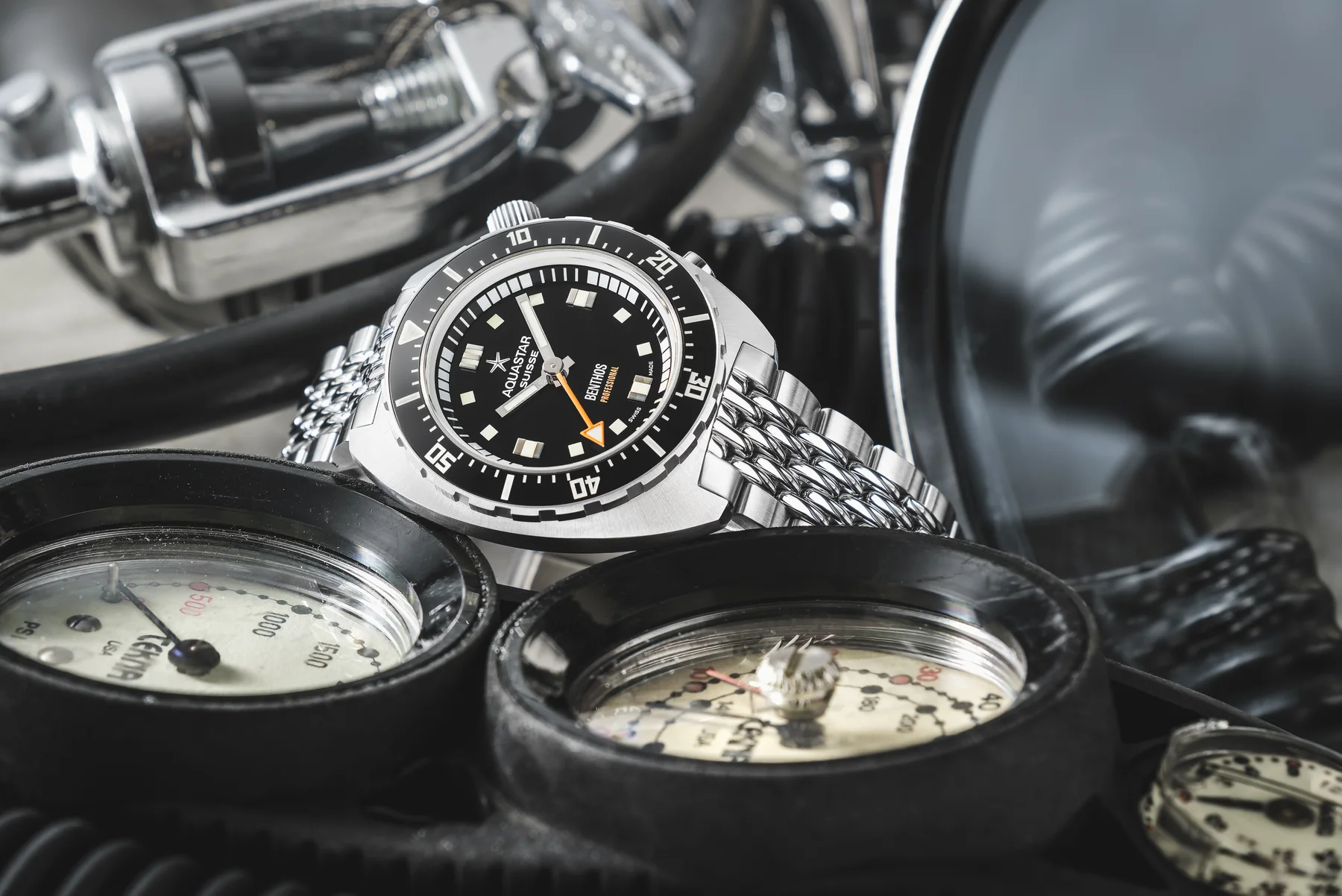
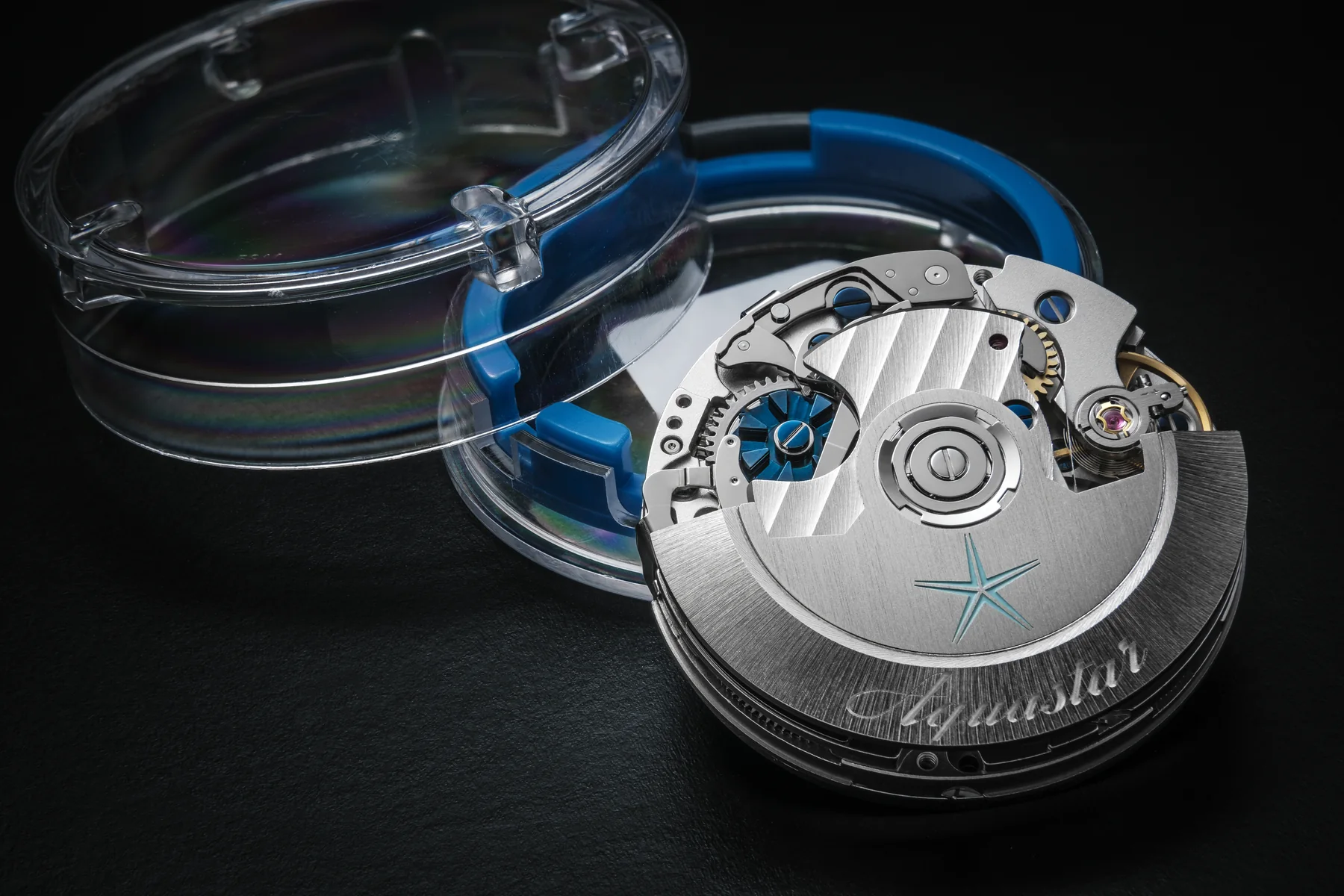
An Aquastar chronograph movement resting beside its clear case back

A chronograph rated to serious depth still raises the same question at the dock, on the boat, and at the sink – can you press the pushers in water? Chronograph pusher water resistance is where spec-sheet confidence meets real engineering, and the answer is rarely as simple as the dial text or caseback engraving suggests.

Why chronograph pusher water resistance is different

A standard dive watch has a relatively straightforward sealing challenge. The caseback, crystal, and crown must remain secure under pressure. A chronograph adds two more moving points of entry, each designed to travel in and out of the case on command. That changes everything.

Every pusher is a controlled breach in the case wall. It must move with precision, deliver a clean tactile response, and still maintain a seal against water, pressure, dust, and age. In a mechanical chronograph, that external movement also has to transmit force to a complex system of levers, hammers, and cams without excess play. Good chronograph design is already difficult. Good chronograph water resistance is harder.

This is why many chronographs, even expensive ones, settle for modest water resistance ratings. It is not always a failure of ambition. Often, it is the result of honest engineering priorities. A slim vintage-style case, elegant pump pushers, and crisp actuation can work against the thick gaskets, reinforced tubes, and added resistance required for underwater use.

How pushers are sealed

At the center of chronograph pusher water resistance is a simple principle: the pusher stem has to move, but water cannot follow it into the case. That is typically handled by gaskets placed around the pusher shaft, inside the pusher tube, or in a multi-part assembly designed to maintain compression as the part travels.

The best systems do not rely on one line of defense. They use material choice, dimensional tolerances, spring pressure, and gasket geometry together. O-rings made from modern synthetic compounds can be highly effective, but they only work as intended when the fit is exact and the surfaces remain clean and undamaged. A pusher that feels sharp and mechanical to the finger may be operating inside a very narrow margin.

There are also trade-offs. A firmer seal can increase pusher resistance. A lighter, more refined feel may come at the expense of ultimate underwater security. This is why one chronograph can feel buttery and elegant while another feels more deliberate and tool-like. The tactile difference is not just character. It often reflects how the watch was engineered to manage pressure and ingress.

Pump pushers, screw-down pushers, and the reality behind both

For many collectors, the visual distinction is immediate. Pump pushers are clean, classic, and often closer to the profile of historic chronographs. Screw-down pushers look more overtly technical and usually signal a watch designed with higher water exposure in mind.

A pump pusher can be water resistant. That point is often misunderstood. Water resistance does not automatically require a screw-down system. With the right gasket design, pusher construction, and case engineering, a pump-pusher chronograph can achieve meaningful water resistance and real-world dependability. But there is a limit to how much trust should be placed in any moving pusher underwater, particularly once the watch has seen years of wear or uncertain service history.

Screw-down pushers add another layer of security by mechanically locking the pusher against accidental activation and reducing exposure at the seal point. That extra protection is useful, especially for a watch expected to see rough marine use. The drawback is equally clear. They are slower to operate, less elegant in use, and they interrupt the immediacy that makes a chronograph so satisfying in the first place.

Neither system is universally better. It depends on the watch’s purpose. A racing chronograph that may encounter rain, spray, or brief immersion has different requirements than a true underwater instrument. The collector should also be honest about actual use. Plenty of chronographs spend more time timing coffee brews than decompression stops.

What the depth rating does and does not tell you

A water resistance rating is a controlled test result, not blanket permission. If a chronograph is rated to 100 meters, that does not mean every function is safe to use at 100 meters. It means the case, when properly secured and in correct condition, has passed a pressure test to that standard.

This distinction matters. Many manufacturers explicitly warn against operating pushers underwater unless the watch was specifically designed for that purpose. Others permit it only on certain models, usually with stated conditions. If the brand does not clearly say the pushers can be actuated underwater, the safest assumption is that they should not be.

Dynamic conditions complicate things further. Jumping into water, swimming with force, exposing the watch to temperature changes, or pressing a pusher at depth can create stresses beyond static lab testing. Saltwater adds another layer. It is not just wet. It is corrosive, persistent, and unforgiving to compromised seals.

That is why seasoned enthusiasts look beyond the headline number. They ask how the pushers are built, whether operation in water is approved, and how recently the watch was tested. Specs matter. So does context.

Vintage chronographs deserve special caution

This is where many good watches are treated too casually. A vintage chronograph with a printed depth rating, a compressor-style case, or a muscular case profile is not automatically ready for modern water use. Original gaskets age. Pusher tubes wear. Springs weaken. Service history can be incomplete or optimistic.

Even when a vintage watch has been pressure tested, caution is still the disciplined approach. A successful bench test is reassuring, but it does not reverse decades of metal fatigue, prior polishing, thread wear, or unknown parts changes. On a vintage chronograph, pusher operation in water is usually a bad gamble, no matter how heroic the marketing language once was.

Collectors who appreciate historic underwater chronographs understand the distinction between owning a watch with professional lineage and treating it as if it just left the factory. Heritage has to be respected. So do physics and time.

Why modern engineering changes the picture

Modern mechanical chronographs benefit from better gasket compounds, tighter machining tolerances, improved case architecture, and more rigorous production control. Those advances do not eliminate risk, but they narrow the gap between design intent and real-world performance.

This is where serious brands separate themselves from generic luxury positioning. A watch built with genuine underwater credibility is not just given a sporty dial and a bold depth rating. It is engineered around the problem. Case construction, pusher geometry, crown protection, crystal seating, and serviceability all work together. The result should feel coherent, not theatrical.

For a heritage-driven chronograph, this matters even more. Reviving the proportions and spirit of a historic instrument is only half the job. The modern watch has to meet modern expectations for reliability. That balance between archival fidelity and contemporary sealing is not easy, but when done properly, it is what turns a nostalgic design into a serious tool watch.

So can you use chronograph pushers underwater?

Usually, no – unless the manufacturer clearly states that you can.

That may sound conservative, but it is the right baseline. Even with a strong water resistance rating, most chronographs are safer when the pushers remain untouched in water. The risk is not only immediate flooding. It can be gradual ingress, moisture trapped after use, or seal damage that only becomes obvious later.

If a specific model is designed for underwater pusher operation, follow the maker’s instructions exactly. Make sure the watch has been pressure tested on schedule. Rinse it after saltwater exposure. Never assume yesterday’s rating is today’s reality.

If the watch is not explicitly engineered for underwater activation, treat the chronograph as a timing instrument to be used before immersion or after surfacing. That approach protects the movement, the case integrity, and the long-term service life of the watch.

What serious owners should look for

When evaluating a chronograph for water use, the intelligent question is not just how many meters it is rated for. Ask whether the pushers are approved for underwater use, whether the design uses screw-down pushers or advanced sealing on pump pushers, and whether the case was conceived as a true marine instrument rather than a dressed-up chronograph with sporty language.

Also consider service discipline. Chronograph pusher water resistance is not permanent. Gaskets compress and age. Lubricants migrate. Impacts matter. A watch that was watertight five years ago may not be watertight now, even if it looks perfect on the wrist.

A well-built chronograph can handle a great deal. But the best owners understand that water resistance is a system, not a promise etched in steel. Respect the engineering, maintain it properly, and use the pushers with the same judgment you would expect from any serious instrument built for hard use.
Posted on

Column Wheel Chronograph vs Cam: Why It Matters

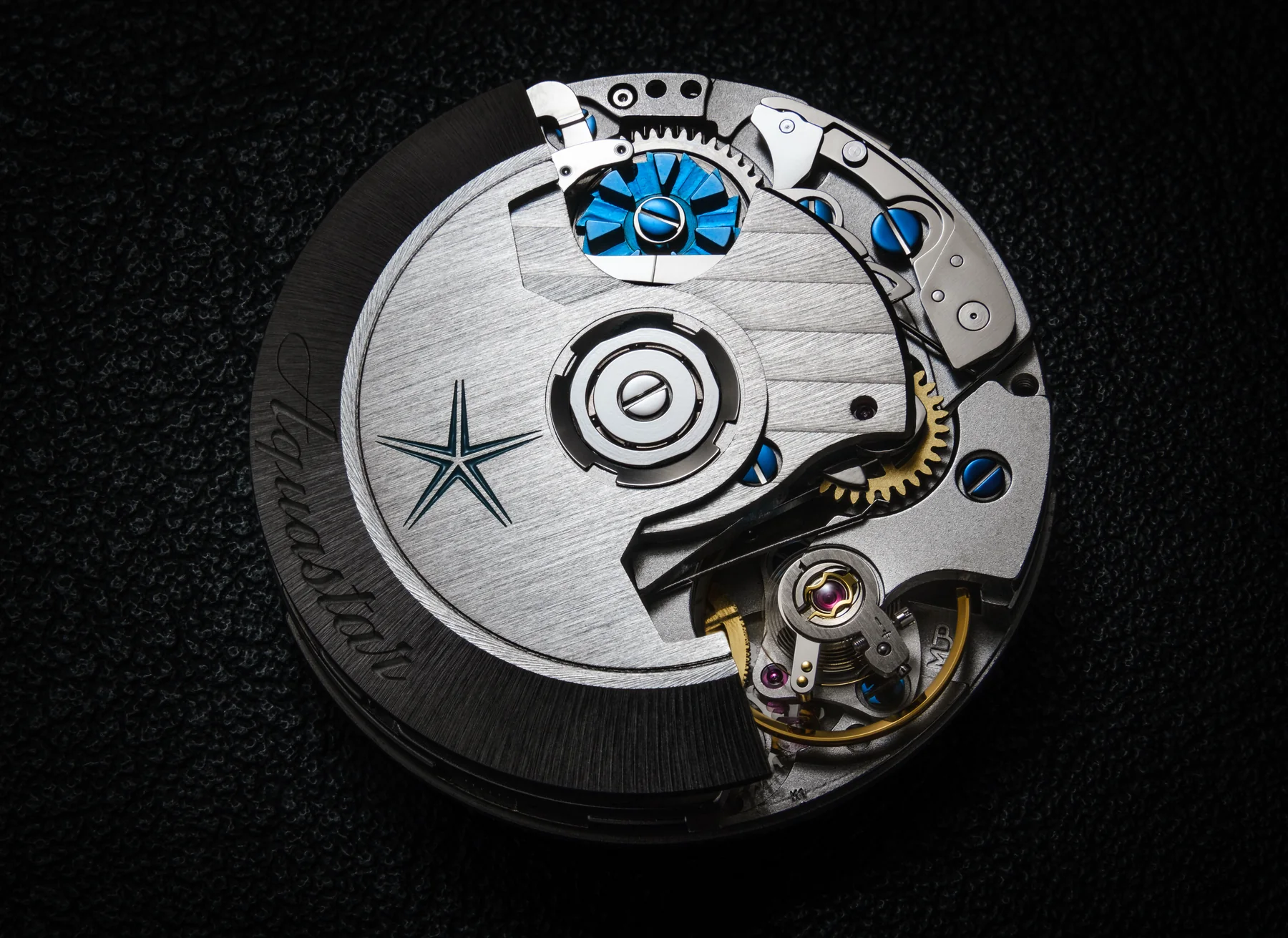
An Aquastar chronograph movement resting beside its clear case back

If you have ever read a chronograph review and seen the phrase “column wheel” mentioned in reverent tones, you may have wondered what it actually means and why it commands a premium. A chronograph is a watch with a built-in stopwatch, and the mechanism that starts, stops, and resets that stopwatch can be controlled in two main ways: by a column wheel or by a cam (also called a coulisse-lever or shuttle-cam system). This article explains how a column wheel chronograph works, how it differs from a cam-actuated one, and why the column wheel remains the mark of a more considered, higher-tier movement.

Macro of the Aquastar chronograph movement with the blue column wheel visible at the centre, surrounded by the chronograph levers
The blue column wheel at the centre of the Aquastar Deepstar chronograph movement, built by La Joux-Perret. It is the toothed part this article is about, orchestrating start, stop and reset.

What a chronograph has to do

Every chronograph performs three jobs in sequence: start, stop, and reset to zero. When you press the top pusher the first time, a clutch engages the chronograph seconds hand to the running gear train so it begins to sweep. Press it again and the hand stops while the watch keeps telling the time. Press the lower pusher and the hand flies back to zero. Coordinating these actions, deciding which lever moves, which spring tensions, and which wheel engages at each press, is the job of the chronograph’s control organ.

That control organ is where the two design philosophies diverge. Both must translate a simple push of your finger into a precise, repeatable sequence of mechanical events. The difference lies in how elegantly, and how durably, they do it.

How a column wheel works

A column wheel is a small, intricately machined component that looks a little like a castle turret or a crown gear. It has a ring of vertical columns, typically six to nine, rising from a toothed base. With each press of the pusher, a clicking finger advances the wheel by one step, rotating it a fraction of a turn.

As the wheel rotates, the levers that control the chronograph rest either on top of a column or down in the gap between two columns. When a lever sits on a column, it is held away from the mechanism. When it drops into a gap, it engages. So a single rotation of this one part choreographs the whole start-stop-reset cycle: levers rise and fall in a fixed, repeatable rhythm dictated by the geometry of the columns. It is a beautifully economical solution, one rotating part orchestrating several others.

Because the engagement points are defined by precisely cut columns, the action is crisp and consistent. Watch enthusiasts often describe the feel of a column wheel pusher as having a clean, deliberate click, the result of the lever dropping cleanly into a machined gap rather than riding along a sloped surface.

How a cam (shuttle) system works

The cam-actuated system, sometimes called a coulisse-lever or shuttle-cam mechanism, replaces the column wheel with a flat, shaped cam that slides or pivots back and forth. Instead of levers rising and falling over vertical columns, they ride over the profiled edges of this cam. As the cam shifts position with each pusher press, its contours push the levers in and out of engagement.

The cam approach was developed largely as a way to make chronographs more affordable to manufacture. A stamped or simply machined cam is far cheaper to produce than a column wheel, which requires precise cutting and finishing of each individual column. Cam systems are also somewhat more tolerant of manufacturing variation, which makes them well suited to high-volume production.

It would be a mistake to dismiss cam chronographs as inferior in function. Some of the most successful and robust chronograph movements ever made are cam-actuated, and a well-made cam system can be every bit as reliable and accurate at timing as a column wheel. The differences are real, but they live more in feel, finishing, and prestige than in whether the stopwatch keeps good time.

Column wheel vs cam: the real differences

Once you strip away the marketing, the practical contrasts come down to a handful of points:

  • Pusher feel: Column wheel systems generally give a smoother, more precise click. Cam systems can feel slightly stiffer or more mechanical, though good design narrows the gap.
  • Cost and complexity: The column wheel is more expensive to make and to assemble, which is the main reason it appears in higher-tier movements.
  • Finishing and prestige: A column wheel is a visually appealing component, often shown off through a display caseback, and it carries genuine horological cachet.
  • Durability: Both can last for decades with proper service. Cam systems are arguably a little more forgiving of wear, while column wheels reward careful regulation.
  • Serviceability: A column wheel demands a more skilled hand to adjust correctly, which is one reason it is associated with finer watchmaking.

For most owners, the deciding factor is not measurable performance but the sense that a column wheel represents the older, more refined way of building a chronograph. It is the architecture that the great manually wound chronographs of the twentieth century used, and it remains the choice when a brand wants to signal that no shortcut was taken.

Why premium dive and sports chronographs favour the column wheel

In a sports or dive chronograph, the chronograph function is not a decorative afterthought. It is a timing tool, used to measure elapsed minutes underwater or on the track, and the crisp, dependable action of the pushers matters to the person using it. A column wheel delivers that tactile confidence, the clean engagement that tells you the timing has started or stopped exactly when you intended.

This is why you find column wheel architecture in the chronograph calibres chosen for higher-tier Swiss sports watches. The La Joux-Perret L113 and the related L100 family are column wheel chronograph movements, built by an independent Swiss movement specialist and selected for watches where the chronograph is meant to be used, not just admired.

The column wheel in an Aquastar chronograph

Aquastar is a useful worked example, because the chronograph is not an add-on to the brand, it is the point. Frédéric Robert founded Aquastar in Geneva in 1957, and the Deepstar chronograph that followed in 1962 carried a no-decompression bezel patented in 1964, a genuine timing instrument for divers rather than a dress complication.

The modern Deepstar keeps that logic. The Deepstar III runs the La Joux-Perret Calibre 1MPS, a column-wheel chronograph that La Joux-Perret developed exclusively for the model, an undertaking very few makers of Aquastar’s size ever commission. The result is the architecture this article describes, the clean column-wheel engagement, sitting inside a case built for the water and paired with the tool-watch discipline the brand has followed since the 1950s. It is the difference between a column wheel shown off through a display back and one that is actually there to be used.

If you are weighing up a chronograph and the column wheel question matters to you, look past the brochure language and ask what the movement actually is. A genuine column wheel chronograph, finished and regulated well, is one of the more satisfying mechanical objects you can wear on your wrist. To see how that architecture sits inside a purpose-built Swiss dive chronograph, explore the Aquastar Deepstar family, or read how it fits the wider case for a Swiss tool watch.

Frequently asked questions

Is a column wheel chronograph better than a cam?

Not in the sense of keeping better time. A well-made cam chronograph can be just as accurate and reliable as a column wheel. The column wheel is generally smoother and more precise in pusher feel, more expensive to make and finish, and more demanding to service, which is why it appears in higher-tier movements. The advantage is in feel, finishing and prestige rather than measurable timing performance.

How can I tell if a chronograph has a column wheel?

The reliable way is to check what the movement actually is rather than the brochure language. Look up the calibre: a column wheel is a specific, documented component, so the maker or the movement supplier will state it. Many column-wheel movements are shown through a display caseback, where the wheel looks like a small toothed turret with vertical columns. The pusher feel, a clean deliberate click, is a hint but not proof.

What movement does the Aquastar Deepstar use?

The Aquastar Deepstar III uses the La Joux-Perret Calibre 1MPS, a column-wheel chronograph movement that La Joux-Perret developed exclusively for the model. La Joux-Perret is an independent Swiss movement specialist whose L113 and L100 column-wheel family is chosen for sports and dive chronographs meant to be used.

Why do column wheel chronographs cost more?

Because the column wheel itself is expensive to produce and to assemble. Each column has to be precisely cut and finished, and regulating the mechanism correctly takes a more skilled hand than adjusting a cam system. That extra cost in parts and labour is the main reason column-wheel architecture is reserved for higher-tier movements.


Posted on

What Is a Skindiver Watch? The 1950s Dive Watch Explained

Aquastar dive watch

A skindiver watch is one of the earliest forms of the modern dive watch, a 1950s category built for free divers and spearfishers who swam without bulky equipment. If you have ever wondered what a skindiver watch is, how it differs from the tool divers that followed, and why so many of them share that distinctive rounded case, this guide explains the category from its origins to what it means for collectors today.

What Defines a Skindiver Watch?

The term skindiver comes from the sport of skin diving: diving with a mask, fins, and snorkel rather than a full air supply. As recreational underwater swimming grew through the 1950s, watchmakers responded with timepieces that could survive immersion and stay legible in low light. The result was a loosely defined family of watches we now call skindivers.

A skindiver watch typically combines a few recognisable traits: a water-resistant case rated for real immersion, a rotating timing bezel, high-contrast luminous markers, and a strap suited to bare-wrist wear in and out of the water. These were not laboratory instruments. They were affordable, robust watches aimed at a fast-growing audience of amateur divers, and that practical, mass-appeal character is part of what gives the category its charm.

It is worth noting that skindiver was never a tightly regulated label. It describes a period and a purpose more than a fixed specification. That is exactly why the category is so broad, and why collectors still debate where its boundaries lie.

Why the 1950s Produced the Skindiver

The skindiver watch is a product of its moment. The post-war years saw a surge of interest in the underwater world, driven by improved swimming gear, cheaper travel to coastal regions, and a wave of popular books and films about the sea. Skin diving and spearfishing became mainstream leisure activities across the Mediterranean, the Pacific, and beyond.

That new audience needed a watch it could trust in the water without paying for a professional instrument. Watch houses, many of them Swiss, recognised the opportunity and adapted existing case and movement technology to handle moisture and pressure. The timing bezel, borrowed in spirit from earlier instrument and aviation watches, let a diver track how long they had been down, an essential safety habit even for shallow free diving.

Because the category grew from genuine demand rather than a marketing exercise, skindivers tended to be honest, no-nonsense watches. Form followed function, and the design language that emerged in this decade went on to shape almost every dive watch made since.

The Cushion Case and Other Hallmarks

If one feature is most associated with the skindiver, it is the cushion case: a squarish case with strongly rounded corners that softens into a pillow-like profile. The shape was not merely stylistic. A cushion case wraps a relatively large dial and movement in a compact, sturdy housing, and its broad flanks help protect the crown and resist knocks during active use.

Beyond the case shape, several other hallmarks recur across the category:

  • A bidirectional or friction-fit rotating bezel for timing, an early form of the elapsed-time bezel later refined on professional divers.
  • Bold luminous hands and markers, often painted, for legibility in murky or dark water.
  • A screw-down or otherwise sealed crown, with gaskets to keep moisture out under pressure.
  • An acrylic crystal, which was tough against shattering and easy to polish, if prone to scratches.
  • Modest water resistance by today’s standards, frequently rated around 100 to 200 meters, which was ample for the recreational use intended.

Straps were usually simple: a perforated leather rally band, a steel bracelet, or in warmer climates an early rubber strap. The overall impression was purposeful rather than luxurious, and that restraint is precisely what many enthusiasts now find appealing.

Skindiver vs the Later Tool Diver

It helps to place the skindiver in context. The category sits at the start of the dive watch story, before the highly specified professional tool divers of the 1960s and 1970s arrived. As saturation diving, military procurement, and deep commercial work pushed requirements higher, the industry developed watches with unidirectional safety bezels, far greater depth ratings, and features such as the helium escape valve.

The differences are mostly ones of degree and intent. A skindiver was built for recreational immersion and prioritised value, legibility, and durability. A later tool diver was engineered for professional environments where failure carried real consequences, so it added redundancy, depth, and standardised testing. One is not simply a worse version of the other. The skindiver is the foundation on which the tool diver was built.

For a modern buyer, the distinction matters because it shapes expectations. A vintage skindiver is best treated as a characterful daily wearer rather than a deep-water instrument, while a vintage or modern professional diver is designed to be used in earnest.

Aquastar and the Skindiver Era

Aquastar’s roots run directly into this period. The Aquastar Model 60, introduced in 1957, is a documented example of a Swiss skindiver-era watch with a cushion case, and it predates the formal founding of Aquastar as an independent house in 1962 by Frédéric Robert. The Model 60 captures the look and intent of the era: a compact, rounded case built to be worn in the water and read at a glance.

That heritage is part of why Aquastar’s later work moved so naturally toward serious diving instruments, including the patented no-decompression bezel of 1962 and, by 1970, the Benthos 500, the first Swiss dive watch rated to 500 meters. The skindiver was the starting point of a continuous line of dive-watch development, not a dead end.

Collecting and Wearing a Skindiver Today

Skindiver watches have become a focus for collectors who value honest 1950s and early 1960s design. Their compact diameters, often in the high 30s of millimeters, wear comfortably on a wide range of wrists and suit anyone who finds modern dive watches too large. The cushion case in particular has enjoyed a strong revival, and contemporary watches frequently borrow the silhouette.

If you are buying vintage, treat condition and originality as priorities. Old gaskets and acrylic crystals can be replaced, but original dials, hands, and bezels are what hold long-term value. Never assume a vintage skindiver is still water-resistant: decades-old seals should be tested or replaced before any contact with water, and many are best kept dry regardless.

If you prefer the look of the era with modern reliability, a current watch that carries the cushion-case lineage offers the best of both. To see how the 1950s skindiver shape lives on in a contemporary Swiss dive watch, explore the Aquastar Model 60 collection, which traces its design directly to that founding moment in dive-watch history.

Posted on

Mechanical vs Quartz: Which Dive Watch Should You Buy?

Aquastar dive watch

If you are shopping for a dive watch, one of the first decisions you will face is mechanical vs quartz. Both can be reliable, water-resistant tools, yet they age, fail, and serve you in very different ways. This guide compares mechanical and quartz dive watches on the points that actually matter underwater and over a lifetime of ownership: accuracy, longevity, repairability, failure modes, and cost. The aim is an honest framework, not a verdict, so you can match the watch to the way you actually dive and live.

Mechanical and Quartz: How Each One Keeps Time

A mechanical dive watch runs on a coiled mainspring that stores energy and releases it through a regulated gear train. An automatic version winds that mainspring from the motion of your wrist, while a manual-wind version asks you to turn the crown. The rate is governed by a balance wheel oscillating back and forth, typically several times per second. Nothing electronic is involved, which is part of the appeal: the entire system is mechanical and, in principle, serviceable forever.

A quartz dive watch uses a battery to send current through a tiny tuning-fork-shaped quartz crystal, which vibrates at a precise frequency (usually 32,768 times per second). A circuit counts those vibrations and drives the hands once per second, which is why most quartz watches tick rather than sweep. The mechanism has far fewer moving parts, runs on electrical power, and is inherently very accurate because the crystal’s frequency is so stable.

That core difference, a wound spring versus a powered crystal, drives almost every trade-off that follows. Neither approach is more “serious” than the other. Quartz dominated professional and military dive watches through the 1980s precisely because it was rugged and accurate, while mechanical watches retained a following for their craft, longevity, and the fact that they never need a battery.

Accuracy: Quartz Wins on Paper

If raw timekeeping is your priority, quartz is the clear winner. A standard quartz dive watch typically holds within roughly 15 seconds per month. A good mechanical movement, by contrast, is usually rated in seconds per day. A chronometer-grade mechanical watch might run within -4 to +6 seconds per day, which is excellent for a spring-driven device but still an order of magnitude looser than ordinary quartz.

For diving specifically, this gap matters less than it sounds. A diver tracks elapsed time on the rotating bezel, not on the absolute reading of the dial, and the bezel only needs to be accurate over the span of a single dive. Over 40 minutes underwater, even a mechanical watch running a few seconds fast per day introduces no meaningful error. Where quartz accuracy genuinely pays off is in daily life: you reset a quartz watch far less often, and a thermocompensated quartz movement can hold a few seconds per year.

Longevity and Repairability: Mechanical’s Strong Suit

This is where the two diverge most sharply, and where a buyer’s time horizon really matters. A mechanical movement is built to be disassembled, cleaned, lubricated, and reassembled indefinitely. A well-made Swiss mechanical dive watch serviced on schedule can realistically run for generations. Parts for established calibres such as the Sellita SW200-1 or the ETA family are widely available, and any competent watchmaker can work on them.

Quartz movements are generally less repairable. The electronics, the stepping motor, and the circuit are usually replaced as a module rather than rebuilt. For an inexpensive quartz watch this is fine, because a replacement movement is cheap. For an older or discontinued quartz watch it can be a problem: if the specific module is no longer produced, the watch may become difficult to revive even when the case and dial are perfect. High-end quartz is an exception, with some movements designed for long service lives, but as a category, mechanical watches are the safer bet for multi-decade ownership.

There is also the battery question. A quartz dive watch needs a battery change every one to three years, and crucially, that means opening the case. Every time a dive watch is opened, its gaskets should be inspected and the case pressure-tested before it goes back in the water. A mechanical watch sidesteps the battery entirely, though it still needs periodic gasket service to stay water-resistant.

Failure Modes: How Each One Lets You Down

Understanding how a watch fails is more useful than asking which is “more reliable,” because both are reliable when maintained. They simply fail differently.

  • Quartz: the most common failure is a dead battery, which is gradual and predictable. A weak battery often makes the seconds hand jump in two- or four-second steps as a warning. The worst-case scenario is a battery left in too long, which can leak and corrode the movement, or a circuit fault that requires a full module swap.
  • Mechanical: failures tend to come from shock, magnetism, or worn lubricant. A hard knock can damage the balance staff, a strong magnetic field can throw off the rate until the watch is demagnetised, and old, dried oil increases friction and slowly degrades accuracy. None of these are sudden in the way a dead battery is, but they require a watchmaker rather than a battery shop.

For diving, both types depend far more on the case, crown, and gaskets than on the movement inside. A screw-down crown, properly maintained seals, and regular pressure testing protect the watch regardless of what powers it. Water resistance is a function of the case, not the calibre.

Cost, Wearing Experience, and Resale

Quartz dive watches are usually cheaper to buy and far cheaper to maintain. If you want a robust, accurate, low-fuss tool that you can throw in a dive bag and forget, quartz is hard to beat on pure utility. The trade-off is that the wearing experience is more functional than emotional, and at the lower end, resale value is modest.

Mechanical dive watches cost more upfront and more to service, but they offer the smooth sweeping seconds hand, the heft and craft of a precision movement, and the sense that you are wearing a small machine rather than a powered circuit. Well-regarded Swiss mechanical dive watches also tend to hold their value better over time, and the best examples become objects people keep and pass on rather than replace.

There is no universally correct answer. A weekend recreational diver who values low maintenance and absolute accuracy may be happiest with quartz. A buyer who wants a watch for life, who enjoys the mechanics, and who is comfortable with a service every five to seven years will gravitate toward mechanical. Many enthusiasts eventually own both for exactly these reasons.

Which Should You Choose?

Start with how you will actually use the watch. If you need set-and-forget accuracy, minimal cost, and you do not mind that the watch may not be repairable in 30 years, quartz makes sense. If you want longevity, serviceability, and the character of a mechanical movement, and you accept the higher running cost and looser daily accuracy, mechanical is the better fit. Both can be genuine dive tools with the right case, crown, and gasket maintenance.

If you lean toward a mechanical dive watch built around a dependable, widely serviceable movement, it is worth looking at the Aquastar Benthos family, where the Benthos Professional runs the automatic Sellita SW200-1. Whichever route you take, judge the watch on the things that survive the marketing: how it is built, how it can be serviced, and how it fits the diving you actually do.

Posted on

How to Read Watch Specifications

An Aquastar Benthos Professional on a steel bracelet among diving gauges and regulators

A watch can look right in a photograph and still be completely wrong on the wrist or in the water. The difference is usually buried in the spec sheet. If you want to know how to read watch specifications, you need to see past marketing language and understand what each number actually tells you about performance, proportions, and purpose.

That matters even more with serious tool watches. A dive watch is not defined by a rotating bezel and a bold dial alone. Its credibility lives in the engineering – case construction, movement architecture, depth rating, crystal, lume, and the details that determine whether the watch is merely styled like an instrument or built like one.

How to read watch specifications without getting distracted

Most watch specifications mix genuinely useful information with details that sound impressive but mean very little in practice. The skill is learning which lines on the page affect ownership and which ones are there to decorate the story.

Start with the fundamentals. Case diameter, thickness, lug-to-lug length, movement type, water resistance, crystal material, and bezel construction will tell you more than a paragraph of brand copy. If those core specifications are right, the rest becomes refinement. If they are wrong, no amount of heritage or finishing will save the watch.

You also have to read specifications as a system rather than as isolated numbers. A 41mm dive watch can wear compact or oversized depending on lug length and case profile. A 300-meter depth rating sounds serious, but it means more when paired with a screw-down crown, solid caseback, and a bezel you can trust with wet hands. Good specifications work together.

Case dimensions tell you more than diameter alone

Many buyers fixate on case diameter because it is the easiest number to compare. It is also one of the most misleading when taken by itself. A 39mm watch with a long lug span can wear larger than a 41mm watch with short, sharply turned lugs.

The more useful measurement is lug-to-lug length. That number determines how much wrist real estate the watch actually occupies. For many collectors, especially those who care about vintage-correct proportions, lug-to-lug is the difference between balanced and cumbersome.

Thickness matters too, but context matters more. A chronograph will usually be thicker than a time-only diver because the movement is more complex. A domed crystal can add visual height without making the mid-case feel bulky. If the watch is intended as a professional instrument, some thickness is a fair trade for depth rating and structural integrity. If it is excessively tall without offering meaningful capability, that is another story.

Case material should also be read for function, not just prestige. Stainless steel remains the benchmark for a reason – durable, corrosion-resistant, and proven. DLC-coated steel adds surface hardness and a more tactical appearance, but coatings can show wear differently over time depending on use. Titanium reduces weight, which some owners love and others find less reassuring in a substantial dive watch. None of these is automatically better. The right choice depends on how the watch is meant to be worn.

Movement specifications separate romance from reality

The movement is where watchmaking substance begins. The first distinction is mechanical versus quartz. For an enthusiast audience, a Swiss mechanical movement carries obvious appeal – traditional architecture, serviceability, and the tactile satisfaction of a living machine on the wrist.

Then look at whether the movement is automatic or manual-wind. Automatic is more convenient for daily wear. Manual-wind offers a more direct connection with the mechanism and can suit historically faithful recreations. Neither is superior in every case.

Power reserve is worth checking, but do not treat it as a trophy number. A longer reserve is useful if you rotate watches, yet reliability, service access, and regulation matter just as much. Beat rate can also be informative. A higher beat movement may offer a smoother seconds hand sweep and potentially finer rate stability, while a lower beat caliber can feel more traditional and sometimes easier on long-term wear of components. Again, trade-offs.

If the spec sheet lists the caliber, that is a good sign. It shows confidence and gives experienced buyers a way to assess lineage, known strengths, and service expectations. If a brand stays vague about the movement, pay attention.

Water resistance is not a marketing flourish

On a dive watch, water resistance is a core specification, not a decorative stamp. But it is often misunderstood. A 200-meter or 300-meter rating does not mean the watch is suitable for every underwater task by default. It means the case has been engineered and tested to a defined pressure standard. Real-world capability still depends on crown security, gasket condition, case construction, and proper maintenance.

For actual aquatic use, you want to see a screw-down crown and a case designed with purpose. A solid depth rating on paper means less if the rest of the watch feels compromised. A serious diver should inspire confidence before it ever reaches the water.

There is also a difference between lifestyle water resistance and professional credibility. Fifty meters may survive incidental contact. One hundred meters can handle more, depending on the design. But when you move into the territory of dedicated dive instruments, higher ratings paired with proper construction are what matter. Not because every owner is saturation diving, but because engineering margin is part of what makes a tool watch trustworthy.

Crystal, bezel, and lume reveal real-world intent

Acrylic, mineral glass, and sapphire each tell a different story. Acrylic is warm, period-correct, and charmingly distortive, but it scratches easily. Mineral is serviceable yet less desirable in premium tool watches. Sapphire is the modern benchmark because it resists scratches far better in daily use. If the watch is built for enduring performance, sapphire usually belongs there.

Bezels deserve close attention, especially on a diver. Unidirectional bezels are the standard because they reduce the risk of accidental overestimation of remaining dive time. Material matters too. Aluminum inserts carry vintage character and can age attractively. Ceramic offers superior scratch resistance and a sharper modern look, though some collectors still prefer the warmth and historical honesty of aluminum.

Lume is one of the clearest signals of whether a watch was designed for use or simply styled for effect. Strong luminous material on the hands, markers, and bezel pip is not a trivial feature on an underwater instrument. It is a functional requirement. Super-LumiNova is now widely expected in quality mechanical sports watches, but application quality still varies. Broad, legible hands and clean contrast often matter as much as raw brightness.

Bracelet and strap specs affect ownership every day

Buyers often spend more time debating movement pedigree than the component they actually feel against the skin. That is a mistake. Bracelet and strap specifications shape daily comfort, balance, and usability.

Look for lug width, clasp type, and whether the bracelet offers meaningful micro-adjustment. On a dive watch, that matters. Wrist size changes with heat, activity, and wetsuit use. A beautifully made bracelet that cannot be adjusted properly will become a frustration.

Rubber straps should be judged by fit, flexibility, and design rather than by material claims alone. An integrated or tapering strap can transform the character of a watch. Leather may look refined, but it is rarely the practical choice for a watch with serious underwater intent. Match the strap to the mission.

How to read watch specifications like a collector

Collectors read specs with one extra question in mind: does this watch make sense as a whole? That means checking whether the design, dimensions, movement, and materials are aligned with the watch’s stated identity.

If a watch claims dive heritage, the proportions should feel disciplined, the bezel should be functional, and the dial should favor legibility over theatrics. If it references a historic professional instrument, the modern upgrades should improve reliability without erasing the character that made the original matter. This is where experienced enthusiasts separate thoughtful re-editions from generic retro styling.

That same lens helps with chronographs. The presence of a chronograph adds complexity and appeal, but it should also justify itself through layout, pushers, thickness, and overall balance. Specifications are not just numbers. They are evidence of whether the watch was designed with conviction.

What to ignore on a spec sheet

Some details deserve less attention than buyers often give them. Jewel count, for example, can be informative in context but rarely decides whether a watch is worth owning. Marketing terms like premium grade, special edition engineering, or performance inspired design are even less useful unless they are backed by concrete specifications.

You should also be cautious with broad claims about versatility. A watch can be described as equally suited to the boardroom, beach, and black tie, but the dimensions and construction usually tell a more honest story. Read the steel, the thickness, the bezel, and the dial before you read the slogan.

A good spec sheet does not need to shout. It states the facts plainly, because the facts are enough.

The best way to judge a watch is to read the specifications until the watch becomes visible in your mind – how it will sit, how it will wind, how it will age, and whether it was truly built for the job it claims to do. When you can do that, you are no longer buying a picture. You are buying the machine.

Posted on

What Does Water Resistance Rating Actually Mean on a Watch?

An Aquastar diver underwater in full gear gripping a shot line, the dive watch on the wrist

Almost every watch carries a water resistance rating, usually printed on the dial or caseback as a depth in meters or as a pressure in bar or ATM. The figures look reassuring: 30m, 100m, 300m. The problem is that a watch water resistance rating does not mean what most people assume it means, and reading it literally is the fastest way to flood a movement. This article explains what the number actually measures, why a 30m watch is not meant for swimming let alone diving, and how to read every common rating in real-world terms.

What a water resistance rating actually measures

A water resistance rating is the result of a static pressure test carried out in a laboratory, not a promise of survival at that depth in open water. When a watch is marked 100m, it means the case withstood a pressure equivalent to 100 meters of static water without leaking during a controlled test. The watch is sealed, submerged or placed in a pressure chamber, and held at a fixed pressure while the case is checked for ingress.

The key word is static. The test water does not move, the watch does not move, and the temperature is controlled. Real life is the opposite. The moment you swim, dive off a board, or simply move your arm quickly through water, the pressure acting on the case rises well above the static figure. That is why the printed depth is best understood as a margin of safety rather than an operating limit.

Static versus dynamic pressure: the gap that matters

Static pressure is the steady force of still water at a given depth. Dynamic pressure is what happens when water is forced against a surface in motion. A swimmer’s wrist cutting through water, the impact of a dive into a pool, or the rush of a shower jet can momentarily generate pressure spikes far higher than the depth would suggest. A watch sitting still at one meter feels roughly one extra bar of pressure. The same watch slapped hard against the surface during a dive can briefly see several times that.

This is the single most important reason that water resistance ratings carry a large built-in buffer. A watch rated for a modest depth has almost no buffer left once dynamic pressure is added, which is why the lower ratings are effectively splash protection rather than swimming credentials. The higher the static rating, the more headroom the case has to absorb those real-world spikes.

The ratings explained in real-world terms

Here is how the common figures translate into what you can and cannot safely do. Treat these as conservative guidance, because individual gasket condition and case design matter as much as the printed number.

  • 30m (3 bar): Splash resistance only. Survives rain, handwashing, and accidental splashes. Not for swimming, not for showering. A 30m watch is not a dive watch in any sense.
  • 50m (5 bar): Light swimming in a pool, but avoid diving in, jumping, or high-pressure water jets. Still not for snorkelling or any submerged activity.
  • 100m (10 bar): Genuine swimming and snorkelling. This is widely considered the practical floor for a watch you can use in water with confidence, though it is the bare minimum for any serious aquatic use.
  • 200m (20 bar): Recreational scuba diving. From here up, the watch enters true dive-watch territory and is built with the gaskets, crown, and case to match.
  • 300m (30 bar): Serious recreational and technical diving, with a healthy margin for dynamic pressure and repeated use.
  • 500m (50 bar): Deep and saturation-oriented diving. A rating of this kind signals a case engineered well beyond everyday needs.

Notice the jump in capability between 50m and 100m, and again between 100m and 200m. The numbers are not linear in everyday usefulness. A 200m watch is not merely twice as capable as a 100m watch; it is built to a different standard of sealing and crown design, which is what allows it to handle the pressures of actual diving.

Why 200m and above is the real dive-watch threshold

A watch built for diving is rated with a deliberate safety margin above its intended working depth. The accepted convention among dive-watch makers is to test cases well beyond the depth a diver would ever reach, so that the static rating leaves room for dynamic pressure, ageing gaskets, and repeated immersion. A 300m rating does not mean you should descend to 300 meters; it means the case has the structural and sealing headroom to keep a recreational diver safe with margin to spare.

This is also where a screw-down crown becomes essential. A push-pull crown relies on a single point of sealing, while a screw-down crown threads the crown tube and compresses gaskets to lock the most vulnerable opening in the case. Combined with a screwed caseback and a thick, well-seated crystal, this is what separates a watch that can dive from one that merely resists a splash.

Water resistance is not permanent

The single biggest misconception about water resistance is that it lasts forever. It does not. The seal of a watch depends on rubber gaskets at the crown, caseback, and crystal, and rubber degrades. Heat, sunscreen, soap, salt water, and simple age all harden and shrink gaskets over time. A watch that was rated 300m when new can lose much of that integrity within a few years if it is never serviced.

If you actually take a watch into water, treat pressure testing as routine maintenance. Have the gaskets inspected and the case pressure tested roughly every couple of years, and replace seals during any full service. Always confirm the crown is fully screwed down before contact with water, never operate the crown or pushers underwater, and rinse the watch in fresh water after exposure to salt. These simple habits matter far more than the printed depth on the dial.

The practical takeaway

A water resistance rating is a static test result with a built-in safety margin, not a literal diving depth. As a rule of thumb: 30m means splashes only, 50m means careful pool swimming, 100m is the practical floor for confident water use, and 200m or more is where a watch is genuinely engineered to dive. If you want a watch you can take into open water without a second thought, look for a 200m or 300m rating paired with a screw-down crown and a documented service history.

That combination of depth rating, crown design, and robust sealing is exactly what defines a purpose-built dive watch. If you want to see how those elements come together in practice, the Aquastar Benthos family is built around the demands of real diving, with depth ratings and case construction intended for the water rather than the display case.

Posted on

What Is a Heritage Dive Watch?

The 1959 Aquastar Navigator worn on the wrist among vintage diving equipment

A compressor case from the 1960s, a no-decompression bezel, a domed crystal profile, a broad-arrow handset that can be read at a glance underwater – these details are not styling exercises. They came from a time when a dive watch was equipment first. So when collectors ask, what is a heritage dive watch, the real answer starts there: with purpose, not nostalgia.

A heritage dive watch is a modern watch built from a historically important dive reference, or from a brand’s genuine underwater instrument lineage, while preserving the design language, proportions, and functional intent that made the original matter. It is not simply a new watch with faux-aged lume and a retro font. A true heritage diver carries forward a specific history and translates it into modern mechanical form.

What makes a heritage dive watch different

The difference comes down to lineage. A heritage dive watch is anchored in a documented past – a real model, a real era, and usually a real use case tied to sport, commercial, military, or professional diving. The watch has a clear point of origin. Its bezel layout, dial architecture, case construction, and legibility choices were not invented by a modern marketing team looking for vintage appeal. They were inherited.

That heritage can take several forms. Sometimes it is a faithful re-edition of a known reference. Sometimes it is a modernized revival that preserves the original watch’s identity while upgrading the movement, materials, lume, crystal, and water resistance. In both cases, the core idea is continuity.

This is where many watches miss the mark. Plenty of modern divers borrow cues from the past. Fewer have an actual claim to it. A watch can look vintage-inspired without being a heritage dive watch in any meaningful sense.

What is a heritage dive watch in practical terms?

In practical terms, a heritage dive watch should show three things at once: historical legitimacy, recognizable design continuity, and modern usability.

Historical legitimacy means there is an authentic backstory behind the watch. The original model existed, served a purpose, and mattered enough to be remembered. Design continuity means the new watch still looks and feels like its predecessor, not like a generic modern diver wearing a retro costume. Modern usability means it can meet current expectations for reliability, serviceability, and daily wear, even if the design belongs to another era.

That balance is not easy to get right. Push too far toward modern tastes and the watch loses the character that gave it value in the first place. Push too far toward strict historical recreation and you may end up with a piece that is charming but compromised by contemporary standards. The best heritage divers know exactly what to preserve and exactly what to improve.

The role of archival design

Archival design is more than copying an old dial. It means respecting proportions, negative space, bezel scale, hand shape, lug profile, and case thickness. Serious collectors notice when these elements drift.

A 40mm case can wear completely differently depending on how faithfully the brand has handled the mid-case shape and lug geometry. A bezel insert can be technically superior in ceramic, yet still feel wrong if its typography loses the visual character of the original. Heritage is often decided by details that casual buyers might not name, but they can still sense when something feels honest and when it feels manufactured.

The role of modern engineering

A heritage dive watch is not a museum piece unless it is intended to be one. Modern engineering is part of the proposition. Sapphire crystals replace acrylic for scratch resistance. Super-LumiNova improves low-light performance. Updated gaskets, screw-down crowns, and improved case construction increase water resistance and reliability. Swiss mechanical calibers offer stronger service support and better consistency than many vintage movements now can.

Those upgrades matter because a real dive watch, heritage or otherwise, should still function as a tool. Professional by nature. Luxurious by design. That standard only holds if the watch is built to endure beyond the display box.

Heritage diver vs vintage-inspired diver

This distinction matters more than the market likes to admit.

A vintage-inspired diver borrows the mood of an earlier period. It might use gilt accents, beige lume, a boxed crystal, or an old-school bezel font. It may be attractive and well made, but it does not necessarily trace back to a specific historic instrument from that brand.

A heritage diver has stronger foundations. It usually revives a documented reference or carries unmistakable DNA from a brand’s established dive catalog. There is a line you can follow from the past to the present. For collectors, that line is the difference between atmosphere and substance.

Neither category is automatically better for every buyer. If you simply want a handsome modern diver with retro character, a vintage-inspired model may be enough. If you care about provenance, archival fidelity, and collector relevance, heritage carries more weight.

The features that usually define a true heritage dive watch

Most true heritage divers share a familiar set of traits, though the exact mix depends on the source model. Legibility is always near the top. Large hands, high-contrast dials, clear minute markings, and functional lume are inherited because they served divers in difficult conditions.

Case architecture matters just as much. Skin diver shapes, compressor-style cases, asymmetrical chronograph housings, cushion cases, and compact professional profiles all point to specific periods of underwater watch development. These forms were not arbitrary. They solved real problems involving pressure, grip, protection, and underwater timing.

Bezels often tell the story fastest. A heritage diver may preserve a countdown bezel, elapsed-time bezel, no-decompression scale, or another timing system tied to the original watch’s function. That is more significant than a generic unidirectional bezel inserted for category compliance.

Then there is the movement. Purists may accept an updated caliber, and often should, but they want the upgrade to make sense. A modern Swiss automatic or hand-wound movement can improve durability and serviceability without erasing the watch’s character. A heritage watch does not need to be mechanically identical to the original to be credible. It does need to respect the spirit of the instrument.

Why collectors care about heritage dive watches

Collectors are not only buying a look. They are buying continuity.

A heritage dive watch offers access to a historically important design without the compromises that often come with true vintage ownership. You avoid fragile lume, uncertain water resistance, replacement parts of questionable correctness, and the anxiety of wearing an increasingly scarce original. At the same time, you still get the shape, the layout, the proportions, and the narrative that made the original desirable.

That matters even more in a market crowded with oversized cases, polished excess, and generic luxury positioning. A heritage diver answers a different brief. It does not need to announce itself with spectacle. Its authority comes from function, restraint, and credibility earned underwater.

For many buyers, that is the appeal. You are wearing a watch with a reason to exist.

Where heritage can go wrong

Not every reissue deserves the label.

Some watches lean so heavily on nostalgia that they become caricatures – over-aged lume, exaggerated vintage cues, and dimensions that betray the original. Others sanitize the design so thoroughly that the result feels disconnected from the reference that inspired it. A polished ceramic showpiece with a token retro dial may be a fine luxury watch, but it is not automatically a serious heritage diver.

Price can also complicate the equation. Heritage carries collector appeal, and brands know it. But premium pricing only makes sense when the watch delivers more than a story. The engineering, finishing, movement quality, and design discipline need to support the claim.

This is why enthusiasts scrutinize dimensions, bezel action, handset accuracy, dial text, caseback execution, and strap choices. On a true heritage watch, those details are part of the integrity of the whole piece.

What to look for before you buy one

Start with the origin story. Is the watch tied to a real historic model, or is the heritage language mostly decorative? Then look at the execution. Are the case proportions faithful? Is the dial layout consistent with the original? Have the updates improved wear and reliability without rewriting the watch’s identity?

It also helps to ask what kind of heritage you want. Some buyers want near one-to-one faithfulness. Others want the old design with modern concessions such as sapphire, ceramic, better lume, and higher water resistance. There is no single correct answer. It depends on whether you value archival purity, daily practicality, or a careful middle ground.

Brands with a genuine underwater instrument legacy tend to understand that balance best. Their strongest models feel less like tributes and more like continuation pieces. That distinction is precisely why watches from specialists such as Aquastar stand apart in the heritage dive category.

A good heritage dive watch does not ask you to choose between past and present. It proves that the best underwater instruments were never defined by era alone. They were defined by purpose, and purpose always wears well.

Posted on

What Makes a Tool Watch, Really?

An Aquastar Benthos Professional dive watch resting among diving regulators and depth gauges

A watch stops being a tool the moment purpose becomes secondary to posture. That is the cleanest way to answer what makes a tool watch. Not marketing language, not faux-military styling, and not an oversized case with a few aggressive lines. A true tool watch is designed around a job, then engineered to do that job reliably, repeatedly, and without drama.

That standard matters because the term gets used loosely. In today’s market, almost any steel sports watch with lume and a rotating bezel can be called a tool watch. For collectors and serious buyers, that is not enough. The category was built by watches meant for divers, pilots, racers, soldiers, and field professionals who depended on immediate readability and mechanical integrity in demanding conditions.

What Makes a Tool Watch in Practice

At its core, a tool watch is purpose-built. Every serious example begins with a use case. A dive watch must remain legible underwater, resist pressure, and allow elapsed-time tracking at a glance. A pilot’s watch must be readable in unstable light and easy to operate quickly. A chronograph made for timing events must present information clearly under stress, not bury it beneath decorative detail.

That focus creates a different kind of beauty. The best tool watches are attractive because they are disciplined. Their proportions, dial layouts, bezel designs, hand shapes, and case architecture are all there for a reason. Nothing essential is added for spectacle, and nothing functional is sacrificed for fashion.

This is where many modern watches miss the mark. They borrow the vocabulary of a tool watch while abandoning the grammar. You see gilt accents that reduce contrast, polished surfaces that trade durability for shine, and bloated cases that imply toughness while wearing poorly and solving nothing. Real instrument design is more restrained than that.

Purpose Before Prestige

A true tool watch starts with a task. That sounds obvious, but it is the dividing line between authentic utility and styling exercise.

Take a serious dive watch. Its rotating bezel is not decorative. Its minute hand must stand out instantly. Its lume is there because darkness is part of the environment, not because glow sells. Its crown and caseback must manage water resistance through sound engineering, not hopeful branding. If those elements are weak, no amount of heritage language can rescue the watch from irrelevance.

The same principle applies across categories. A tool chronograph needs pushers with positive actuation and a dial that does not force the eye to search. A field watch must survive impact, moisture, and long wear while staying simple enough to read in a second. The details change, but the hierarchy does not. Function comes first.

That does not mean a tool watch cannot be finely finished or mechanically sophisticated. It means those qualities must support the mission rather than distract from it. Professional by nature can still be luxurious by design, but only if the foundation remains honest.

Legibility Is Non-Negotiable

If there is one trait that separates genuine tool watches from the merely sporty, it is legibility. A tool watch is meant to communicate immediately. Underwater, at speed, in low light, or under pressure, hesitation is failure.

That is why the strongest designs use high-contrast dials, clear typography, distinct hands, and lume placed where it matters most. The minute track should be readable. The bezel markings should make sense. The crystal should minimize distortion and glare as much as possible. Even the shape of the hands matters. Broad, differentiated forms help the wearer identify time information instantly without mental effort.

There are trade-offs here. Vintage-inspired watches often use domed crystals, warm lume tones, and faithful dial layouts that preserve historical character. Done well, that creates emotional depth without compromising utility. Done poorly, it turns clarity into costume. The best modern heritage pieces know where to preserve the past and where to improve it, whether through better anti-reflective treatment, stronger luminous material, or tighter tolerances.

Durability Means More Than Water Resistance

Many buyers reduce the idea of a tool watch to toughness, but toughness alone is too vague. What matters is targeted durability.

A proper tool watch is built to withstand the conditions tied to its purpose. For a diver, that means dependable water resistance, corrosion-resistant materials, a secure bezel, robust gaskets, and strong low-light visibility. For broader daily use, it can also mean shock resistance, scratch resistance, and a case architecture that protects the movement rather than merely enlarging it.

Materials matter, but only in context. Stainless steel remains the classic choice because it is proven, repairable, and capable of taking hard use. DLC coatings can increase surface hardness and reduce visible wear. Ceramic bezels resist scratches well, though they are not immune to impact. Sapphire crystals offer excellent scratch resistance but should be integrated thoughtfully so they do not create unnecessary thickness or reflection.

The point is not to chase the most exotic specification. It is to build a watch that can be used hard without feeling fragile. That is a subtle difference, and experienced collectors can feel it immediately in the case, crown action, bezel click, and bracelet or strap execution.

Mechanical Integrity and Serviceability

A tool watch is not just a visual concept. It must work consistently over time. That puts mechanical integrity near the center of the discussion.

In a serious mechanical tool watch, the movement should be reliable, stable, and serviceable. Not every tool watch needs a haute horlogerie caliber. In fact, many of the best have historically relied on dependable workhorse movements because reliability matters more than theatrical complexity. A movement with proven architecture, solid parts availability, and sensible regulation often suits the category better than something fragile or obscure.

This is one reason tool watches have such lasting appeal among enthusiasts. They are machines with a clear chain of logic. The case protects. The dial communicates. The movement delivers. When all three elements are aligned, the watch earns trust.

That trust also depends on usability. Crown threading should feel precise. Pushers should not feel vague. Bezels should align. Casebacks should seal properly. Tool watches are judged in the hand as much as on paper.

Heritage Counts, but Only When It Is Earned

Collectors care about lineage for good reason. Many of the most respected tool watches were born from real professional use, not retrospective storytelling. Their forms were shaped by constraint, field feedback, and practical need.

That history gives context to modern re-editions and revivals. When a brand respects original case proportions, dial balance, and instrument logic while upgrading materials and reliability, the result can feel deeply coherent. Heritage is not there to soften performance. It should sharpen it.

This is where brands with legitimate underwater instrument history hold an advantage. They are not inventing a fantasy of utility. They are continuing a design tradition that began in actual working conditions. When handled with discipline, that continuity gives a watch collector value beyond nostalgia. It preserves the reason the watch existed in the first place.

Still, heritage alone does not make a modern watch a true tool watch. A faithful reissue that loses legibility, wears awkwardly, or compromises build quality is still a miss. The past is a foundation, not a shield.

The Difference Between a Tool Watch and a Luxury Sports Watch

This distinction is worth making because the lines can blur.

A luxury sports watch may borrow from tool-watch architecture while prioritizing finishing, status, and versatility. There is nothing inherently wrong with that. Many are excellent watches. But a tool watch keeps performance at the top of the hierarchy even when refinement is present.

You can usually see the difference in the details. Is the dial optimized for immediate reading, or styled for effect? Does the bezel feel engineered for use, or included because the market expects one? Is the case shape meant to protect and wear well, or simply project mass and expense? Tool watches answer these questions with restraint.

For some owners, the ideal watch sits between both worlds: rugged enough for real use, refined enough for daily wear, and faithful to a professional origin. That is where the best modern dive watches operate. They do not reject luxury outright. They simply refuse to let luxury override purpose.

So, What Makes a Tool Watch Worth Owning?

The answer is not just capability. It is clarity of intent.

A tool watch worth owning feels honest. It tells you what it is for, and every major design choice supports that mission. It should be readable without effort, durable in the ways that matter, mechanically dependable, and free from decorative noise that weakens the core idea. If it carries heritage, that heritage should be visible in the architecture, not just the advertising.

For enthusiasts, that is the appeal. A real tool watch is one of the purest expressions of watchmaking because it has nothing to hide behind. It must perform, and it must make sense.

That is why the category endures. Long after trends fade, purpose still looks right on the wrist.

Posted on

Manual Wind Dive Chronograph Explained

Macro of the Aquastar chronograph movement with the blue column wheel visible at the centre, surrounded by the chronograph levers

Manual Wind Dive Chronograph: at a glance

Manual wind dive chronograph: how mechanical honesty, case design and bezel feel define a true underwater tool. Aquastar's collector guide. Use this guide on manual wind dive chronograph to weigh design choices, engineering trade-offs and how the category translates to real Aquastar dive watches.

TopicManual wind dive chronograph
Read time5-8 min
SourceAquastar editorial

A proper manual wind dive chronograph makes its case before you ever turn the bezel. You feel it in the resistance of the crown, in the deliberate start of the pusher, and in the simple fact that nothing inside the watch moves unless you wind it. For collectors and divers who value mechanical honesty, that is not nostalgia for its own sake. It is a direct connection to the era when underwater timing instruments were built for work first and admiration second.

Manual Wind Dive Chronograph Explained - manual wind dive chronograph

The category sits in a narrow and demanding part of watchmaking. A chronograph already asks more of a movement than a standard three-hand diver. Add serious water resistance, legibility under pressure, and a case architecture that can withstand repeated exposure to saltwater, and compromises appear quickly. That is why the best examples matter. They are not styling exercises. They are purpose-built instruments with genuine technical discipline behind them.

What defines a manual wind dive chronograph?

At its core, the formula is simple. A manual wind movement powers a chronograph housed in a case designed for underwater use, with a rotating timing bezel, high-contrast dial, strong luminous material, and meaningful water resistance. In practice, however, each element has to serve the others.

Manual winding changes the character of the watch immediately. Without a rotor, the case can stay slimmer, the movement remains visually and mechanically cleaner, and the wearer becomes part of the ritual. That matters in a tool watch. A hand-wound caliber asks for attention. It reminds the owner that this is a machine with stored energy, not a passive object.

The dive chronograph side is where things become more specialized. A diver needs at-a-glance legibility, especially for elapsed time. A chronograph adds extra information, but too much dial furniture can weaken clarity. The strongest designs solve this with disciplined layouts, oversized hands, restrained text, and bezel scales that remain intuitive even in poor light.

Why hand-wound movements still belong in serious dive watches

A modern buyer might reasonably ask why a diver should be manual wind at all. Automatic winding is more convenient. Quartz is even more practical. Both points are fair. But convenience is not the only measure of a professional instrument, and it never has been.

A hand-wound movement strips the watch to essentials. Fewer moving parts above the caliber can mean reduced thickness and less mechanical clutter. That can help with proportions, especially in historically faithful re-editions where case profile matters as much as diameter. It also preserves a tactile relationship with the watch that many collectors consider central to the ownership experience.

There is also a historical argument, and in this segment it carries real weight. Many of the most respected dive chronographs of the 1960s and 1970s were born in the hand-wound era. Their appeal was not built around luxury theater. They earned their status through utility, distinctive design language, and proven use in the water. A modern manual wind dive chronograph that respects those roots is not looking backward blindly. It is preserving a format that made sense then and still holds meaning now.

That said, hand-wound is not automatically better. If you rotate through a large collection, you will need to wind and set it more often. If you expect grab-and-go ease, an automatic diver may suit you better. This is exactly where intent matters. The manual-wind buyer usually wants engagement, not automation.

The engineering challenge behind a dive chronograph

Building any reliable chronograph is difficult. Building one for underwater use is harder. Pushers, crown, crystal, caseback, and bezel all become potential points of failure. Every interface must be controlled without making the watch clumsy or overbuilt.

Pushers are the most obvious challenge. On a standard chronograph, they are designed for frequent actuation. On a dive watch, every opening in the case must be treated with suspicion. Some brands historically advised against operating the chronograph underwater. Others engineered systems intended to manage that risk more effectively. Either way, sealing a chronograph for real water resistance is never trivial.

Case architecture matters just as much. A true dive chronograph needs enough structural integrity to resist pressure while maintaining comfortable wear. Thick crystals, properly engineered gaskets, and solid crowns are not marketing details. They are what separate a watch with aquatic styling from a watch made for harsh underwater conditions.

Then there is the dial. Chronograph registers, central timing hands, minute tracks, and bezels all compete for space. If the watch cannot be read quickly, especially in low visibility, the design has failed. The best examples understand restraint. They let the elapsed-time function dominate and treat every other display as secondary.

What collectors should look for

For enthusiasts considering a manual wind dive chronograph, provenance and execution matter more than headline specifications alone. Water resistance figures, movement names, and case dimensions are important, but they do not tell the whole story.

Start with the design lineage. Does the watch come from an actual underwater instrument tradition, or does it simply borrow vintage cues? Collectors in this category tend to know the difference. Authenticity shows up in proportions, handset design, bezel geometry, subdial placement, and the overall logic of the watch. A faithful case profile often says more than a long list of decorative upgrades.

Next, study the movement choice. A hand-wound chronograph caliber should feel appropriate to the watch, both mechanically and historically. Serviceability matters. So does pusher feel. A crisp start, controlled reset, and smooth winding action reveal a level of refinement that spec sheets cannot capture.

Lume, crystal, and bezel construction deserve the same scrutiny. Modern Super-LumiNova, sapphire crystals, and ceramic inserts can improve day-to-day durability, but they should not overwhelm the original character of the design. The strongest reissues know where modernization helps and where restraint preserves identity.

Heritage is not enough on its own

Vintage credibility opens the door. It does not finish the job. Too many heritage-driven watches get trapped between eras, neither faithful enough for collectors nor capable enough for modern wear. The result is often a compromised piece that looks right in photos and disappoints in use.

A serious manual wind dive chronograph must justify itself on the wrist. That means stable bezel action, clear underwater timing logic, secure crown engagement, balanced case dimensions, and a movement that rewards daily handling. It should feel like a tool watch first, even if the finishing is elevated.

This is where brands with real dive-watch lineage hold an advantage. They understand that heritage is a technical brief, not a mood board. When archival design language is paired with contemporary manufacturing standards, the result can be a watch that honors the original while eliminating the fragility and inconsistency that often come with true vintage ownership.

That balance is precisely why brands like Aquastar continue to resonate with informed buyers. The appeal is not generic retro styling. It is the revival of historically important underwater instruments with the materials, tolerances, and reliability expected today.

Who a manual wind dive chronograph is really for

This is not the obvious choice for everyone, and that is part of its appeal. If you want maximum convenience, there are easier watches to own. If you want pure desk-diver aesthetics, there are less expensive ways to get them.

The manual wind dive chronograph belongs to a more specific buyer. Someone who values the tactile discipline of winding a movement. Someone who notices the difference between a generic compressor-style case and a historically grounded profile. Someone who understands that a chronograph on a diver is not about excess complication, but about elapsed-time utility shaped by a particular era of tool-watch development.

For that buyer, the trade-offs are not drawbacks. They are the point. You accept the ritual of winding because it keeps the experience mechanical and direct. You accept a more specialized format because it offers character no mass-market diver can replicate. And you appreciate the fact that this corner of watchmaking remains demanding enough to resist trend-driven shortcuts.

A good manual wind dive chronograph does not ask for attention with inflated luxury cues. It earns it through proportion, pressure resistance, legibility, and movement feel. That is why the category still matters. Not because it is rare, but because when it is done correctly, it delivers something modern watchmaking too often forgets – purpose you can feel every time you wind the crown.

Related from Aquastar: Aquastar Deepstar III, the manual-wind dive chronograph, the Aquastar Deepstar collection.

Further reading: Wikipedia on the chronograph.

Posted on

What Makes a Column Wheel Dive Chronograph?

An Aquastar chronograph movement resting beside its clear case back

Column Wheel Dive Chronograph: at a glance

Column wheel dive chronograph explained: how the mechanism delivers precise pusher action and underwater durability, and why it matters to collectors. Use this guide on column wheel dive chronograph to weigh design choices, engineering trade-offs and how the category translates to real Aquastar dive watches.

TopicColumn wheel dive chronograph
Read time5-8 min
SourceAquastar editorial

A true column wheel dive chronograph is a rare thing. Not because the phrase sounds technical, but because it asks one watch to do two difficult jobs at once – deliver precise elapsed-time control through a refined chronograph mechanism, and survive as a serious underwater instrument. Most watches are better at one side of that equation than the other. The ones that get both right earn their place.

What Makes a Column Wheel Dive Chronograph? - column wheel dive chronograph

For collectors and divers, the appeal goes well beyond brochure language. A column wheel is not decoration hidden under a caseback. It changes how the chronograph behaves at the pusher, how the movement coordinates start-stop-reset commands, and how the entire watch feels in use. In a dive chronograph, that matters because timing should feel deliberate, positive, and trustworthy.

Why the column wheel still matters

At its core, the column wheel is the command center of a mechanical chronograph. It is a small, finely machined wheel with vertical columns that coordinate the levers responsible for starting, stopping, and resetting the stopwatch function. When the pusher is pressed, those levers engage with the column wheel in a controlled sequence.

That architecture is prized for good reason. A well-executed column wheel chronograph usually offers a cleaner, more precise pusher feel than a cam-switched alternative. The action tends to be smoother and more consistent, with less of the abrupt or uneven sensation that can appear in less sophisticated systems. Collectors notice it immediately. So do owners who actually use their chronographs rather than leaving them parked in a watch roll.

This does not mean every cam-actuated chronograph is inferior. Some are durable, serviceable, and entirely fit for purpose. But in enthusiast terms, the column wheel remains the more elegant solution. It reflects a higher level of movement design and finishing discipline, especially when paired with thoughtful adjustment and proper assembly.

What turns it into a dive chronograph

A chronograph becomes a dive chronograph when underwater timing is central to the design rather than an afterthought. That sounds obvious, yet the distinction matters. Plenty of sporty chronographs wear rotating bezels and bold lume without truly being built for subaquatic use.

A legitimate dive chronograph needs the fundamentals of a professional dive watch. Water resistance must be credible, not merely nominal. Legibility must hold in poor light and at a glance. The bezel must be secure and readable. Pushers, case construction, gaskets, and crystal all need to support real environmental pressure, shock, and moisture control.

Then there is the harder question: should chronograph pushers be operable underwater? Historically, this has been one of the major challenges in the category. Standard pump pushers and rectangular pushers introduce potential ingress points. Screw-down pusher systems can improve security, but they also reduce immediacy and can make the chronograph less practical in the moment. Some designs prioritize water resistance by discouraging underwater actuation. Others engineer around the problem with more specialized solutions.

That is why a true dive chronograph has always occupied a narrower and more technically demanding corner of watchmaking than the ordinary diver or the ordinary racing chronograph. It must reconcile competing priorities instead of pretending they do not exist.

Column wheel dive chronograph design is about control

The best column wheel dive chronograph watches are not defined by movement architecture alone. They succeed because the entire watch is organized around controlled timing in hostile conditions.

Start with legibility. Underwater, clutter is the enemy. A chronograph can quickly become too busy if the dial prioritizes symmetry over clarity. Useful dive chronographs tend to favor strong contrast, oversized hands, decisive markers, and restrained dial text. Subdials must be readable without overwhelming the primary time display. Timing scales should support use, not distract from it.

Case design matters just as much. A dive chronograph is almost always thicker and more mechanically complex than a time-only diver. That added mass must be managed carefully. If the case is too broad, the watch becomes top-heavy. If the pushers protrude awkwardly, comfort and security suffer. If the bezel is shallow or slippery, gloved operation becomes an issue. Good design solves these problems before the watch ever reaches the wrist.

The movement must also be chosen with honesty. A column wheel sounds impressive, but in a dive watch the bigger question is whether the caliber is suited to the mission. Serviceability, shock tolerance, power reserve, chronograph engagement behavior, and long-term parts support all matter. Refinement at the pusher is valuable. Reliability over years of actual wear is non-negotiable.

Heritage and the real history behind the format

The column wheel dive chronograph carries unusual credibility because it comes from a period when underwater timing instruments were still evolving through direct use. This was not an era of desk-diving nostalgia. It was a period when case architecture, bezels, scales, and chronograph layouts were being tested by working divers, military users, commercial operators, and serious enthusiasts who depended on elapsed time in demanding conditions.

That history explains why the category still commands attention today. The best vintage examples were not trying to imitate generic luxury sports watches. They were purpose-built instruments, often shaped by the constraints and needs of actual underwater work. Their proportions, dial layouts, and timing functions emerged from necessity.

Modern brands that revisit this territory have a choice to make. They can preserve the original logic of the watch, or they can dilute it with fashionable cues that look expensive but weaken the concept. The difference is usually obvious to an informed buyer. Faithful case dimensions, usable bezel geometry, balanced dial architecture, and historically coherent functionality matter more than inflated case sizes or decorative excess.

That is one reason the category continues to appeal to serious collectors. It sits at the intersection of mechanical sophistication and authentic tool-watch history. Few genres manage both without compromise.

Column wheel vs cam in the real world

For many buyers, the practical question is simple: can you feel the difference? Usually, yes.

A quality column wheel system tends to deliver a more defined start and stop action. The reset can feel cleaner, and the pusher force more consistent across the sequence. That does not automatically make the watch more accurate, and it certainly does not guarantee better water resistance. But it contributes to the sense that the chronograph is operating with precision rather than persuasion.

The trade-off is cost and complexity. Column wheel chronographs are generally more expensive to produce and can require more careful adjustment in manufacturing and service. That is part of the reason they remain desirable. They are not simply marketed as premium – they are mechanically more demanding to execute well.

For a buyer choosing between a cam-driven dive chronograph and a column wheel alternative, the decision depends on priorities. If the goal is pure value and reliable daily use, a strong cam-actuated design may be more than enough. If the goal includes mechanical pedigree, refined actuation, and movement architecture with genuine enthusiast appeal, the column wheel carries more weight.

What to look for in a modern column wheel dive chronograph

A serious buyer should look past the headline specification. The movement type is important, but it is only one part of the watch.

Pay attention to pusher design and case sealing. Study the dial layout and ask whether the chronograph can be read quickly under pressure. Look at the bezel and determine whether it functions as a real timing tool or merely completes the aesthetic. Examine the thickness-to-diameter ratio, because comfort and balance are critical in a watch already carrying mechanical complexity.

Material choices matter too. Sapphire crystal, modern luminous compounds, corrosion-resistant case construction, and bezel materials that withstand hard use all strengthen the proposition. So does restraint. A dive chronograph should not try to impress through excess. It should justify itself through coherence.

That is where Aquastar and a handful of similarly disciplined names stand apart. In this segment, credibility comes from understanding why these watches existed in the first place – and respecting the fact that a dive chronograph was never meant to be a costume piece.

Why this category remains special

There are easier watches to build and easier watches to sell. A simple diver is less mechanically demanding. A motorsport chronograph avoids the sealing and usability challenges of underwater work. A luxury sports watch can borrow the look of utility without accepting any of the engineering burden.

The column wheel dive chronograph does not have that luxury. It must justify every millimeter, every pusher, every register, and every gasket. When it is done properly, the result has unusual depth: the tactile satisfaction of a fine chronograph, the legitimacy of a real dive instrument, and the historical gravity of a category shaped by use rather than marketing.

For the enthusiast who values mechanical substance, that is the point. Not novelty. Not trend. A watch built with enough integrity that the architecture beneath the dial still matters every time you press the pusher.

Related from Aquastar: the Deepstar III, a column-wheel dive chronograph, the full Deepstar family.

Further reading: Wikipedia on column-wheel chronographs.